
At last, the NFL Scouting Combine is here. Although the new league year doesn’t start until March 11, many people around the NFL view its annual pre-draft showcase as the unofficial start to the next season. General managers, coaches, agents and hundreds of former college players will descend on downtown Indianapolis over the next week as they prepare for the NFL Draft in April.
However, their time spent together isn’t just focused on this year’s draft class. The combine often serves as a melting pot for other team-building avenues, such as gauging the upcoming free-agent market and potential trade candidates.
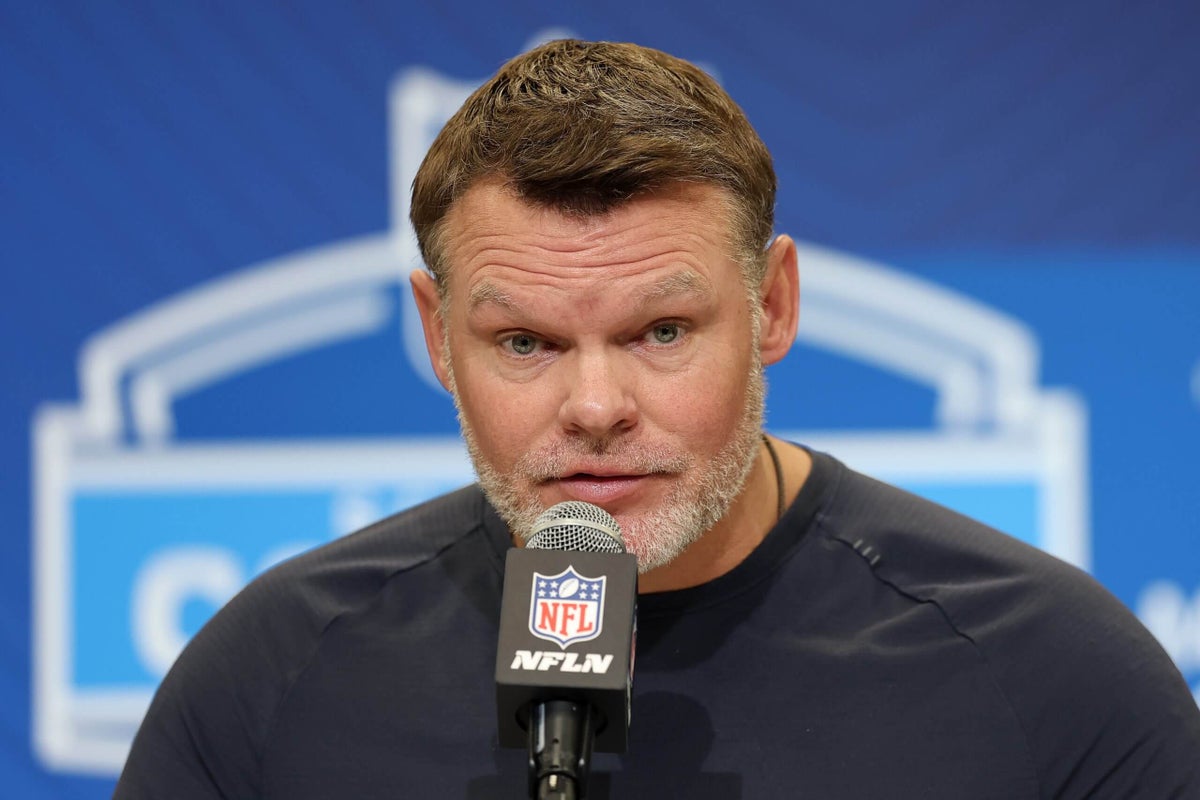
Indianapolis Colts general manager Chris Ballard will surely be in the mix as he enters his 10th season with the franchise. The 56-year-old has rarely delivered during the first nine years of his tenure, boasting just two playoff appearances, one postseason victory and zero AFC South titles. Despite his underwhelming resume, Ballard was retained by Colts principal owner Carlie Irsay-Gordon. He revealed in January that he told Irsay-Gordon he hasn’t lost his “juju, shimmer or confidence” in turning the franchise around, and his quest to prove her right is underway.
Ballard will speak to the media this week for the first time since his end-of-season news conference, and as always, I’ll have plenty of questions. Here are five that are top of mind.
1. Has Charvarius Ward decided if he’ll keep playing football?
Last year, Ballard broke away from his typically conservative approach in free agency and signed Ward to a three-year, $60 million deal with $35 million guaranteed. The 2023 second-team All-Pro was supposed to shore up the Colts’ secondary, but Ward never regained his star form because he barely saw the field. Three concussions limited him to a career-low seven games and resulted in two stints on injured reserve. Ward spoke candidly after his second concussion — which happened after he and tight end Drew Ogletree accidentally ran into each other during pregame warmups — and said he thought about retiring before eventually returning from injured reserve and playing again. But after suffering another concussion and ending the year on IR, he revisited the topic on locker clean-out day.
“My daddy told me to retire, but I don’t think I’m gonna do it,” Ward said. “I just got to see how I feel this offseason. I know going into next season, if I do come back and play again, if I get one more (concussion), I for sure will probably retire. Hopefully, knock on wood, I don’t get no more concussions and don’t have to deal with that anymore.”
Ward said he would make a decision “ASAP,” and if he chooses to walk away, that will drastically change the Colts’ offseason. The financial ramifications, and more specifically the impact on the team’s salary cap, are hard to predict because each retirement situation is unique to that player and team if there is money left on the player’s contract. However, at the very least, Ward’s departure would immediately put the Colts back on the market for another starting-caliber cornerback to line up opposite Sauce Gardner. The Colts could then turn to 2025 third-round pick Justin Walley, who showed promise in training camp before tearing his ACL and missing his entire rookie year. Additionally, Indy may also consider picking another cornerback early in this year’s draft or trying to make another big splash in free agency. Either way, the Colts would have to weigh all of their options if Ward is no longer a part of the equation.
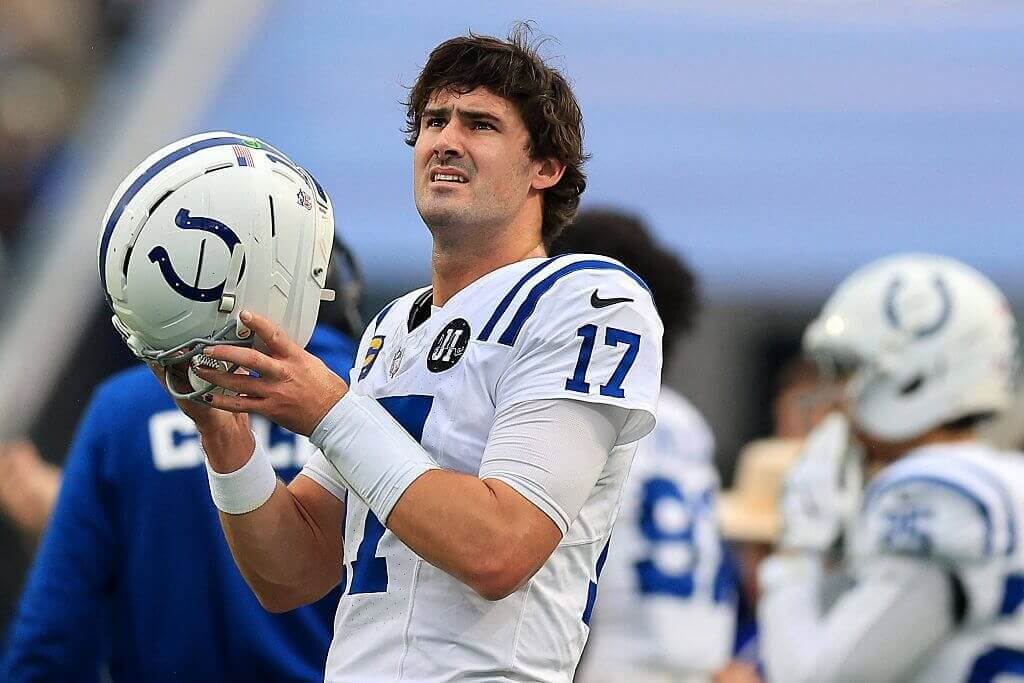
Colts quarterback Daniel Jones has expressed optimism that he’ll be ready in time for training camp, but being back at full strength likely will take longer. (Mike Carlson / Getty Images)
2. What’s the latest on Daniel Jones’ recovery?
Jones’ resurgent season in Indianapolis came to a disappointing end after he fractured his left fibula and ultimately tore his right Achilles tendon. The veteran quarterback, who turns 29 in May, did not need surgery on his fibula, but he underwent surgery for his Achilles in early December. Now that he’s more than two months removed from the procedure, Ballard should be able to provide an update on Jones’ recovery. Jones was optimistic about being ready for training camp in July, though it’s worth noting that there is likely a difference between being medically cleared and being back at full strength.
The Colts are very optimistic that they’ll be able to retain Jones in free agency, so much so that Ballard called him the team’s short- and long-term answer at QB during his end-of-season news conference. But perhaps a good follow-up question to that statement from Ballard, which I will ask this week, is why he’s so confident in a QB with a lengthy injury history? Last year at the combine, Ballard declared an open QB competition between 2023 No. 4 pick Anthony Richardson and a to-be-determined challenger (that wound up being Jones). Ballard said the team had to consider another QB because Richardson couldn’t stay healthy.
Well, the same can be said for Jones. He quickly proved that the Colts were right to take a chance on him, but like Richardson, injuries have plagued his career. In fact, Jones has played only one full season through his first seven years in the NFL. Obviously, the Colts are taking a huge risk on Jones and his surgically repaired Achilles in 2026, assuming he re-signs, but they also don’t have a viable Plan B. They essentially tied their future to Jones after trading their next two first-round picks to the Jets to land Gardner.
3. Does your draft approach change at all without a first-round pick?
For the first time since 2022, the Colts do not have a first-round pick. Indianapolis’ first pick this year is slated to be No. 47 in the second round. It’s difficult to picture Ballard striking a trade to recoup a first-round selection because, in theory, that would likely require him to part ways with one of the team’s top players, such as perennial All-Pro left guard Quenton Nelson, so the GM will have to be creative with limited draft resources.
When Ballard spoke at the end of the season, he said the first half of the 2025 campaign wasn’t a fluke. He believed the Colts were a top-four team in the NFL when they were 8-2 and stood atop the AFC standings, but it’s hard to ignore the team’s seven-game losing streak to end the season. That unraveling revealed some glaring holes, particularly on defense, and puts even more pressure on Ballard to find impact players at each point in this year’s draft.
Ballard has been hesitant in the past to trade future draft capital to improve his current draft position, but under these circumstances, I would not be surprised if he pivoted. Because the Colts don’t have a first-round pick again until 2028, that year may serve as a hard reset for the franchise if it doesn’t turn the corner over the next two years. So, from that perspective, it may behoove Ballard to be more aggressive in the short term — like perhaps trading a 2027 Day 2 and Day 3 pick for a chance to gain another Day 2 pick this year — in an effort to immediately improve Indy’s roster.
4. How do you balance getting younger and faster on defense and finding production?
Ballard said at the end of the season that the Colts’ 2025 defense showed its age at various points last year and emphasized that it must get younger and faster. The defensive line is the first unit that came to my mind and, more specifically, the edge rushers. Laiatu Latu is the only one who showed any promise last season, totaling 8.5 sacks and three interceptions. Veterans Samson Ebukam, Kwity Paye and Tyquan Lewis, who combined for nine sacks, are all set to become unrestricted free agents. None of them should be retained, and while it would be wonderful for the Colts to replace that trio with young and upcoming talent, it’s also a bit unrealistic.
The truth is that good and young edge rushers rarely become free agents, so if a productive edge rusher is on the open market, they’re most likely going to have a few warts. The two biggest names are Trey Hendrickson and Bradley Chubb, who most recently played for the Cincinnati Bengals and Miami Dolphins, respectively. Both are north of 30 and have dealt with injuries in recent years, but when healthy, they’ve proven to be productive and would probably be upgrades for the Colts. That doesn’t mean I think Ballard shouldn’t also draft a defensive end that could potentially start right away, but I don’t see the harm in taking a one-year flier on Hendrickson or Chubb because, although you might be sacrificing a bit in age, at least you’re targeting a proven commodity. Not to mention Hendrickson had arguably the most dominant stretch of his career while playing under Colts coordinator Lou Anarumo when Anarumo held the same title with the Bengals.
5. Does Anthony Richardson Sr. have a future with the Colts?
Richardson was drafted to be the face of the franchise, but as his fourth season approaches, it stands to reason that it may be better off for both sides if Richardson is traded. Ballard, who has been one of Richardson’s biggest supporters, changed his tune a bit at the end of the season and was noncommittal about Richardson’s future in Indy. Richardson ended the 2025 season on injured reserve after suffering an orbital fracture during a pregame accident that left him with impaired vision in his right eye.
“He’s got to still work through the vision (loss) he has, and we’ll see what the future holds there,” Ballard said. “We’ll kind of see going forward how that ends up playing out.”
Richardson has played just 17 games in his first three seasons while struggling with injuries, inaccuracy and, in the past, immaturity. Richardson was benched for two games during the 2024 season for what Colts coach Shane Steichen described as a lack of game preparation. After losing his starting job to Jones during training camp last year, Richardson would have had a shot at redemption when Jones tore his Achilles, but Richardson was sidelined due to the orbital fracture. Richardson was optimistic that his full vision would return this offseason. However, neither he nor the Colts could say for certain that it would.
Ballard will certainly be asked to give an update on Richardson’s eye at the combine, and with the Colts seemingly all in on Jones, whatever details Ballard can share about Richardson likely won’t just matter to the higher-ups in Indy. If Richardson’s full vision has returned, that may be a determining factor in how many other teams might be interested in trading for the dual-threat QB, who turns 24 in May. If the Colts move on from Richardson, I’d think his value is somewhere around a fifth- or sixth-round pick given his injury history and inefficiency as a passer.