
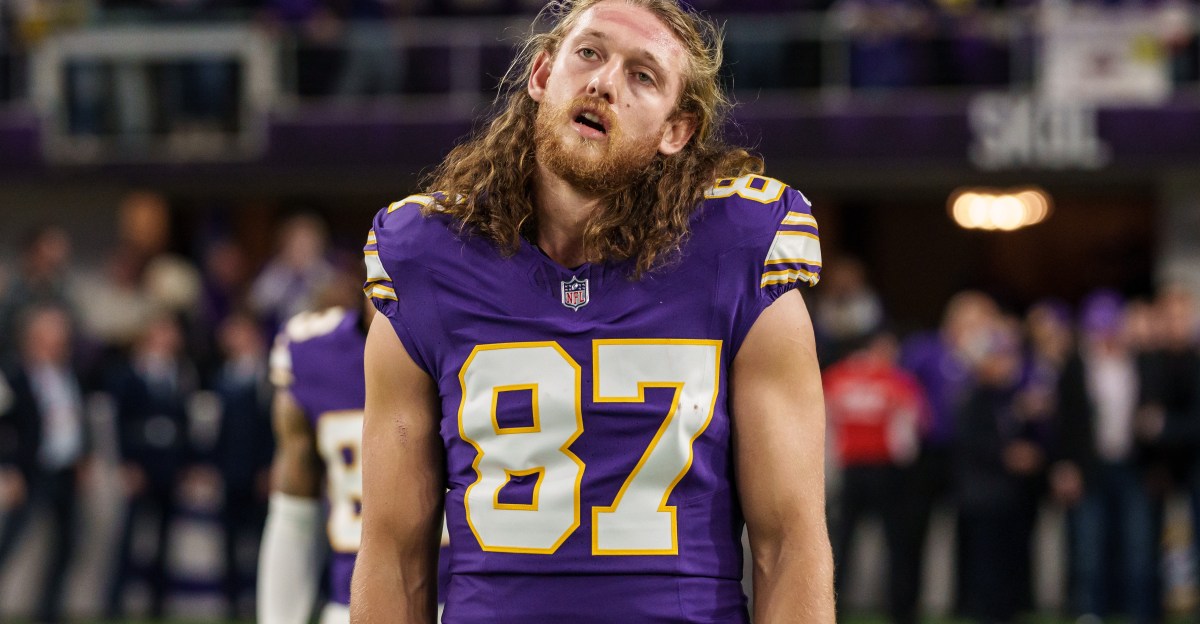
The Minnesota Vikings are about $42 million over the estimated $303.5 million NFL salary cap for 2026 (the projected range is between $301.2 million and $305.7 million) and must get salary cap compliant by 4pm ET on March 11th. Beyond trimming $42 million in cap space (the Vikings currently are the most over the salary cap of any NFL team), the Vikings will also need to free up more cap space for new acquisitions, including possible trades, free agent signings, and around $14 million for new draft picks after the draft is over.
So, there are a lot of cuts to be made, whether by releasing players, retirements, trades, or contract management. Let’s look at some of the more sensible options for the Vikings to get cap compliant and get the most value for their salary cap dollar.
It’s already been reported that the Vikings are shopping veteran defensive tackle Javon Hargrave at the NFL Combine, which makes sense given the structure of his contract and the emergence of Jalen Redmond last season. Hargrave was a disappointment for the Vikings last season after signing a two-year deal. He missed some time due to injury and at one point saw his reps decreased by Brian Flores.
Still, Hargrave, 33, is an interior defensive lineman that can rush the passer and there is always a market for those players. Hargrave would be a $21.5 million cap hit for the Vikings this season, but trading him would save $15 million with a $6.5 million dead cap hit. The team trading for Hargrave would have him on a one-year deal with a $15 million cap hit including incentives. That’s a reasonable price for Hargrave, but as a short and not undervalued contract is unlikely to yield more than a late round pick in trade. The main thing for the Vikings is the $15 million in cap savings, which would reduce their deficit to $27 million.
Aaron Jones is an enormous $14.55 million cap hit for the Vikings this year and that was never going to stand. It’s time for the Vikings to move on from the 32 year-old and replace him with either a draft pick or free agent. Jones is a great locker room and team guy but he’s simply not worth his salary cap hit. If the Vikings could restructure his deal for less than the $6.8 million dead cap hit for releasing him that might be worthwhile, but assuming that doesn’t happen releasing Jones would save the Vikings $7.75 million if done by March 13th. That amount would drop to $5.75 million after that as an additional $2 million in salary becomes guaranteed on the third day on the new 2026 season. Expect a transaction to happen before that.
Releasing Aaron Jones would lower the Vikings’ salary cap deficit to $19.25 million.
Ryan Kelly Retirement/Release
Center Ryan Kelly is widely expected to retire after suffering three concussions last season at age 32. If he doesn’t, the Vikings could also release him for the same cap savings of $8.35 million with a $3.4 million dead cap hit. Either way, moving on from Ryan Kelly would reduce the Vikings salary cap deficit to $11 million (rounding).
Release/Trade T.J. Hockenson
T.J. Hockenson is a $21.3 million salary cap hit this year and a $23.3 million cap hit next year. Both are among the very highest hits for a tight end and Hockenson simply is not playing at that level. It’s true that all Vikings receivers weren’t as productive last year given the dismal quarterback play, but Hockenson really hasn’t been the same since his knee injury and has never been a good all-purpose tight-end as he’s never been a good blocker. Josh Oliver is a better blocker and underrated receiver who could easily assume TE1 duties for the Vikings.
I doubt the Vikings would be able to trade Hockenson’s contract, even with $5 million/year lower cap hits for the acquiring team, but it’s worth shopping. Hockenson has another $2.3 million guaranteed after March 13th, which reduces the cap savings by releasing him, so better to do so before then to maximize savings if no trade can be made.
Releasing Hockenson by March 13th saves the Vikings $8.8 million in salary cap this year (and $23.4 million next year) with a $12.5 million dead cap hits. That would reduce the Vikings salary cap deficit to $2.2 million.
31 year-old Brian O’Neill is in the last year of his contract and could be extended to continue as starting right tackle and save salary cap space this year. A three-year extension and converting his current base salary to a signing bonus would save around $12 million in cap space this year.
O’Neill is a longtime team captain and core player for the Vikings and is still playing well at right tackle. Extending a 31 year-old likely comes with decreasing performance, but not always in an offensive lineman. Extending him at a team friendly price would be great, but extending him makes sense and would give the Vikings around $10 million in cap space cumulatively with all the above transactions as well.
Harrison Smith Retirement
Harrison Smith is also expected to retire this year but the nature of his contract makes this more of a dead cap hit than a salary cap savings. Smith also has $25 million more salary guaranteed after March 13th so expect an announcement before then. If Smith retires pre-June 1st it’s actually a $6.3 million additional salary cap hit (all dead cap) for the Vikings. But they can move $7.6 million dead cap hit to 2027 by making it a post-June 1st retirement and thereby saving $1.3 million in cap space this year. I would expect them to do that. That gets the Vikings to $11.3 million in cap space.
The above moves would get the Vikings cap compliant and largely fund the cap hit from their 2026 draft picks. But to make any acquisitions beyond draft picks, the Vikings will need to make further cuts to this year’s salary cap. Here are a couple more options:
Convert Justin Jefferson’s 2026 Base Salary to a Signing Bonus
Jefferson has a $25 million base salary this season and a contract that runs through 2029 with a void year so converting that base salary to a signing bonus would spread the cap hit over the remaining years of his contract and save the Vikings around $20 million in cap space this year. That’s probably enough to accommodate the signings of free agents such as Jalen Nailor, Eric Wilson, Ryan Wright, Andrew DePaola, Jalen Redmond (EFRA), Bo Richter (EFRA), Ivan Pace Jr. (RFA), and a few others, along with Mac Jones and Anthony Richardson if the Vikings opt to trade for them.
The Vikings could also opt for releasing Jonathan Allen, although combined with moving on from Javon Hargrave would create a need in the interior defensive line. Allen, 31, is no bargain at this point for the Vikings as a $23.9 million cap hit this year and a $23 million hit next year too. Cutting Allen by March 13th, after which another $8 million in salary is guaranteed, would save the Vikings another $6.5 million in cap space although it would come with a $17.3 million dead cap hit.
Convert Other Base Salaries to Signing Bonuses
There are a few other contracts on the Vikings roster with significant base salaries- Christian Darrisaw, Jonathan Greenard, and Will Fries- that could potentially be converted to signing bonuses if necessary, which shifts salary cap from this year to future years and reduces contract flexibility. It’s generally something best done with quality players expected to play through their contract at a high level and only judiciously because it can lead to more top heavy cap situations down the road and a need for even more players on cheap contracts.
The Vikings can become cap compliant and make room for draft picks and a bunch of low-level free agent signings- mostly former Vikings- to fill gaps in their roster.
But they also don’t have a ton of salary cap firepower so any more significant signing would have to have a backloaded contract or require the Vikings to do more contract restructuring. That makes a potential deal for Kyler Murray, for example, more problematic for the Vikings but still doable. But it would definitely limit other additions.
We’ll see how Rob Brzezinski and company manage the Vikings salary cap situation over the next couple weeks, but we should see some significant moves before March 13th. Stay tuned.