
The NFL Draft process kicked into high gear last week at the annual scouting combine in Indianapolis, when coaching staffs got their first real exposure to players their scouts have been following for years. Those visits, along with the drill work and medical testing, shake up everyone’s draft order a bit.
That makes this week the perfect time for our second Falcons mock draft of the year. (Here is our first.) A word of warning: This one may not be popular in Atlanta, as there are no wide receivers on the list and the top pick is not at a glaring position of need.
It’s hard to imagine the Falcons coming away from the draft without any wide receiver help, given the state of their current receiving corps and the lack of options on the free agency market. But there wasn’t a wide receiver available at any of these picks that justified passing on the value of the players selected.
So with only five picks at the moment, here’s what I’m forecasting for the Falcons.
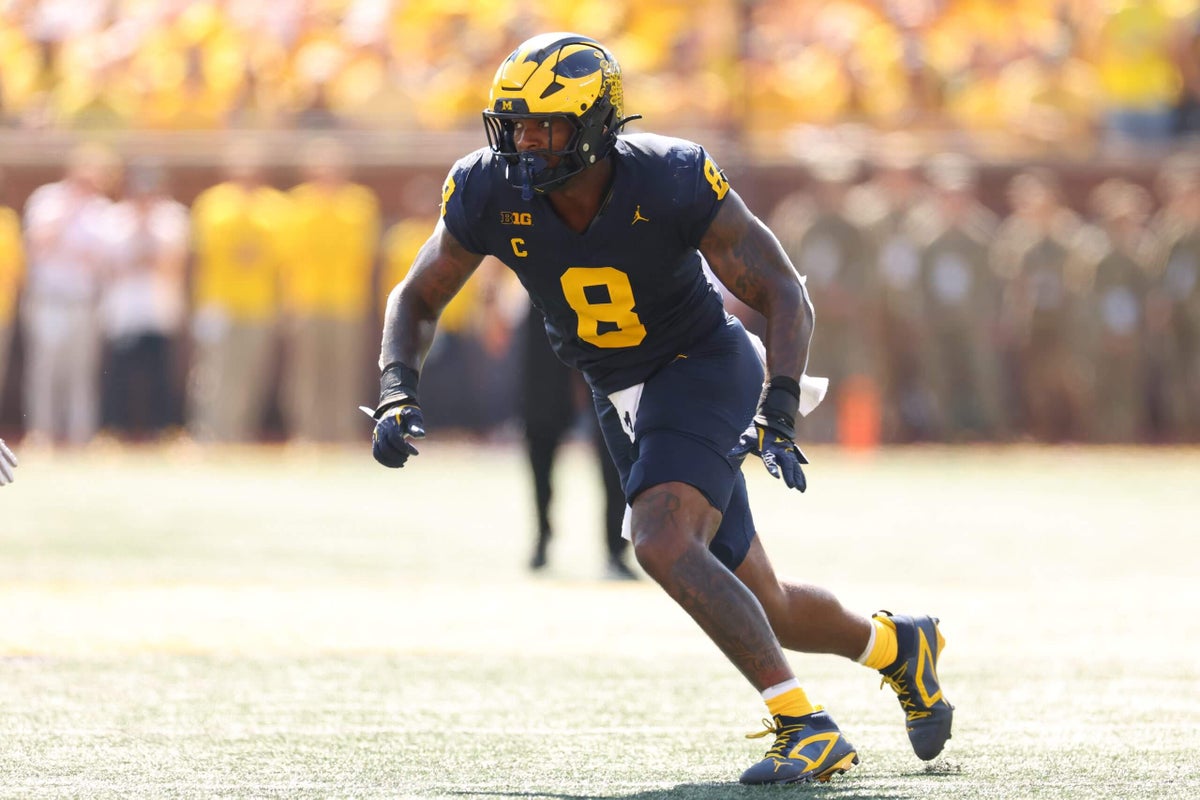
Second round, pick No. 58Derrick Moore, Edge, Michigan
We’re starting with an early trade after accepting an offer from San Francisco that sent Atlanta’s original picks at Nos. 48 and 232 to the 49ers for Nos. 58 and 92. The move doesn’t add more picks, as general manager Ian Cunningham has said he wants to, but it does add a lot more value, essentially swapping a seventh-round pick for a third-rounder by dropping 10 spots in Round 2. It seemed worth the risk.
Taking Moore with the pick is partially insurance for James Pearce Jr. and partially a nod to the defensive blueprint the Seattle Seahawks just used to win a Super Bowl, which was to get as many talented defensive linemen as they could find. At first glance, Atlanta needs a defensive tackle more than an edge rusher (I was tempted to turn down the Niners’ offer because Florida State’s Darrell Jackson Jr. was still on the board at No. 48), but Moore was the best value available. The 6-4, 255-pounder is Dane Brugler’s No. 52 overall player and the ninth-ranked edge rusher.
Pearce Jr.’s legal troubles have left his status for the 2026 season and beyond in doubt, and Moore could immediately eat up some of the snaps Pearce had been expected to take while allowing the Falcons to continue rotating edge rushers as frequently as they did a year ago. Moore did not work out at the combine due to a hamstring injury.
Third round, pick No. 79Eli Stowers, TE, Vanderbilt
Yes, Atlanta is keeping Kyle Pitts on the franchise tag. But that doesn’t mean new coach Kevin Stefanski can’t find work for another tight end on this roster, especially one who tested as Stowers did at the combine. The 6-4, 239-pounder set the vertical jump record for his position with a leap of 45.5 inches, the second-highest combine jump for any position since at least 2003. He also had an 11-foot, 3-inch broad jump, the second best of any tight end since 2003.
Stowers, a consensus All-American for the Commodores, was already Brugler’s 48th-ranked overall player and the No. 2 tight end. Charlie Woerner played 538 snaps at tight end for the Falcons last year, the sixth most of any offensive skill player on the team. But he’s entering the final year of his contract and could be a salary-cap casualty, considering the Falcons could save $4.8 million by cutting him. Woerner only has 26 catches in his six-year career, so Stowers would immediately add more receiving value.
Third round, pick No. 92Jake Slaughter, C, Florida
With the extra third-round pick acquired in the trade with the 49ers, I have the Falcons taking a player they’ve already spent a lot of time with in the pre-draft process, according to a league source. The 6-5, 303-pound Slaughter is Brugler’s highest-ranked center and No. 83 player overall and would be immediate competition for Ryan Neuzil for the starting job.
Fourth round, pick No. 114Chris McClellan, DT, Missouri
Brugler calls the 6-4, 313-pound McClellan “an underrated player who will be in an NFL rotation for a long time.” That sounds just about ideal for a fourth-round pick, particularly at a position of need for the Falcons. McClellan has 34-inch arms and 11-inch hands and could immediately improve Atlanta’s run defense, which Stefanski and president of football Matt Ryan have said is a priority.
Sixth round, pick No. 196Cole Payton, QB, North Dakota State
The 6-3, 232-pounder might not make it to the sixth round after a combine in which he had the second-best vertical jump (40 inches) and broad jump (10 feet, 10 inches) among quarterbacks. He was already an intriguing prospect after one year as a starter for the Bison, in which he threw for 2,719 yards, rushed for 777 yards and totaled 29 touchdowns.
Payton wouldn’t be a threat to Michael Penix Jr.’s starting job in 2026, but he could be a developmental prospect who might mature into Penix insurance or a valuable trade chip if Penix solidifies the position.