
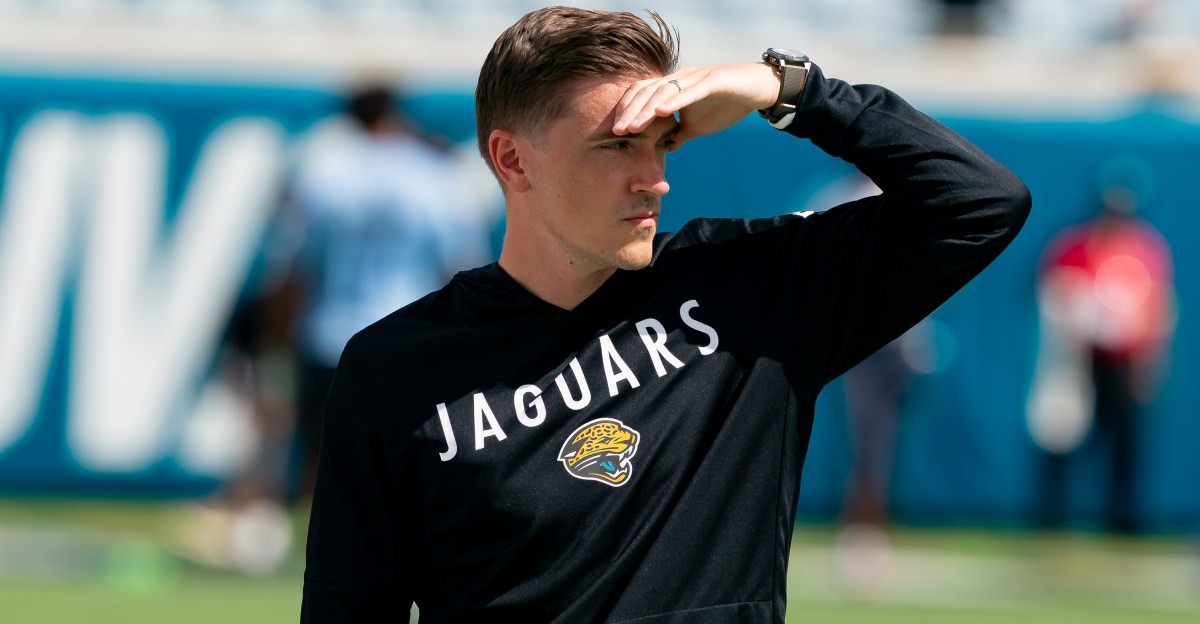
Fifteen months into his role as General Manager of the Jacksonville Jaguars, James Gladstone has firmly imprinted his ideology onto the franchise. And with the NFL Draft just over one month away, it’s another opportunity for him to reshape the roster into one ready to challenge for the postseason and beyond. With just nine picks under his belt, what can we learn from last year that will help us foresee how the Jags approach this year’s annual selection meeting?
One simple – maybe too simple – takeaway from 2025 would be the value that Gladstone and head coach Liam Coen put on having a roster with significant versatility. Certain guys from the previous regime were let go if they were scheme or position-specific, whilst other more fluid players such as Jarrian Jones and Antonio Johnson enjoyed a larger workload thanks to their ability to play multiple positions.
We saw a similar thought process prior to the season kicking off. Travis Hunter is the poster-child for this philosophy, although his profile as a generational talent may have meant that the Jaguars were keen on him regardless of his ability to play both receiver or cornerback. Nevertheless, Wyatt Milum had positional versatility on the offensive line, and late round additions Jack Kiser, Rayuan Lane and Bayshul Tuten delivered special teams upside. Expect this trend to continue in 2026.
After the draft last year, both Gladstone and Coen were keen to emphasize a new organisational philosophy, one that prioritized character and mental toughness. This was evident in their first draft haul, with the Jags head coach acknowledging it was a prerequisite before making a phone call to a prospect:
“With every pick that was the priority. That was very clear. You look across the board at these guys, and you talk to the people that were in touch with them, whether it be the coaches, the personnel, their college coaches, their high school coaches… …tough resonates with all these guys, and guys that love football, that love the process that drives the results. So many captains out of this group and leaders and guys that have played a lot of snaps. So much of that was a part of this whole process.”
The aforementioned Tuten may have best demonstrated that toughness last year, with a playing style that seemed to seek out content rather than relish it. In a competitive AFC South, those character traits could prove the difference.
Last year, Gladstone did an impressive job finding contributors on the final day of the draft. Kiser, Lane, Tuten, LeQuint Allen and Jonah Monheim all saw gametime in 2026 to various degrees; some shared a role in the backfield, others found a home on special teams, and Monheim, a seventh-round selection, performed admirably when stepping in for the injured Robert Hainsey at center.
With seven more picks on day three in 2026, Gladstone might be in line for a statue if he’s able to find similar value in back to back drafts. Picking diamonds in the rough is how NFL teams win Super Bowls – the Jaguars aren’t there yet, but they’ve started down the right path.
Much like we do with head coaches, we are often quick to attribute success and failure of a front office to just one person. But the General Manager is just the tip of a spear, with dozens of staff being relied upon to gather and process the information needed for them to make a final decision when it’s time to make picks.
In that regard, Gladstone puts a lot of faith in his colleagues’ work and opinions, encouraging a relaxed, collaborative environment throughout the process but specifically on draft weekend, valuing his team’s ability to offer context to draft reports with character references, suitability to the team’s culture, and the room’s thoughts on the value at a specific spot. This open approach reduces tunnel vision, and the flexibility of his GM earned praise from the head coach last year:
“It was really cool to see this guy work. This was his Super Bowl in a lot of ways. He was unbelievable. The communication, the resilience, the ability to move around this draft and navigate it the way he did and the way these guys communicated was really fun to watch. The work was done, and then he went and operated, and the staff went and operated at a high level, it was really cool to see.”
The NFL, in some regards, is stuck in its ways. The draft process has a structure that has been in place for some time; the season ends, then it’s All-Star games, then it’s the combine, then it’s Pro Days, then it’s player visits. And once that is done, then you make your choices. But much like a younger generation of head coaches have transformed ways of working on the field, similarly some front offices are adjusting their practices off it.
Gladstone is at the forefront of this revolution. During his time with the Los Angeles Rams, he began questioning the value of Top 30 player visits. And when he got to Jacksonville he skipped the process altogether, avoiding being exposed to recency bias that a last-minute meeting (which in large part tends to involve scripted answers from prospects) can bring. Gladstone has confirmed that he will not be bringing in any prospects again as we get close to within a month of draft weekend.
Reinforcing his confidence and faith in his front office team, the Jags GM also did not attend the combine in February. Having neither a GM nor a head coach at the annual meat market is unusual – in fact, Big Cat Country had almost as many representatives at the combine as the Jaguars did. But again, Gladstone trusts his guys to come to the table with all the information needed to make an informed decision.
The front office seems happy to zig while the rest of the league zags, and perhaps it helps the team keep their cards close to their chest. If Gladstone can smash another draft out of the park, nobody will question his methodology.