
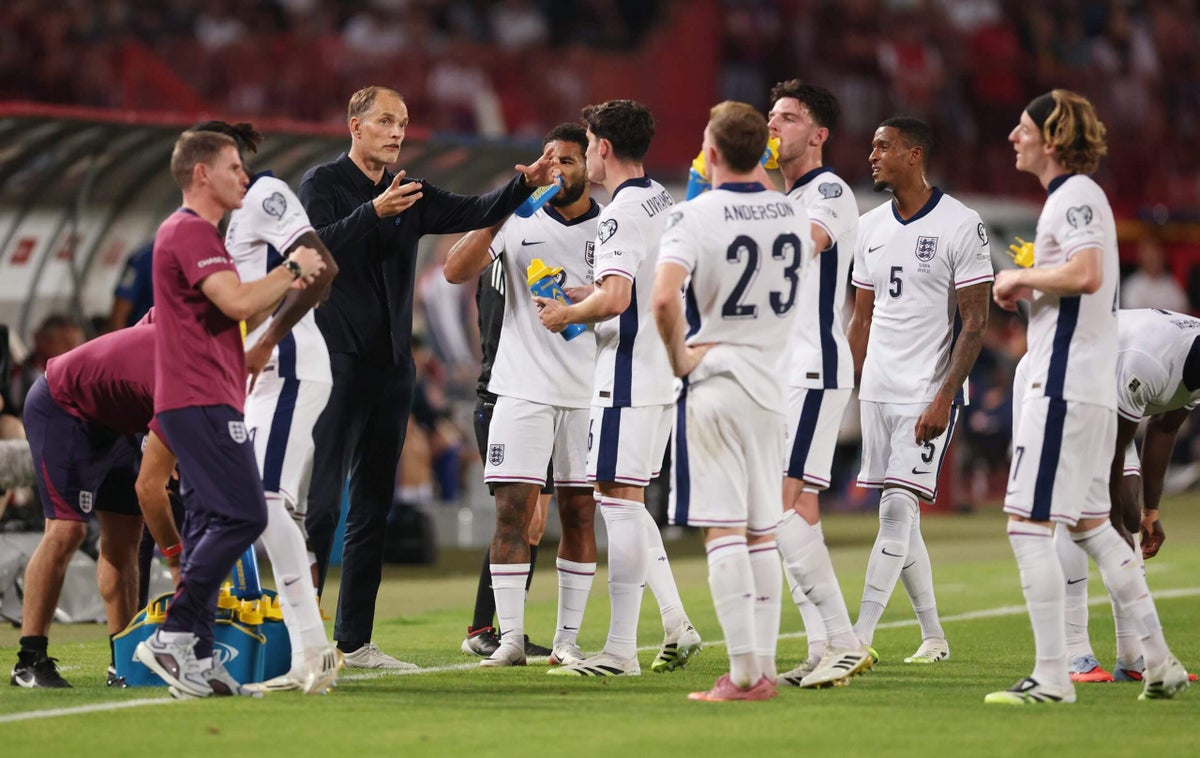
Stop me if you’ve heard this one before but the Premier League and English Football Association are having another club vs country row.
The latest flare-up in this forever war is significant for two reasons. The first is its timing and the second is the likely solution, which some English Football League clubs believe is to gang up on them.
Let’s deal with the timing first.
On Friday, Thomas Tuchel announced a 35-man England squad that did not have room for Trent Alexander-Arnold and half a dozen other guys who would have been picked by Tuchel’s predecessors Graham Taylor, Terry Venables, Glenn Hoddle or Kevin Keegan if they had been available in the 1990s. And it is also only a week after 16-year-old Max Dowman became the youngest goalscorer in Premier League history on a weekend when fellow English teenagers Josh King, Rio Ngumoha and Chris Rigg started for their clubs in football’s richest domestic league.
All that, coupled with England’s long spell in the top five of FIFA’s world rankings and the betting markets’ belief that Tuchel’s team are the second favourites for World Cup glory this summer, would seem to suggest that English clubs are producing enough talent for the national team’s manager to add a second star to the badge.
But (you must have known one was coming) what if I told you the underlying data was not as good as the eye test?
While Dowman stole the headlines, the Arsenal prodigy was one of a dwindling band of Englishmen to actually get on the pitch in the Premier League last weekend. Of the 296 players who took off their tracksuits, only 82 (28 per cent) can play for Tuchel.
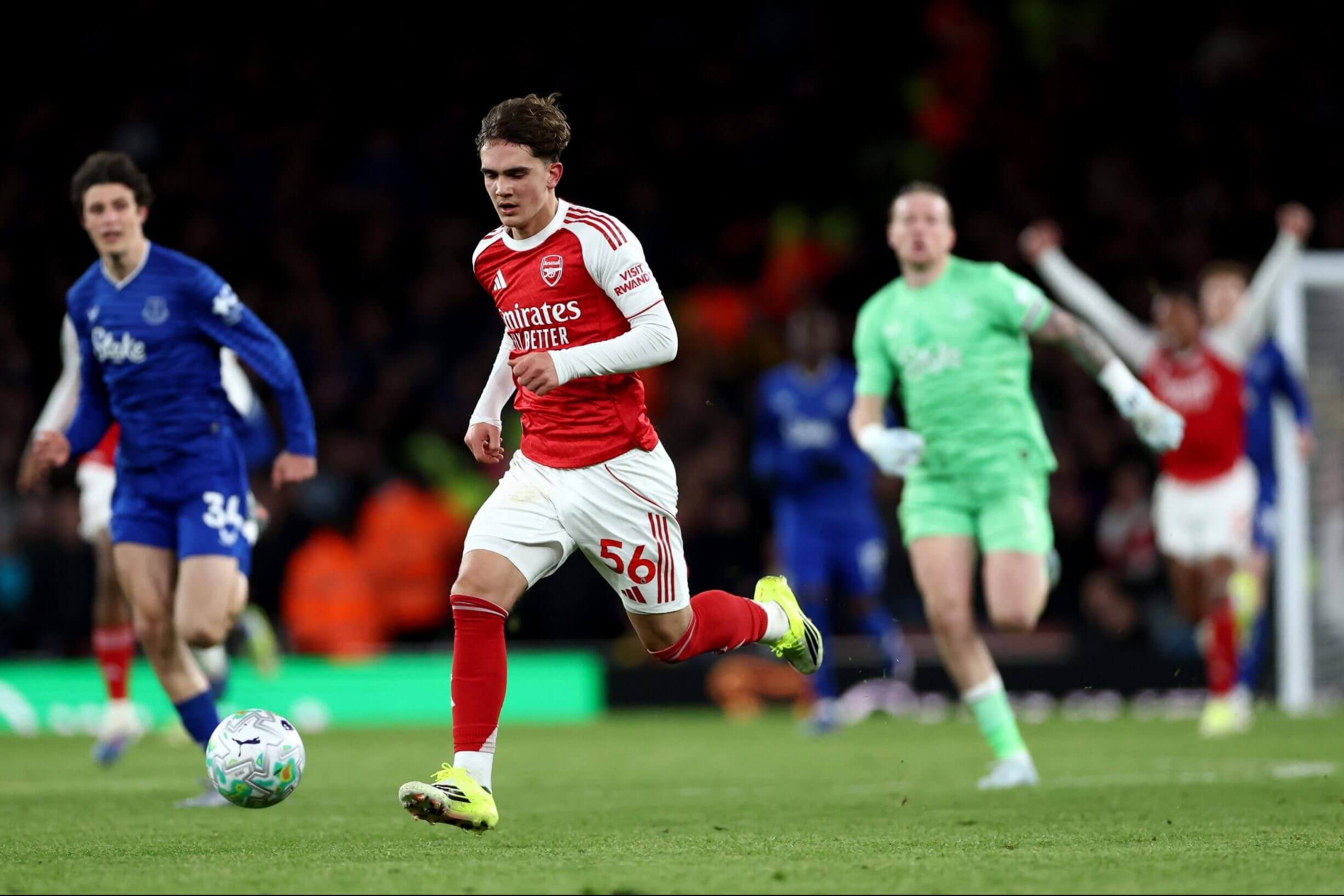
Max Dowman has stolen the headlines but the overall picture for English talent appears very different (Alex Pantling/Getty Images)
The picture is even worse if we look at the share of minutes played by England-qualified players (‘EQPs’, as they are known in the trade) in the top flight this season. That number is just under 26 per cent.
Maybe that is enough. How many players do you really need to win a World Cup, anyway? Argentina used 23 last time. And Tuchel’s squad includes five players who are getting loads of minutes for huge clubs on the continent.
There is also the group of players who could have played for England but chose to play for another country. It is not unreasonable to imagine that some of them would still be contributing to the EQP column if the FA had come calling sooner.
When the FA complains to the Premier League about blocked pathways, stockpiling and club managers not thinking about what’s good for the Three Lions, the Premier League will respond with all of these arguments. It will also point out that the influx of foreign players into the English game over the last 30 years has clearly raised standards and anyone getting serious playing time in the Premier League now must, at least, be close to England standard, which was not necessarily true in the past.
However, is it not a tiny bit worrying that Tuchel has been forced to pick three goalkeepers for his squad who have played 12 league games between them this season? The FA, whose job it is to worry about these things, certainly believes it is — if not for today then perhaps for tomorrow.
Which brings us to the proposed solutions.
This month, the EFL held its annual conference at The Belfry, a golf resort and hotel near Birmingham. The most important decision made at the two-day gathering was the expansion of the Championship play-offs from four teams to six. But it is a decision postponed that caused the most controversy.
This relates to a joint proposal from the FA, PL and EFL’s executive team, all of whom have been trying to come up with a solution that would make Tuchel the England manager happy, while not upsetting Tuchel the once and future Premier League club manager.
The plan is to relax the rules on player loans, which state the minimum term must be from one transfer window to the next, so that Premier League clubs could lend players to EFL sides for shorter periods. These “development loans” would, in theory, give talented, young EQPs a shot at more first-team minutes.
The Premier League would also like to add two more games to the group stage of the EFL Trophy, the annual competition between the 48 clubs in League One and League Two, plus 16 under-21 sides from Premier League and Championship clubs with top-rated academies.
As a sweetener, the clubs were told that the leagues and FA will throw an extra £16million ($21m) over three years into the Professional Game Youth Fund that dishes out grants to academies. This would be worth an extra £175,000 over the period for category one and two academies, and £200,000 for the category-three academies run by most lower-division clubs.
However, the proposal has not landed very well for several reasons.
First, some EFL clubs have pointed out that the last thing they need is two more EFL Trophy games and if they do this, how will they find the space to extend the League One and League Two play-offs to six teams, which they do want to do.
Second, there is a group of EFL clubs who are fed up with Premier League teams making it harder for them to develop their own players, which is a long-term issue that will not be made any easier by the sugar rush of short-term loans.
And finally, many in the room did not like the fact that the presentation, which was delivered by EFL chief operating officer Nick Craig and FA chief football officer Dan Ashworth, came with a perceived ‘or else’ — and that was the threat to change the post-Brexit rules on how clubs can recruit from overseas.
Since leaving the European Union in 2021, foreign players have needed a governing body endorsement (GBE) to gain a work permit to ply their trade here. A point-based system was agreed with the government and the underlying theory is that English clubs — much like companies, hospitals and universities — should be able to bring in a controlled number of highly skilled workers from abroad to meet skills gaps, spread best practice and allow UK plc to compete on the global stage.
The important point is that the FA, the governing body, runs this process.
In 2023, the GBE system was tweaked, as the clubs persuaded the FA that more flexibility was needed to ensure English clubs could still sign exciting young foreign talents. The compromise was the creation of the elite significant contribution (ESC) route to a GBE, with Premier League and Championship clubs allowed to recruit up to four ESC players who did not meet the points-based criteria each season, and clubs in League One and League Two allowed two.
However, there is an important caveat buried in the small print of the ESC deal: the FA can scrap it if EQP minutes fall below 25 per cent for the season in any league. And that is the lever the FA is threatening to pull right now.
So, some EFL clubs are wondering why their access to ESC talent is under threat because Premier League clubs have bought too many foreign players, and the only solution is to let Premier League clubs lend more of their stockpiled young English players to EFL clubs, further disincentivising EFL clubs from investing in their own academies, and staging more games against under-21 sides that nobody pays to watch.
Deals, doors and deadlocks
There does, at least, seem to be a path to peace in that dispute, which is more than can be said for the elusive “New Deal for Football”. This is the suggested name for the proposed agreement on a new financial distribution settlement between the Premier League and the rest of the professional pyramid.
Under a formula agreed in 2015, the Premier League shares about 16 per cent of its central broadcast and commercial income with clubs in the EFL and below, but half of this goes to half a dozen or so recently relegated clubs in the form of parachute payments.
Originally designed to protect clubs from the financial shock of relegation, they have increasingly become more like trampoline payments, as they give their recipients a huge advantage in the EFL, where the central income is a tiny fraction of the Premier League’s. Not only does this leg-up skew competition in the Championship but it also encourages clubs without parachute payments to overspend, simply to compete.
So, the EFL has been asking the Premier League, and anyone else who will listen, to pool the leagues’ revenues and then share the pot on a 75/25 basis. The EFL would also like the Premier League to slash parachute payments and put the savings in the solidarity pot, further boosting the amounts sent to non-parachute clubs.
The Premier League, however, does not want to share anywhere near that much money and its clubs do not want to give up their full parachute payment insurance policies. So, we have had at least five years of stop-start negotiations, which are currently stopped again.
What is interesting now is the arrival of the independent football regulator, who has the power, if asked by one of the parties, to intervene and force a settlement on the game. It is a power that its chair, David Kogan, keeps telling people he does not want to wield, as he believes this is a decision football could and should make for itself.
Kogan said this publicly at the Financial Times’ Business of Football conference last month, where he was followed onto the stage by Premier League chief executive Richard Masters, who said he was ready to do a deal with his EFL counterparts and his “door is always open”.
What Masters did not say, however, was that he is willing to pick up negotiations again but only if the EFL agrees not to mention parachute payments and agrees to accept a four-to-one merit rake in the Championship.
At present, there is no merit rake in the Championship, which means every club gets the same share of the league’s central income, regardless of where they finish in the table. The EFL is happy to change this and has suggested that both the Championship and Premier League adopt a two-to-one merit rake, which would mean the first-placed team in both divisions would receive twice the amount as the last-placed team. This, it says, would reduce the “cliff edge” between the divisions.
The Premier League, on the other hand, with its own constituents to worry about, does not want to change its 1.8:1 ratio but thinks the EFL should have a far more aggressive rake to close the gap at the top end. Like the lion on its logo, the Premier League does not appear to concern itself with the opinions of the sheep in the lower reaches of the Championship.
These pre-conditions to talks were discussed at the EFL meeting, which just so happened to be held in The Belfry’s Masters Suite, or, as one wag put it, the room whose door is always open.