
Many moons ago, back when The Washington Post had a sports section, I was the beat writer for a plucky mid-major basketball program that had never won an NCAA Tournament game: George Mason. After three years and two NCAA trips, but no wins for GMU, my career took me elsewhere.
Thus the surreal feeling of watching George Mason in 2006 make it all the way to the Final Four. It was the story of the tournament, the college basketball version of the Miracle on Ice.
“They’ll make a movie out of this someday,” a colleague told me.
But they didn’t. Probably because as the years went on, too many other George Masons happened.
VCU, an 11-seed just as George Mason had been, made the Final Four in 2011.
Wichita State made the Final Four in 2013.
Loyola Chicago and Sister Jean made it in 2018.
Florida Atlantic, as a 9-seed, made the Final Four in 2023.
And of course Butler, back then still considered a mid-major, made it all the way to the championship game in 2010 … then went all the way back the next year.
The George Mason run started an era of the mid-major tournament run.
Before 2018, a No. 16 seed had never beaten a No. 1 seed. Then UMBC did it to Virginia … and Fairleigh Dickinson did it to Purdue five years later.
Before 2012, a No. 15 seed had only beaten a No. 2 seed three times. Then, over the next 11 years, it happened seven times — and Florida Gulf Coast became the first 15 seed to win a second game, making the Sweet 16 in 2013.
The college basketball world was flat. Upsets became so common that they were hardly upsets anymore. They were less special.
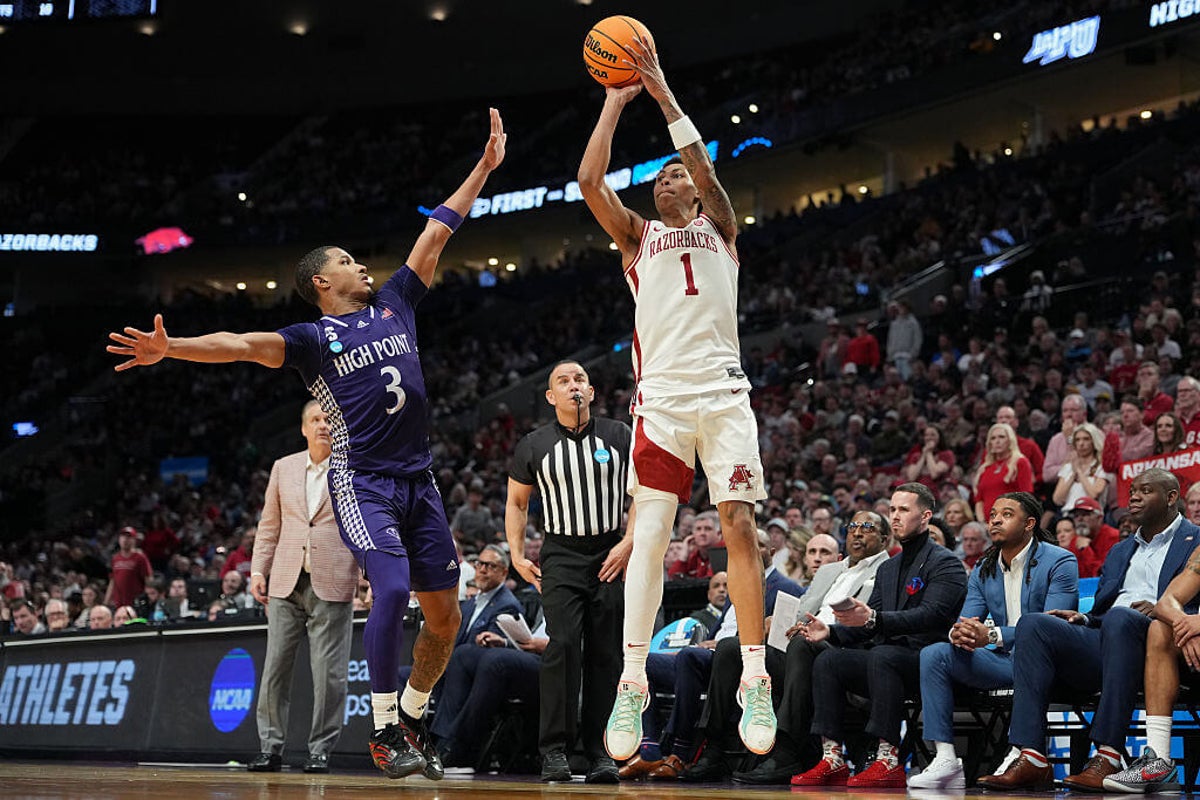
Now they’re rare. High Point beating Wisconsin was the best upset of the first round, but that’s the only 12-seed or worse to win a game in two years. Only one double-digit seed — Texas, an 11 seed — will make the Sweet 16, which is the third straight year that’s been the case, and all three of those double-digit seeds have been power-conference teams.
The golden age of the upset seems like the past, and the reasons seem clear: Unlimited transferring and the ability to pay players have armed power-conference teams with the ability to pluck the best players from the lower levels. If a mid-major gets a good player, chances are they won’t hold onto him for long. Yaxel Lendeborg, rather than leading UAB, is one of the key players for No. 1 seed Michigan. Xaivian Lee, rather than play his senior season at Princeton, is starting for Florida. And so on.
The result is still a fun and exciting tournament, even without upsets. In fact, the fewer upsets, the better the games get as things go on. The perfect tournament, if one could devise one, would be a few first-round upsets and one Cinderella making a deep run that captures the country’s imagination.
But a Final Four full of them, not so much, especially when the novelty has worn off. The 2011 national semifinal between Butler and VCU drew 14.9 million TV watchers. Twelve years later, the national semifinal between Florida Atlantic and San Diego State drew two million fewer, even though it went down to the wire.
Upsets are still cool. The small school unknown knocking off the big brand is a huge part of what makes the NCAA Tournament special — which is precisely why this current period is actually good for the sport.
This is a reset. This is setting the scene — hopefully — for a future era where the upsets become special again.
Maybe that happens organically, under the current conditions. Maybe the mid-majors adjust and figure out ways to keep their players, schools setting aside money to stay competitive, or signing them to contracts that keep them around. Maybe we just have some teams sneak through the current system, able to keep their players, become veterans and every now and then you have a big upset, the way it was in the old days.
More likely, however, the current conditions would need to change.
Paying players isn’t going away. And the old transfer rules — everyone has to sit a year — are just as unlikely to return.
But there’s a chance that within a few years, unlimited transferring will be reined in, ideally to a system that allows one free transfer. (For one brief, shining moment, that was the actual NCAA rule, until it got struck down.) Because the idea of annual free agency is so disliked by so many, the one-time transfer exemption is the one idea that could actually result in federal legislation. Failing that, there could be collective bargaining or some arrangement that will pass muster.
The result could – should – give potential Cinderellas a better chance to hold onto their players. Yes, they would be free to leave once. But taking away the second immediate transfer would offer at least some stability, some ability to protect and project your roster.
It wouldn’t mean a return to the 2006-23 era. But that wouldn’t necessarily be a good thing. Cinderella isn’t a great story if she happens every night.
But future tournaments will still need those Cinderellas. The current lack of upsets may be a good thing — but only for a bit. And the current conditions may be temporary enough that it’s only for a bit.
At least the future George Masons can hope.