
“He wound his arm back and sucker-punched me to the back of the head. I fell to the ground, got up, and you could hear fans going, ‘Oh, what’s happened there?’. They then had a goal kick and because I was the defender and he was the striker, I was marking him. He was still pushing me and then the ball came up to us. We both went up to head it and he’s not even gone for the ball, he’s cranked his elbow straight into my face and broken my nose. I was knocked out for about a minute on the pitch. I managed to walk off and then had to go to hospital for the night. It was shocking.”
Non-League defender Ethan Light, 22, is reliving his ordeal in a conversation with The Athletic, describing how he was assaulted twice by an opponent in the final five minutes of a December 2024 match while playing for Hendon against Tilbury in the Isthmian League Cup. Both were captured on camera because the game was being recorded.
The case is just one example of many violent incidents across amateur and non-League football in the United Kingdom.
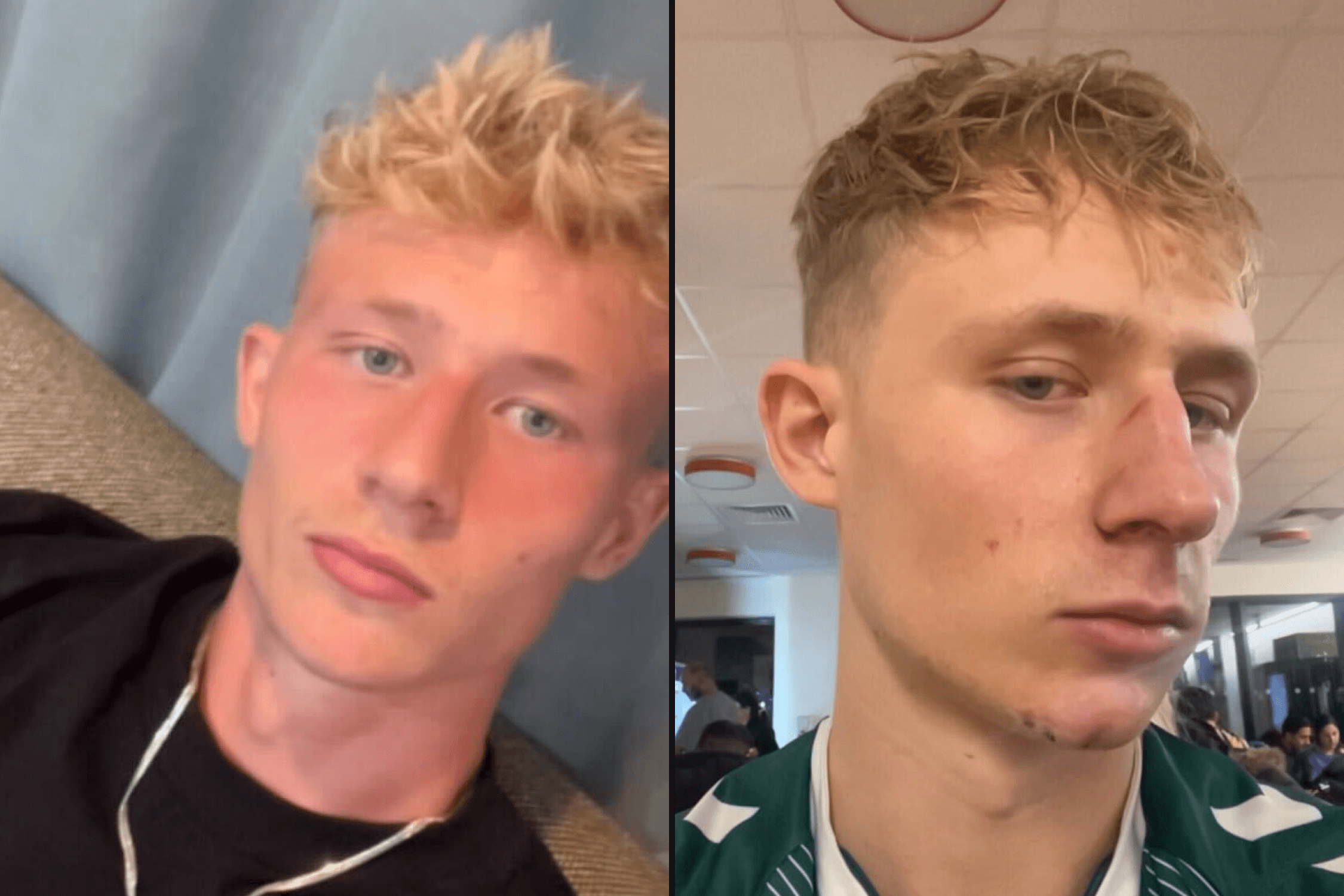
Ethan Light before and after the incidents that broke his nose (Ethan Light)
Light was unable to play football for more than three weeks after that match because of concussion and a broken nose.
At that time, he was being paid around £200 ($267) a week by Hendon. However, as he was there on a non-contract basis, he did not receive any money during the period he was absent.
Light, who was employed as a personal trainer at a gym, was also unable to work for a fortnight. “I was losing all of that money through no fault of my own, but because of someone else’s terrible actions,” he says.
Light was set to move to Hemel Hempstead Town, who play in the National League South (the sixth tier of English football), but that was delayed until the end of the January as a result. When he finally joined, he was not at full match fitness because of his enforced time away from the pitch. He was also struggling with his breathing because of his broken nose and hated playing in a protective mask.
“I just felt so bad, I couldn’t see the ball or anything, it was terrible,” he recalls. “My breathing has worried me more than anything else. I struggle to breathe every now and then.”
Following the incident, Light took his case to the Metropolitan Police. He says he was eventually offered an out-of-court settlement of £200, which he felt was insulting and a disappointing outcome. Scotland Yard confirmed to The Athletic that a 21-year-old man received a community resolution order for common assault.
Light’s opponent, Alex Hernandez, was only sent off for the elbow as the earlier punch was missed by the referee. He apologised for his conduct and received a five-game suspension following a Football Association (FA) regulatory commission hearing.
In its annual grassroots discipline review for the 2024-25 season, the FA reported there were 4,649 serious-case allegations made. These are defined as being “aggravated by reference to a protected characteristic, threats, physical contact or assaults on match officials, and player-on-player assaults”.
The report says that for every serious-case allegation made, an estimated 2.19 incidents actually take place.
“From what I’ve seen, it looks like it’s happening more regularly now, which is not good,” Light says. “But on the other hand, the fact things like this are getting posted (online) and seen around the footballing world is probably a good thing in a way because it stops people thinking they can get away with it, as there are a lot of cameras around nowadays.”
In an incident that gained widespread media attention in January this year, Trearddur Bay footballer Tom Taylor, 35, was arrested on suspicion of assault in Wales. That came after he was filmed appearing to strike an opponent in the face with his elbow on the edge of the box, just as another player was taking a penalty.
Danny Brookwell, who played for Porthmadog FC in the Ardal North West League — the third tier in Welsh football — was concussed as a result of that incident. Brookwell has since returned to playing for his club.
Taylor was later released by Trearddur Bay, who issued an apology. He was banned from all football-related activity by the Football Association of Wales, pending the outcome of its investigation. North Wales Police told The Athletic there was no further update, but said the case was currently with the Crown Prosecution Service for a decision.
In Liverpool, Richard Agbasoga, a 27-year-old temporary NHS worker from Ghana, was left with a fractured skull, broken fingers and stage-three concussion after being attacked by a group of 12 spectators at a game in October.
Agbasoga, who only returned to football last month, was playing for Ormskirk West End against Calci FC in the Championship division of the Liverpool Premier League when the incident took place. He had confronted a Calci player who had headbutted one of his team-mates. At that point, the spectators ran onto the pitch and attacked Agbasoga. This went on for around 50 seconds, according to Ormskirk West End manager Chris Bull, who told The Athletic it was the worst incident he had seen on a football pitch, describing it as “absolutely horrific”.
A nursing student, Agbasoga was taken to the same hospital where he works for treatment. As he was not entitled to statutory sick pay, Ormskirk West End set up a GoFundMe page that raised £5,000 to cover his expenses until he could return to work.
The match concerned was abandoned. The league suspended Calci FC’s fixtures, while Liverpool County Football Association carried out an investigation. When contacted by The Athletic, the FA said multiple players from Calci and Ormskirk West End were sanctioned with fines and suspensions by a regional discipline panel and that both clubs were fined.
Merseyside Police began an investigation but it was halted last month. A spokesperson for the force told The Athletic the victim declined to support a prosecution.
In another case, Robert Williams-Jones, 43, formerly manager of Amlwch Town FC, was given a suspended jail term after he was recorded punching a volunteer linesman to the ground during a match in April 2024, the BBC reported. He also received a £3,000 fine and a lifetime ban from football by the North Wales Coast Football Association disciplinary panel.
The list goes on.
Last month, a police investigation was launched following disorder at an FA Vase match between Bilston Town and Droylsden FC when a fight broke out on the touchline. Following their 2-0 home defeat, a Bilston player, still in his kit, was seen scrapping with spectators in the fracas, in footage that was shared widely on social media. The two clubs said they had suspended the fans involved in the violence, the BBC reported.
A separate police investigation, which remains ongoing, was carried out in October following reports of an assault that led to a fixture in Scotland, between Irvine United and Kilwinning United in the Ayrshire Sunday Amateur FA league, being abandoned in the 79th minute, Ayrshire Today reported. In a later statement, Irvine United said on Facebook that they had cut ties with a player “after the terrible and careless act committed on October 12 vs Kilwinning United as we don’t condone violence at the club”.
That same month, Greater Manchester Police (GMP) began an investigation following a fight between players and supporters in Oldham, the Manchester Evening News reported. That resulted in the game between Avro, who were playing at home, and Kidsgrove Athletic, from Staffordshire, being called off in the 83rd minute. Avro had been leading 6-0. GMP told The Athletic two suspects were identified and interviewed — one has been released under investigation, the other was released with no further action taken. Officers are still working to identify others who were involved and as such the case remains open.
In December, a 42-year-old man was arrested on suspicion of causing grievous bodily harm after Sammy Moore, the manager of Potters Bar, was left with injuries to his face that required him to go to hospital, The Athletic previously reported. The incident happened before Potters Bar’s game against Welling United in the Isthmian League, the seventh tier of English football, and led to the match being called off.
Incidents that result in police involvement are likely to represent only a fraction of the overall picture. The FA’s report into discipline in grassroots football said that 50 per cent of reported allegations result in a charge by the relevant football authorities.
It is an issue that is not isolated to the men’s game either.
In January 2025, for example, a 25-year-old woman in Wales was arrested on suspicion of assault following an alleged attack on an opposition player during a women’s match between Goytre and Tonyrefail Welfare, the BBC reported at the time. South Wales Police told The Athletic the woman engaged and completed the Women’s Whole System Approach Course as part of community resolution.
There have also been problems at youth level, with reports of matches getting abandoned and police being called following fighting involving parents from opposing teams.
Last month, for example, an under-14s fixture between Aberkenfig and Trefelin, in Wales, was halted when parents ran onto the pitch and began scrapping in front of the children. As a result, Trefelin said in a statement, posted online, that the “individuals involved have been handed a life ban”. In a statement reported by Wales Online, an Aberkenfig spokesperson said: “We will carry out a full internal investigation in conjunction with the relevant governing bodies. We are committed to addressing this matter appropriately and ensuring that lessons are learned to prevent any recurrence.”
So what’s going on, and why do there appear to be more incidents of violence?
Jamie McCunnie, a 42-year-old former professional footballer who is now a full-time referee in Scotland, can offer a unique perspective, having been on both sides of the fence.
In March 2022, he was also the victim of a vicious assault by Martin Szpak in an over-35s game that left him needing stitches in his face after a headbutt.
The case ended up at Dundee Sheriff Court, with Szpak ordered to carry out 180 hours of unpaid work and banned from amateur football for 18 months, The Dundee Courier reported.
“Some of these things that we’re seeing now, they’re happening on a football pitch but they’re not football related, they’re assaults,” McCunnie tells The Athletic. “When I was growing up, we used to call them the dark arts, but I don’t really recall seeing some of the things I’m seeing nowadays.
“There’s a certain level of aggression, violence and people being out of control. A lot of the time, it’s not even a game-defining decision. And then, before you know it, it just spirals out of control, it goes from zero to 100.”
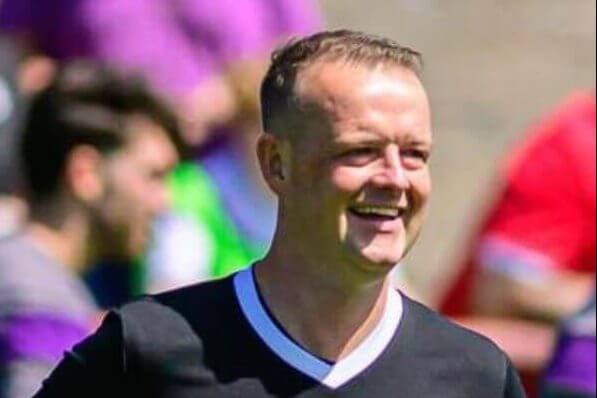
Jamie McCunnie is a player-turned-referee (Jamie McCunnie)
From his experience officiating youth matches, McCunnie says children are often embarrassed by the behaviour of their parents or coaches when incidents turn violent.
“We really struggle to cover the great amount of games at grassroots level,” he added. “Every single game needs referees. So with more people getting involved in football — which is absolutely amazing — you need more officials. The problem we’re having is retention (of officials).”
McCunnie said it was important to note how more incidents are being identified due to the increased use of recording devices, mobile phones and the sharing of footage on social media.
“Where things are being captured on a phone, or social media, it spreads very quickly and there can be no doubt about the offence,” he said. “So it definitely helps, and then by that, you’re also getting other people calling it out and saying it’s unacceptable.”
Recalling his own assault ordeal, McCunnie says he was disgusted by what occurred during that match on a Friday evening.
“You end up in the hospital, getting stitched up, and you’re like, ‘It’s crazy, just for a game of football’,” he says. “I felt disappointed, frustrated and disgusted because I had to go back to my family at night. I had to go to work on Monday (he previously worked in employability) and explain why I had stitches in my forehead.”
Victims of assaults in amateur football are often left with long-lasting psychological effects, scars and trauma.
Joel Collins, a goalkeeper for Avenue Hotspur in Welsh capital Cardiff, tells The Athletic how he has post-traumatic stress disorder and flashbacks following an incident that happened following a match in October 2024. He needed surgery after sustaining a serious injury to his leg. BBC Wales reported that a group attacked players from Avenue Hotspur as they left the changing room, using weapons including baseball bats.
In a separate incident, Calum Couston, 35, suffered a broken jaw after being struck from behind by an opponent in the Greater Glasgow Amateur League in January 2020.
“I got fouled, so it was a free kick,” Couston tells The Athletic. “I walked away and the guy that fouled me basically just forearmed me from behind. I went to the minor injuries unit the next day and they said it was a clean break of the jaw, so I immediately went into surgery. I got a plate in my jaw and that’s eight weeks, no chew. So exactly what it says on the tin.”

Calum Couston had his jaw broken and could not eat solid food for weeks while recovering (Calum Couston)
His attacker, Richard Munro, was convicted of assault and ordered to perform 100 hours of unpaid work, the Scottish Sun reported.
Couston says his main frustration is that Munro — who was not sent off in the match as the referee did not spot the incident — was able to continue playing football. The Athletic contacted the league, but it did not comment.
“The only sentence I would have wanted was banning him from football,” he tells The Athletic. “You can’t have folk just walking around lamping folk. You can’t be doing that.”
Couston continues to enjoy playing football but says he can still feel the plate in his jaw.
To try to crack down on bad behaviour, the English FA says it has introduced a number of measures.
These include a captains-only protocol (only a team’s skipper is allowed to approach the referee to discuss a decision), cooling-off periods, points deductions and ground closures for repeated serious misconduct, as well as the continued use of body cameras by match officials, which was introduced in February 2023. The aim of that is to deter people from screaming abuse at an official.
Light has since left Hemel Hempstead and is now enjoying his football again at Walton & Hersham, who are top of the Southern League South Division in the game’s eighth tier. He intends to try to have his nose finally fixed at the end of the season, in the hope that will sort out his problematic breathing.
“When I see the videos and I think about what that guy did to me, I can’t comprehend why you would do that to someone on a football pitch, because you wouldn’t do it to someone on the street,” he says.
“So why, on the football pitch, they feel like that’s OK I have no idea.”