
When Barcelona won the European Cup for the first time in the club’s history, it was not because of some hypnotic passage of football involving touch after touch from all of Johan Cruyff’s players.
The 1992 final against Sampdoria at Wembley was meandering towards extra time when Ronald Koeman reminded that for all of a coach’s genius and for all of the technical prowess he might have at his disposal, sometimes the best teams deliver historical moments by simply smashing the ball in the direction of the goal.
Koeman’s free kick came at the end of a season in which he scored 16 times from centre-back, a record that meant he finished fourth in the Pichichi (the list of La Liga’s top scorers) despite his position on the pitch.
That his ability from dead balls also contributed to goals for some of his team-mates in a campaign during which Barcelona led domestically shows that even Cruyff understood that if a player was very good at striking over distance, he might as well be allowed to express his talent in that way from time to time.
All these years later, Koeman is in his second spell in charge of the Dutch national team and if he were to win the World Cup as a coach, he would have achieved what Cruyff could not as a player.
Koeman has estimated that the chances of that happening will improve if the Netherlands get their set pieces right at both ends of the pitch.
Before their 2-1 friendly victory over Norway in Amsterdam on Friday, he claimed that over the past five years, the Dutch record from defending such situations is in the top five of European nations, but in attack, the story is not as flattering.
It explains why he is tempted to lean on specialist advice in the United States, where the Netherlands play World Cup group fixtures in Dallas, Houston and Kansas City.
In terms of heat, the schedule could not have been more gruelling for Koeman’s squad, which is why he anticipates the games being slower, with outcomes more likely to be influenced by corners and free kicks.
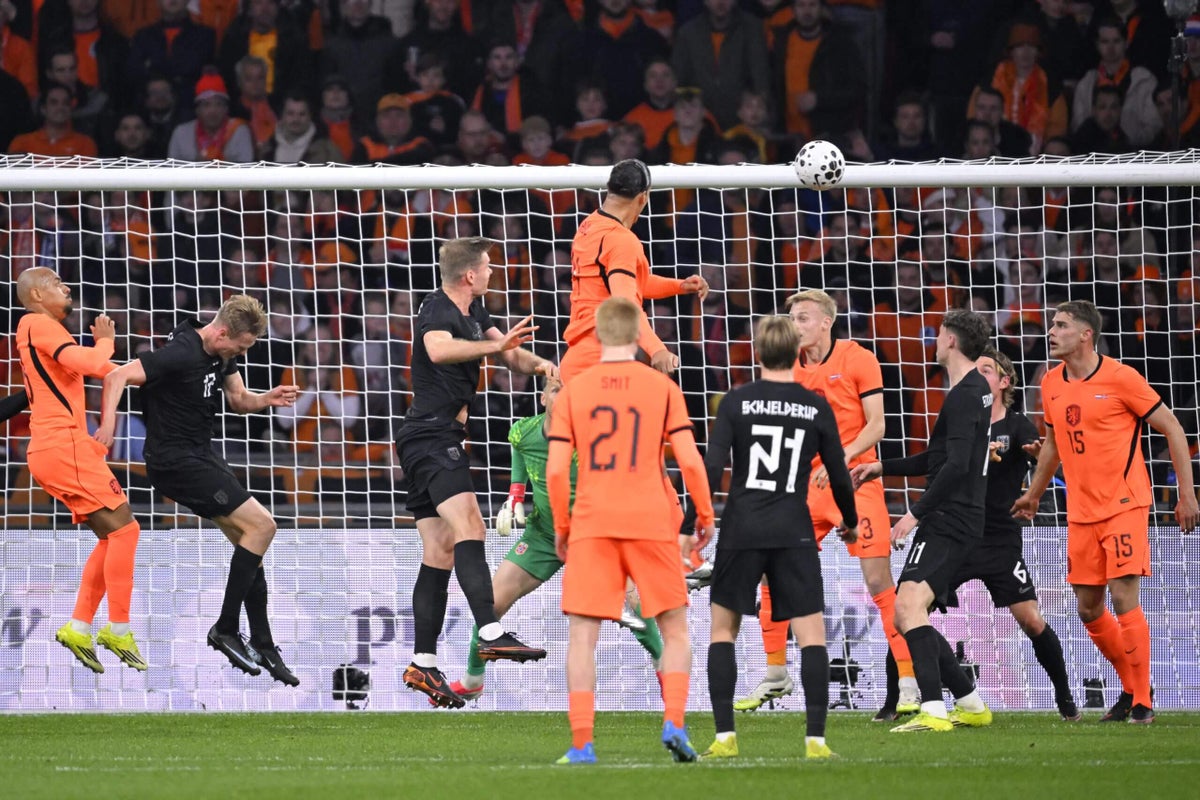
Against Norway, where Cruyff’s death a decade ago was marked in the 14th minute in recognition of his iconic shirt number, the Netherlands gave an indication they are improving in this department because their first-half equaliser came from a glorious Virgil van Dijk header following a perfect delivery by Teun Koopmeiners.
If Koeman has his way, this is what a classic Dutch set piece will look like in the near future.
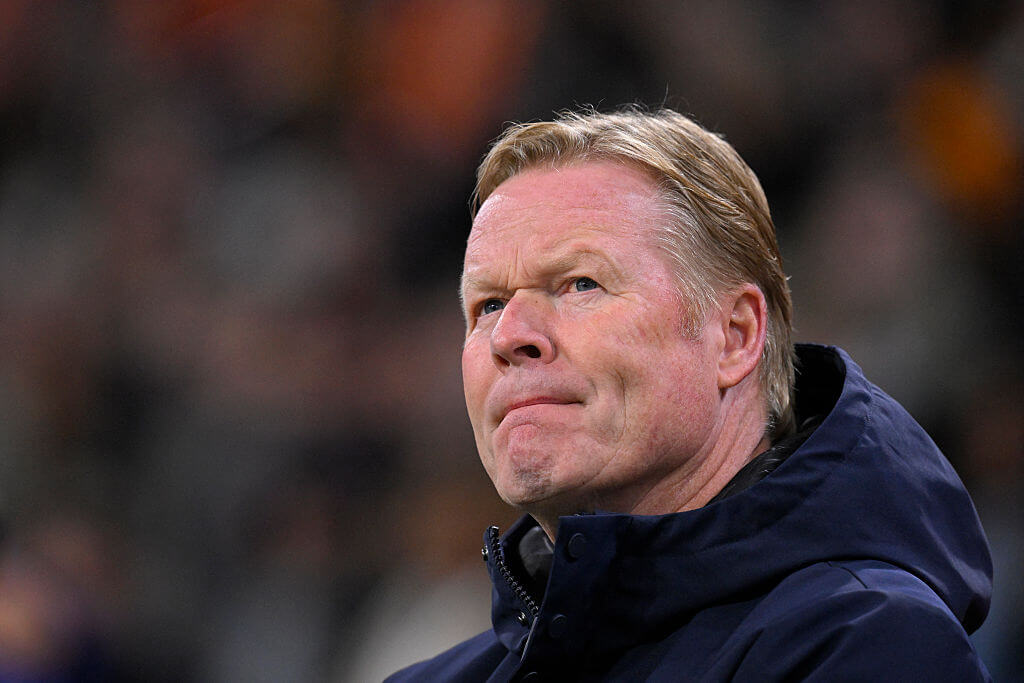
Ronald Koeman is in his second spell in charge of the Netherlands (John Thys/AFP via Getty Images)
The conversation around this facet of the game has taken a negative turn in recent times, particularly in England, where Arsenal seem likely to power their way to the Premier League title by reducing their identity to these supposedly undignified margins.
For Koeman and the Netherlands, the relationship is not quite the same: he has identified a potential problem and he’d like to solve it; the team’s entire existence is not exactly pivoting towards it like it sometimes feels it might be elsewhere.
This version of the Netherlands has some of the best defenders in Europe. It also has one of the more settled midfields, with top-level players in each position. When the conditions are favourable, they convince you with the way they move the ball forward with speed and purpose, as they frequently did against Norway for an hour.
Yet when the ball reaches the attack, there are doubts. Memphis Depay might be the country’s all-time leading scorer, but Koeman’s confidence in him does not appear to be what it once was because of injuries. He was unavailable here. And behind him, the options are not great. It explains again why Koeman has added Ruud van Nistelrooy to his staff, a centre-forward who knew exactly where to be during his own playing career.
There might be another issue at the business end of the pitch. Koeman anticipates there will be more penalty shootouts at this World Cup due to the extra round of knockout games. Any team that reaches the final might have to go through this experience at least twice, according to Koeman, and the country’s record in such situations is dismal, losing seven out of nine since a defeat by Denmark in the semi-finals of Euro 92.
Meanwhile, the two Dutch players who can be relied upon in such moments are currently out of the squad for different reasons. Koeman believes he has better options in midfield than Kenneth Taylor from Lazio, while Steven Bergwijn has not been selected since moving to Saudi Arabia’s Al Ittihad on account of the standard of the league he is competing in.
At the last World Cup in Qatar, the Netherlands were knocked out by Argentina on penalties. During that tournament, Koeman’s predecessor Louis van Gaal was hyper-focused on the issue to the extent he thought he had planned everything, only to eventually realise it might have made the players even more nervous than they would have been ordinarily.
Koeman knows there is a problem due to the missed opportunities of the past, as well as current abilities. The dynamic means he is trying to figure out how to address it without making it bigger than it already is.
These are often framed as the small margins, but Koeman realises they are actually much bigger concerns that deserve his attention because he knows better than anyone else the simple reality that kicking the ball accurately at the goal can lead to glory.