
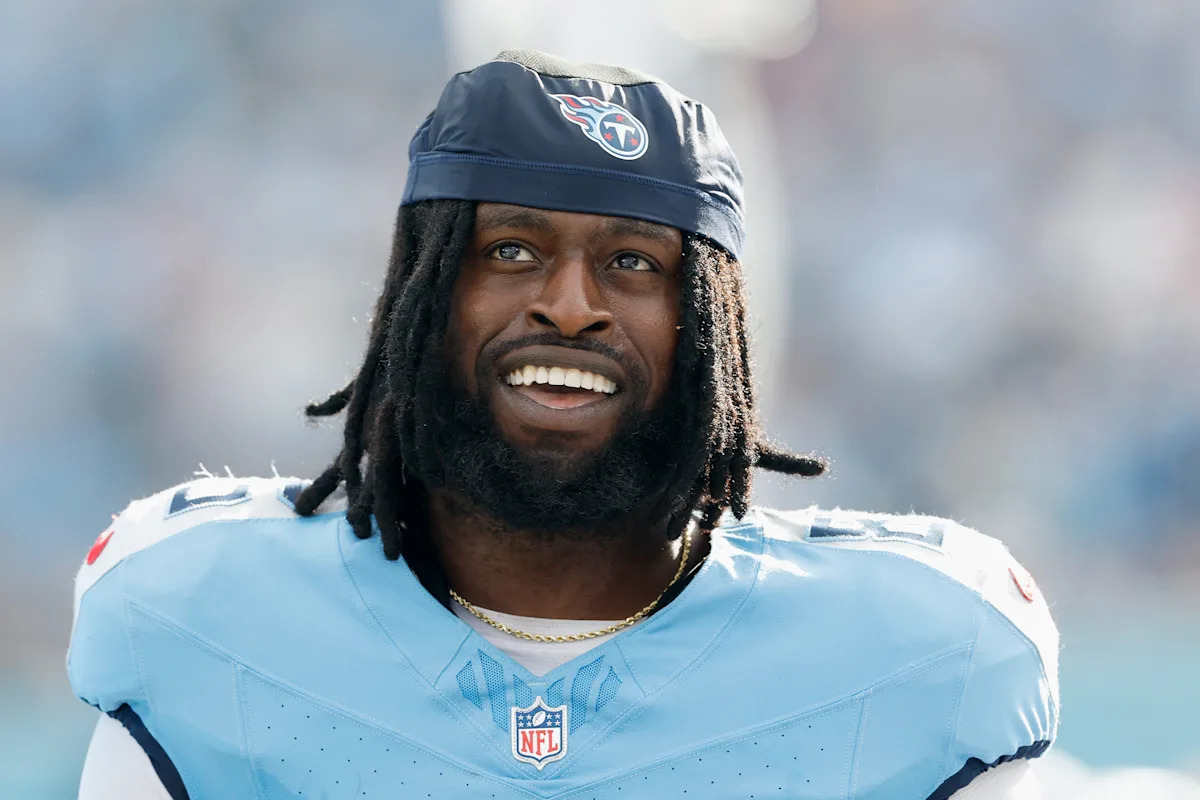
Chig Okonkwo’s 2026 contract details
All contract details have been obtained from Over the Cap
This is a 3-year, $27 million contract; $16.7 million is fully guaranteed including a $7 million signing bonus. The 2026 and 2027 salaries are both guaranteed. It is, in effect, a 2-year, $18m contract with a team option for Year 3 at a cost of another $9m (cash & cap).
Advertisement
At $9m per year average annual value, this contract is tied with Hunter Henry for the 15th highest tight end deal in the NFL per Over the Cap, which feels like it could be a good value for the Commanders.
Receiving
Rushing
Scrimmage
23
TE
17
8
46
32
450
14.1
3
22
50.0
48
1.9
26.5
69.6
9.8
3
2
0
0
0.0
6
0.7
0.1
0.2
35
12.9
452
3
0
4
24
TE
17
11
77
54
528
9.8
1
25
48.1
39
3.2
31.1
70.1
6.9
2
6
0
1
50.0
4
3.0
0.4
0.1
56
9.5
534
1
0
5
25
TE
17
11
70
52
479
9.2
2
19
55.7
70
3.1
28.2
74.3
6.8
1
17
0
1
100.0
17
17.0
1.0
0.1
53
9.4
496
2
2
4
26
TE
17
12
79
56
560
10.0
2
24
45.6
43
3.3
32.9
70.9
7.1
0
0
0
0
0.0
0.0
56
10.0
560
2
0
4
Provided by Pro-Football-Reference.com: View Original Table
Generated 3/29/2026.
No void years
The first thing that leaps off the page at me is that there are no void years on this contract. Oweh’s deal had one void year and Tunsil’s extension reduced his from 3 void years to just 2. The trend in Washington in 2026 seems to be — not total abandonment — but less reliance on void years as the team’s core roster becomes more complete and cap resources are stabilized. I have included a detailed discussion of the team’s evolving use of void years at the end of this contract analysis.
Advertisement
Here’s what Okonkwo will earn per season if he is cut or the contract expires:
This details how much the team has to pay Oweh if they cut him at the end of any of the first three seasons, or if he plays to the end of his contract:
Cut after 2026: $17.35m for one season
per game/workout bonuses: $650k (based on playing 17 games)
2027 guaranteed salary: $7.35m
Cut after 2027: $18m ($9m per season)
$17.35m accounted for in 2026 (above)
per game/workout bonuses: $650k
Contract terminates at end of 2028: $27m ($9m per season)
$18m paid through 2027 (above)
per game/workout bonuses: $650k
Okonkwo’s cash flow:
This details how much the player will receive each year of the contract if he is not cut:
2026: $10m (signing bonus + base salary + per game/workout bonuses)
2027: $8m (base salary + per game/workout bonuses)
2028: $9m (base salary + per game/workout bonuses + roster bonus)
Total cash paid to Okonkw over 3 years: $27m ($9m per year)
$9m per season
As you can see, whether looked at from the team’s perspective or from Okonkwo’s, the deal will pay him in cash either $9m per season for 2 years or 3 years.
Advertisement
When can he be cut?
The Commanders have a clear “off ramp” at the end of the ‘27 season, when they can cut Chig, having paid him $18m for two seasons and taking the ‘dead cap’ accounting entry for $2.33m (dead cap = money paid to Okonkwo in ‘26 & ‘27 but charged in the cap accounting system in 2028 or later).
It is, in effect, a 2-year, $18m contract with a team option for Year 3 at a cost of another $9m (cash & cap).
BONUS: A quick discussion of the use of void years in Washington under Adam Peters, 2024 to 2026
The Commanders have demonstrated three different approaches to the use of void years in free agent contracts, extensions and restructures across the three different offseasons that Adam Peters has been in charge in Washington. Rather than being a disjointed approach, I believe that a strategy of cap & cash management is being unveiled one act at a time that demonstrates a willingness to use void years as a tool to achieve specific cap space targets, without being an element of cap management that is a central feature, like with, say, the Philadelphia Eagles.
Advertisement
The Commanders, who appeared to be adopting the use of void years in a wholesale manner in 2024, added only a single void year to a single contract among external free agents in 2026, adding 5 players from other teams on multi-year deals that don’t include void years at all. The evolving look at what the Commanders are revealing year by year indicates to me that the front office is not afraid of leaning into the use of this tool when it suits the team’s needs, but that there is no intent to leverage cap space by heavy reliance on void years, a la Howie Roseman.
In March of 2024, I wrote this:
This offseason, Adam Peters has signed over 20 free agents (including a few re-signings from the 2023 roster), but only a few of those deals have been for more than 1 year.
Despite leading the league in 2024 available cap space, Rob Rogers has again been aggressive in adding void years to some of the larger free agent contracts signed this month.
The dead cap that will hit the Commanders 2027 salary cap line from the team’s 2024 free agent signings will be about $18.36m.
The 2024 cap savings that results from the use of void years on these 4 contracts amounts to about $6.04m. The team will enjoy the same “savings” against the 2025 and 2026 caps.
As you can see, the team isn’t using void years as a way to wedge in contracts under a tight cap. If you took the $6m in 2024 cap savings away from the current estimated cap space, the Commanders would still have over $40m at the moment, and the projected rollover to 2025 would still be over $20m.
It’s clear that [cap guru] Rob Rogers believes in this concept; it’s also clear that he sold Ron Rivera on the idea, and that now he has a free hand under Adam Peters to continue with it.
A commitment to the use of void years means a commitment to lots of dead cap on the books. Look at this chart:
Is this kind of salary cap management a good idea?
Well, it appears that Adam Peters has signed off on it, and I’ll direct your attention to the long quote from [the linked] article above for the argument in favor of it.
In 2024, four free agents, Armstrong, Luvu, Biadasz, and Allegretti, signed 3-year contracts. Each of those contracts had 2 void years added.
Advertisement
In 2025, the Commanders traded for two players — and they re-negotiated/restructured both deals after acquiring the players. The team added 4 void years to the Deebo Samuel contract, and 3 void years to the Laremy Tunsil deal, shifting ~$26.7m out of 2025 cap accounting and into later years. They also included a void year in Terry McLaurin’s contract extension, and realized a net cap savings of $11.3m in 2025 when they replaced his old contract with the ‘25 extension.
Checking my notes and searching my memory, I can’t recall any other void years in 2025 contracts and extensions.
It was reported that the Commanders ultimately rolled over $23.8m at the end of the ‘25 season. If this figure is correct, the use of void years to shift $26.7m from the Laremy Tunsil & Deebo Samuel contracts was critical — without those machinations, the team wouldn’t have had the surplus cap space it needed to get through the season.
Having shifted over $18m in 2024 and nearly $27m on two contracts (Deebo & Tunsil) in 2026 through the aggressive use of void years, it feels like the Commanders are now (mostly) attempting to limit the use of this tool in 2026.
Advertisement
I say “mostly” because they actually pumped up the amount of cap space stashed in Tunsil’s void years even though they cut from 3 void years to 2, but they have just $5.2m tucked into one other void year in one other contract (Oweh). Also, the restructure of Nick Allegretti’s contract this offseason reduced the dead cap in his one void year from $2.3m in his original contract to $1.84m in the restructured deal.
Taken all together, I think this signals more about the intent to extend Tunsil again than any strong reinforcement of the team’s prior commitment to the increased use of void years in contracts.
The phrase I would use to describe the Commanders’ use of void years in 2026 would be, “highly selective”.
Notably, this offseason, Oweh is the only external free agent deal that has a void year in his deal. Void years were not used for the multi-year contracts given to Okonkwo, Cross, Robertson, Chenal, Settle, (or Wylie), and none of the Commanders’ 1-yr deals in Adam Peters’ tenure has used voids except Deebo’s restructured contract last year, which was a risk-free move that did not change the ultimate 2026 cap position and which, as mentioned earlier, was needed to stay cap-compliant in 2025.
Advertisement
As you review what the Commanders have done in free agency this offseason, I think you’ll see that, outside of the Tunsil extension and the one year in the Oweh contract, the Commanders are utilizing a specific approach to veteran contracts and extensions this year, with this Chig Okonkwo contract following something of a default ‘template’ for the team’s multi-year contract structures, established with the first big Adam Peters extension, given to Sam Cosmi in 2024. As I explore the details of other contracts (Robertson, Chenal, Settle, etc) going forward, I think it’ll become clear that this is, for the moment at least, the preferred template for multi-year extensions and free agent signings from this front office.