
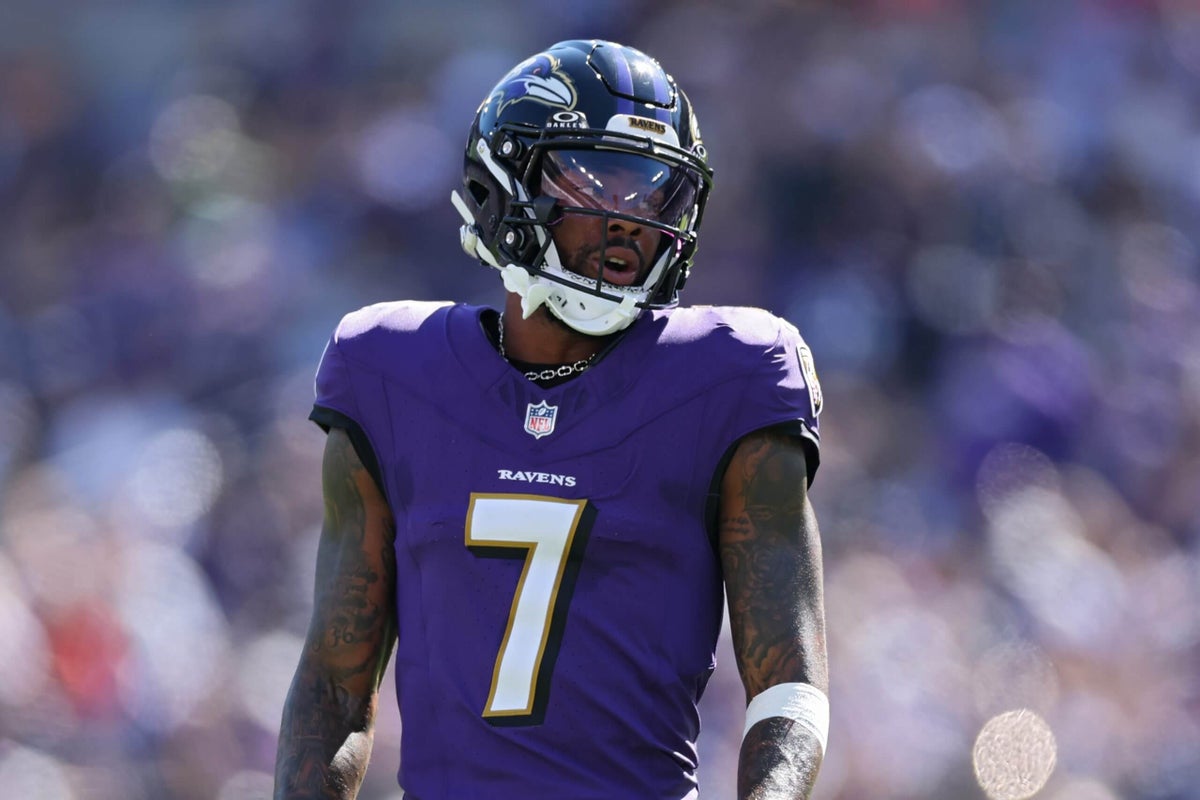
The start of the offseason workout program for the Baltimore Ravens has typically generated little fanfare. It’s an indication that the draft is near and the start of training camp is in the not-so-distant future. But it’s not been viewed as this seminal day on the offseason calendar.
Until this year.
The combination of a new head coach for the first time since 2008 and the need to further distance itself from the painful memories of a highly disappointing 2025 season has created a sense of anticipation throughout the organization for the start of the workout program.
“That’s kind of like the thing we’ve been most excited about, is getting to that point,” Ravens coach Jesse Minter said at last week’s league meeting. “All the work has been geared toward being ready for that day that the guys walk in the door.
“We need to capture that. We want to create an environment where we capture the players, and they feel like they’re getting a lot out of it. We put a lot of time and energy into that, and we’re excited for it to get started.”
Players will be back at the Under Armour Performance Center on Monday. Over the next two weeks in Phase 1 of the offseason program, the focus will be on strength and conditioning. Phase 2 will begin later this month and last for three weeks, giving coaches an opportunity to join the players for on-field workouts and select drills.
Organized team activity practices mark the beginning of Phase 3 and will start for the Ravens the week of May 18, with as many as 10 practices permissible.
All of the workouts are voluntary, but there will be more attention on player attendance this year, with the team getting acclimated to a new coaching staff and different offensive and defensive systems. As usual, much of that attention will be on quarterback Lamar Jackson.
Jackson hasn’t spoken to reporters since the team’s season-ending loss to the Pittsburgh Steelers in early January. In the days that followed, the Ravens moved on from longtime head coach John Harbaugh and offensive coordinator Todd Monken, replacing them with Minter and Declan Doyle.
Last month, the Ravens exercised a restructure of Jackson’s contract to create much-needed salary-cap space, rather than reaching an agreement on an extension, which was the organization’s goal.
Both Minter and Doyle have maintained contact with Jackson throughout the offseason, though Minter was noncommittal last week when asked whether the quarterback planned to attend the voluntary workout program. Jackson was barely present at all at the Under Armour Performance Center.
Plenty of time in the days ahead will be spent discussing Jackson’s whereabouts, but there are a number of other Ravens who would benefit from a strong first impression with the new coaching staff and a productive offseason program.
Rashod Bateman, WR
It’s been another offseason of trade speculation surrounding Bateman, who is coming off an injury-marred 19-catch season. Ravens officials are adamant that Bateman is in the team’s 2026 plans, and they may have no choice. His trade value isn’t high, and the Ravens probably can’t afford to subtract him from a thin receiver room.
The coaching change should invigorate Bateman, who at times seemed frustrated with his role in Monken’s offense. This is a key time for Bateman and the offensive staff to start developing trust.
Mike Green, OLB
The 2025 second-round pick had 3.5 sacks as a rookie and showed at times why the Ravens were excited about his potential. He also showed that he has a lot of room for growth. There will be plenty of attention on free-agent edge acquisition Trey Hendrickson. Green’s development this offseason, though, shouldn’t be overlooked.
The Ravens could still add a veteran edge rusher, and there are plenty still available, including Jadeveon Clowney, Joey Bosa and Cameron Jordan. They could also prioritize the position in the draft. If Green looks ready for a second-year breakout, the need becomes less glaring.
Marlon Humphrey, CB
He’s a four-time Pro Bowler and the team’s second-longest-tenured player. However, for much of this offseason, Humphrey was mentioned as a release candidate. It was widely believed that if he did return, he’d have to take a pay cut. That hasn’t happened, and Humphrey appears set to play his 10th season with the team.
The 29-year-old remains one of Baltimore’s most vital players. When he’s at his best, his energy and big-play ability raise the defense’s level. When he struggles, as he did last year, the Ravens’ defense struggles. The Ravens badly need a bounce-back season from the veteran.
Emery Jones Jr., G/T
The Ravens brought in a starting left guard in John Simpson, but they still haven’t addressed the other guard spot. Last year’s starter, Daniel Faalele, remains on the free-agent market. The Ravens will presumably draft a guard later this month, yet Jones has an opportunity to solidify himself as the in-house leader in that role.
A third-round pick last year, Jones played only 49 offensive snaps in what essentially was a redshirt rookie season as he recovered from shoulder surgery. After a healthy offseason, he should be in a more favorable spot to earn a starting job.
Tyler Loop, K
Other than Jackson, Loop will be the most scrutinized Raven this summer. His 44-yard miss in the season finale kept Baltimore out of the playoffs and capped an uneven rookie season. The Ravens haven’t brought in any training camp competition for Loop, and Minter was noncommittal on whether they will.
Minter reaffirmed the organization’s belief in the young kicker and said that Loop is having a good offseason. He’s going to have to prove he can be trusted, and that can only happen by making field goals in big spots. Still, Loop can immediately show team officials that he’s in a good place mentally and is more consistent with his kicks.
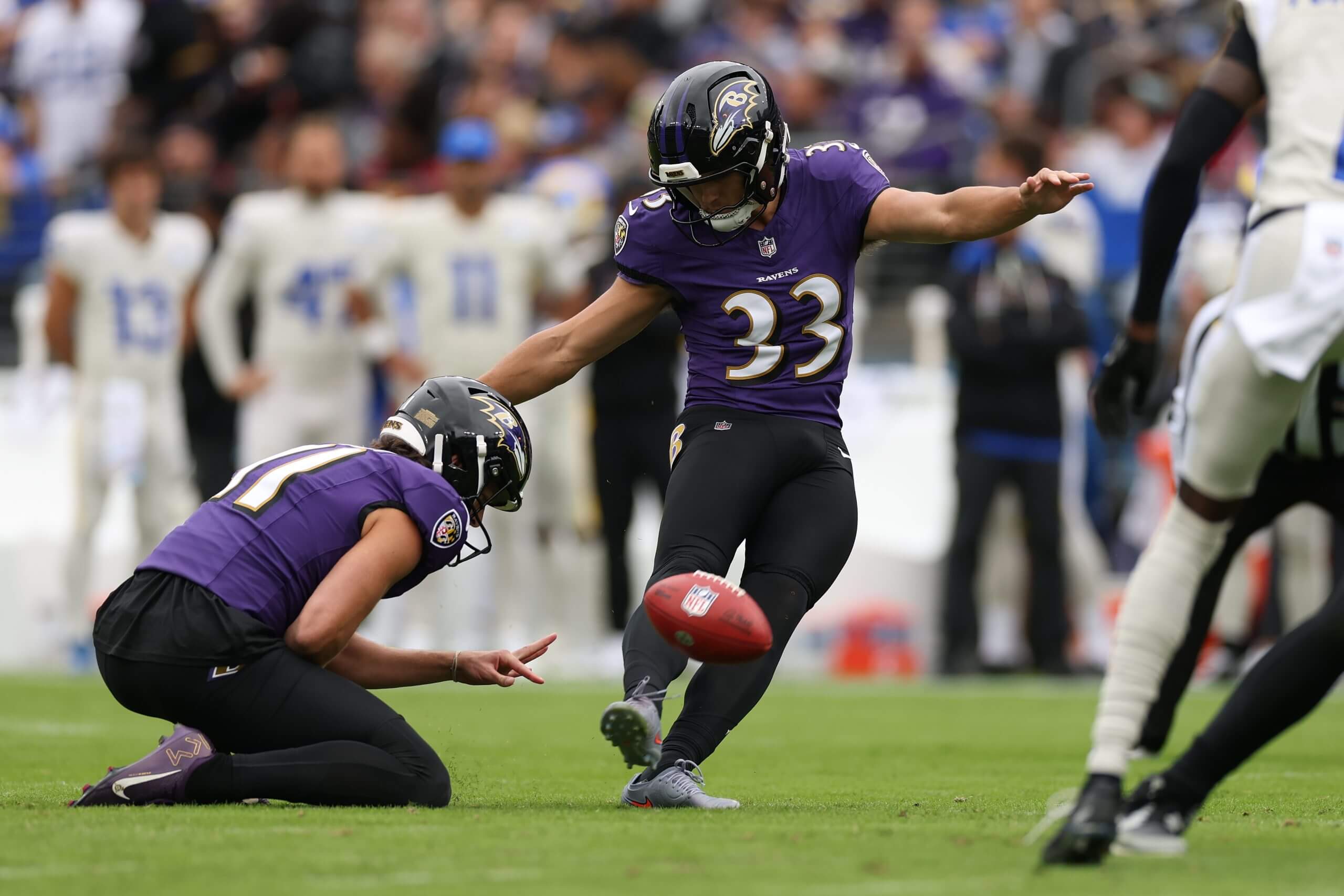
Tyler Loop made 88 percent of his field goal attempts as a rookie, but his miss in the season finale cost the Ravens a playoff berth. (Patrick Smith / Getty Images)
Nnamdi Madubuike, DL
It’s been over six months since Madubuike was last on the field with the Ravens before he sustained a season-ending neck injury. There’s been no definitive word from Madubuike or the Ravens’ decision-makers about his status and whether he has a chance to play in 2026.
Madubuike has been at the Ravens’ facility this offseason, and his social media posts suggest he’s been working out hard. What isn’t clear is whether team doctors have cleared him to play football again. If Madubuike gets to that stage, he’ll automatically be the biggest addition Baltimore could have made this offseason.
Aeneas Peebles, DL
There was plenty of summer excitement last year for the rookie sixth-round pick, but he got buried in the defensive line rotation and played just 71 defensive snaps. He’s become the forgotten man of sorts at a time when the team is lacking in defensive line depth.
The Ravens need more of an interior pass rush. Peebles was drafted to provide that. A new coaching staff will now evaluate whether he can be a useful piece.
Roger Rosengarten, RT
With all of the attention on the Ravens’ poor guard play last year, Rosengarten slipped under the radar. He didn’t have a bad season, but he also didn’t notably build off a promising rookie year.
The Ravens are almost certainly going to have new starters at all three interior offensive line positions. They have to hope that new offensive line coach Dwayne Ledford can get the young right tackle to play with more consistency.
Malaki Starks, S
Starks should have a little more stability alongside him with the addition of Jaylinn Hawkins, and he figures to be more settled in Year 2. A first-round pick last year, Starks had a solid rookie season, yet he’d be the first to acknowledge that he has more big-play ability than he showed.
Minter got a lot out of his safeties with the Los Angeles Chargers, and the trio of Starks, Hawkins and Kyle Hamilton is one of the most talented safety groups in the league. For that group to get to the next level, Starks needs to take another step.
Devontez Walker, WR
If you look at Baltimore’s wide receiver depth chart, Walker is the team’s No. 3 wideout. There’s not even an obvious challenger for that role. However, the Ravens love bringing in veteran receivers later in the offseason, and they also figure to take at least one in the draft.
Walker flashed his potential in his second NFL season, scoring touchdowns on three of his six receptions. Yet, he still has a lot to prove. How much the front office and the new coaching staff believe in the 2024 fourth-round pick will partly determine just how aggressive they are in adding to a very thin receiver group.