
There are two specific moments throughout my 19-year career covering the Miami Dolphins that scarred me, leaving a tattoo-like imprint on my brain that hasn’t left..
Both involve former Miami Dolphins coach Adam Gase as the main character, and neither is flattering to the Los Angeles Chargers’ newly hired pass game specialist.’
The first was my discovery that Gase was adamantly opposed to coaching Lamar Jackson when he was coming out in the 2018 NFL Draft.
Gase seemingly placed Jackson, a two-time NFL MVP, and one of the most dynamic players of this era, in the category of quarterbacks who run too often.
While the Dolphins were shopping for a quarterback to potentially replace Ryan Tannehill, Jackson wasn’t on that grocery list.
Even when Dolphins owner Steve Ross pitched that the Dolphins should select Jackson, a South Florida native when a trade-down offer in the first round of that draft was proposed Gase stood his ground.
Gase won that standoff because then-general manager Chris Grier pledged to “never give a coach a quarterback he doesn’t want,” which is something I often have to remind myself of when debating how the Brian Flores’ Dolphins drafted Tua Tagovailoa fifth overall in 2020.
But that’s another topic to discuss on another day.
The bottom line is that Gase didn’t want to coach Jackson because his style, his knack for scrambling, the belief that the Heisman Trophy-winning quarterback wasn’t a traditional pocket passer, meant Gase would have to alter his offense.
And that was seemingly a dealbreaker.
Gase again proved how rigid he was with his scheme, approach, coaching philosophy, when he lured Jay Cutler out of retirement by getting the Dolphins to pay Cutler $13 million for the 2017 season when Tannehill was sidelined by a knee injury.
Instead of sticking with Matt Moore, who actually led Miami to the wins that sealed the Dolphins’ 2016 playoff berth under Gase, the former Dolphins and Jets head coach preferred a quarterback he could instruct and orchestrate as if playing EA Sports Madden video game.
After experiencing those two missteps in Dolphins history, living through that period of rigidity, I concluded Gase, and many others, don’t want to challenge themselves to become good coaches.
Good coaching adapts to the talent they have.
Good coaching adjusts schemes to it, and alters style of play.
They build an offense and defense around the players they have on the roster, and base it off their skill set.
Good coaches are rare based on my experience.
That’s why there’s usually collateral loss when it comes to regime change in football.
When the Dolphins switched from a 3-4 to a 4-3 scheme — going from Cam Cameron era to the Bill Parcells era, and then back again going from Joe Philbin to Gase, or Gase to Brian Flores — players get lost in the transition.
Talent slips to through the cracks.
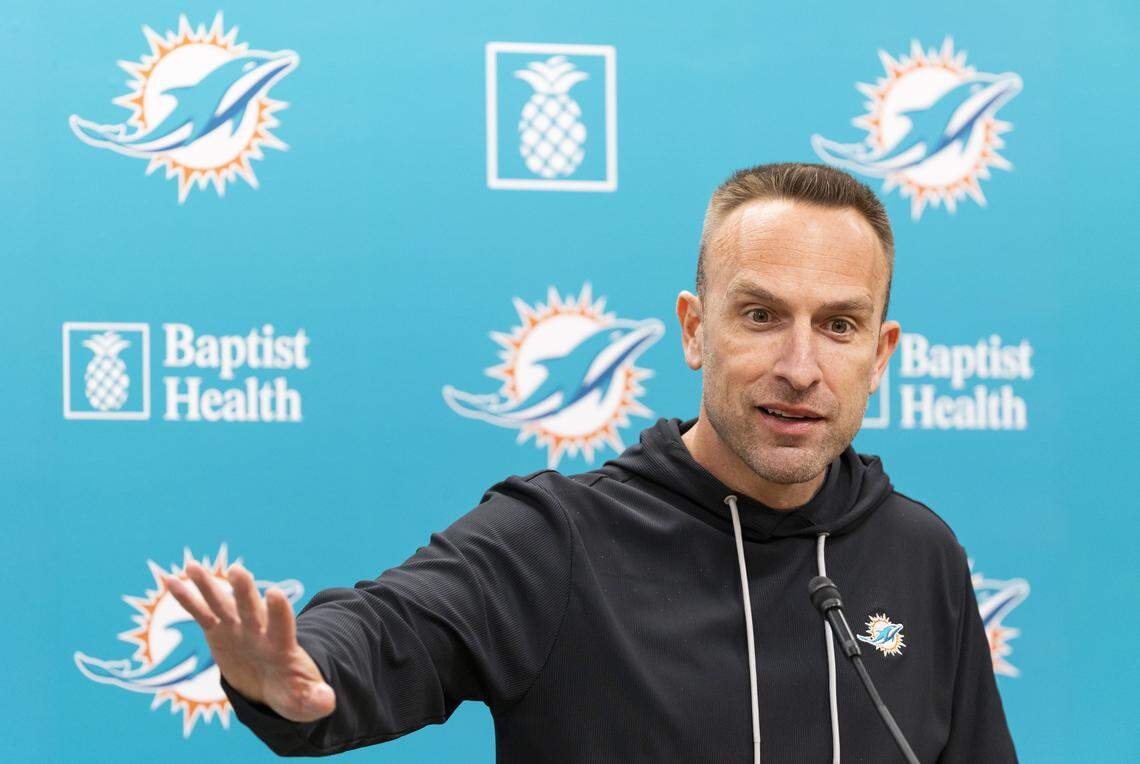
So I asked Jeff Hafley, the Dolphins’ new head coach, who plans to take a hands-on approach to running Miami’s defense, calling plays, about his approach, and received some encouraging words.
“If I have to change based on who our roster ends up with, then I’ll change, but I’ve got no problem doing that. You’re going to see elements of both regardless, you just might see different jersey numbers and people doing it. It’s like – here’s another example. You want to call it a 4-2-5 or a 4-3? What’s the difference? You’ve got a nickel out there,” Hafley said. “Well, what happens when I put in a big nickel, a safety to play the nickel? Is that different? It’s all the same. It’s just jersey numbers and people, so I don’t get too caught up in all that stuff.”
Sounds like someone actually wants to be a good coach, and work with the talent he’s given.
Let’s just say that was refreshing to hear, and soon enough we’ll learn if Hafley’s more than just talk.