
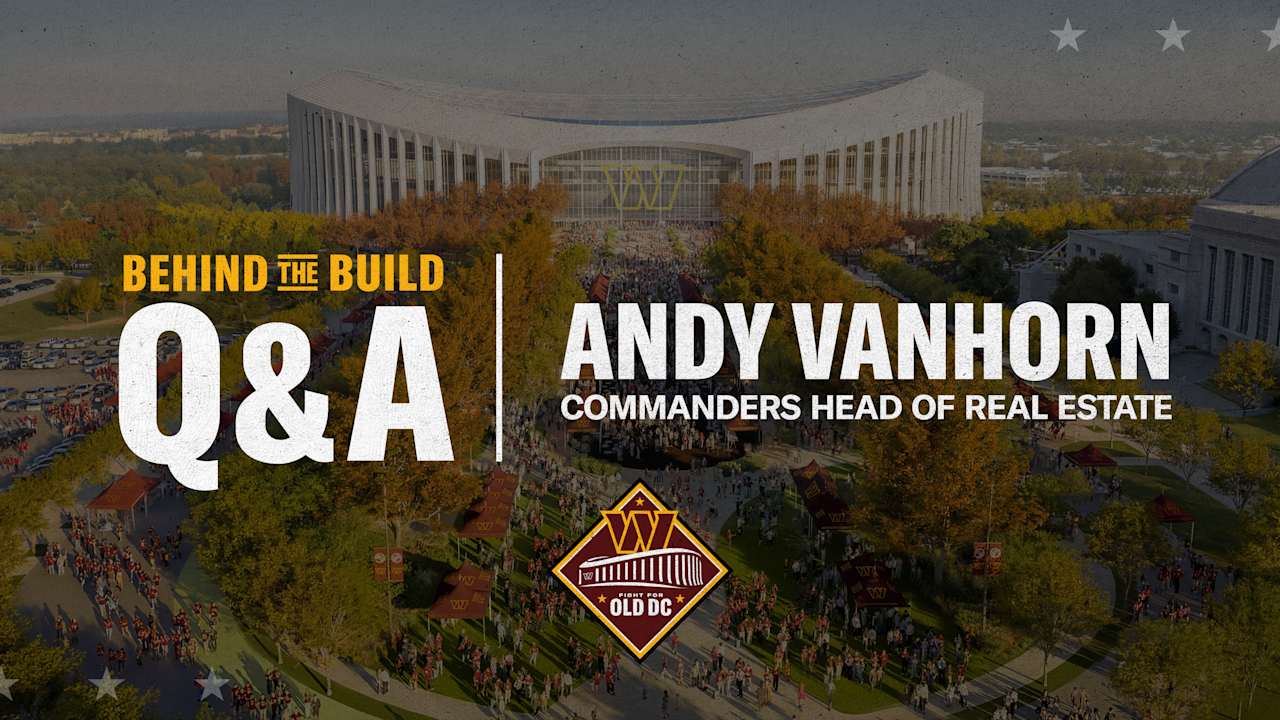
Q: The first look showed a stadium that fits right in with its surroundings. Can you walk us through how the venue’s design is uniquely D.C.?
A: “We thought about some very important things. One being the field runs east west, which is an extension of the National Mall — the National Mall runs directly through from the Lincoln Memorial, through the Capitol, through our site. Aligning the field and the entries of the stadium and our big windows along that axis felt very D.C., very important and very monumental.
The stadium also kind of has that dip in the middle, which does bow to the Capitol and has that respect for its location with the Capitol being the most important building on that axis. And the stadium being a clear icon there in the form of light and shape, and its colonnade, but it is clearly deferential, which I think is really an incredible movement.”
Q: In addition to the old RFK Stadium and the city of D.C., what else or where else are you drawing inspiration from for the design?
A: “We certainly are visiting lots of the newer stadiums in the league, from SoFi to Minneapolis to Atlanta. I think inspiration comes in many forms. We’re thinking about how to best handle parking in an urban environment. Atlanta does a great job of that. When it comes to lighting and access from a roof system, Minneapolis and SoFi are best-in-class. Dallas’ concourse, for example, has very convenient access for fans. I think it’s really a blend of all those best factors.
We’re doing an incredible amount of diligence when it comes to questions such as, ‘How do you think about how the fans flow into the stadium?, ‘How do fans experience the stadium around it? How does the stadium work on a non-gameday?’
Most of those stadiums still sit in a sea of parking or in an isolated area. Our stadium will be integral to daily life. We envision the landscape around the stadium being running paths and biking paths, and that being a very close up approach unlike a stadium kind of on an island. We were also looking at Chase Arena over Super Bowl weekend when we were out in San Francisco and how that integrates directly into the neighborhood. It was a really helpful example of how we want to make our retail flow and how we want people to be able to access the grounds and the stadium proper.”
Q: From the outset, the team has been very vocal about developing a site that has lasting value for District residents. With features like a transparent roof, what is the vision for transforming the 180-acre campus into a destination that goes beyond Commanders gamedays?
A: “Of the 180 acres, there’s about 90 acres total of development. The balance is open space primarily and of that 90 we control about 75 acres. The stadium sits on a portion of that, but the balance really is intended to be a vibrant front door and entertainment district with live entertainment and other great anchors such as retailers, movie theaters, a really great food and beverage scene with restaurant and bar options along the main street, among other things.
And then we have the festival plaza. As we think about that, that really tries to bring that mix of hotels, retail, anchor uses and housing in to make sure that there is a vibrant community 365 days a year. The stadium’s really only one leg of the stool. We do need this mix of great hospitality uses, and this mix of great retail uses to really make sure the site works year round, and that residents want to be there, and that there’s great options for jobs and things like conferences. And so, when we think about the mix of uses on the site, we do need to make sure that we are hitting on all cylinders there.
Then we have the riverfront district, which is down near the water — a little bit quieter, a lot more housing. We have a goal of delivering 6,000 units of housing. Thirty percent of those are affordable, and so we do think about that great diversity of housing opportunity for people as well, so that there is a broad range of access for everyone.”