
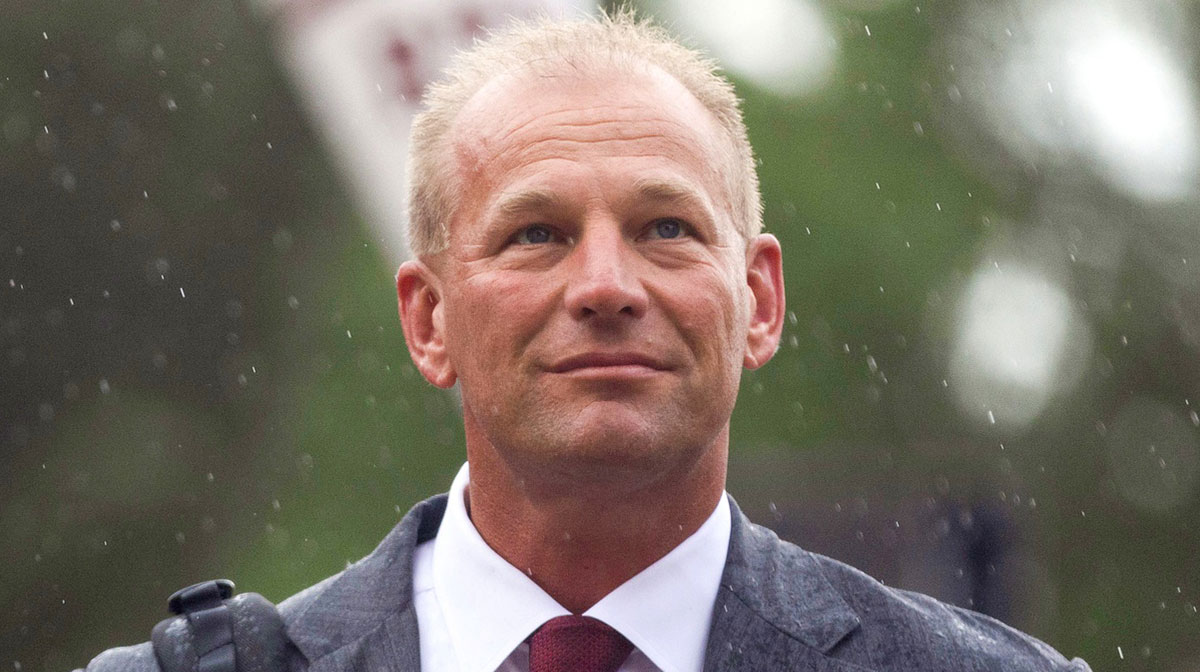
In Tuscaloosa, patience is rarely a virtue—it’s a calculated risk. Alabama football‘s decision to extend head coach Kalen DeBoer after an uneven 2025 season reflects both. This was not a reflexive reward for incremental progress, nor a blind leap of faith. It was a strategic bet rooted in trajectory, market realities, and the daunting shadow of Nick Saban.
The numbers alone demand attention. On Wednesday afternoon, the Crimson Tide finalized a seven-year contract extension with DeBoer worth $12.5 million annually, running through the 2032–33 season. The deal adds two years to his original agreement and includes a structured buyout—$10 million through January 2027, decreasing to $8 million and then $6 million. It’s a significant commitment, but not an inflexible one. Alabama secured continuity without sacrificing long-term flexibility—a hallmark of forward-thinking programs in a volatile coaching market.
On the field, DeBoer has delivered measurable progress. The Crimson Tide improved from 9–4 in 2024 to 11–4 in 2025, compiling a 20–8 record across his first two seasons at the helm. More importantly, Alabama went 7–1 in SEC play in 2025, reestablishing itself as a legitimate conference force. Wins over ranked opponents—including a stunning 24–21 victory at Georgia—signaled a program regaining its competitive edge. Yet the season’s defining moments also revealed its limitations. Alabama’s loss to Georgia—a 28–7 defeat in the SEC Championship Game—followed by a jarring 38–3 loss to Indiana in the College Football Playoff quarterfinal exposed a clear gap between contention and dominance.
That tension defines the extension. Alabama returned to the Playoff and proved it could navigate a full SEC slate with authority. But it also showed it is not yet the overwhelming force it once was when the stakes peaked. For most programs, that arc would represent unqualified success. At Alabama, it invites scrutiny.
Context matters. DeBoer inherited one of the most pressurized transitions in college football history, stepping in immediately after Saban’s departure in 2024. Year one was uneven, as expected. Year two, however, brought sharper execution, improved cohesion, and a clearer identity on both sides of the ball. Depth issues and late-season inconsistency lingered, but the overall trajectory pointed upward. Alabama’s leadership evaluated not just results, but direction—and saw momentum rather than stagnation.
Equally influential was the external landscape. In today’s market, programs must actively secure stability—they can’t afford to assume it. DeBoer, fresh off a CFP playoff appearance with a rising profile, would have drawn significant interest had Alabama hesitated. Allowing him to linger mid-contract risked speculation, leverage, and potential disruption. By acting decisively, Alabama sent a message to recruits, donors, and competitors—the post-Saban era will not be defined by uncertainty.
At its core, this extension is a calculated bet on both risk and foresight. If DeBoer continues to produce double-digit wins, maintain elite recruiting, and turn CFB playoff appearances into championships, the deal will look prescient. But if Alabama settles into a pattern of being consistently good—yet rarely great—the financial safeguards will become more than fine print.
For now, the evidence supports the investment. DeBoer has elevated the program’s floor, restored its relevance in the SEC title race, and positioned the program as a credible playoff contender. Extensions in Tuscaloosa are not about rewarding the past, they are about securing the future. Given the trajectory, the market, and the stakes, Alabama’s decision reads less like a gamble and more like a necessary, calculated move to stay in college football’s elite tier.
In Tuscaloosa, patience is rarely a virtue—it’s a calculated risk. Alabama football’s decision to extend head coach Kalen DeBoer after an uneven 2025 season reflects both. This was not a reflexive reward for incremental progress, nor a blind leap of faith. It was a strategic bet rooted in trajectory, market realities, and the daunting shadow of Nick Saban.