
Habituation to noise is the process by which the brain learns to ignore persistent sounds, such as the hum of a fridge or a whirring fan. It is a huge relief to sufferers of tinnitus and it helps the rest of us fall asleep in noisy hotel rooms.
But there are downsides. We might learn to nod off to the sounds of the city but it does not make that sleep particularly restorative, and we would not want to become so used to something annoying that we simply feel helpless to do anything about it.
Succour or surrender — I wonder which of these outcomes English football has reached regarding the “ticking clock” Independent Football Regulator (IFR) chair David Kogan has been talking about for the past year.
For those of you who have already become habituated, Kogan’s clock is marking the passage of time between the last agreement the English Football League and Premier League made on how to share some of the latter’s huge central revenues, which happened in 2019, and its long-awaited replacement, the so-called “New Deal for Football”.
But it is also counting down to the moment when a negotiated settlement becomes impossible and the leagues will have to accept one imposed on them. That ticking is not the type of background noise the English game should be ignoring. It is a call to action.
As of today, the two sides look set to roll over that 2019 deal for an eighth year — a compromise nobody is enjoying.
Here, The Athletic answers the key questions.
Why does the Premier League give any of its money away?
I have clearly been talking to too many Premier League club executives, as this is how they often refer to the income that the top division in English football’s historic and uniquely deep professional pyramid makes these days.
Thanks to a combination of (in no particular order), the game’s storied past in Britain, the Greenwich meridian, the global dominance of the English language, advances in television technology that started about 40 years ago and have not stopped, clever marketing, mistakes made by rival leagues and some good choices, the upper tier of football in England has become the most popular domestic league in what is the world’s most popular sport. As a result, its annual media revenues have grown by a factor of 400 since 1992, when it broke away from the other three divisions of the Football League to become the Premier League.
Before we go any further, it is important to note that break in 1992 created two separate companies, enabling the new one to negotiate its own broadcast and commercial deals while removing the obligation to share the benefits of them with the old one. It did not create a North American sports-style closed league, though. Promotion and relegation continued and 51 different clubs have played in the Premier League over the past 34 years — 31 of these are now scattered across the three divisions of the English Football League (EFL). All helped to make the Premier League the global giant it is today.
Before the 1992 split, what eventually became the EFL distributed its £11million-a-year deal with domestic broadcaster ITV on a 50/25/25 basis, with the 22 clubs in the old First Division sharing half the money, the 22 in the Second Division taking a quarter share, and the 48 across the Third and Fourth Divisions getting the rest. So, half of an already small number was sent down the chute from the elite.
Post-divorce, the First Division became the 20-team Premier League and kept its new £60million-a-year deal with Sky Sports to itself, which it was still doing 15 years and three bumper media-rights deals later in 2007, when EFL chairman Sir Brian Mawhinney asked his Premier League counterpart Richard Scudamore for help. By that point, the Premier League was making about £900m per season from its domestic and international broadcast deals.
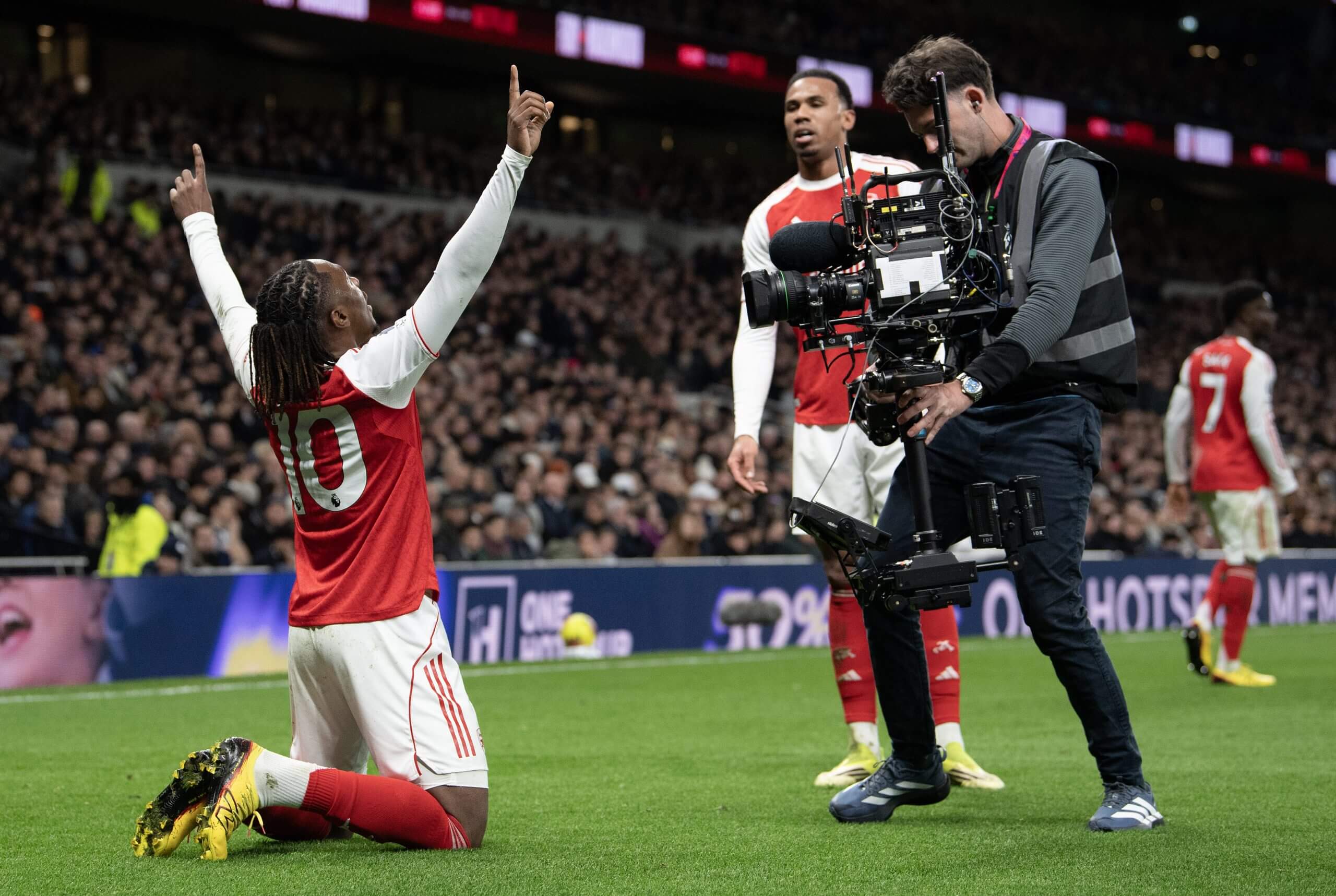
The Premier League enjoys lucrative broadcast deals (Visionhaus/Getty Images)
Shorn of its biggest attractions, the EFL’s TV deals had not done quite so well and what had once been a bridgeable gap for clubs moving between England’s top two divisions had become a chasm.
To be fair, the Premier League was aware of the financial difficulties a relegated club could face in the second-tier Championship, so had been dishing out parachute payments to cushion their change in circumstances since 1992. By 2006, these payments had grown to £7.5million per relegated team and they were entitled to them for two seasons. The Premier League was also giving away some money each year to help EFL clubs with their academies.
What Mawhinney and Scudamore agreed was the first “solidarity” package: a three-year deal worth £90million to the 72 clubs not in receipt of parachute payments. This sum was made up of about £10m a year for EFL academies and community programmes, approximately £10m per year to be divvied out between the clubs and another £10m or so annually in unclaimed parachute money thanks to that insurance scheme’s yo-yo effect.
Mawhinney, a former UK government minister, said his clubs were “very grateful” for the “generous gesture” and suggested the Premier League had realised that a healthy EFL was good for business. Others, however, noted that the total package for the non-parachute EFL clubs amounted to just over one per cent of the Premier League’s yearly broadcast earnings.
Even so, it was a start and further, more generous deals were agreed in 2010, 2016 and 2019, the latter being when the current distribution regime was set.
OK, so how much does the Premier League share now?
Next season, the Premier League’s central commercial and media rights deals will hit £4billion ($5.4bn) for the first time. Almost 80 per cent of that will be shared between the 20 member clubs.
The league’s operating costs account for about six per cent of the total, almost £220million, with a further one per cent set aside to invest in projects to ensure the league’s continued growth.
Before you leap into the comments section, yes, the legal bill has grown, but the Premier League has also taken its international media and distribution business in-house, ending a 20-year outsourcing arrangement with marketing giant IMG. It also runs regional offices in Beijing, Mumbai, New York and Singapore, funds the Premier League Summer Series competition and is about to start its own streaming joint venture, also in Singapore.
We then get to what it will share with the EFL, which is about £225million in parachute payments and in the region of £150m in solidarity payments. If you add those two pots together, you get to almost 10 per cent of the pie.
That leaves three per cent for the “wider game”, which breaks down as:
£36million for 106 Premier League, EFL and National League (fifth tier) club community programmes
£25million to the Professional Footballers’ Association, and £24m for grassroots facilities charity the Football Foundation
£14million for improvements at non-League and women’s clubs via the Premier League Stadium Fund
£5million for the National League, and a similar sum for the Women’s Super League
£2million to the League Managers’ Association and then smaller grants to a variety of charities, including the Football Supporters’ Association, anti-discrimination body Kick it Out, and disability group Level Playing Field.
When you tot all it up, the Premier League’s contributions to the greater good will come to more than £130million next season.
In terms of money from its central funds, that is it — approximately 13 per cent shared with the rest of the game, almost half of it in parachute payments — but the Premier League likes to point out that its largesse does not stop there.
A levy of four per cent on all transfer fees paid by EFL and Premier League clubs raises about £125million. This money is split between the Professional Game Youth Fund, which distributes £80m to more than 90 clubs with elite academies, a £30m contribution to players’ pensions and £15m to support a variety of development programmes. It probably will not shock you to learn that Premier League clubs contribute more than 90 per cent of the total raised by the transfer levy.
Football DataCo is a more genuine EFL/Premier League joint venture and is the company which collects and sells British football’s fixture lists, results and statistics to betting firms and media outlets. The money it makes, which is approaching £100million a year, is shared between the Premier League, EFL and the Scottish pro leagues on a 45/45/10 basis. Next season, it should contribute about £40m to the EFL’s coffers. Some Premier League clubs think they are being too generous, as Football DataCo’s improved results have been driven by the rise in gambling, and more people are betting on their matches than on those of EFL and Scottish clubs.
Which brings us to the League Cup, the knockout competition run by the EFL since the 1960s. Along with its three annual play-off finals, the latter stages of what is currently called the Carabao Cup for sponsorship reasons are the most valuable items of broadcast inventory the EFL owns, although that depends on the continuing participation of English football’s most famous sides.
Most of the time, that goes without saying, as most Premier League clubs and their fans value the chance to play in a Wembley final, win a trophy and guarantee themselves European football the following season. But when negotiations between the leagues get fraught — and they have been very fraught — you will hear suggestions that the EFL is not grateful enough for those big Wembley occasions each February or March, usually featuring Premier League royalty.
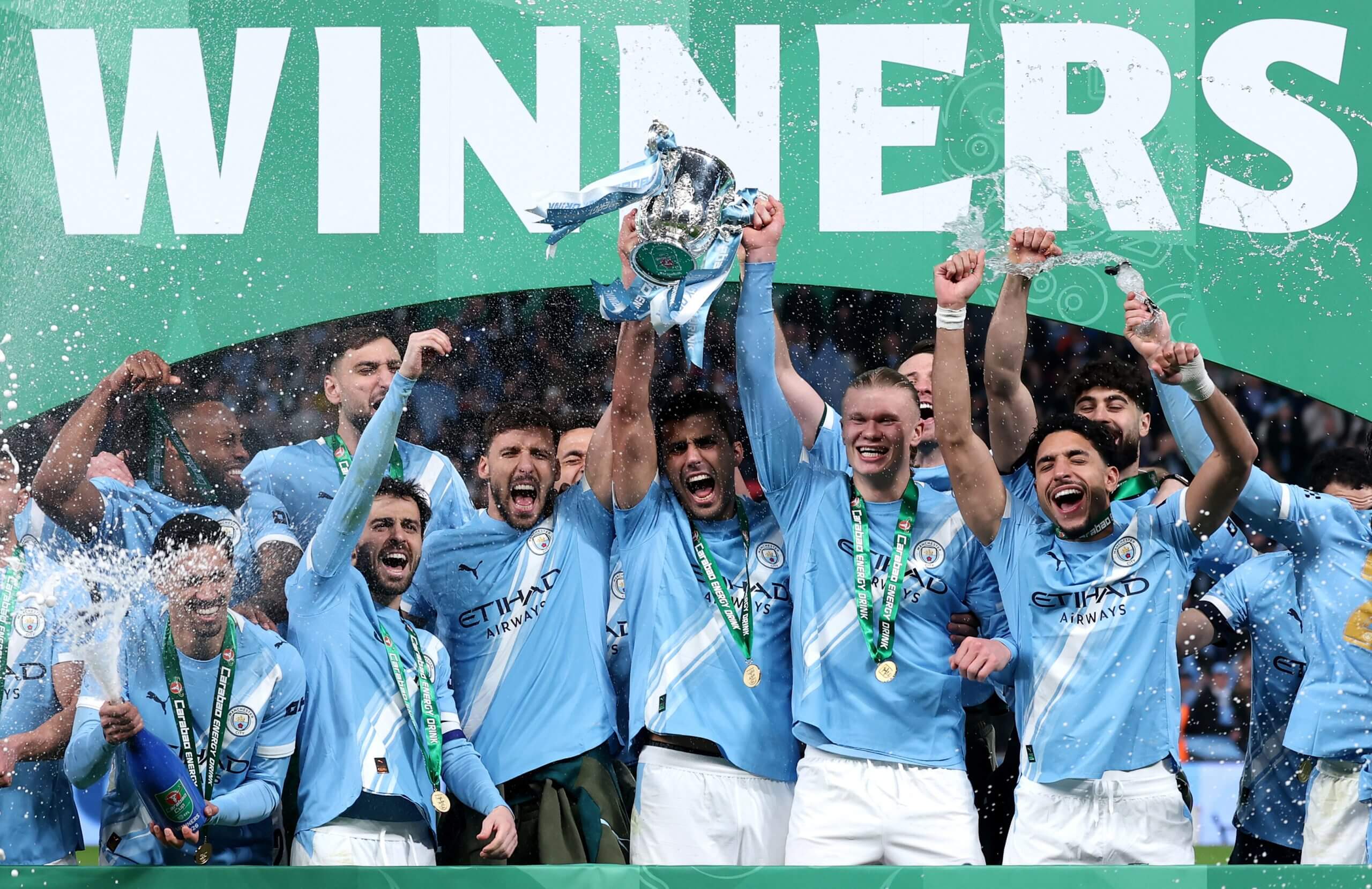
Premier League clubs naturally dominate the EFL-run Carabao Cup (Julian Finney/Getty Images)
If we just park that beef for a moment and total up how much money the Premier League sends directly or indirectly to the EFL, we have about £150million in solidarity payments, £45m for youth development, £40m via Football DataCo and £20m for community schemes via the charitable fund. This adds up to circa £255m even without the Carabao Cup, which is about what the EFL makes from its own central broadcast and commercial deals.
And this, of course, does not include parachute payments, although they are a point of contention that makes all the other arguments seem like minor misunderstandings.
How much more money do the EFL want?
Don’t worry, I will come back to parachute payments very soon, as they are probably the main reason why Kogan’s clock still ticks, but let’s focus on the case EFL chair Rick Parry has been making since 2020, which was almost as soon as he was appointed to that job.
Parry, who was the Premier League’s first CEO in 1992, believes the best way to cut EFL clubs’ chronic loss-making, thereby reducing their reliance on handouts from their owners, is to increase solidarity payments and halve the “cliff-edge” gap between the Premier League and Championship. He would do this by pooling the leagues’ media revenues and then distributing 25 per cent of the total throughout the EFL.
Furthermore, he would reintroduce a merit rake, or ladder, to the Championship, League One and League Two, so that the top teams at each level would receive more central money than the bottom ones, narrowing the gaps between the divisions. And, finally, he would tighten the EFL’s cost-control regimes to apply some downward pressure on players’ wages.
Oh, and he would scrap parachute payments entirely.
If we go through those ideas in turn, the Premier League has, by and large, acknowledged that it probably should increase solidarity payments. It also does not mind the idea of pooling the leagues’ broadcast rights, although it is not entirely convinced that joining forces will enable the Premier League’s world-beating sales team to extract much more value from the EFL’s rights than the EFL itself has already achieved. Worth a go, though.
But as far as I can tell, most Premier League clubs believe Parry has lost his marbles if he really believes it is going to jump from sharing a sum equivalent to about 10 per cent of the leagues’ “net media revenues” today to a quarter of them tomorrow — they see his 25 per cent as an opening gambit in a haggling contest they expect to win.
They agree with him on merit rakes, though. They just believe the Championship’s should be much steeper than their own, which is currently 1.8:1. This means the team who finish top of the Premier League earn about 1.8 times more in central funds than the last-placed side. It is one of the flattest distribution ratios in European football and is one of the Premier League’s better decisions, as it has undoubtedly helped to make the league more competitive from top to bottom than its continental counterparts.
They also agree that the EFL should copy the Premier League’s recent move to financial regulations which limit the amount each club can spend on their first-team squads via a “squad cost ratio (SCR)” of 85 per cent of their respective annual revenues. From next season, this model will replace the old “profitability and sustainability rules”, PSR, which tried to keep a lid on spending by linking it to each club’s profit/loss numbers over a three-year period. The EFL operates a similar system in Leagues One and Two, but is still mulling over its options in the Championship.
Where there is zero agreement, though, is on parachute payments.
If we go back to Parry’s pitch, it was based on the observation he made about the 2018-19 season, when the last-placed team in the 20-strong Premier League, Huddersfield Town, earned £88million more in central distributions than Championship title winners Norwich City, who were not one of that season’s six parachute clubs. Parry pointed out that if the Premier League agreed to his 25 per cent plan and both divisions used a 2:1 merit rake, the gap between 20th and 21st on the English football ladder that season would have been £42m, doing away with the need for parachute payments entirely.
The Premier League strongly disagrees.
OK, so what is the Premier League’s counter-proposal?
Is this a trick question? Because, strictly speaking, the Premier League has not made a counter-proposal yet — not one its own clubs have formally agreed, anyway.
If you are looking for a simple reason as to why no deal has been reached yet, that is the best bet. The Premier League teams have not yet been able to decide among themselves as to how much they should offer, with what strings attached and, most crucially, how they split the bill.
They, however, would say that part of the reason they have not yet made a formal offer to Parry is that they do not believe he has been negotiating in good faith.
Baroness Karren Brady, who announced her resignation as West Ham United’s vice-chair this week, is not the only Premier League club executive to make this argument but is the only one who did it in the House of Lords during last year’s debate on the bill which created the IFR.
The narrative is that Parry has gone into every round of talks saying he was willing to do a deal with the Premier League but, with his next breath, adding that he intended to unpick it as soon as possible by triggering the so-called “backstop”.
Confused? Yep, it is all rather murky, but the “backstop” is Kogan’s most powerful weapon — the one he keeps saying he really does not want to use — as once triggered, it gives the regulator the power to decide which of the leagues’ distribution proposals best meets the IFR’s statutory commitment to ensuring financial sustainability.
The subtext here is that the Premier League has clearly been worried that the IFR will prefer whatever the EFL presents, and Parry has been happy to wait. Therefore, there was no point doing a deal as the IFR will only rip it up.
For what it is worth — and I have checked the transcripts of his appearances in Parliament and his letters to government — Parry has never said he intends to trigger the backstop, come what may. In fact, he has repeatedly said he would like to strike a deal ASAP because his clubs are losing money. You will have to be the judge of whether he really means that and the Premier League is being paranoid, or he is too cute to show his hand and the Premier League is right to distrust him.
Now that we have got that cleared up, let me explain the three draft proposals the Premier League has discussed with the EFL.
The first was the existing deal plus three per cent of the leagues’ pooled media revenues, which would have delivered an extra £75million in solidarity payments to the Championship, just over £3m per each of its 24 clubs, plus £20m for the 48 teams across Leagues One and Two, to spend on infrastructure improvements.
Parachute payments would be renamed “financial stability payments” (FSPs) and slightly reduced to £45million in the first season after relegation, £35m in the second and, for clubs who had spent more than one campaign in the Premier League, a year-three payment of £15m. Finally, there should be a merit rake of 3:1 in the Championship.
This proposal did not get a particularly warm reception, so the Premier League then came back with something better: a four per cent “net media revenue” boost on the 2019 deal that would bring in an extra £99million in solidarity for the Championship, £8.3m for League One and £4.2m for League Two, plus £13.5m in ring-fenced infrastructure grants for those bottom two divisions.
There were no further concessions on parachute pa… sorry, FSPs, but the Championship merit rake was reduced to 2.4:1, with 1.7:1 recommended for League One and 1.35:1 for League Two. This deal, like the first, would last six years and would have been worth an extra £125million a year in payments to EFL clubs.
Then, in late 2023, a final proposal came. This one was 14.75 per cent of the net media rights, with 4.56 per cent ring-fenced for FSPs, which would be used to “top up” the FSP recipients’ distributions so they would total £45million for the most recently relegated, with year-two recipients getting £35m. This one also came with an immediate solidarity sweetener of £88m for the EFL to share out in its usual 80/12/8 divisional split. Overall, this deal would have been worth an extra £145m a year to the EFL once it got properly up and running.
But, as we know, it was never formally offered, which is a shame, as the EFL clubs would very probably have voted to accept it.
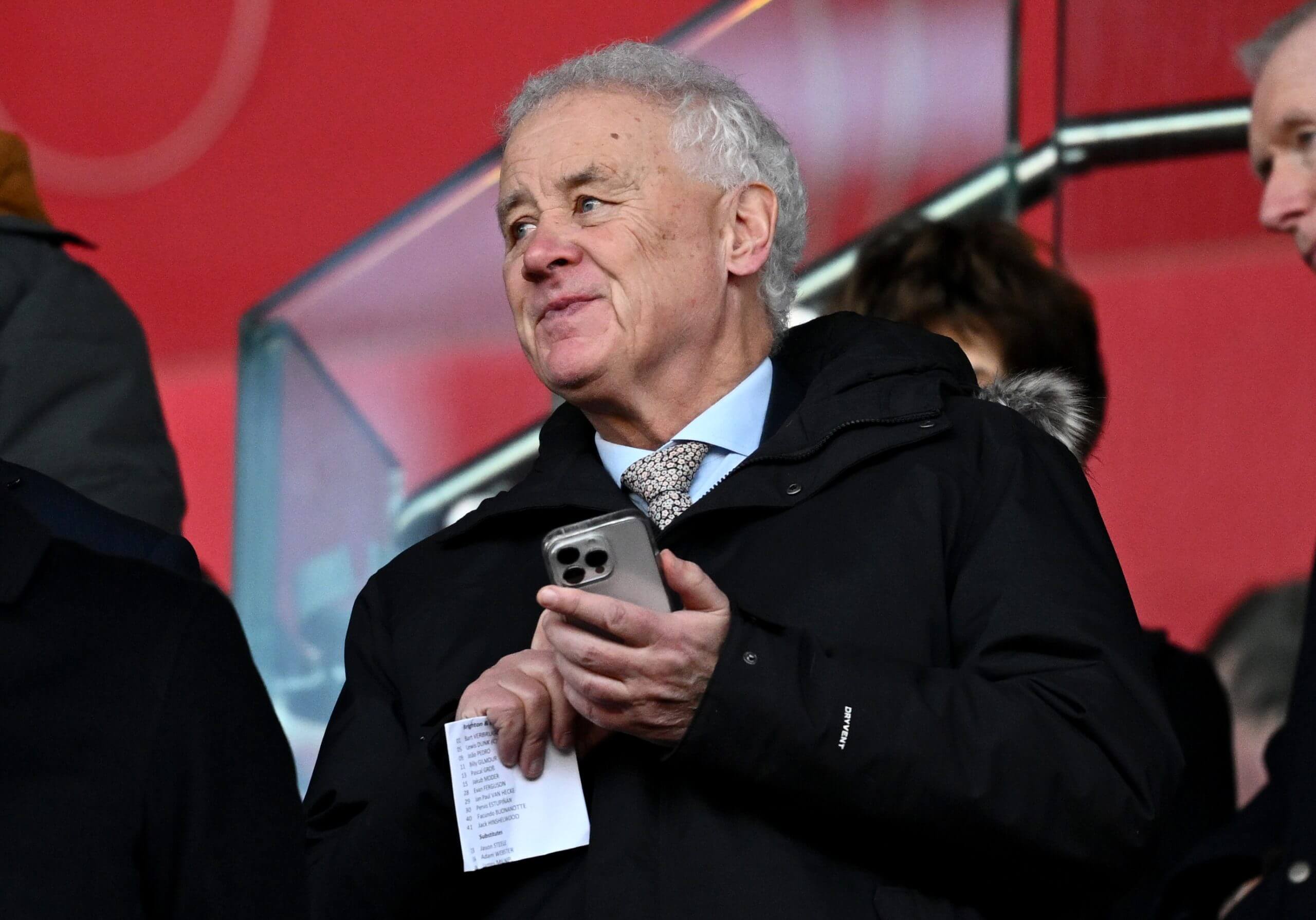
EFL chair Rick Parry (Gareth Copley/Getty Images)
Talks pretty much collapsed after that, with both sides blaming each other.
The waters were muddied even more by the Premier League’s continuing attempts to persuade the revolving door of government ministers in charge of the draft Football Governance Bill that football did not need an independent regulator, and certainly not one who would look at something as essential to its success as FSPs, and that the world game’s governing body FIFA and European equivalent UEFA would ban England from playing in international tournaments if we went ahead with this madness.
Baroness Brady was still fighting this guerrilla war last year while the UK’s new Labour government was using its large majority to usher an even stronger version of the bill into law than the one that got timed out when the Conservatives called an election in July 2024.
But that did not stop some Premier League club executives from making a direct appeal to counterparts in the Championship early last year that the 2023 deal was still on the table, providing the EFL joined the top flight in telling the government “Thanks, but no thanks” to the offer of independent regulation.
As non-starters go, that one did not even leave the horsebox.
Is the clock still ticking, then?
Yes, and everyone will notice it when it stops, which will probably happen later this year when the IFR publishes a draft version of his state of the game report.
This is one of the most important pieces of work the regulator is doing, as it will set out the main challenges that office must address to meet its objectives of making clubs more financially sustainable and the entire system more resilient.
The final version will be published in early 2027 but Kogan has already said he has a very good idea what it will tell us and that he should have his abridged version ready by the autumn. We also know that it will look at the impact of parachute payments on the Championship.
The current consensus is that the regulator will agree with the Premier League that parachute payments are a necessary evil — not that the latter would describe them quite like that. Without them, promoted clubs would not have the confidence to sign players good enough to compete in the top flight, which would damage the overall product, hurting the entire system. Furthermore, parachute payments also provide a soft landing for relegated clubs, giving them time to readjust their wage bills and squads to life in the EFL.
However, the current formula, which will give Wolverhampton Wanderers, Burnley and whoever goes down with them in the coming weeks £55million each next season, with the promise of £45m, if needed, in 2027-28 and a third payment of £20m the year after, is too much help. It skews competition in the Championship and forces non-recipients to overspend just to keep up.
The general opinion is that the regulator will trim the year-one payment slightly, halve the year-two one and scrap the year-three money entirely. That may, of course, be wishful thinking on the EFL’s part, but I suspect most Premier League clubs would accept it, particularly if they get their way on a steeper merit rake for the Championship and its adoption of SCR.
The real question is whether enough of them believe there is sufficient time — and goodwill — to do a deal before everyone sees which way the regulator is leaning? Because if you wait until Kogan has shown his hand, well, you might as well just bunker down, try to make your best case in the backstop process, and hope for the best.
So, the clock is very much still ticking… but is anyone noticing?