
In today’s NHL, players aren’t just judged on their ability; they’re graded on value and efficiency — how large is their impact relative to their contract? Last week, we looked at some of the best bargain contracts in the NHL from this past season. Now let’s look at players who didn’t live up to their contracts in 2024-25 and how much longer those deals will be on the books.
Here’s how we’ll conduct this exercise.
• We’ll be using Dom Luszczyszyn’s player model as a measuring stick. Net Rating provides an all-in-one performance metric that weighs factors such as point production, play-driving, defensive impact, penalties drawn, blocked shots, faceoffs, penalty-kill impact and more. That impact is then translated to a market value — what that player’s contributions should be worth — and that market value is compared to their actual cap hit.
• A player isn’t “bad” if he ends up on one of the inefficient lists. It just means he wasn’t quite worth his cap hit in 2024-25, at least from a statistical perspective. There are plenty of high-end NHLers who you’ll see throughout the piece, many of whom actually played very well this season.
• We’ll only be identifying players who underperformed their cap hit by at least $1 million.
• No goalies will be analyzed.
• There are blind spots in the model, like any statistical measure — it’s not perfect. With that in mind, I used the model to generate an initial list of players for each team, but I occasionally exercised personal discretion to remove a player from the “inefficient” contracts pile if I felt there was an obvious flaw or blind spot in the model’s evaluation.
• Players who spent the overwhelming majority of the season injured (Tyler Seguin, for example) or on LTIR weren’t included.
• Players who changed teams midseason weren’t included either.
Anaheim Ducks
Most Inefficient Contracts in 2024-25
Player
Net Rating
Cap Hit
Years Left
-6
$5.75M
1
-2
$5M
2
+1
$6.25M
2
Trevor Zegras: He burst onto the scene as an immediate game-breaker, scoring 61 points as a 20-year-old rookie and 65 points as a 21-year-old sophomore. However, the last two years under former Ducks head coach Greg Cronin were wildly disappointing. Zegras suffered injuries, which hindered his speed. His offensive creativity was stifled by Cronin, and he was frequently shuffled between center and the wing.
Zegras’ talent level and early career scoring resume suggest that he should return to being a bona fide top-six forward in Philadelphia. This year, however, he failed to live up to the deal. Zegras produced a modest 32 points in 57 games, but more concerningly, had some of the worst two-way play-driving metrics in the league, primarily on the defensive end.
Ryan Strome scored exactly 41 points for the third consecutive season. That doesn’t sound too bad for $5 million, but the problem is that he gives back a lot of that value with very poor defensive metrics.
Alex Killorn is still a decent play-driver at 35 — the Ducks outshot and outscored opponents during his five-on-five shifts — but the 19 goals and 37 points he scored aren’t enough relative to his steep $6.25 million AAV.
Boston Bruins
Most Inefficient Contracts in 2024-25
Player
Net Rating
Cap Hit
Years Left
+7
$7.75M
6
+7
$9.5M
5
Elias Lindholm: Lindholm isn’t the No. 1 center the Bruins were hoping for. He was excellent defensively in difficult matchups, but his 17 goals and 47 points aren’t enough to justify a $7.75 million AAV. He turns 31 in December and has six years of term remaining, so there must be some long-term concern about how this deal will age.
Charlie McAvoy had a down year, scoring just 23 points in 50 games, which marked the fewest points he’s scored per game in any NHL season. Additionally, his two-way results were above average, but not in the elite range to which we’re accustomed. However, on a big-picture level, there’s no reason to worry about McAvoy’s contract. He’s still a bona fide No. 1 defenseman, and while his $9.5 million cap hit is steep, it’s a figure he’s lived up to when at his best. Just chalk this one up to an off year.
If this exercise included goaltenders, Jeremy Swayman would have been far and away the Bruins’ most inefficient contract for 2024-25. Swayman posted an .892 save percentage in 58 games, while in year one of a brand-new $8.25 million AAV contract extension.

Owen Power has faced growing pains, especially defensively, but the Sabres shouldn’t be too worried about his contract. (Steve Roberts / Imagn Images)Buffalo Sabres
Most Inefficient Contracts in 2024-25
Player
Net Rating
Cap Hit
Years Left
+2
$8.35M
6
-7
$3.33M
1
-4
$4.28M
5
-12
$2M
1
Owen Power: Power has faced growing pains, especially defensively, but the Sabres shouldn’t be too worried about his contract. He’s still only 22, has flashed impressive offensive skills, is a No. 1 pick and it’s not exactly easy to hit your ceiling when you’re playing on a bad team with subpar defense partners. Power was one of the 20 highest-paid defensemen in the NHL this past season and didn’t live up to that pay grade, but with his talent, six years remaining on the deal and the skyrocketing salary cap, this is a contract that he should eventually grow into.
If anything, Mattias Samuelsson has the most problematic contract on the Sabres. He is injury-prone and has seen his play regress significantly. He has another five years left on his deal and could be a prime buyout candidate.
Sam Lafferty and Connor Clifton were slightly overpaid further down the lineup.
Calgary Flames
Most Inefficient Contracts in 2024-25
Player
Net Rating
Cap Hit
Years Left
+6
$10.5M
6
-2
$4.55M
1
Jonathan Huberdeau: He was much better this season, scoring 28 goals (more than double the year before) and 62 points. His bounce-back was one of the reasons the Flames were surprisingly competitive this season. However, 62 points is still a far cry from the 90-100 point player you’re expected to be when you’re paid $10.5 million per year.
Rasmus Andersson had a down year, producing just 31 points (his lowest output since the 2020-21 season) and struggling defensively in a hard matchups role. Context is key, however. Andersson played through a broken fibula late in the season, and he was forced to do a lot of heavy lifting driving his own pair as he mentored his young partner, Kevin Bahl. He should bounce back next season, and most would actually view his $4.55 million cap hit as a bargain.
Carolina Hurricanes
Most Inefficient Contracts in 2024-25
Player
Net Rating
Cap Hit
Years Left
+2
$7.75M
4
+4
$7.75M
0 (UFA)
Andrei Svechnikov: The Hurricanes definitely need a lot more than the 20 goals and 48 points Svechnikov scored in 72 games at an expensive $7.75 million cap hit (tied for second highest on the Canes), but there’s important context to bear in mind.
For starters, Svechnikov tore his ACL in 2023. It often takes players a full two years to return to the level of play they were at before an ACL tear. NHL Edge shows that Svechnikov’s top speed and speed bursts over 20 miles per hour were significantly down this season compared to earlier in his career. He was also constantly adjusting to different linemates all year, which isn’t ideal for chemistry. It’s encouraging that he bounced back in the playoffs with eight goals in 15 games.
This is likely just a down year for Svechnikov, rather than a sign that the Canes should be worried about his contract.
Carolina intentionally signed Dmitry Orlov to an inflated cap hit contract in 2023 to keep the contract term down to two years. The idea was that he could be a steady top-four stopgap until youngsters such as Alexander Nikishin were ready to make an NHL impact. The plan has worked out exactly as designed, as he’s coming off the books just as his game is starting to atrophy.
Chicago Blackhawks
Most Inefficient Contracts in 2024-25
Player
Net Rating
Cap Hit
Years Left
-10
$3.75M
0 (Buyout)
-8
$4M
0 (UFA)
-5
$4.25M
1
-1
$5.5M
3
-10
$2.275M
1
-10
$2.25M
0 (RFA)
-2
$4.5M
1
TJ Brodie: The Blackhawks had several veterans who underperformed to varying degrees, but the good news is that most of them will come off the books soon.
Brodie, who has already cleared waivers for a buyout, and Alec Martinez were often liabilities rather than stabilizing veteran presences.
Jason Dickinson’s offense regressed to only 16 points in 59 games. However, the bigger surprise was that his defensive impact, which had been consistently excellent, also wavered. Dickinson only drove 40.4 percent of expected goals during his five-on-five minutes, although it should be noted that he handled very difficult matchups.
Philipp Kurashev and Joe Veleno didn’t contribute much, despite earning over $2 million each. Veleno has already been shipped out to Seattle.
Nick Foligno’s production isn’t worth $4.5 million at this stage in his career, but this isn’t a contract the Hawks regret. He’s paid more for his leadership and intangibles, plus there’s only one year remaining. And while Tyler Bertuzzi was wildly inconsistent at times and couldn’t drive play, he finished the season with 23 goals, which isn’t terrible for his $5.5 million cap hit.
Colorado Avalanche
Most Inefficient Contracts in 2024-25
Player
Net Rating
Cap Hit
Years Left
-8
$2.5M
4
Miles Wood: Wood had a down year, scoring just eight points in 37 games in an injury-plagued 2024-25 campaign. He took undisciplined penalties, posted below-average defensive numbers and was occasionally healthy scratched as well.
Columbus Blue Jackets
Most Inefficient Contracts in 2024-25
Player
Net Rating
Cap Hit
Years Left
+1
$6.25M
6
Damon Severson: The Blue Jackets’ cap sheet is pretty clean compared to most teams that miss the playoffs. Damon Severson’s deal (six years remaining at a $6.25 million AAV) is the exception — he’s been deeply inconsistent and mistake-prone — and you’d toss Elvis Merzlikins (two years left at a $5.4 million cap hit) in as well if you included goaltenders. Other than that, Columbus has done well not to saddle itself with overpaid veterans.
Dallas Stars
Most Inefficient Contracts in 2024-25
Player
Net Rating
Cap Hit
Years Left
+2
$9.5M
0 ($1M x 1 extension with $3M in potential bonuses kicking in)
-8
$3.75M
1
Jamie Benn: It’s impressive that the Stars have been able to ice a Cup-contending team for years despite having nearly $20 million invested in Benn and Tyler Seguin (Seguin didn’t make the inefficient list for this season because he only played 20 games). They’ve both been productive top-nine forwards, but neither has performed at an elite level, despite being two of the highest-paid forwards in the Western Conference.
Benn only scored 16 goals and 49 points in the regular season. He was even worse in the playoffs, mustering just a single goal and two assists in 18 postseason appearances.
Matt Dumba was a poor fit in Dallas from day one. He was the only defenseman on the Stars who had a negative five-on-five goal differential during the regular season, despite playing relatively sheltered third-pair minutes. It speaks volumes that he was healthy scratched for the entire playoffs, even early on when Miro Heiskanen was unavailable.
Detroit Red Wings
Most Inefficient Contracts in 2024-25
Player
Net Rating
Cap Hit
Years Left
-10
$4.75M
1
-2
$5.1M
3
0
$5.625M
2
-2
$4.75M
1
-5
$3.4M
1
-9
$2.34M
0 (UFA)
-4
$3.2M
3
Ben Chiarot: The Red Wings have a lot of promising, young players, but their inability to punch through as a playoff team largely comes down to an expensive veteran supporting cast that hasn’t lived up to its end of the bargain.
Detroit’s blue line beyond Moritz Seider and Simon Edvinsson is a mess in particular, with none of Chiarot, Justin Holl or Jeff Petry performing up to their salaries.
J.T. Compher had a solid first season in Motown last year, but his production declined to just 11 goals and 32 points in 76 games this season. He didn’t have the best two-way numbers either (Red Wings controlled just 44 percent of shot attempts with Compher on the ice at five-on-five), which resulted in him underperforming his $5.1 million AAV.
Andrew Copp is in a similar boat. He’s above-average defensively and can handle tough matchups, but his offense (23 points in 56 games) and overall impact don’t move the needle enough to justify his $5.625 million cap hit.
Vladimir Tarasenko slumped to only 11 goals this year, far below what you’d expect considering his $4.75 million AAV.
Edmonton Oilers
Most Inefficient Contracts in 2024-25
Player
Net Rating
Cap Hit
Years Left
+8
$9.25M
5
Darnell Nurse: Everybody knows the Nurse situation at this point. He’s a toolsy top-four defender prone to making the occasional big mistake and playoff inconsistencies. Nurse is nowhere close to being elite, which is the expectation when you’re one of the highest-paid defensemen in the NHL.
Last summer, the Oilers also invested $10 million of cap space toward Viktor Arvidsson, Adam Henrique and Jeff Skinner. Their Net Rating was just high enough to avoid making this list, but for all intents and purposes, those were inefficient contracts as well.
Arvidsson scored only 27 points in 67 games despite getting tons of opportunities on Leon Draisaitl’s line. Henrique doesn’t score or defend at a high enough level to live up to his $3 million AAV. Skinner, meanwhile, was only dressed for five playoff games. Those three signings looked reasonable at the time, but in hindsight, it ended up being a poor investment, especially since it indirectly cost them Dylan Holloway and Philip Broberg later on.
Florida Panthers
None: The Panthers have managed their books exceptionally well. Their roster is littered with excellent-value contracts, and for the second year in a row, they weren’t held back by any inefficient deals.

Drew Doughty is one of the most overpaid defensemen in the league at $11 million AAV. (Jayne Kamin-Oncea / Imagn Images)Los Angeles Kings
Most Inefficient Contracts in 2024-25
Player
Net Rating
Cap Hit
Years Left
+4
$11M
2
-6
$2.66M
0 (UFA)
Drew Doughty: He missed more than half the season with a fractured ankle. When he came back, the 35-year-old showed noticeable signs of decline offensively and defensively. Doughty can still hang in a top-four role, and perhaps better health can help him bounce back next season, but he’s one of the most-overpaid defensemen in the league at $11 million.
Tanner Jeannot packed a punch physically, which had a useful impact, but his offensive contributions were non-existent (13 points in 67 games).
Minnesota Wild
Most Inefficient Contracts in 2024-25
Player
Net Rating
Cap Hit
Years Left
-6
$3.5M
3
Yakov Trenin: His size, forechecking and defensive acumen are useful, but at a $3.5 million cap hit, you’d expect him to perform at the level of a bona fide third-line player. That didn’t come to fruition as Trenin produced a measly 15 points in 76 games. His five-on-five points-per-60 rate ranked seventh worst among all NHL forwards who played at least 750 minutes in 2024-25.
Besides that, the Wild did invest their dollars pretty efficiently. And that was a necessity when you factor in the nearly $15 million in dead cap space that Ryan Suter’s and Zach Parise’s buyouts consumed.
You could argue that paying Ryan Hartman and Marcus Foligno a combined $8 million may not be ideal, considering their middling offensive profiles. However, those two bring enough other qualities with their physicality and defensive play to make their deals passable.
Montreal Canadiens
Most Inefficient Contracts in 2024-25
Player
Net Rating
Cap Hit
Years Left
-4
$8.7M
1
-4
$5.5M
2
-10
$3.5M
0 (UFA)
-8
$3.36M
1
-7
$3.4M
0 (UFA)
-3
$4.87M
1
-7
$2.9M
2
+2
$6.5M
2
-1
$4.45M
0 (UFA)
Patrik Laine: The Canadiens had several middle-class players in the $3-5.5 million cap hit neighborhood who didn’t live up to their contracts. The preceding Marc Bergevin regime signed a large chunk of those deals, and the good news is that many of these contracts are set to expire soon.
Laine’s contract stands out as the most inefficient deal on Montreal’s books, but that trade was still a smart, sensible gamble for several reasons:
Montreal received a second-round pick for taking on Laine’s contract. This was them intentionally taking on an overpriced contract for a sweetener (and with the hopes of rehabilitating Laine’s value).
Laine only has one year left on his deal, so the downside risk was always low. And conversely, if he bounced back, Montreal would have had an opportunity to sell him as a rental at the 2026 trade deadline, like it did with Sean Monahan (that’s unlikely now that the Canadiens will probably be in the playoff race again next season).
Injuries slowed Laine down. If he can stay healthier next season, his even-strength impact should improve. All told, 20 goals in 52 games isn’t terrible, even if he was far from being worth $8.7 million this past season.
Veteran forwards Josh Anderson (15 goals, 27 points) and Brendan Gallagher (21 goals, 38 points) were significantly better than in 2023-24, but they still aren’t worth their cap hits.
David Savard was an important stopgap to play tough top-four minutes in past years while the club’s young defenders developed, but he slowed down significantly this year. He averaged 16:35, and yet the Canadiens still controlled only 43.6 percent of scoring chances and less than 40 percent of actual goals during his five-on-five shifts.
Montreal’s bets on Kirby Dach and Alex Newhook as premium reclamation projects haven’t panned out yet. Injuries have derailed Dach as he’s fallen short of 60 games played in each of his first three seasons in Montreal. He struggled mightily in the second-line center role, unable to score points, drive offense or play reliable defense. However, he’s shown in years past that he has the talent to be an effective top-nine winger, so shifting him back to the flank could unlock better form.
Newhook, meanwhile, has shown flashes but hasn’t been consistent enough, generating just 26 points (15 of which were goals) in 82 games.
Nashville Predators
Most Inefficient Contracts in 2024-25
Player
Net Rating
Cap Hit
Years Left
-6
$7M
6
0
$8M
3
Brady Skjei: The Predators didn’t have as many overpriced contracts as you might have guessed after their miserable 2024-25 season, but their two misses were colossal. Skjei was torched defensively all year, as Nashville was outscored by a whopping 28 goals during his five-on-five minutes. Offensively, he only mustered 33 points. He should improve in year two — he had to adjust to a drastic systems change, his PDO was low and the whole team around him struggled — but this is a worrisome contract long term.
Steven Stamkos went from scoring 40 goals and being over the point-per-game mark with Tampa in 2023-24 to scoring a modest 53 points. It’s not entirely his fault because the Predators didn’t have the right playmaking center for him to play with.
New Jersey Devils
Most Inefficient Contracts in 2024-25
Player
Net Rating
Cap Hit
Years Left
-5
$6M
2
-5
$4M
2
+9
$9M
3
-4
$3.15M
1
Ondrej Palat: He scored just 15 goals and 28 points despite playing on Jack Hughes’ line for most of the season. Palat, 34, was better in the playoffs and can still help a team with his experience and two-way intelligence, but he doesn’t belong in any contending team’s top six.
Dougie Hamilton’s future will be fascinating to watch. The 32-year-old offensive defenseman is still a valuable contributor, but he isn’t worth $9 million, and the Devils’ right-side defense has a logjam (Johnathan Kovacevic and Brett Pesce are locked up long term, not to mention that Simon Nemec and Seamus Casey could be NHL-ready next season). Luke Hughes also looks ready to be The Guy offensively for New Jersey’s blue line, which makes Hamilton’s skill set less of a necessity.
Erik Haula’s $3.15 million cap hit was already cleared out in a shrewd salary dump trade with Nashville.
New York Islanders
Most Inefficient Contracts in 2024-25
Player
Net Rating
Cap Hit
Years Left
-10
$3.5M
3
-4
$6.15M
5
-7
$3M
5
7
$8.5M
6
-6
$2.5M
2
Anthony Duclair: The Islanders have several overpriced contracts with significant term remaining on their books.
Duclair, who scored 24 goals in 2023-24, limped to just 11 points in 44 games in an injury-plagued season. He failed to ingratiate himself with Patrick Roy, which led to the latter savagely ripping him in a news conference, with Duclair subsequently stepping away from the team.
Ryan Pulock was once an incredible top-four defenseman for New York during its contention window in 2020 and 2021, when the club made back-to-back Eastern Conference final appearances. His performance has heavily deteriorated since then. I’d argue that the Net Rating model penalizes him too harshly (he still plays difficult top-four minutes and matchups), but there’s no question that he’s bent under the pressure of that workload.
Pierre Engvall was better down the stretch, but 15 points in 62 games and mediocre play-driving results won’t cut it at a $3 million AAV.
Bo Horvat performed closer to the level of a $7 million center than an $8.5 million one, according to Net Rating, but some context is required. He spent most of the year without Mathew Barzal, his usual running mate, because of the latter’s injury troubles. That drop-off in linemate quality explains why Horvat’s production slipped from 68 points in 2023-24 to 57 points this past season. Horvat should bounce back to being a 65ish point player if Barzal can stay healthy, at which point his contract would be fair value rather than inefficient.
At $2.5 million, Casey Cizikas is paid to be an elite fourth-liner. He was exactly that at one stage in his career, but the 34-year-old is closer to being a run-of-the-mill fourth-liner these days.
New York Rangers
Most Inefficient Contracts in 2024-25
Player
Net Rating
Cap Hit
Years Left
-1
$6.5M
2
+5
$8.5M
5
+14
$11.6M
1
Chris Kreider: The Rangers’ aging, expensive core mightily underperformed this season.
Kreider was restricted by a back injury and illness that he played through. He tallied just 22 goals and eight assists in 68 games, a major drop-off from the 39 goals and 75 points he produced the year prior. He scored just 1.03 points per 60 at five-on-five, which ranked in the bottom 20 among all NHL forwards who played at least 750 minutes in 2024-25. Hopefully, better health can lead to a bounce-back in Anaheim.
Mika Zibanejad is no longer the first-line-caliber center he’s paid to be — he doesn’t drive play or score enough at five-on-five. The five years he has left at a $8.5 million AAV are problematic, but could a permanent shift to the wing be revitalizing? When J.T. Miller was acquired from the Canucks, Zibanejad was shifted to Miller’s right wing at times. The two seemed to click, and Zibanejad tallied 33 points in the final 32 games of the season.
Artemi Panarin remains an offensive star, but his production dropped by 31 points compared to 2023-24, falling just shy of the 90-point mark despite being one of the highest-paid players in the league.
Ottawa Senators
Most Inefficient Contracts in 2024-25
Player
Net Rating
Cap Hit
Years Left
-5
$4M
1
+1
$6.5M
0 (UFA)
David Perron: The Senators’ cap sheet is in a much stronger position than years past, with no true deadweight contracts holding them back.
Perron had a slow start, with only four points in his first 20 games, but that was understandable, given that he was playing catch-up due to an injury and a health scare involving his daughter. He found his groove down the stretch and was much closer to being the player the Senators were hoping for when they signed him to a two-year deal.
Claude Giroux is still a key cog of Ottawa’s top six, but he slowed down a bit this year, with 50 points and slightly below-average play-driving metrics. He was closer to performing at the level of a $5 million-ish forward rather than a $6.5 million player.
Philadelphia Flyers
Most Inefficient Contracts in 2024-25
Player
Net Rating
Cap Hit
Years Left
+5
$7.75M
5
+3
$6.2M
7
Sean Couturier: Philadelphia doesn’t have as many bloated contracts as you might expect a non-playoff team to be stuck with. Couturier is the only clear overpayment: He’s still an above-average two-way center, but his offensive game (45 points in 79 games) has taken a notable hit since returning in 2023 from a near two-year absence due to injuries.
Owen Tippett had a down year, scoring 20 goals and 43 points. However, he was a near 30-goal scorer in the two years before that, is in his prime at age 26 and his contract will look better as the cap increases. Tippett’s deal shouldn’t be an issue — it profiles as closer to fair value than an overpayment moving forward.
Pittsburgh Penguins
Most Inefficient Contracts in 2024-25
Player
Net Rating
Cap Hit
Years Left
+5
$10M
2
-5
$4.5M
4
0
$6.1M
3
-3
$3.57M
1
-8
$2M
1
Erik Karlsson: He has been a far cry from the 101-point, Norris Trophy-winning defenseman the Penguins thought they might get when they acquired him two summers ago. He’s lackadaisical and mistake-prone defensively, and his offensive impact (53 points) has been good, but not elite. Karlsson has played closer to the level of a $6 million defenseman, according to Net Rating, which is a steep gap compared to his $10 million cap hit.
Ryan Graves has been a disastrous fit in Pittsburgh. He’s essentially a No. 6 defenseman locked up long term at a $4.5 million AAV.
Kris Letang’s game is rapidly declining. The 38-year-old’s production dropped to 30 points in 74 games, his offensive play-driving metrics took a nosedive and he still makes loud defensive mistakes from time to time.
This list doesn’t include goaltenders; otherwise, Tristan Jarry (three years remaining at a $5.375 million AAV) would have been on here as well.
San Jose Sharks
Most Inefficient Contracts in 2024-25
Player
Net Rating
Cap Hit
Years Left
-17
$3.64M
2
-2
$5M
1
-12
$2.75M
0 (UFA)
-10
$1.8M
1
Barclay Goodrow: The Sharks have some inefficient investments, but none of them are going to handcuff them long term. Goodrow and Marc-Édouard Vlasic (he didn’t officially make the list due to games missed) are wildly overpaid, but they will help the Sharks reach the salary cap floor, which they currently aren’t close to hitting. Vlasic was placed on unconditional waivers for the purpose of a buyout on Thursday, while Goodrow has two years remaining.
The Sharks intentionally handed Alex Wennberg an inflated $5 million AAV to keep the term down to just two years when they signed him last summer. That’s a shrewd decision for a rebuilding team — he was a solid two-way middle-six center this season.
Seattle Kraken
Most Inefficient Contracts in 2024-25
Player
Net Rating
Cap Hit
Years Left
-7
$6.25M
6
-3
$5.5M
2
-5
$4.6M
1
+3
$7.14M
6
+5
$7.35M
2
Chandler Stephenson: If goaltenders were included in this exercise, Philipp Grubauer would have far and away ranked as Seattle’s worst value contract this season. Among skaters, Stephenson stands out as a clear anchor.
His 51 points in 78 games don’t seem too bad on the surface, but he’s an empty calorie point producer who drags the team down as a two-way liability. Stephenson’s defensive metrics were some of the worst in the league, with Seattle only controlling an alarming 36.5 percent of high-danger chances during his five-on-five shifts.
Andre Burakovsky scored only 37 points at a $5.5 million cap hit — it’s impressive that the Kraken shed his contract to Chicago without having to attach a draft pick or retain salary.
Jamie Oleksiak had a down year on the club’s second pair. He decisively lost his matchups, with Seattle giving up far more shots, scoring chances and goals than they created during his even-strength minutes.
Matty Beniers is elite defensively, but we’re still waiting for his big offensive breakout after a modest 43-point campaign. He’s still only 22 and has shown a higher offensive ceiling in the past (scored 57 points as a rookie), so I’m confident he’ll grow in this area and that his $7.14 million AAV will eventually become a long-term bargain with the skyrocketing salary cap.
Vince Dunn is uber talented offensively, but his defensive issues have dragged down his overall value. Dunn surrendered five-on-five high-danger chances and goals against per 60 at the worst rate among all Kraken defensemen this past season. The end result is that he played closer to the level of a $6 million defender, according to Dom’s model.
St. Louis Blues
Most Inefficient Contracts in 2024-25
Player
Net Rating
Cap Hit
Years Left
-5
$4M
1
+1
$6.5M
2
+3
$6.5M
3
-5
$3.25M
0 (UFA)
-8
$2.1M
1
-4
$2.95M
1
Nick Leddy: He missed more than half the season due to injury. He’s still a smooth skater and solid puck mover, but that skill set is a bit redundant now that Cam Fowler and Philip Broberg are in the fold on left defense. Leddy isn’t suited to being a top-four option on a contending team anymore, but he’s on the books for one more year at $4 million.
Justin Faulk is also overpaid. His contract is longer and more expensive than Leddy’s, but the difference is that the Blues don’t have an in-house replacement for his top-four minutes on the right side. Yes, it’d be nice for the Blues to get better play from Faulk at his $6.5 million AAV or ship him out and find a right-side upgrade, but acquiring top-four right-handed defensemen is never easy.
Brayden Schenn is still a good player (50 points in 82 games), but he isn’t quite a bona fide second-line play-driving center anymore. He’s a tad expensive at $6.5 million. The good news is that he seemed to fare better later in the season, when linemates Dylan Holloway and Jordan Kyrou were able to do the heavy lifting in terms of play-driving.
Mathieu Joseph, Alexandre Texier and Radek Faksa were slightly overpaid in the bottom-six relative to their contributions.
Tampa Bay Lightning
Conor Sheary: The Lightning weren’t stuck with any inefficient contracts besides Sheary. The 33-year-old was buried in the AHL for most of the year, appearing in just five games for Tampa Bay. He has one season left at a $2 million AAV.
Toronto Maple Leafs
Most Inefficient Contracts in 2024-25
Player
Net Rating
Cap Hit
Years Left
+4
$7.5M
5
-3
$3.75M
3
-6
$2.4M
2
-10
$2.1M
1
+14
$11M
0 (UFA)
Morgan Rielly: The Leafs owned more overpriced contracts than you’d expect for a contending team, but all those deals were in the “slight overpay” range rather than albatrosses.
Rielly’s contract is probably the most concerning long term — his offense has slipped to 41 points this season, and he’s below average defensively. He’s still a capable second-pair quality defenseman, but he’s expected to be more than that with a $7.5 million cap hit for the next five seasons.
Max Domi showed better flashes in the playoffs, but was an awkward fit in Toronto’s lineup for most of the season. He’s too flawed defensively to win his matchups as a top-nine center, and doesn’t generate quite enough offensively (33 points in 74 games) to stick as a full-time top-six winger either.
David Kämpf and Calle Järnkrok were expendable bottom-six pieces on bloated cap hits.
John Tavares didn’t quite live up to his $11 million cap hit at age 34 (which is entirely understandable), but the Leafs must be happy that they got 38 goals and 74 points from him in the final year of his contract.
Utah Mammoth
Most Inefficient Contracts in 2024-25
Player
Net Rating
Cap Hit
Years Left
-5
$3.42M
1
-2
$4.3M
2
-8
$2M
1
Matias Maccelli: He amassed 49 points in 64 games (a 63-point pace over 82 games) as a 22-year-old rookie in 2022-23 and followed that up with 57 points as a sophomore. Unfortunately, his production collapsed, and he completely fell out of favor this past season. Maccelli slumped to just 18 points in 55 games and was a regular healthy scratch, appearing in only three of Utah’s games after the 4 Nations break. He’s a very crafty, slick playmaker, but he’s undersized at 5-11, can be a mixed bag defensively and isn’t a strong forechecker.
Lawson Crouse, a linemate of Maccelli in 2023-24, went from scoring 24 goals in 2022-23 and 23 goals in 2023-24 to only 12 goals and six assists in 81 games this past season. Eighteen points simply isn’t going to cut it when you’re on a $4.3 million cap hit.
Vancouver Canucks
Most Inefficient Contracts in 2024-25
Player
Net Rating
Cap Hit
Years Left
+7
$11.6M
7
-7
$3.25M
3
+1
$6.65M
0 (UFA)
Elias Pettersson: He inexplicably limped to just 45 points in 64 games despite owning the fifth-highest cap hit in the NHL this season. He was still very sharp defensively, but his inability to drive top-line caliber offensive results had him performing at the level of a $6.6 million center, which is a huge letdown compared to his $11.6 million AAV.
Dakota Joshua was playing catch-up all year after undergoing a testicular cancer diagnosis that delayed his start to the season. He was a shadow of the heavy forechecking, net-front scoring forward he had been in 2023-24. It’d be unfair to judge his performance this past season; hopefully, he can be healthier and more productive this fall.
Brock Boeser had a disappointing campaign after scoring a career-high 40 goals in 2023-24. He regressed to 25 goals, was a non-factor at five-on-five for large stretches, especially without J.T. Miller, his usual center, and his two-way results slipped compared to last year.
Vegas Golden Knights
Most Inefficient Contracts in 2024-25
Player
Net Rating
Cap Hit
Years Left
+6
$8.8M
2
Alex Pietrangelo: He didn’t perform at the elite level we’re accustomed to, primarily because of injuries. The 35-year-old’s defensive numbers took a hit — he scored the fewest points per game of his Golden Knights career — and his two-way results during the playoffs were troubling. Pietrangelo had to withdraw from the 4 Nations Face-Off due to health concerns, and there’s uncertainty surrounding his playing future for next season.
Washington Capitals
Most Inefficient Contracts in 2024-25
Player
Net Rating
Cap Hit
Years Left
0
$5.8M
0 (UFA)
Andrew Mangiapane: His speed, energy and forechecking were very useful in the Capitals’ bottom six. However, the 14 goals and 28 points he amassed obviously weren’t commensurate with his expensive $5.8 million cap hit.
Outside of that, Washington’s cap spending was very efficient in 2024-25.
Winnipeg Jets
None: The Jets got excellent bang for their buck this year, with no player significantly underperforming his contract. That efficiency drove them to a Presidents’ Trophy-winning season.
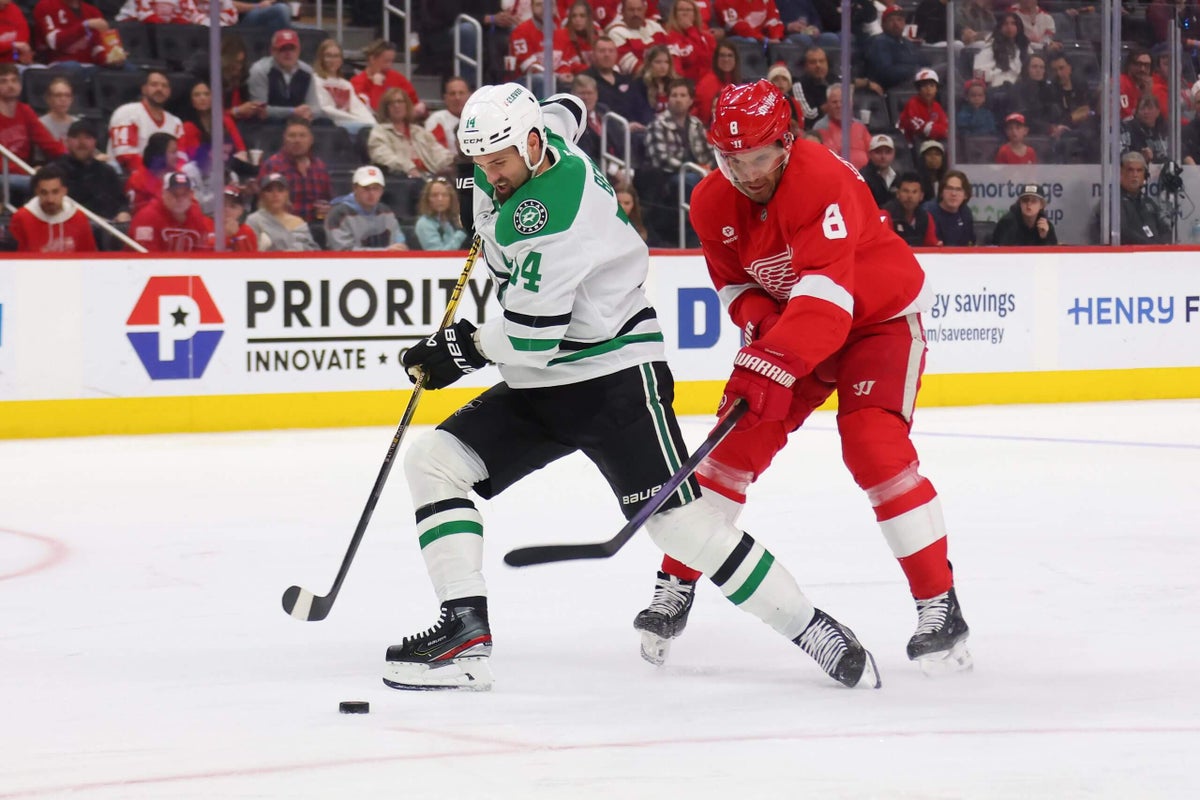
(Top photo of Jamie Benn and Ben Chiarot: Gregory Shamus / Getty Images)