
Some general managers have gone to market, wallet full and eyes longing. A Stanley Cup is just one or two moves away if they can simply unlock the aetherial, if not magic, formula to maximize their team with another couple of players who add that extra spark. And then there are the Pittsburgh Penguins, who are nibbling at the edges of the buffet like disinterested party guests.
In a great sense, the Penguins are disinterested. They have no need or want for the big-name free agents. To sign one now would be to impede the most important offseason since 2005. A few more wins now are not going to help the great revamp. Or rebuild. Or retool. Or whatever you want to call it. And when the team is finally ready to truly compete for a Stanley Cup, the 28 or 29-year-old they signed today would be on the downside of his career.
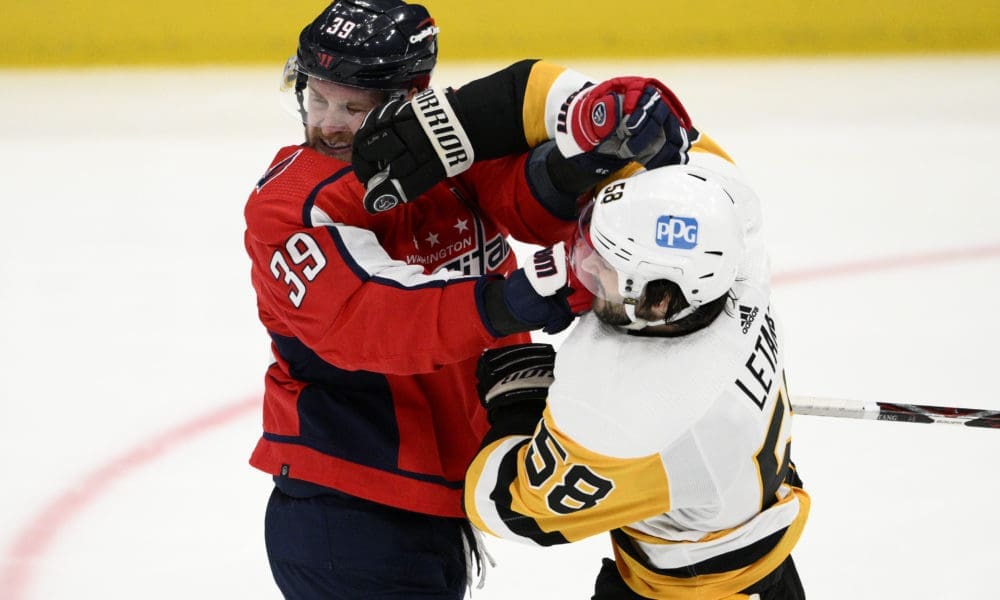
Another note regarding the Penguins’ strategy, in two years, almost the entire roster will turn over as only four players are currently under contract, including soon-to-be 38-year-old Kris Letang and defenseman Ryan Graves, who is currently fighting for a roster spot.
In short, Penguins general manager Kyle Dubas is setting up for a great renewal–just not yet.
So, the grading scale of the Penguins’ 2025-26 offseason is much different than two years ago, and likely dramatically different from what it will be in two years.
Early Penguins Offseason Grade: B
Dubas has methodically executed his plan. When the players that he and the scouting staff liked. Those who were worthy of the No. 11 pick were largely picked over, Dubas turned disappointment into opportunity by trading down out of the No. 12 pick and getting Nos. 22 and 31. Then, using a second-rounder to swap the No. 31 pick for No. 24.
Those extra picks became the ox-like centerman Bill Zonnon and the raw Will Horcoff.
Since none of the 2025 picks are likely to make the NHL roster in the fall, the free agents will have a clean ramp to the roster. Each signing has been purposeful and appropriate.
However, have the Penguins signed too many players who are currently borderline NHLers? There are currently 15 NHL forwards on the roster, not counting prospects Ville Koivunen, who will presumably make the show, and Tristan Broz, whom Dubas said wanted to call up at the end of last season.
It is quite clear that trades are coming.
Read More: Dubas Sets up Penguins Trade Strategy; One New Challenge
The difference between an A and a B grade that we delivered has less to do with what Dubas has done and more to do with a few players that Dubas missed. We’re specifically citing a few non-tendered RFAs, such as Arthur Kaliyev and Jacob Pelletier, who signed with Ottawa and Tampa Bay, respectively. Defenseman Zac Jones was another intriguing non-tendered RFA who signed elsewhere. Jones is somewhat in the mold of Matt Grzelcyk, who could run a power play and adequately defend.
Missing on those risky RFAs who very well might wash out with new teams, but are no less qualified than Philip Tomasino, whom the Penguins re-signed, was a miss.
It’s also very important to note that just because a player signed elsewhere does NOT mean the Penguins didn’t try. Players also get a say, you know?
Defense
The Penguins’ free agent signings started small with Parker Wortherspoon, a perfectly average depth defenseman capable of third-pairing minutes. Wotherspoon skates well and makes a solid first pass–his signing is very much akin to finding Ryan Shea, but Wortherspoon has more NHL experience.
One of the best signings of the Penguins’ offseason was Alexander Alexeyev, formerly of the Washington Capitals. Coach Spencer Carbery served him a steady diet of press box nachos, and Alexeyev played only eight games in the regular season, but 10 playoff games. It’s an all-reward, no-risk signing as the Penguins need lefty defensemen, and they need someone to guard the net.
Alexeyev may or may not fit the Penguins’ needs. He’s not overly physical, but he’s 6-foot-5, 220 pounds and does play a tough game in the battle zones. He will join Connor Clifton as players on the blue line who can make life less enjoyable for opponents.
Dubas also snagged Seth Jones’s brother, Caleb Jones. Caleb is more physical than Seth, but has played 51 or more NHL games in a season just twice. He’s likely ticketed for Wilkes-Barre/Scranton, but given the number of depth defensemen competing for the roster spots, he has a reasonable chance to play under the NHL lights.
Dubas has done well to bolster the defense with no-risk moves. At worst, the Penguins are no worse (which isn’t very good), but if he finds one diamond in the rough, the Penguins will have a player to lean on for a long time.
And that’s the point of this offseason.
Forwards
Anthony Mantha headlines the group. Two seasons ago, he netted 23 goals split between Washington and Vegas, but he tore his ACL last Nov. 5 and missed the rest of the 2024-25 season. If the best-case scenario unfolds, the Penguins will pay Mantha $4.5 million, including $2 million in incentives.
If it goes bust, as it has at other points in Mantha’s career, Fenway Sports Group is out $2.5 million, but there will have been no harm nor foul to the team.
Perhaps the signing isn’t what PHN would have done, but it clearly sets up a Rickard Rakell trade and statistically will cost the Penguins a few wins–which improves their draft stock. Getting a good draft pick or picks in 2026 is part of the goal.
The other questionable forward signing was re-upping Philip Tomasino. The forward had a burst of offense after he first arrived from Nashville, but he largely struggled with putting forth a complete game. The layers and details of Tomasino’s game were soft, though all involved lauded him for the effort to reset his game to fill the role of a middle-six winger more adequately.
He’s getting a second chance at $1.75 million, though overhauling one’s game is no easy task. He was disappointing in a second-line role, but perhaps new coaches and a third chance will be the charm.
Beyond the debatable headline signings are the under-the-radar signings for which Dubas deserves credit.
Justin Brazeau, 27, is tailor-made for this Penguins situation. He’s a big forward at 6-foot-6, 227 pounds who doesn’t mind going to the net. Don’t be fooled by the tale of the tape; he’s not a bruiser or raucously physical player. In fact, he’s been somewhat generic to this point in his career. However, in 50 games with the Boston Bruins last season, he netted 10 goals with 10 assists–nearly the same tallies as Tomasino, but in much less ice time and a lower line role.
Brazeau went ice cold after Boston traded him to Minnesota, and he had just two points (1-1-2) in 19 games. Still, Dubas was happy to tout that the Penguins’ development staff helped Joona Koppanen get 12% more from his skating–if they can do similar things for Brazeau, being a consistent third-line winger and PP2 net-front presence. It’s the perfect long-range signing for a team with space and time to develop borderline NHL players.
Connor Dewar was the other former Penguins RFA-turned-UFA-turned-Penguins forward to sign a one-year deal. Dewar was spunky in his short stint with the Penguins after they acquired him and Conor Timmins at the trade deadline, even getting some time on the second line during a little offensive hot streak.
Dewar is a gritty small forward quite capable of bottom-line minutes and penalty killing. If he gets squeezed out of a roster spot by a prospect, the Penguins will welcome him to the Wilkes-Barre/Scranton Penguins, and he’ll probably be quickly recalled as injuries occur.
The Trade
Dubas dealt goalie Alex Nedeljkovic to the San Jose Sharks for a 2028 third-round pick. On the surface, it’s a backup goalie to a goalie-desperate team for the perfectly acceptable market price.
Deeper than the superficial acknowledgement, it was clearing a space for one of the Penguins’ young goalies, be it Joel Blomqvist, Sergei Murashov, or even Filip Larsson, to grab the spot.
Blomqvist struggled mightily in the NHL during what was supposed to be his arrival party in January, but he is just 23 years old. There’s more development ahead, and by removing Nedeljkovic, Dubas has dangled the golden opportunity in front of all of his goaltenders at the start of the offseason.
Whoever claims the net will have earned it. The trade was little more than a future asset, but in reality, it was a call to the goalie department–one of them will make the NHL.
Of course, this grade is little more than the first test of the semester. The big moves in the form of future-changing trades are yet to come