
The 4 Nations Face-Off did wonders for growing the game of hockey, but it also played an important role in terms of roster selection for the 2026 Winter Olympics.
It was evident throughout the tournament that some players aren’t built for best-on-best hockey — and that some players simply aren’t good enough to make those teams.
Team USA had a few examples of that. New York Rangers forwards Chris Kreider and Vincent Trocheck drew criticism for their play, in addition to musings that they were only selected because Rangers general manager Chris Drury was part of the Americans’ front office staff. New York Islanders forward Brock Nelson also raised eyebrows when it was announced that he’d be on the team.
There were also a few other Americans who didn’t live up to the hype.
Auston Matthews, Jack Hughes and Adam Fox were chief examples. They’re all among the most talented hockey players in the world, but none of them made much of an impact for Team USA.
On the flip side, Dylan Larkin, Jake Guentzel, Brock Faber and a handful of others surprised everyone with their ability to rise to the occasion. They needed more of those guys.
All four teams, as well as the eight others participating in the tournament, will undoubtedly take lessons from this experience with them when they choose their Olympic rosters next season — and they might look to the Utah Hockey Club for help.
Here are a few UHC players that could get an all-expenses-paid trip to Italy next February. Note that a few players on this list are on expiring contracts, meaning they might not be back next season. But for the purposes of this article, once a Clubber, always a Clubber.
Clayton Keller, Team USA
Let’s start with the obvious.
At the time of writing, Clayton Keller is the 11th-highest scorer in the NHL, and the fourth-highest American. With 20/20 hindsight, he might be the biggest snub of the entire tournament.
Keller coming in hot 🔥
Coming off his first career 5-point night to lead the league in points & assists has Clayton Keller securing his spot as NHLPA Player of the Week! pic.twitter.com/4pmunNdLv3
— NHLPA (@NHLPA) February 28, 2025
He’s one of those players that can play with anyone in any situation and do a bang-up job at it.
His size was likely a factor in his exclusion from the team. But in an Olympic setting, that shouldn’t be an issue. International hockey (when it’s not an NHL-run tournament) uses its own rulebook. It doesn’t permit fighting and it punishes physical play a lot more heavily than the NHL does.
“His game is the most complete it has (ever) been,” said Utah HC coach André Tourigny of his captain.
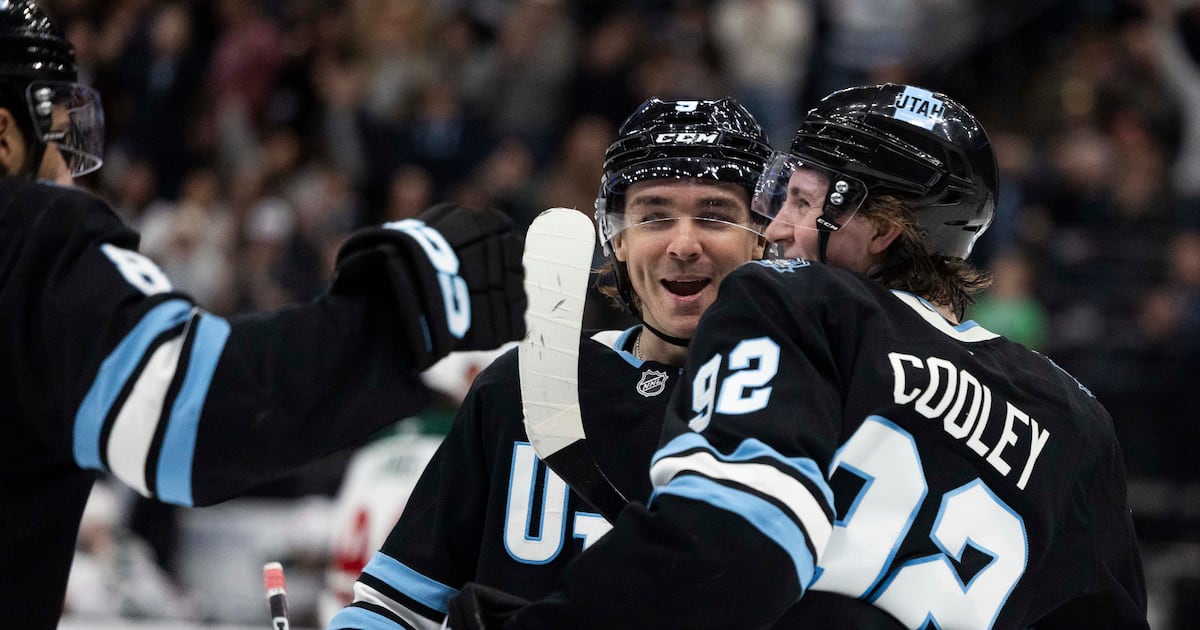
Logan Cooley, Team USA
Another player who can fill the net is Logan Cooley.
There’s no doubt that his ceiling is among the highest in the NHL, but he doesn’t get enough credit for what he has done this season. In 54 games, he has 17 goals and 47 points while playing a first-line center role and killing penalties. And he’s only 20 years old.
On a per-game basis, he’s performing at a similar rate to Minnesota Wild forward Matt Boldy, who did play for Team USA this year. By the time he reaches Boldy’s ripe, old age of 23, he’ll likely be among the league leaders offensively.
And, again, Cooley kills penalties. That’s something that most first-line centers don’t do.
Cooley is not a lock to make the team, but his versatility should earn him serious consideration at the least.
Dylan Guenther, Team Canada
Like Cooley, Dylan Guenther is showing why he deserves to be in the international hockey conversation: He has 22 goals and 44 points in 49 games and he’s a weapon on the power play.
That said, he doesn’t play in the same defensive situations as Cooley and Team Canada is always deeper than Team USA. But if he has a hot start to the season, there’s no reason he couldn’t make the team.
Mikhail Sergachev, Team Russia
This one goes without saying: The only reason Mikhail Sergachev did not play in the 4 Nations Face-Off is that he’s Russian, and Russia was not included in the tournament.
Russia will participate in the 2026 Olympics and barring any injuries, Sergachev will be their top defenseman.
Karel Vejmelka, Team Czechia
Like Sergachev, Karel Vejmelka’s home country of Czechia did not participate in the 4 Nations Face-Off, but will go to the Olympics in 2026.
As of right now, Vejmelka is arguably the best Czech goalie in the world — and he’s certainly in the top three, which is the threshold to make the team.
Connor Ingram, Team Canada
This one has been a debate among the Utah HC beat reporters this week (and by a debate, I mean me against everyone else). But there’s a realistic world in which Connor Ingram makes Team Canada next year.
Has he had a Vezina-caliber season this year? No. But he’s dealt with a lot, and he has the potential to come back swinging next season.
Also, as deep as Canada is, they don’t have any elite goalies right now. Ingram doesn’t have to be the best goalie in the world to make the team. If he starts the season on the right foot, he’ll be in the conversation.
Again, it’s not a lock by any means, but it’s not out of the question.
Kevin Stenlund, Team Sweden
On the Stanley Cup-winning Florida Panthers last season, Kevin Stenlund played the most penalty kill minutes of any forward in the playoffs — and that’s saying something, considering that the Panthers have two-time two-way forward of the year Alex Barkov.
Stenlund is also a beast in the faceoff circle and his 6-foot-5 stature makes him hard to move in the corners.
That’s a type of player that you always want on your team. No, he’s not going to lead your team in scoring, but in a must-win defensive situation, he’s a guy the coach will always send over the boards.
Olli Määttä, Team Finland
Olli Määttä turned some heads at the 4 Nations Face-Off. He started the season as a sixth or seventh defenseman with the Detroit Red Wings, but since being traded to Utah in late October, he has proven that he still has a lot more to give.
He showcased that at the tournament in February, where he played top minutes on a heavily injured Finnish team. He even had a pair of assists to show for it.
Juuso Välimäki, Team Finland
It’s been a tough go for Juuso Välimäki this season. He was named to Team Finland, but he didn’t get to play at all. Shortly after returning to Utah, he got sent down to the minors.
Even if he’s still in the AHL when the Olympics roll around, Välimäki still has a shot at being selected for the Olympic team because Finland doesn’t have many NHL-caliber defensemen.
Matias Maccelli, Team Finland
It’s been an equally tough year for Matias Maccelli. Before the season started, everyone saw him as a lock for Finland’s 4 Nations squad. But when he struggled to have much impact for Utah, they passed him over.
The last two seasons were seemingly the start of an elite career for Maccelli, who has been hailed for his playmaking ability. The 2024-25 season hasn’t been his best, but it’s possible that he comes back with a vengeance next year and returns to his former level.
If that happens, he’ll be a lock once again.
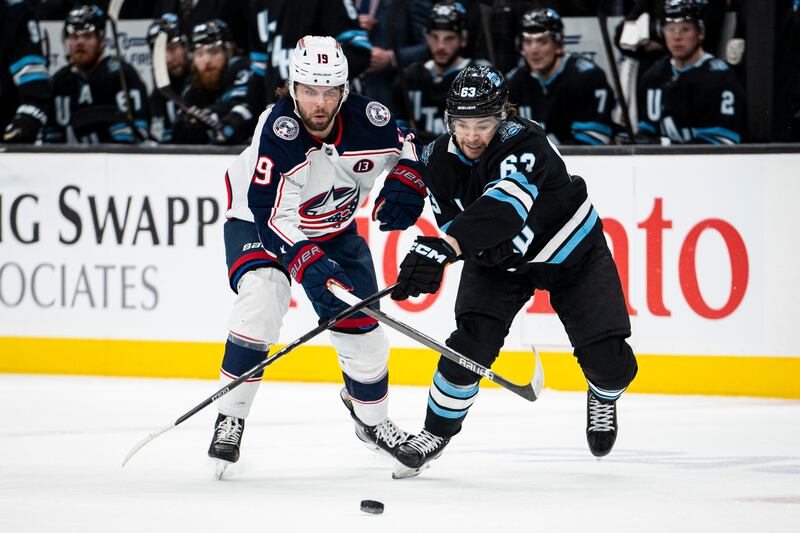 Utah Hockey Club left wing Matias Maccelli (63) and Columbus Blue Jackets defenseman Ivan Provorov (9) compete for possession of the puck during an NHL game held at the Delta Center in Salt Lake City on Friday, Jan. 31, 2025. | Isaac Hale, Deseret News