
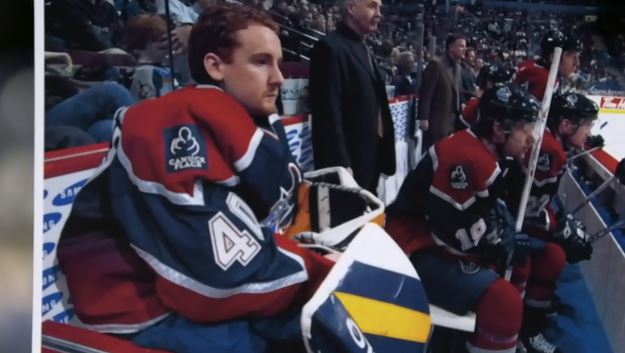

Photo credit: TSN.
The National Hockey League has announced some big changes on Friday when it comes to EBUG eligibility in their new Collective Bargaining Agreement (CBA).
Earlier this week, the National Hockey League and the Players’ Association officially announced that the owners and the players have voted to ratify a new Collective Bargaining Agreement (CBA) which begins ahead of the 2025-26 season and runs until 2030, meaning we’ll have labour peace for the next half decade.
There were some pretty big changes announced in the new CBA including an increase in the amount of regular season games, reduction in preseason games, mandatory neck guards for those entering the league in 2026-27 & beyond.
NHL announces big changes to eligibility requirements for EBUGs
On Friday morning, the National Hockey League and the NHLPA released their Memorandum of Understanding for the new CBA which included all of the new changes hockey fans will see in the years ahead.
One change that was expected and announced on Friday was changes to eligibility requirements for Emergency Backup Goaltenders, also known as EBUGs, which fans might be quite familiar with from the David Ayres situation in Toronto in February 2020 and also in Vancouver in late 2003 when Chris Levesque backed up Johan Hedberg for a game against the Pittsburgh Penguins.
In the Memorandum of Understanding, the National Hockey League and Players Association agreed to new guidelines that must be followed when considering someone to serve as a team’s Emergency Backup Goaltender starting in 2026, which includes that the person must be present at both home and away games with the club.
This is a change from the current CBA, which mandates that each NHL arena has one Emergency Backup Goaltender that can suit up for either team, if necessary.
According to the Collective Bargaining Agreement, the goaltender must not have:
1. have played an NHL Game under an NHL SPC; (Editor’s note: Standard Player Contract).
2. have played in more than 80 professional hockey games;
3. have played professional hockey in the prior three (3) seasons;
4. have another current contractual obligation that would preclude the ability to serve as the Club’s Emergency Goaltender Replacement; and
5. be on the Reserve List or Restricted Free Agent List of an NHL Club.
The most likely scenario we’ll see happen starting in the 2026-27 season is that a member of the team’s staff that already travels with the club, such as a goaltending coach, will end up being designated as their EBUG.
Previously on CanucksDaily
POLL
1 HOUR AGO | 49 ANSWERS
Fans Get Huge Opportunity with the Vancouver Canucks After the NHL’s Latest Announcement
Do you agree with the new eligibility rules for Emergency Backup Goaltenders (EBUG)?