
Welcome, for a seventh consecutive year, to my annual re-draft and ranking review exercise.
Each summer at The Athletic, I re-draft the class of three years prior and begin to review my draft board relative to the draft order. The goal is twofold: providing you with updated evaluations of the players and measuring where I was on each of them relative to NHL teams in order to test what I got right and wrong.
While three years obviously isn’t the finish line for these kids, I believe it’s the earliest possible point of re-entry for real conclusions and takeaways. These players are almost all now 21 years old and either established as NHLers or approaching the end of their prospect lifecycle.
This piece — along with my guide to scouting and my players I got wrong column (out next week) — is one of several I produce each year in an effort to be as open and candid as possible with readers about my work, my process and my results.
It is not lost on me how much my job differs from that of an NHL scout.
Theirs is an unenviable one done under an internal and external microscope, where review and criticism of their choices determine their livelihood. When they stick their neck out for a prospect, it comes with real consequences if that player doesn’t pan out. It’s a cutthroat business where most kids’ odds of not making it are greater than their odds of NHL success, and where most scouts live under the constant pressures of short contracts.
While my job comes with its own form of public criticism and my livelihood is determined by the quality of my work in its own way, the stakes just aren’t as high. I get into the same rinks, watch the same tape, and talk to the same people about these kids before building my own list. But I don’t actually have to step up to the podium and make the picks.
But I do still have to earn your trust. That’s especially true at The Athletic, where you’re paying to subscribe. If you’re going to spend your money to read our work, you deserve to know that you can count on it to be not only well-sourced and researched, but also transparent. The rankings and evaluations you read are only as good as the time, energy and purported expertise that fuels them.
And the 2021 draft is a particularly interesting case study because it was the “COVID Draft” wherein most leagues played reduced schedules under cancellations and delays and some, including the OHL, didn’t play at all, forcing players to sit out or find unconventional places to play in across Europe — and challenging scouts to work mostly on video and over the phone/Zoom.
Under those circumstances, here’s how I did.
Actual draft pick: No. 1 (change: none) to Buffalo
My final ranking: No. 1 (change: none)
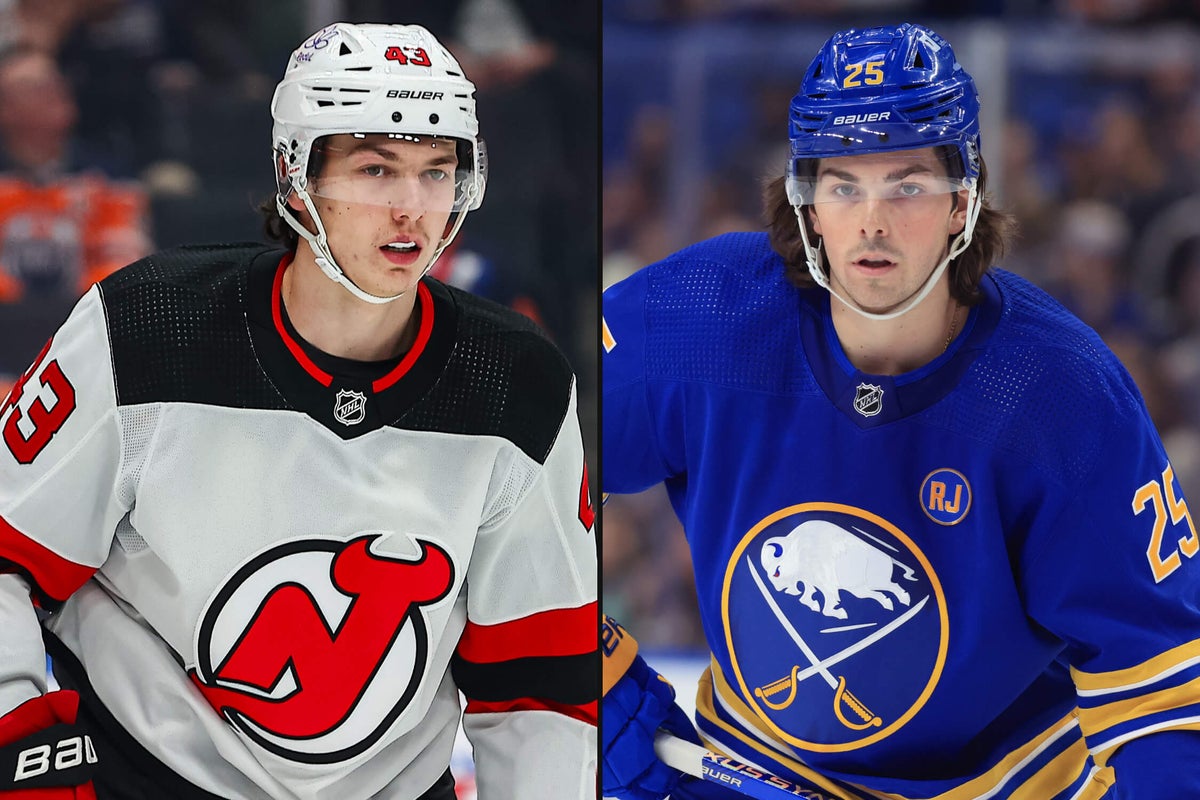
Though there was a general consensus among NHL scouts that Power was the No. 1 prospect in the draft in 2021, there were some in the public sphere who ranked Matty Beniers at No. 1 that year. Power was No. 1 on my board from start to finish, though, and he was the right pick. His offense hasn’t popped playing behind Rasmus Dahlin, but Power has back-to-back 30-plus point seasons, was a Calder Trophy finalist and has averaged 23:18 since entering the league (from age 19-21) to strong goal-differential results on middling Sabres teams. While you could probably make a case for any of the first five names on this list, I don’t think any of them are as strong as Power’s and certainly none of them play a bigger role than he does. He’s a top-four stud and I think maybe quietly underrated. He’s got another level to find still, too.
Actual draft pick: No. 4 (change: +2) to New Jersey
My final ranking: No. 7 (change: +5)
A desire to see Hughes round out his game and really grab me in his draft year more than he did left me a little lower on him than where the Devils took him, although I didn’t mind the bet and he was in that mix. And while he still needs to round out his game and defend better today, his offense and skating have predictably carried him a long way and probably give him a higher ceiling than the other three players I debated re-ranking here.
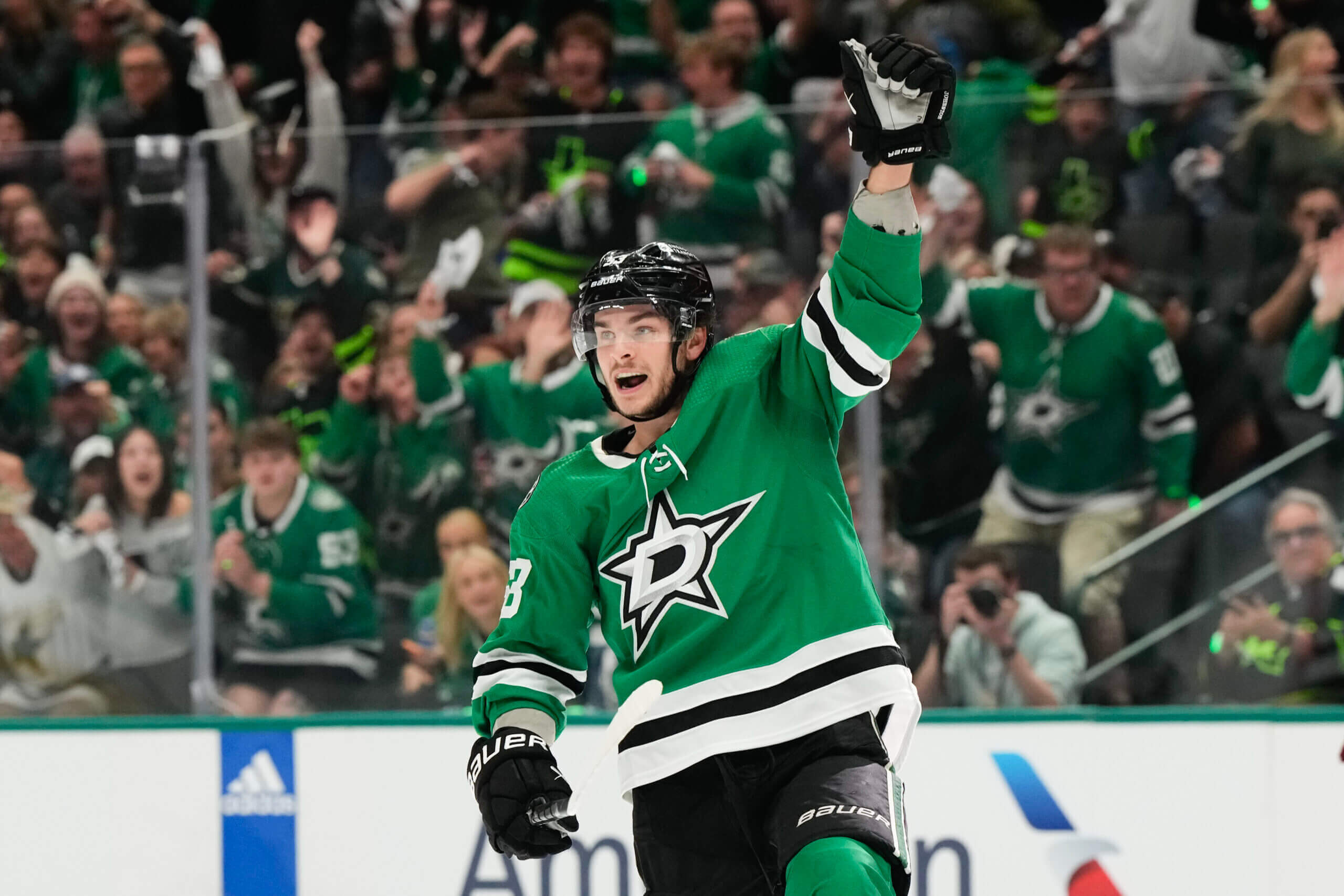
Wyatt Johnston is undoubtedly one of the best young players in the game. (Sam Hodde / Getty Images)
Actual draft pick: No. 23 (change: +20) to Dallas
My final ranking: No. 55 (change: +52)
I’m not going to beat myself up about where I slotted Johnston because he was one of the only kids in the draft who didn’t play in his draft year (outside of a strong showing at U18 worlds) and my actual evaluation/scouting report was more or less bang on — I just didn’t trust it enough, which was a judgment call that I made with some of the smaller sample sizes that I was prepared to live with. Here’s what I wrote about Johnston at the time:
“Johnston’s a talented, versatile, Jack-of-all-trades-type who is always on the right side of the puck, moulds his game to his linemates, excels in the faceoff circle, and plays with pace. He didn’t play this year other than U18s but I’ve had multiple people around the OHL reach out to me unprompted to pump his tires and tell me to keep an eye on him moving forward. There were people in Windsor who thought he was their best player some nights late last season and they were excited to see him take a step this year. He’s not going to break a defender’s ankles one-on-one but he’s a diligent, up-tempo player with a well-rounded offensive toolbox and a standout two-way game. One OHL scout told me this: ‘He’s filled out a little from all I’ve seen and heard and I think his goal-scoring/passing skills set him up to project at least as a solid middle-six forward.’”
He’s undoubtedly one of the best young players in the game now, so full credit to the Stars for trusting in their evaluation. He’s one of two picks they knocked out of the park in 2021.
4. New Jersey Devils: C Mason McTavish
Actual draft pick: No. 3 (change: -1) to Anaheim
My final ranking: No. 10 (change: +6)
McTavish was a riser in the 2020-21 season’s second half after joining EHC Kloten in Switzerland’s second rung late in the year and impressing into their playoffs and U18 worlds. I moved him from the middle of the first round into my top 10 but didn’t quite lift him enough on my list in hindsight, even when it looked like he was going to be a top-five guy at the draft itself. I haven’t course-corrected fast enough on risers over the years, honestly, and it has been the most common area where my lists have underperformed. It’s something I’ve been much more cognizant of in the last couple of years.
Actual draft pick: No. 2 (change: -3) to Seattle
My final ranking: No. 4 (change: -1)
Oddly enough: Despite the fact that I finished lower on Beniers than where he was picked, I was actually ahead of the curve on ranking him near the top of the draft. He ranked ninth on my preseason list and eighth on my preliminary list when others were slotting him in the middle of the first round. His Calder Trophy-winning rookie season obviously set a pretty high bar that his sophomore year couldn’t return to last year, but Beniers is probably somewhere closer to the 57-point one than the 37-point one and I’d expect him to rebound next season. He still has the skating, the work ethic, and the rounded skill to be a top-six center in the league. He’s not a frontline, elite skill guy but he’s going to be a very good player for a long time.
Actual draft pick: No. 8 (change: +2) to Los Angeles
My final ranking: No. 3 (change: -3)
I was bullish on Clarke then and I’m bullish on Clarke now. Though he hasn’t grabbed hold of it in the NHL, neither has Simon Edvinsson, who was taken two spots in front of him and that’s simply because D take longer. What he has done over the last two years, though, is play some of the most impactful 43 games of hockey I’ve ever seen at the OHL level (his 84 points and plus-53 rating in 43 combined regular season and playoff games with Barrie post-world juniors, completely changing the look of that Colts team, were utterly dominant in all areas) and one of the best under-21 seasons by a defenseman in AHL history. I expect Clarke to hold a top-six and PP job with the Kings next year and still expect him to become, in the prime of his career, one of the top offensive defensemen in the NHL.
Actual draft pick: No. 47 (change: +40) to Dallas
My final ranking: No. 18 (change: +11)
I believe my ranking of Stankoven was the highest in the public sphere ahead of the 2021 draft and I’m really proud of not just where I landed on him but of the way I trusted my evaluation of the player, his skill set, his style of play, and his clear and very practical strength as projectable, never getting bogged down in the bad habit of size downgrading as a default. I thought about ranking him even higher here and expect him to be a highly impactful player for the Stars next season. I spend a lot of time talking about players I got wrong, and 2021 wasn’t perfect for me, but when I look back on this class I look back proudly on how I landed on the right side of the most highly debated players in it (more on Joshua Roy, Tyler Boucher, etc., below).
8. Los Angeles Kings: LW Kent Johnson
Actual draft pick: No. 5 (change: -3) to Columbus
My final ranking: No. 2 (change: -6)
I still think Johnson is going to be a very productive, counting stats top-six offensive winger. I’ve written about it in the past but I don’t love how his development has been handled/he has been coached, either. But I was also a little too enamored by his skill and finesse at the BCHL and NCAA levels in his two seasons prior to the draft. He made playmaking look as easy as any player I’ve watched at the Jr. A level and then had a point-per-game freshman season at Michigan. In the end what you had was a player whose talent was a cut above and who also had a glistening statistical track that was deeper than others because his seasons weren’t as impacted as those in the CHL for example. There were signs, though, in both his style of play and the at-times perimeter nature of his game, that his game wasn’t going to work as well against pro competition as it did against junior competition, where he could just skill his way to points.
9. Arizona Coyotes: LHD Simon Edvinsson
Actual draft pick: No. 6 (change: -3) to Detroit
My final ranking: No. 11 (change: +2)
As with Beniers, despite the fact that I finished lower on Edvinsson than where he got picked I was actually early onto him in the range that he eventually went, slotting him No. 2 on my preseason list after he blew me away on tape. I expect him to play a full-time top-six role for the Red Wings next year and while I don’t think he’s going to have as much offense as I thought he might at one point in time (I initially fell in love with his ability to handle the puck at 6-foot-6), his defensive ceiling is high and I think I landed in more or less the right spot on him in the end that year.
10. Ottawa Senators: RW Dylan Guenther
Actual draft pick: No. 9 (change: -1) to Arizona
My final ranking: No. 6 (change: -4)
I’ve stood on both sides of the Guenther fence over the years so I won’t be able to take credit one way or another. I was high on him in his draft year and actually soured on him more than most post-draft, feeling like I was constantly waiting to see him dominate like I thought he was capable of at lower levels and really drive play at five-on-five more than he did. He’s got scoring and skating though and looked like a second-line winger for a good stretch last season. He’s got 50 points in 78 NHL games even as he has worked through some things, too.
Of note, this is also where the Senators drafted Boucher, who I think was appropriately ranked on my list at No. 63.
11. Arizona Coyotes (forfeited)12. Columbus Blue Jackets: C William Eklund
Actual draft pick: No. 7 (change: -5) to San Jose
My final ranking: No. 5 (change: -7)
Eklund has always been a tricky evaluation because it can be hard to properly account for and project smarts. He had plus-skill and plus-skating, and showed plenty of craft in his game, but he was a 5-foot-10 forward who didn’t have a dynamic quality, he was an October birthday, and so even after an excellent season in the SHL it was just tough to be sure about his ceiling. Could you be confident he was going to be a good NHL player? For sure. Teams don’t take players seventh overall without that. But could he be a very good NHL player? I believed he could then and I think I still do now, but even after a 45-point first full season last year, it’s still hard to be super confident in his evaluation because of just how bad San Jose was. What does it mean to have finished second on last year’s Sharks, right?
Actual draft pick: No. 20 (change: +7) to Minnesota
My final ranking: No. 12 (change: -1)
Goalies are harder to project than skaters in their draft years and remain so three years later because of the elongated timelines they have relatively speaking. As a result, the way I’ve re-slotted Wallstedt here starts with his floor rather than his ceiling. If he becomes a bona fide No. 1, he’s a top-10 pick in a re-draft. But despite his years-long track record and almost robotic tools, that’s not promised for any goalie, let alone a goalie prospect. And so the question I’ve asked myself is at which point is he still a better player if he only becomes a 1A/1B (a projection that I think comes with very little risk at this point)? And this is the point on the list where I think the players that follow are more likely middle-six forwards or bottom-four D than surefire top-six forwards or top-three D, in which case the good NHL goalie is still the higher value asset. (I think Wallstedt’s got a real chance to be more of a starter or 1A than 1B, too, honestly.)
Actual draft pick: No. 34 (change: +19) to Anaheim
My final ranking: No. 47 (change: +32)
Zellweger’s another player whose sample size made him a complex evaluation but who also had a late push and who I probably should have given more of a boost. He’s a player I’ve been very high on since the draft but should have given more of a bump on pre-draft. He’s also the kind of D I think the game is trending toward and one I’m surprised I wasn’t higher on honestly. I expect him to take a big jump at the NHL level next season.
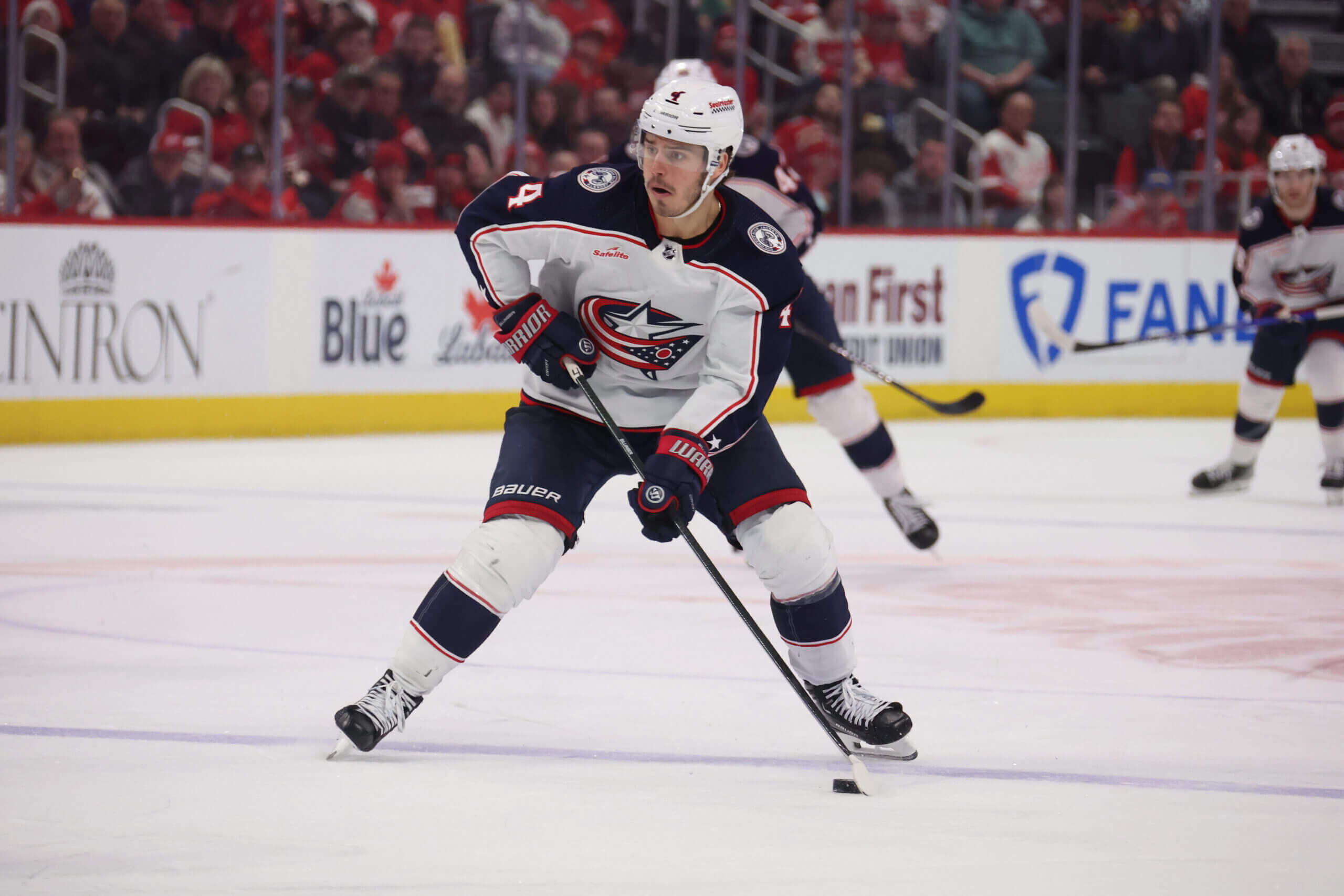
Cole Sillinger had a good season for the Blue Jackets last year. (Gregory Shamus / Getty Images)15. Detroit Red Wings: C Cole Sillinger
Actual draft pick: No. 12 (change: -3) to Columbus
My final ranking: No. 9 (change: -6)
I think the Blue Jackets playing Sillinger in the NHL at 18 slowed his development in some ways (despite his advanced physical makeup, I think he could have benefitted from returning to Medicine Hat under Willie Desjardins post-draft and playing at the world juniors). In junior, he was a pure skill guy. He was competitive, and physically engaged, and physically advanced, but it was really his hands and long-range shot that were his calling card. He had a good season for the Blue Jackets last year and looks like their 3C of the future now but because he played in the NHL so young he hasn’t been able to play in a skill role and it has changed his trajectory some. I still think he’s going to score 50-plus points at some point though.
Actual draft pick: No. 13 (change: -3) to Calgary
My final ranking: No. 17 (change: +1)
If it looks like a teens pick, and walks like a teens pick, and plays like a teens pick, it’s probably a teens pick. Coronato’s been a very good, very well-rounded USHL, NCAA and AHL player and scorer. He didn’t have top-10 talent but he fit into that next tier and still does. He’s going to score 20-plus goals and play hard in the NHL for a lot of years.
Actual draft pick: No. 57 (change: +40) to Toronto
My final ranking: No. 75 (change: +58)
I liked Knies, predicted that he would be a good college player right away, and saw a lot of pro tools. But one of the consequences of the pandemic for me was the way it limited travel and actually seeing what these kids off the ice looked like, because I didn’t realize just how much of a man he was to be blunt. There was also no combine that year where even if I hadn’t seen him on the road I would have been able to get a look at him there. I saw it in Toronto, and in Traverse City, and at the world juniors shortly after the draft but it really is striking how strong he is and it’s become the defining quality of his game over time. He’s not going to be a super productive player but he’s a top-nine winger on any team in the league because of his strength.
Actual draft pick: No. 150 (change: +132) to Montreal
My final ranking: No. 34 (change: +16)
Roy’s a player who I think, if you paid close enough attention to his draft year, you could see was going to end up back closer to the one who was a No. 1 pick into the Q than to the one who bizarrely lingered until late in the fifth round of the NHL Draft. For starters, I think players who are traded in their draft years almost always take an unfair hit because: 1. It’s inherently viewed as a negative when things don’t work out in one place; 2. They usually end up in a building with different scouts than the ones who had watched them previously; and 3. They have to deal with a new coach, new linemates, a new role, and the adjustment period that comes with those things. In his case, if you’d asked around you would have learned that the move from Saint John to Sherbrooke was a complicated and layered one but that he’d primarily requested a trade to be closer to family in Quebec because COVID-19 restrictions were preventing them from visiting the Maritimes. On top of that, I think Roy dealt with some overexposure bias/nitpicking, which is common for players who are names at 14, 15 years old. And then there was his game, which at that age didn’t really wow with the puck-dominant, skilled style that so many are drawn to. But there was still real substance to his game and several translatable pro qualities, led by his puck protection, his shot generation, his opportunism, his hardness on pucks and good hands in tight, and a better passing game than his assists column indicated. Since, he has added depth and dimension one piece at a time to that foundation, rounding out the rest of his game really nicely and becoming the projectable top-nine winger that I think he looked like even then if you could cut out the noise.
19. Nashville Predators: RHD Scott Morrow
Actual draft pick: No. 40 (change: +21) to Carolina
My final ranking: No. 33 (change: +14)
There were some questions about Morrow pre- and even post-draft but his length, skating, skill combination was undeniable and after some maturing on the ice at a UMass program that has a strong track record of developing defensemen, he looks like he’s on a path to becoming an offensive defenseman in the NHL after being one of the top ones in college over the last three seasons. His game still has some growing to do defensively, but it has come far enough to strengthen the projection of his offense.
Actual draft pick: No. 16 (change: -4) to Rangers
My final ranking: No. 23 (change: +3)
Othmann has always been a natural scorer with some jam and that’s still what he is today. His game hasn’t progressed as sharply as you’d like out of a teens pick, he still lacks a bit of a pace, and he’s not the most cerebral playmaker, but he projects as a secondary top-nine scorer with some snarl and PP value.
Actual draft pick: No. 31 (change: +10) to Montreal
My final ranking: Unranked
I didn’t rank Mailloux in his draft year for personal reasons but on talent and upside, he was a first-rounder. He was better as a rookie in the AHL last year than I expected, too. Mailloux’s got NHL size and strength, plays hard, and has real offense to his game. His decision-making and reads are probably always going to come with some headaches at the NHL level, but they have slowly improved and should be passable. The physical tools will carry him, potentially even into a top-four career.
Actual draft pick: No. 15 (change: -7) to Detroit
My final ranking: No. 19 (change: -3)
Cossa always came with more risk than Wallstedt. The Red Wings decided to bet on his size, competitive fire and athleticism. His development has been predictably a little more topsy-turvy since then but the appeal is still very real and last season was a positive note. I still think Wallstedt was the better choice, but you don’t have to wrap yourself into a pretzel to see what they saw in Cossa. He’s still one of the better goalie prospects in the sport.
23. Dallas Stars: LHD J.J. Moser
Actual draft pick: No. 60 (change: +37) to Arizona
My final ranking: No. 89 (change: +66)
I’ve had a tough time slotting overagers over the years, but I think my evaluation of Moser at the time was sound and I did write the following in his report: “I debated ranking him as high as the late 70s.” Moser’s a solid No. 4/5 D and PP2 guy, which is a good player.
Actual draft pick: No. 18 (change: -6) to Winnipeg
My final ranking: No. 8 (change: -16)
I was probably too high on Lucius considering the injury history he already had (which I wrote a feature on that year), but I’m not going to be too hard on myself for it because the injuries he has had since have been unrelated and I really do feel for the kid because it has played such a long and consistent role in his development. He remains tricky to project but has still shown high-end skill/finishing when healthy and I believe he’s more talented than the remaining players if he can get an uninterrupted season in and get back on track.
25. Columbus Blue Jackets: RW Jackson Blake
Actual draft pick: No. 109 (change: +84) to Carolina
My final ranking: No. 78 (change: +53)
Blake’s a player who really benefitted from returning to the USHL for his post-draft season so that he could really make an impact in his freshman year at North Dakota, something I think more young players would be smart to do. I understand the draw of going straight into college hockey, and I understand the egos at play, but development should be the focus and Blake proved that you can go back, be a top player, move on when you’ve checked that box, and then quickly ascend from there through college. That was especially true post-pandemic. Not all players who go back are resigning themselves to a five-year timeline post-draft. Blake was a 60-point player in his sophomore season even though he was junior aged (though the August birthday helped). He’s never going to be a strong defensive player but he works hard enough that he’s going to get out there and I believe he’s skilled enough to make it work as a top-nine/PP2 winger who adds skill to a group and can play with a variety of player types.
26. Minnesota Wild: LW Zachary Bolduc
Actual draft pick: No. 17 (change: -9) to St. Louis
My final ranking: No. 35 (change: +9)
Bolduc was a challenging evaluation as a center who was the QMJHL’s rookie of the year winner coming into his draft year, but who looked like a winger if you paid close enough attention. I wrote the following that year in slotting him early second: “I expect he’ll be picked in the first round. My only reservation in ranking him there is about his ceiling, which I think tops out as a second-line player if all goes well.” Three years later, I think that’s what you’re looking at. He’s not for everyone, he clearly has to play in an offensive role, but he’s not going to be a premium skill guy either so you’re looking at a potential second-liner with some inconsistencies in his game. There’s some risk with his projection that if he can’t become a top-six guy, and can’t change his style, he becomes a AAAA guy, though.
Actual draft pick: No. 21 (change: -6) to Boston
My final ranking: No. 13 (change: -14)
It was easy to watch Lysell skate pre-draft and get a little overexcited about him, and ultimately I think I overemphasized his flashy skating and moments of skill and tracking/hunting relative to some of the practical problems that players who look and play like he does can run into in the NHL. He has been a better AHL player than a WHL one, and I expect him to stick with the Bruins next season as a middle-six winger, but the rest of his game beyond what was already there pre-draft hasn’t developed as much as I thought it would.
Actual draft pick: No. 27 (change: -1) to Nashville
My final ranking: No. 40 (change: +12)
L’Heureux was a polarizing player pre-draft because of his hotheadedness, poor decision-making, and the real question-raising about whether he had it between the ears. You could see the talent, and the fearlessness, and the pro build though too and those things have continued to carry him. He plays on the edge and his teams have always had to learn to live with that because he’s not going to learn to play differently. That can be bottled though and he should be a real pest who also adds some secondary skill to an NHL lineup. He’s also the kind of player who could cut his teeth on a fourth line and then also play on a second line someday.
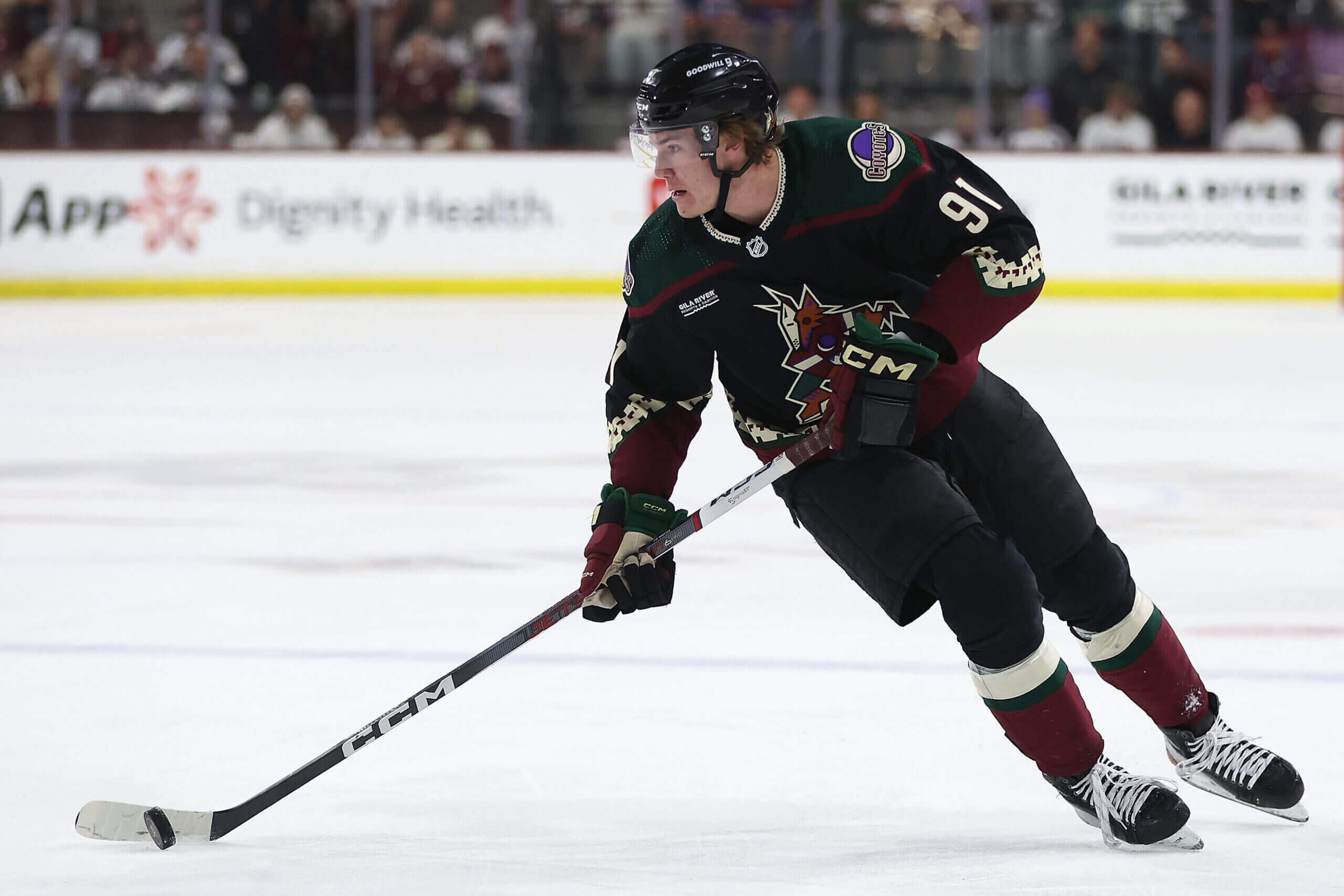
Josh Doan had 9 points in 11 games last season to start his NHL career. (Christian Petersen / Getty Images)29. New Jersey Devils: RW Josh Doan
Actual draft pick: No. 37 (change: +8) to Arizona
My final ranking: Honourable mention
I don’t think Doan’s 9-points-in-11-games start to his NHL career last season is indicative of the offense he’s going to provide but he’s going to be a really strong third-line winger who can chip in in a variety of ways and plays with a pro identity and competitiveness. There were signs of that, too, and while I had time for him as a mid-round pick I probably should have trusted his rapid development curve at the time and slotted him in the second or third on my list.
Actual draft pick: No. 25 (change: -5) to Florida
My final ranking: No 27 (change: -3)
Samoskevich was a first-rounder on talent and skating who had enough to work on to become a projectable NHL player that he was more a late-first. He’s still got some areas of his game that need work but has progressed in line with that kind of slotting, becoming a point-per-game but not star NCAA player and then leading his AHL team in scoring as a rookie to earn his first call-up. I’m still not sure exactly what he is in the NHL but he’ll probably be a middle-sixer who plays 15 minutes a night, contributes offensively at five-on-five, and helps out on the second power play.
Actual draft pick: No. 105 (change: +74) to Chicago
My final ranking: Honourable mention
Del Mastro has put together back-to-back really solid seasons to finish his junior career and start his pro career in the AHL (and briefly NHL) last season. I’m confident he’s going to be more than No. 6-7 without being confident about his top-four merits. He’s probably a No. 4/5 in the NHL but I expect him to be a part of Chicago’s blue line long term with his size, defensive value and developing offensive game. I thought about ranking Ryker Evans, who showed more at the NHL level last year, here, but Evans is also older and I think Del Mastro’s defensive upside is a little higher.
32. Chicago Blackhawks: C Aatu Raty
Actual draft pick: No. 52 (change: +20) to Islanders
My final ranking: No. 16 (change: -16)
I think you could make a case for any number of other forwards here (Carter Mazur, Fedor Svechkov, Ryan Winterton). But I still think Raty becomes a solid NHL contributor and despite his slow start in Abbotsford both after the trade from the Isles last year and to start last season, he still finished with 52 points in 72 games in the AHL last year and he has still had some promising games in the NHL with both the Canucks and Isles. I also want to be careful not to over-analyze him — which I think was a factor in his draft-year fall — relative to those other guys, who all produced less than him last year even if it may not feel like it because of what our expectations of Raty once were (this is a kid who at 16 was viewed as in the first-overall conversation).
Honorable mentions (alphabetical order):
LW Nikita Chibrikov
Actual draft pick: No. 50 to Winnipeg
My final ranking: No. 28
LHD Sean Behrens
Actual draft pick: No. 61 to Colorado
My final ranking: No. 26
LHD Shai Buium
Actual draft pick: No. 36 to Detroit
My final ranking: No. 84
LHD Ryker Evans
Actual draft pick: No. 35 to Seattle
My final ranking: Unranked
RHD Vincent Iorio
Actual draft pick: No. 55 to Washington
My final ranking: No. 99
C Oliver Kapanen
Actual draft pick: No. 64 to Montreal
My final ranking: No. 69
LW Ville Koivunen
Actual draft pick: No. 51 to Carolina
My final ranking: No. 43
LW James Malatesta
Actual draft pick: No. 133 to Columbus
My final ranking: No. 94
RW Carter Mazur
Actual draft pick: No. 70 to Detroit
My final ranking: Unranked
RW/LW Isak Rosen
Actual draft pick: No. 14 to Buffalo
My final ranking: No. 25
C Fedor Svechkov
Actual draft pick: No. 19 to Nashville
My final ranking: No. 36
LHD Stanislav Svozil
Actual draft pick: No. 69 to Columbus
My final ranking: No. 48
RW Ryan Winterton
Actual draft pick: No. 67 to Seattle
My final ranking: No. 61
Takeaways
On the whole, I’m mostly happy with how my 2021 list performed. I actually like my top 12 in hindsight. Though they weren’t in the exact right order, I think those were the top 12 prospects at the time with the information we had. There are some important and big wins, led by bang-on evaluations of polarizing players in Stankoven and Roy. There was some good mistake-avoidance, led by my Boucher ranking but also including other players who weren’t discussed here and were taken in the first round or shortly after but ranked lower (and in appropriate spots, I think) on my list: Chase Stillman, Nolan Allan, Zach Dean, Daniil Chayka. I’m confident I landed in the right spot on the goalies. I like where I was at on most of the honorable mentions above as well.
I was a little low on Luke Hughes, Mason McTavish, and Josh Doan, but not unforgivably so (I think I’ve learned to trust the late risers a little more since McTavish and Doan, too). Not captured here were also a few others who didn’t make the re-draft who I was too high on: Sasha Pastujov (No. 14 on my list, taken No. 66, probably should have gone somewhere in between but definitely much closer to 66th, even though I haven’t given up on him as a potential middle-six playmaker), Francesco Pinelli (No. 24 on my list, taken appropriately at No. 42), and Samu Salminen (No. 29 on my list, taken No. 68, and whose skating should have been more of a red flag). But I can live with the reasons I was lower on some others: Wyatt Johnston (lack of games), Matthew Knies (lack of face time), Logan Mailloux (off-ice reasons).
Still, through seven years of these reviews, I think there’s a case to be made that my list has either stood up well or outperformed the league’s draft order in six of seven of them (my 2020 list underperformed) and I think my work continues to speak for itself on the whole.
Previous re-drafts and ranking reviews:
(Top photo of Luke Hughes and Owen Power: Curtis Comeau / Icon Sportswire via Getty Images and Bill Wippert / NHLI via Getty Images)