
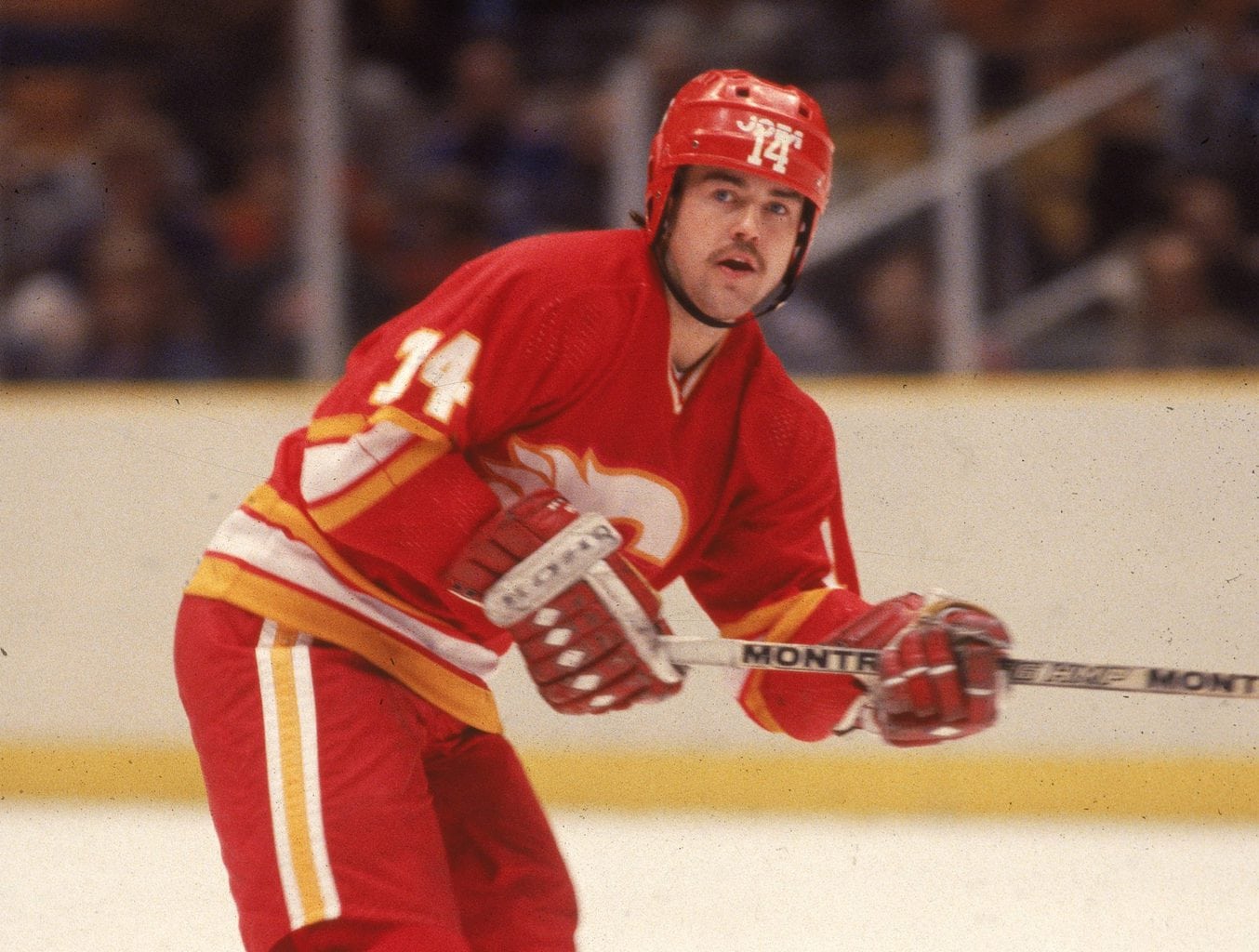
Typically, an NHL trade tree is made special because its branches illustrate the NHL’s evolution. A trade between two teams impacts both teams, but the ensuing trades made with those pieces lead to large ripples that change the state of the league. Even a relatively-minor deal can have profound effects on the state of the league, and one of the best examples of this is the Kent Nilsson trade tree. Many of you may know the name, but the trade tree involved way more than just the Swede.
Nilsson’s Path to Calgary
To properly begin the Nilsson story, we need to start with the World Hockey Association. Nilsson played with the Winnipeg Jets in the WHA before the merger in 1979. In 80 games as a rookie in the WHA, Nilsson recorded 42 goals and 65 assists for 107 points, earning himself the Lou Kaplan Trophy for the WHA’s best rookie, essentially the WHA’s version of the Calder Trophy. The following season, Nilsson won the Paul Deneau Trophy for outstanding leadership, recording 39 goals and 68 assists for 107 points again. In both seasons, Nilsson helped the Jets win the Avco World Trophy.
The issue was that the WHA was dying. Nilsson was successful in the WHA, but as the money trickled out of the league, it ultimately merged with the NHL. It resulted in the Swede having to honor his status as a draft pick of a different NHL team. Atlanta drafted him in the 1974 NHL Draft. A few people will be surprised to learn that a team in Atlanta existed in the 1970s, but the Atlanta Flames did indeed pick up Nilsson. Nilsson recorded 40 goals and 53 assists for 93 points in 80 games in his only season in Atlanta.
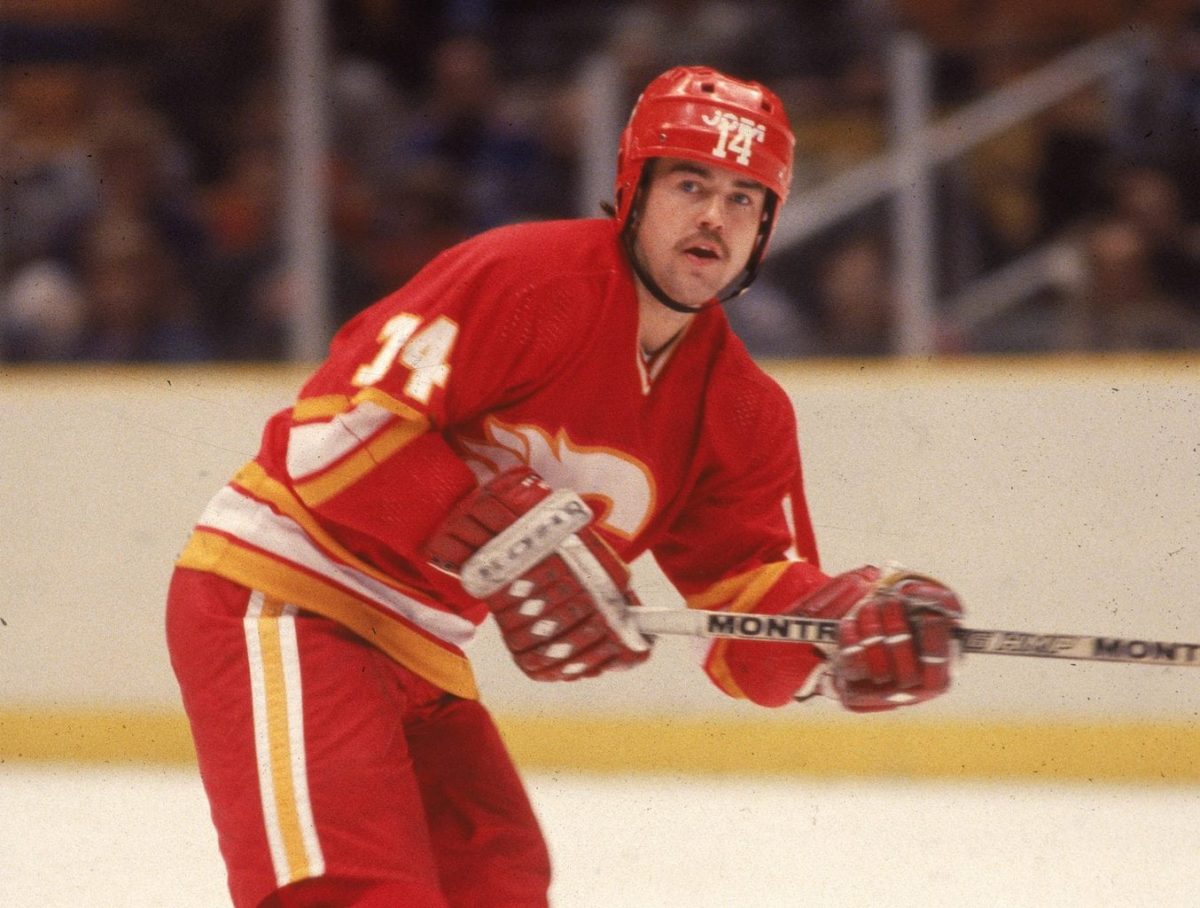 Kent Nilsson, Calgary Flames, Nov. 1983 (Photo by Bruce Bennett Studios via Getty Images Studios/Getty Images)
Change was coming again to where Nilsson played hockey. Instead of the leagues merging, it was looming relocation. Atlanta had its first NHL team stripped away from it. They were relocated to Alberta to join one of the former WHA teams that was situated in Edmonton. There had been a WHA team in Calgary, but they folded before Nilsson made his debut, so this would be his first time playing in Calgary. As the team relocated to Calgary, Nilsson had the ultimate flash for a player. In the 80 games he played with the Flames, Nilsson scored 49 goals and 82 assists for 131 points. It got him onto the NHL’s fourth All-Star team, and he finished fourth in Lady Byng voting.
Nilsson continued to dominate in Alberta, scoring 229 goals and 333 assists for 562 points in 425 games. It’s a scoring rate that brought him into the upper echelons of the thoughts around the NHL. With the Flames looking to bolster for the future in the mid-1980s, rumors began to swirl around the future of the Swede. Eventually, Nilsson was dealt to the Minnesota North Stars.
The Trade
Nilsson was traded to the North Stars with a 1987 third-round pick for a 1985 second-round pick and a 1987 second-round pick. He just wasn’t the same player in Minnesota that he was in Calgary. In his only full season with the North Stars, he scored 16 goals and 44 assists for 60 points in 61 games. He followed it up with 13 goals and 33 assists for 46 points in 44 games before he was traded again to Edmonton for a 1988 second-round pick and cash. In Edmonton, Nilsson scored five goals and 12 assists for 17 points in 17 games, but he wasn’t there for that. It was the Oilers of the 1980s, one of the most dominant dynasties the league has seen. He was there to try and help the Oilers capture the Stanley Cup again, and that’s what he did. In 21 playoff games, Nilsson scored six goals and 13 assists for 19 points as the Oilers won the Cup.
Following the 1987 Stanley Cup Final, Nilsson opted to return to Europe, turning down a contract extension from the Oilers. He did attempt a comeback in the 1994-95 season with the Oilers, but called it quits after just six games to return to Europe to be with his family. It ended the career of the star who began to bring hockey in Calgary to the forefront of the NHL. So, what about the resulting trade tree?
Minnesota’s Side
We’ll start with the North Stars, who got a pick alongside Nisson in that trade. That 1986 third-round pick was used on Brad Turner. Turner was never able to secure a spot in the NHL with the North Stars, but he did play briefly with the New York Islanders. Sadly, he wasn’t traded out of Minnesota, so that part ends.
Well, what about the pick the North Stars got for Nilsson? They used that on defenseman Link Gaetz. Gaetz played in 17 games with the North Stars, getting two assists, but he wasn’t traded. It’s a disappointing side of the Nilsson trade tree, so we’ll come back to this organization later, after another trade. For now, let’s look at the Calgary side.
Calgary Branch
Calgary’s picks were both used well. We’ll start with the 1987 second-round pick, which was used on Stephane Matteau. Matteau is best known for scoring that iconic goal for the New York Rangers, but started his career in Calgary. He only played 82 games for the Flames, but he scored 16 goals and 19 assists for 35 points as he broke into the league. However, before he became the overtime hero in Manhattan, he was traded from Calgary to the Chicago Blackhawks. The Flames got back defenseman Trent Yawney. Yawney spent five seasons in southern Alberta, scoring 11 goals and 45 assists for a total of 56 points. That wasn’t his job. He was paid to stop goals in the defensive zone, and he did that during his tenure in Calgary. However, he wasn’t traded, ending another branch.
It has been a disappointing trade tree so far, so let’s get into the reason we are here. That 1985 second-round pick? Yeah, Calgary picked Joe Nieuwendyk with it. If you are new to hockey and don’t recognize the name, or are younger and didn’t get to see him play, Nieuwendyk was a monster. When he got his first taste of the NHL in 1986-87, he played in just nine games, scoring five goals and adding an assist for six points. The following season, he made the Flames roster, and he torched the league. In 75 games, Nieuwendyk scored 51 goals and 41 assists for 92 points as he ran away with the Calder Trophy as the league’s best rookie.
He built on that the following season, still scoring 51 goals but with only 31 assists, for a total of 82 points. However, that wasn’t the defining moment of his season. In the playoffs, Nieuwendyk scored 10 goals and four assists for 14 points in 22 games as the Flames captured the first Stanley Cup in the history of their franchise. Nieuwendyk continued to dominate throughout his time in Calgary, scoring 314 goals and 302 assists for 616 points in 577 games. In the playoffs, the dynamic center added 32 goals and 28 assists for 60 points in 66 playoff games.
Nieuwendyk’s Trade
Nieuwendyk’s time in Calgary came to an end when, ironically, the organization that sent the pick to Calgary that became the Hall of Fame center wanted him back. The North Stars had relocated to Dallas, and since it would make no sense to be the “North Stars” in one of the most southern mainland states in the US, they dropped the “North,” becoming the Dallas Stars we know today. Nieuwendyk was traded to Dallas for Corey Millen and a prospect, which we will revisit later.
In Dallas, Nieuwendyk continued to dominate, but not to the same extent he had in Calgary. His days of reaching the 40-50 goal mark seemed to be behind him, but he continued to be a core part of the Stars. In 442 games with the Stars, Nieuwendyk scored 128 goals and 162 assists for 340 points. He also helped Dallas capture the 1999 Stanley Cup, and he would eventually get traded to the New Jersey Devils, where he’d help them win the Cup too. Then, he’d bounce around in places like Toronto and Florida before his retirement at the end of the 2006-07 season.
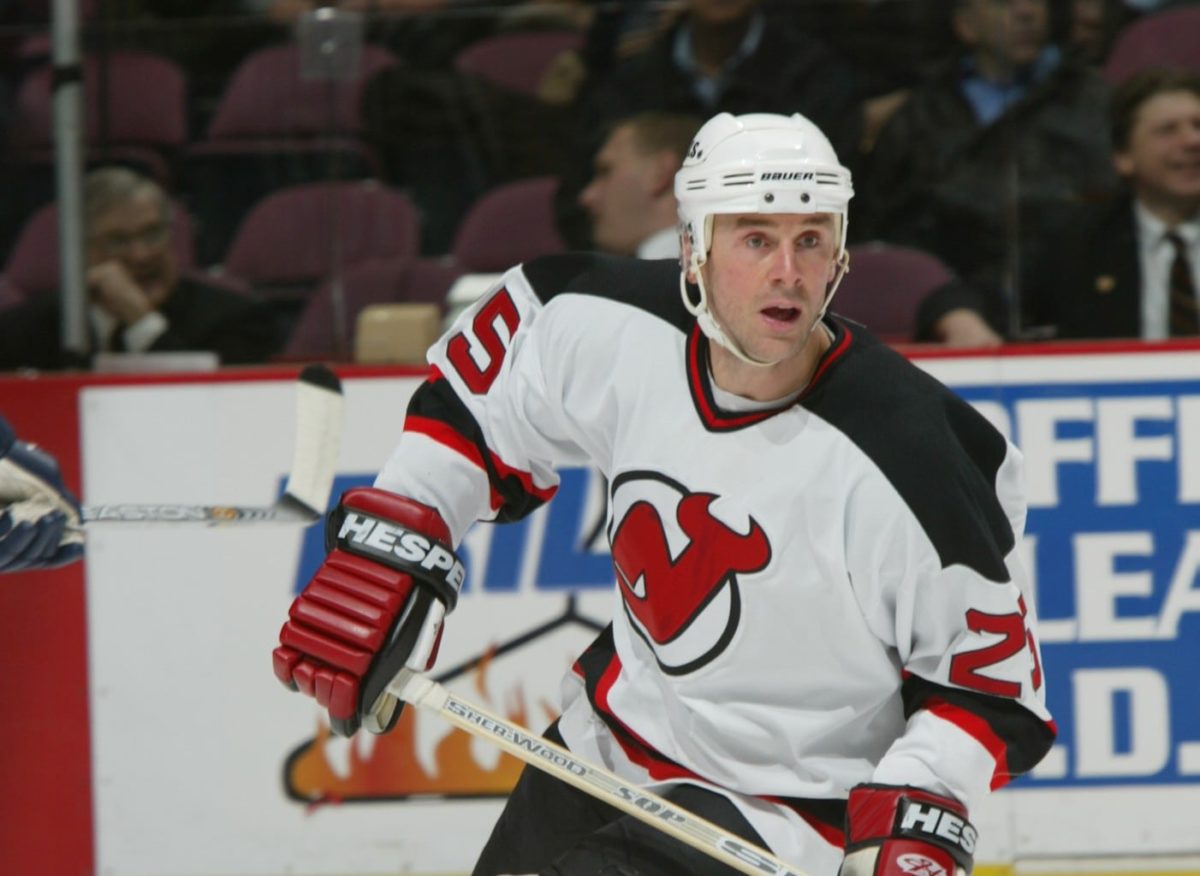 Joe Nieuwendyk, New Jersey Devils. (Photo by Bruce Bennett Studios via Getty Images Studios/Getty Images)
As for what the Flames got back for him, Millen was at the end of his career when he arrived in Calgary. He only played 92 games as a Flame, scoring 15 goals and 25 assists, but he wasn’t a Nieuwendyk replacement. It was going to be next to impossible to replace a Hockey Hall of Fame player, especially one as good as Nieuwendyk. That’s what makes it all the more impressive, considering how the Flames did it, and for that, we must turn to the prospect Dallas gave up.
From One Flames Great to Another
The prospect I said we’d come back to earlier? He was selected 11th overall in the 1995 NHL Draft. He was one of those prospects who was always thought to be destined for great things, and he did not disappoint. That player? Jarome Iginla. Some don’t remember how dominant he was as a Flame, and only recall the shell of Iginla in his journeyman days at the end of his career. However, when Iginla was young, he was a terrifying force.
Iginla’s most significant mark against him is that he never won the Stanley Cup, but it wasn’t his fault. He was named to the All-Rookie team in his debut season, in which he scored 21 goals and 29 assists for 50 points. However, that’s not what Iginla fans remember. What they remember is his 2001-02 season, during which he scored 52 goals and 44 assists for 96 points, winning the Rocket Richard Trophy as the league’s top goal scorer and announcing his arrival as a star in the NHL. He also won the Art Ross Trophy as the top point producer, and the Ted Lindsay Award as the most valuable player, as voted by the players. Two seasons later, Iginla captured the Rocket Richard again. He won the King Clancy Trophy for his leadership and humanitarian contributions that same season.
Related: Rick Vaive Trade Tree: Vancouver Canucks to Toronto Maple Leafs
During his time in Calgary, Iginla won two Rocket Richard Trophies, the King Clancy Memorial Trophy, an Art Ross Trophy, a Ted Lindsay Award, and a Mark Messier Leadership Award, and was named to the NHL’s All-Star team four times. He played in Calgary for 16 years, scoring 525 goals and 570 assists for 1,095 points in 1,219 games with the team. However, the sun sets on everyone eventually, and as Iginla got older, the Flames had to decide what to do with their star veteran, and they opted to cash in.
Iginla was traded to the Pittsburgh Penguins for Kenny Agostino, Ben Hanowski, and a 2013 first-round pick. Sadly, this is a quicker branch. Agostino wasn’t traded after his ten games as a Flame, during which he scored a goal and an assist. Hanowski played 16 games as a Flame, scoring a goal and adding two assists, but wasn’t dealt. As for the pick, the Flames drafted Morgan Klimchuk. He played a whopping one game in the NHL before being traded to the Toronto Maple Leafs for Andrew Nielsen. Nielsen never played in the NHL, bringing our story to a close.
The Impact on the NHL
If we go back to the beginning, this trade tree originated in the WHA before Nilsson was traded to the Atlanta Flames. It spans nearly 40 years and encompasses multiple eras. It’s seen two of the greatest players ever to wear the Flaming “C” come from one trade. It resulted in the Flames getting a core part of their Stanley Cup victory, and two different Hockey Hall of Fame players coming through.
How different would the NHL look today if this hadn’t happened? What if Iginla had stayed in Dallas? Do the Stars win that Cup in 1999? We will never know the answers, and while we can speculate about whether it is likely or not, we will never know. Iginla became a Flame, and he became a star in Alberta. It’s a tree that will never see its branches grow, but its impact will be felt forever, as it helped create a piece of history.
