

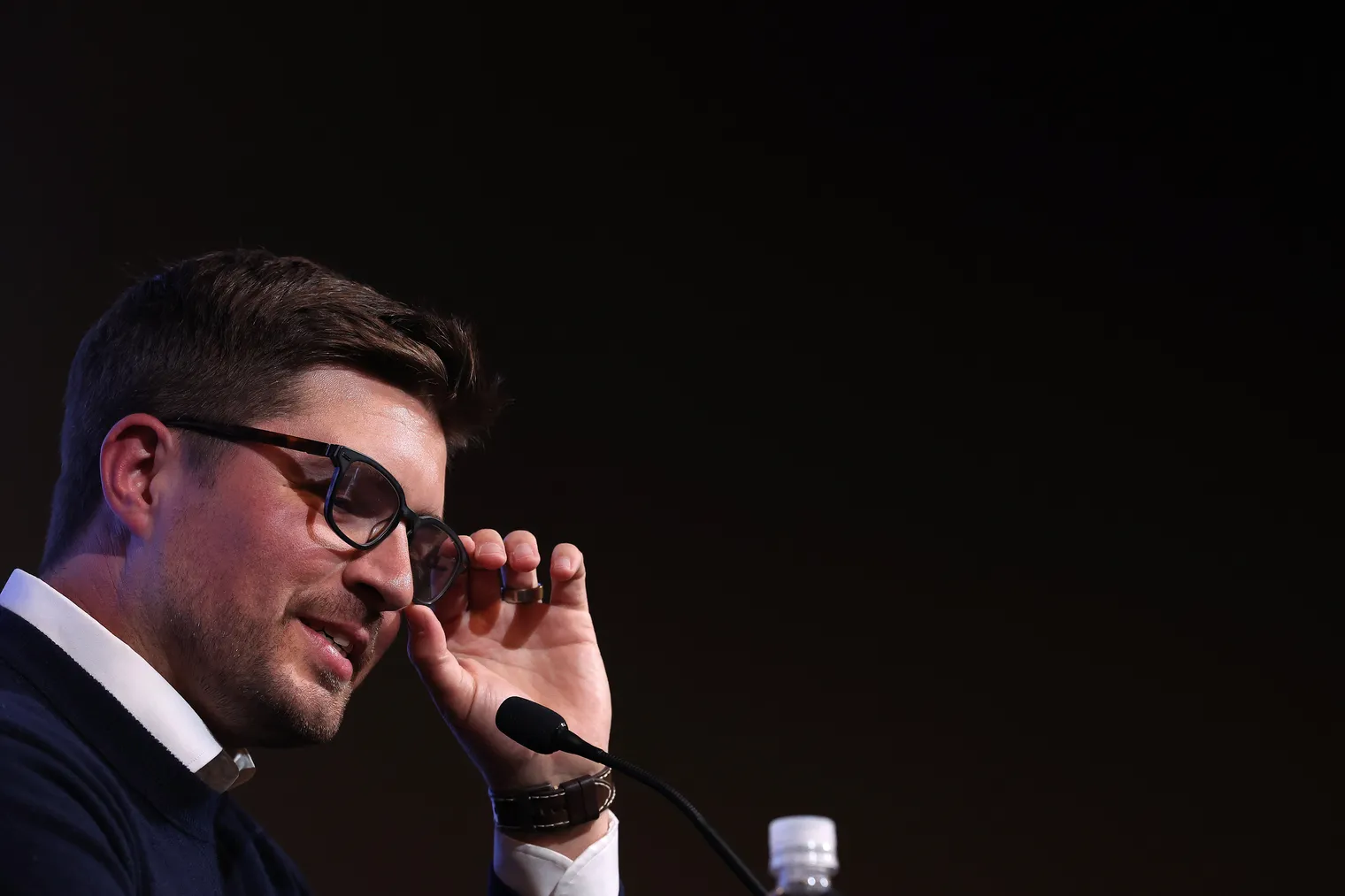
Last week one of my favorite hockey podcasts interviewed Penguins President of Hockey Operations Kyle Dubas. This is a part of their ‘People in the Game’ series aka Offseason Content. They’ve also interviewed an agent (Todd Diamond), a player (Brenden Dillon), and a coach (Rick Tocchet). You can listen to this episode here or wherever you get your podcasts. This show is so informative and I truly feel it makes me a better hockey fan. All of it is interesting and it costs you nothing other than an hour of your time – I can’t recommend it enough. And this episode in particular is very relevant to we Penguin fans. So I wanted to hit some highlights about what was asked of and answered by Kyle Dubas.
The Strategy
Host: Do you share the sentiment that the Penguins are in a unique spot relative to the rest of the league? Everyone will put on a brave face and say ‘We’re trying to compete, it’s going to be better than last year’ but a lot of the teams near the bottom of the standings heading into this offseason were relatively aggressive this offseason…Whereas the Penguins focus has been around the lens of acquiring as much future draft capital as you can…You obviously still have a bunch of highly desirable veterans that will garner a lot of attention in trade buzz. Do you feel like the Penguins are ‘zigging’ while the rest of the league is ‘zagging’ or is that overblown?
Dubas: The one thing I disagree with is we’re actively trying to get worse. That doesn’t enter into our mindset at all…Our goal is trying to return the team to being a contender and one that can sustain itself once it’s there. (emphasis mine) What we’ve elected to do…is rather than go out and bring in players in their late 20s early 30s… players who are going to decline… we didn’t want to have those types of players be going into decline when those players (referring to drafted players) begin to hit.
Dubas: So the strategy that we’ve elected to use… is to identify players that we think haven’t received a great opportunity yet and try to give them that opportunity. And they’re young enough that if they show they can reach their potential they have a chance to be a part of it (the Penguins).
I think this is very enlightening as to how Dubas thinks and what exactly is the plan for this team. It is interesting to go back and review the trades and signings they’ve made and put them into the context of what Dubas said which I will summarize as ‘buy low, sell high’.
In terms of selling high the Jake Guentzel and Marcus Pettersson trades show where a player in his prime was sent out for other assets. These ended up being Ville Koivunen, Vasily Ponomaryev, Melvin Fernstrom, Bill Zonnon and Will Horcoff.
Other young players were brought in with the hope they will contribute quickly with a larger opportunity. The Cody Glass trade was a clear ‘buy low’ on a player who might’ve blossomed. Phil Tomasino, Tommy Novak, Emil Bemstrom, Connor Dewar, and Conor Timmins are other examples of this. There’s no better example though than trading out Alex Nedjelkovic and replacing him with Arturs Silovs – trading away a player in his 30s, on the other side of his ‘peak’ as a player and bringing in a player in his early to mid 20s that’s on the rise.
Then there are the free agent signings. In his tenure with the Penguins Dubas hasn’t made a big time signing, yet. I suppose you could count Ryan Graves; but it seems to me that between Toronto being hamstrung by the combination of a flat cap and the Tavares contract, and Pittsburgh regretting the Ryan Graves and Tristan Jarry deals, Dubas may have severe UFA buyer’s remorse and an aversion to using free agency to acquire key players. However you can see the ‘buy low, sell high’ philosophy at play with guys like Lars Eller and Anthony Beauvillier who were brought in at low points in there careers and flipped for assets. Even though they weren’t or haven’t yet been flipped for futures, Vinnie Hinestroza, Matt Gryzlyck, and Anthony Mantha are in this category as well. I think Parker Wotherspoon, Caleb Jones, and Justin Brazeau also fit here; although they’re on the younger side of things and could stick around for longer than you might think.
Finally you have the pure ‘buy low’ players. These are cap dumps that the Penguins have acquired like Kevin Hayes and Matt Dumba. Flipping Luke Schenn could qualify – although it also seems like printing free money thanks to fleecing Nashville. They’ve already ‘made a profit’ in acquiring these players for assets. Flipping them will juice the returns even more. I’m using this stock market analogy deliberately as I think this is how this front office is going to operate going forward. They’re making moves at the margins to build a big portfolio of player stocks – and they’ll move off of that stock if they can sell high on it and buy low on something promising to outperform their current asset. If they do that enough times they’ll build a winning team and they’ll keep doing it to sustain that process.
The Draft
Host: I feel like there’s a bit of a misnomer between ‘playing fast’ and skating fast. In your conversations with your scouting staff and personnel does this topic come up? Are you viewing this as an opportunity to get players that are undervalued in the draft… and that once you get them in the building and working with your development staff that this stuff (other skills) is going to translate when they’re ready to come to the NHL?
Dubas: First I think developmentally over time the ability to affect change in skating, through a combination of on-ice instruction and off-ice components… you can measure precisely the work you’re doing for a player and how that will impact or change their speed or outright speed – which tends to be how most people grade a player on skating. So unless the player has a severe physical limitation, which through the last number of years now… we’ve been able to… identify which physical limitations pose a large barrier to skating development.
Dubas: Then the other part of it is, if you can go really fast but you don’t know where you’re going or what you’re going to do with the puck if you have it or get it back if you don’t you just go to a lot of bad places really quickly. So more so than outright speed the thing we’ve come to value most is the ability to change speeds and create space.
This certainly tracks with Dubas’s drafting history. While I don’t recall any specific prospect he’s taken that’s been labeled a ‘poor’ skater, raw straight line speed has never been a priority of his. And when you view that trait as something that can be developed and improved over time that makes sense. They appear to value ‘hockey sense’ and agility much more than these other physical attributes. I continue to be skeptical of Dubas’s selections in particular but I do agree with this sentiment that the ability to create space and hockey sense are key attributes and should be valued highly.
There’s more in the interview about the league overall, some things about his time in Toronto, and how they intend to use WBS going forward. I think it’s all fascinating; but these two topics stood out to me. The interview gives us the fans a window into how Dubas thinks. Whether you agree or disagree with the decisions themselves, hearing how the decision was reached is insightful.
The content expressed in fanposts does not necessarily reflect the opinions of the staff here at Pensburgh.com. FanPosts are opinions expressed by fans of various teams throughout the league but may be more Pittsburgh-centric for obvious reasons.