
“Summer hockey,” that’s a quote we heard all week at the World Junior Summer Showcase that was held last week at Ridder Arena on the University of Minnesota Campus in Minneapolis, Minnesota. It ran from Friday, July 25, to Saturday, August 2, with practices and games throughout the week for four of the big teams that will be part of the World Junior Hockey Championship in December.
Canada, Finland, Sweden, and the United States all took part, with several big names making an appearance, like Cole Eiserman and James Hagens for USA, Matthew Schaefer and Gavin McKenna for Canada, Aatos Koivu and Heikki Ruohonen for Finland, and Jack Berglund and Liam Danielsson for Sweden, among many others. In this article, we’ll take a look at how this showcase is a step in the overall process of what it takes to make the final cut for Team USA. However, all of these teams use a similar process, and this showcase is the first step.
Showcase Allows Teams to Familiarize Themselves
Last week was just the start of basically a four-month-long process of evaluations for these players trying to make the team. USA head coach Bob Motzko repeatedly said all week that this is a process and it’s just the beginning. While they have returning players from last year, a lot of players are new, and they have to not only get used to each other but the coaching staff, as well, which is what this showcase gives them a chance to do.
“The coach is going to tell you great, but it’s not December, this is just the first process of what we’re doing. We’re identifying players right now. I still am trying to get to, I know the players on the ice now, and I’m walking around with my sheets trying to get to know them off the ice. One of our other coaches said I said the wrong name today, I called the guy someone else, and that’s what we’re doing. We’re still getting familiar,” said Motzko about the intense rivalry between all the teams.
It’s one thing to watch players participate on different teams; it’s another thing to figure out where to put them on your own team and which players should stay and go. Obviously, the coach knows what he needs, but he has to find players that fit those areas, and in just a week, that’s a hard thing to do. So the showcase isn’t a lot about individual goal-scoring skills, but where they fit in as a whole team, then individuals can get noticed, plus knowing who can fill in if someone else gets injured.
Showcase is Part of a Process
The showcase gives these players a place to show what they can do without winning or losing getting in the way. Of course, every team has pride and wants to win because they are some of the most competitive players in the game, but they know it’s not all done with one loss. However, they also know they have to do their best to ensure a space on the final team. That can be harder to do than most things because if the player overdoes it, that can have an adverse effect as well like too many penalties.
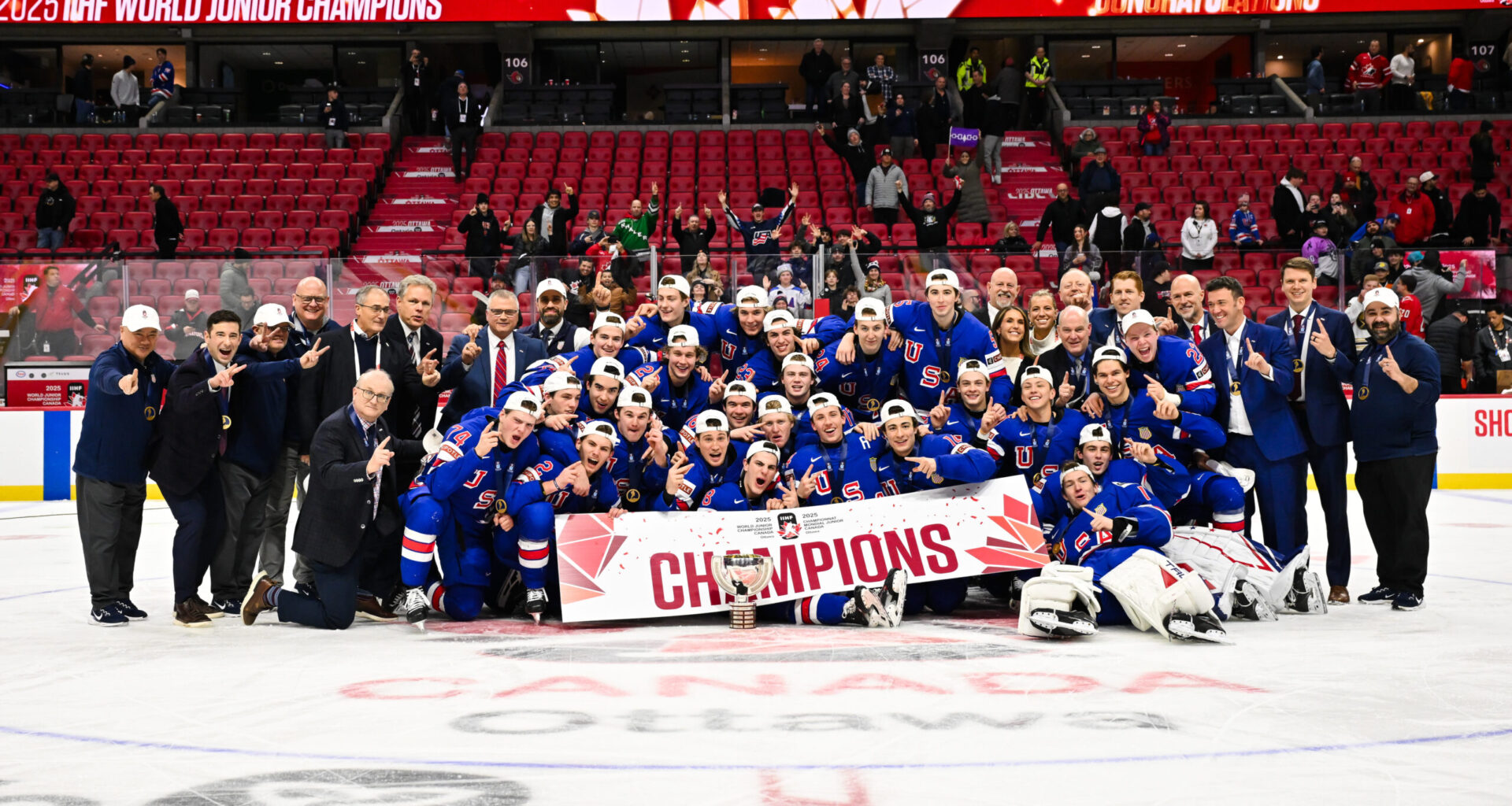
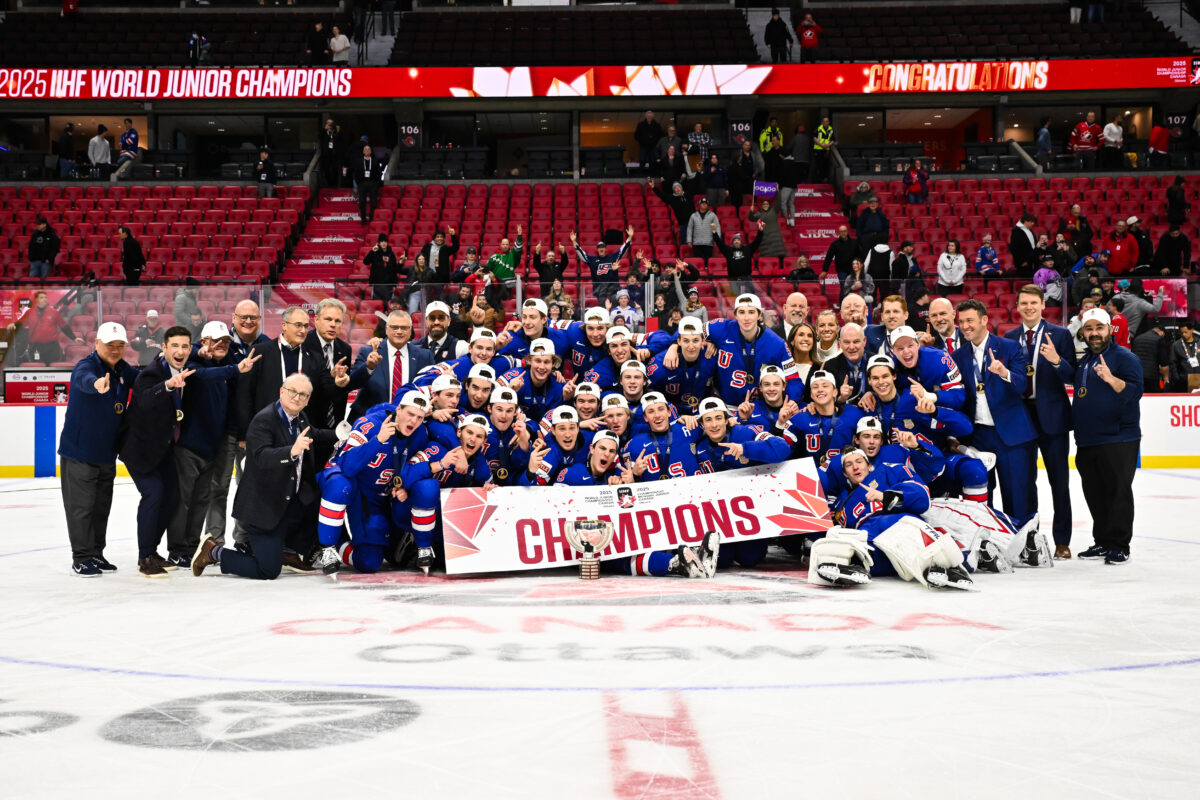 Team USA poses with the IIHF Cup after winning gold in overtime against Team Finland during the 2025 IIHF World Junior Championship (Photo by Minas Panagiotakis/Getty Images)
“It’s really hard right now if we’re going to talk about individuals because we’ve been chasing games, and then players start to do things out of them, not talking about anyone specific, you start to do things, try too much. Then we take another penalty, and it’s been frustrating for a lot of players when that happens, and I think a lot of our guys need….there’s a few teams here that aren’t real happy. Our guys need to get back with their teams and one enjoy the rest of your summer, then you practice…..need to get going again,” Motzko said when asked about a specific player after a gameday. He didn’t want to focus on any individuals because he felt it wasn’t fair after such a short time of evaluations, especially after only a couple of days.
“…The staff all has comments but that’s what we’re here for, this, to really form a new identity, get our own opinion on players and then when we’re watching for them or we get to play against them we’re going to have a reference point and I didn’t have a real reference point with a lot of the guys or my staff so this is the beginning, this is the first part of the process,” Motzko continued on how important this showcase is for figuring out where players fit.
Showcase Brings Out Leaders
Team USA has a number of players returning to the lineup, and because they know how everything works, they’re able to help the younger new players adjust quicker. They know what to expect and how to make it through. They may not have come out on top in this showcase, but they learned a lot about each other and who should fit where, but also what to watch for when the regular season starts.
“It’s great, and you can say it, but they won’t really understand it until we get through it because they’re trying to solve it, every shift. This is just a part of the process, that’s it,” said Motzko after being asked about how the leadership is helping the younger players know this is one long process.
“The big thing with the returning players, the nine of them, are what they’re doing off the ice is probably far more important than on the ice because we know what they can do. They raise the temperature when they’re around the group, and they’re showing leadership, they’re showing great character. Their work ethic has been great, that’s first and foremost, we know they’re good players, we’ve all watched that, and they’ve been tremendous from that standpoint behind the scenes,” said Motzko after day two of games about how important the veteran players are to the team.
Showcase Means Trust the Process
The process may seem a bit odd for some, having the players play together so early and then not have them together again for almost four months, but this is how the tournament works. These players know what they’re getting into, and while they may not be together, they will be playing at their highest level throughout these next months, just on different teams.
“USA hockey’s been running the same model for a long time. We pull guys together, you have one or two practices, and you let them go out and play, okay. There’s no systems, there is no coaching, very little because you don’t have time. You’re observing where they’re at for the talent standpoint and compete level and with their history. Conversely, a couple of teams here have been on for like three weeks before they play games, before they came over, and they look like it. The process USA hockey has had has worked, and we got to trust it and stick with it,” said Motzko about how he knows depth is important, and from working the tournament before.
Related: Minnesota Wild Prospects’ Performances at World Junior Summer Showcase
Obviously, this showcase and the rest of the process have worked for Team USA as they have back-to-back gold medals and are looking to go for a third. They have a number of returning players from last season, and several of those players are high-caliber scorers who will make a great top line. The rest of the pieces, Motzko knows what he’s looking for and just needs to narrow down his choices over the next few months of studying these players with their respective teams.
It’ll be interesting to see who makes the final cut for each team and what the teams will look like when December rolls around. There will be camps for each team before the tournament starts to give them a chance to really narrow down the rosters, but for now, it’s time for the coaching staff to start studying.
