
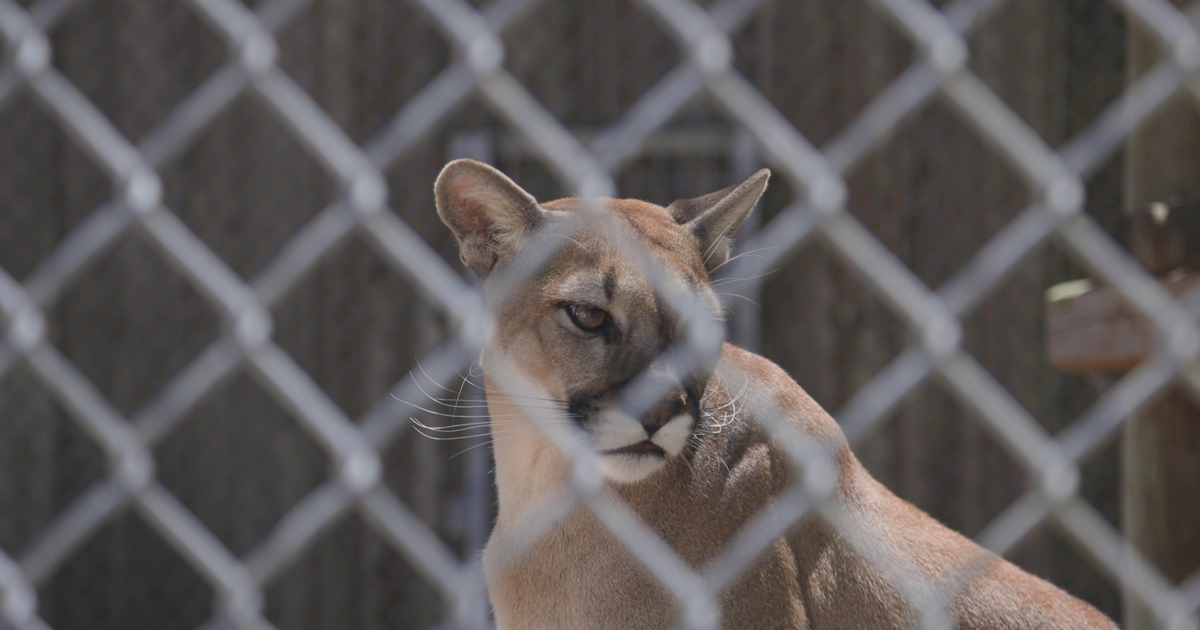
Florida panthers are becoming increasingly elusive and endangered. Biology professor Billy Gunnels described these majestic creatures as “almost a ghost of the forest,” emphasizing the rarity of seeing one in the wild.
“When you see one, your first take is ‘Nah,’” Gunnels said.
He recalled seeing a panther, saying it was an accidental encounter. “I got to see one and it was only one time and it was accidental,” he said. “It looked at us, we looked at it. It took off. It was awesome.”
Despite their majesty, the reality for Florida panthers is grim. Their numbers continue to dwindle each year.
“It is a treat to see one of these,” Gunnels said.
The death toll for these creatures is alarming. “Two 3 1/2 month old Florida Panther sisters were struck and killed, unfortunately, by vehicles in Naples. And that brings the total death toll this year already to 12,” Gunnels said.
Traci Deen, CEO of Conservation Florida, highlighted the role of vehicles in these deaths, saying they are the leading threat to the panthers’ survival.
“Having a pace like this already in 2025 is heartbreaking, and so with only about 200 Panthers left in the wild, every death we take very seriously,” Deen said.
Deen pointed to development and growth as factors contributing to these deadly encounters. “As our population in Florida grows,” she said, “our Panther habitat is shrinking fast. And that’s why we’re experiencing Panther collisions at the rate we are.”
For Gunnels, the situation is heartbreaking. “That’s unfortunate,” he said, “and the fact that two kittens are killed is also regrettable because they’re the next generation, which limits any further improvement in their conservation.”
Protecting Florida’s panthers starts with drivers. Slowing down in panther zones and reporting injured or dead animals to the Florida Fish and Wildlife Conservation Commission immediately can make a difference.