

The San Jose Sharks hit rock bottom this season, and their reward was a potential franchise center in Macklin Celebrini. Their rise to the No. 2 position is mostly about Celebrini, but they’ve accumulated a lot of premium young talent over the last few years. They have a deep system of talented forwards and have put together a group that could form the parts of a contending top six. Despite their high ranking, there is a lot of work left to do in San Jose. These young players still need to develop, and the club needs to get more premium defense talent.
Key additions: Macklin Celebrini, Sam Dickinson, Yaroslav Askarov, Igor Chernyshov, Leo Sahlin Wallenius, Carson Wetsch, Collin Graf
Key graduates: N/A
2023 ranking: 13
2024 NHL Draft grade: A+
Player Ranking
1. Macklin Celebrini, C
June 12, 2006 | 6 feet | 197 pounds | Shoots left
Drafted: No. 1 in 2024
Tier: Elite NHL player
Skating: Above NHL average
Puck skills: High-end
Hockey sense: Above NHL average
Compete: High-end
Shot: High-end
Analysis: Celebrini was the best player in college hockey this season and a leader for a top team in the country. He checks every box you want in a top prospect and is one of the few players I’ve scouted where it’s hard to see any noticeable weakness. He skates very well. He has a very powerful stride with a quick twitch in his first few steps and is able to get by a lot of defenders. He’s extremely skilled and creative with high-end offensive sense. Celebrini makes a ton of difficult plays with the puck on the move, in tight areas and from a standstill. He has a bullet shot and projects to run a first power play in the NHL. He’s average-sized, but Celebrini is highly competitive, wins a lot of battles and projects as a two-way center in the NHL. He has all the makings of a potential superstar you can build a contender around.
2. Will Smith, C
March 17, 2005 | 6 feet | 181 pounds | Shoots right
Drafted: No. 4 in 2023
Tier: Bubble NHL All-Star and top of the lineup player
Skating: NHL average
Puck skills: High-end
Hockey sense: Above NHL average
Compete: NHL average
Shot: Above NHL average
Analysis: Smith led college hockey in scoring, dominating the level after an electric junior career. Smith has tremendous puck skills, vision and overall offensive creativity and projects to be a major asset on an NHL power play. He skates well and makes so many high-difficulty plays at a strong pace, which lends well to his pro projection. Smith is a high-end passer who finds a lot of O-zone seams and can finish chances from the dots. The only real wart in his game is that I wouldn’t call him an overly physical or high-energy player. I don’t think he lacks effort and he gets to the inside parts of the offensive zone enough. He projects as a true top-line forward with a chance to be a star in the league. On the same team as Celebrini, it remains to be seen whether he’s the Sharks’ second-line center of the future or a first-line right wing.
3. Sam Dickinson, D
June 7, 2006 | 6-foot-3 | 203 pounds | Shoots left
Drafted: No. 11 in 2024
Tier: Top of the lineup player
Skating: Above NHL average
Puck skills: NHL average
Hockey sense: Below NHL average
Compete: Above NHL average
Shot: High-end
Analysis: Dickinson was a major minutes player on a great London team. It’s easy to envision him having a long NHL career. He’s a 6-foot-3 defenseman who is one of the best skaters in the draft. He has an explosive, fluid stride that easily picks up power. He breaks up plays and closes gaps easily due to his skating and creates so much possession time for his team. Dickinson is very skilled at handling the puck and often creates chances due to the combo of his skating and skill. He also has a hard slap shot from the point and projects to score a good number of goals in the NHL. He has offense and can make some tough plays but I wouldn’t call his vision what gets you excited about his game. Even with that in mind, in terms of what he could be in the league, I see a player with PP2 potential who could have a major impact at even strength.
4. Yaroslav Askarov, G
June 16, 2002 | 6-foot-3 | 178 pounds | Catches right
Drafted: No. 11 in 2020
Tier: Bubble top and middle of the lineup player
Skating: Above NHL average
Hockey sense: NHL average
Analysis: Askarov has been a top goalie in the AHL over the last two seasons since he came to North America. He’s a high-end athlete who has quickness in his lower half to make all the tough lateral saves in the NHL. He’s an aggressive, competitive goalie who challenges shooters and improvises well, making a ton of highlight-reel stops. He reads the play well, but he does get a little over-aggressive at times and can be caught out of position or trying to be too creative. The athletic tools are so special, though, that I can see Askarov becoming a legit starting goalie in the NHL.
5. William Eklund, LW
October 12, 2002 | 5-foot-11 | 181 pounds | Shoots left
Drafted: No. 7 in 2021
Tier: Bubble top and middle of the lineup player
Skating: Above NHL average
Puck skills: NHL average
Hockey sense: Above NHL average
Compete: Above NHL average
Analysis: Eklund had a highly successful first full NHL season, looking a lot like the top-six forward of the future the Sharks envisioned when they picked him in the top 10. He is a dynamic skater and playmaker who can make a lot of highly creative plays in motion. He has great small-area skills and despite his size, he can create offense at the net. Is he the most dynamic small winger I’ve ever seen? Probably not and I don’t see the star upside some saw a few years ago. But he looks like a legit long-term NHL scorer.
6. Igor Chernyshov, RW
November 30, 2005 | 6-foot-2 | 204 pounds | Shoots right
Drafted: No. 33 in 2024
Tier: Bubble top and middle of the lineup player
Skating: NHL average
Puck skills: NHL average
Hockey sense: NHL average
Compete: Above NHL average
Shot: Above NHL average
Analysis: Chernyshov was very good at the junior level in Russia and earned ice time up in the KHL with a regular shift for a top team in Dynamo Moscow. He’s a big, powerful winger who skates well and has a lot of offensive creativity. He beats defenders routinely with his one-on-one plays, sees the ice well and can create at the net. He’s not going to run players over with his physical play, but he uses his body to create offense. He has the ability to control play at even strength due to his variety of tools and looks the part of a potential strong top-six winger in the NHL.
7. Leo Sahlin Wallenius, D
April 10, 2006 | 6 feet | 180 pounds | Shoots left
Drafted: No. 53 in 2024
Tier: Middle of the lineup player
Skating: Above NHL average
Puck skills: NHL average
Hockey sense: NHL average
Compete: Above NHL average
Shot: Above NHL average
Analysis: Sahlin Wallenius isn’t the biggest defenseman but he’s a very solid two-way player who was the leading player on Sweden’s U18 team this season. He’s one of the best skaters in the draft. He has a powerful and efficient stride that allows him to easily evade pressure and skate pucks up ice. He closes on checks well and is great coming back on pucks in a way that should translate to pro hockey. Sahlin Wallenius has good hands and vision and can shoot the puck well, too, even though he doesn’t project as a major scorer at the higher levels. The sum of his parts looks like a regular NHL defenseman.
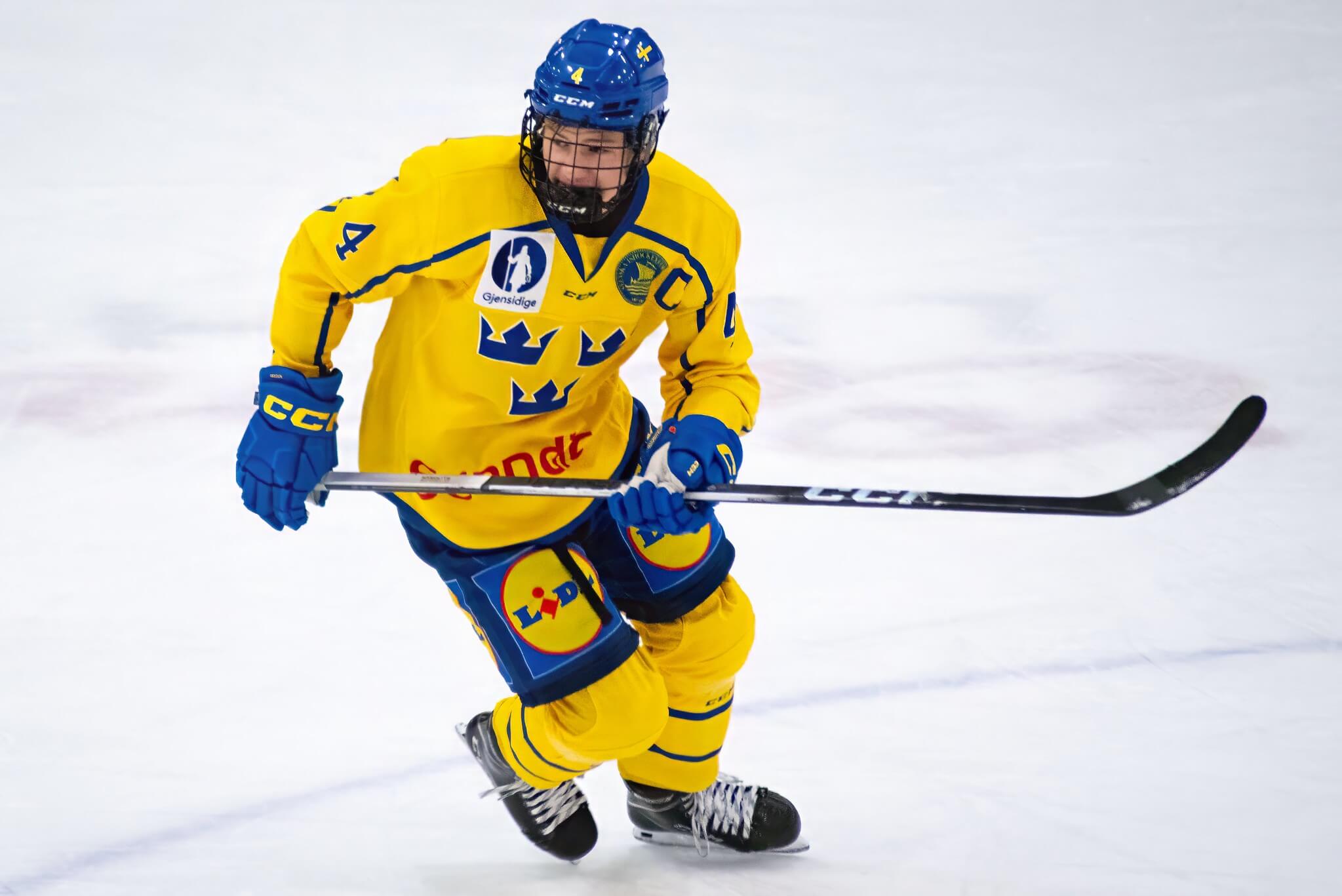
Leo Sahlin Wallenius is one of the best skaters in his draft class. (Steven Ellis / Daily Faceoff)
8. Shakir Mukhamadullin, D
January 10, 2002 | 6-foot-4 | 178 pounds | Shoots left
Acquired via trade
Tier: Middle of the lineup player
Skating: NHL average
Puck skills: NHL average
Hockey sense: NHL average
Compete: NHL average
Shot: Above NHL average
Analysis: Mukhamadullin played big minutes on both special teams for the Barracuda. He is a big defenseman who skates quite well for his size. He’s not overly physical, but Mukhamadullin’s feet and length allow him to break up plays and close on pucks. He has good hands and creates offense off the rush and from the blue line with his skill and shot. I don’t see major offense from him, but he should be a good enough two-way player to be a second- or third-pair NHL defenseman.
9. Filip Bystedt, C
February 4, 2004 | 6-foot-2 | 187 pounds | Shoots left
Drafted: No. 27 in 2022
Tier: Middle of the lineup player
Skating: NHL average
Puck skills: NHL average
Hockey sense: NHL average
Compete: NHL average
Analysis: Bystedt had another good year in the SHL and scored seven points in eight AHL games toward the end of the season. He’s a highly appealing athletic package, as a huge center who can skate quite well and power his way to pucks when he wants to. He has good hands, vision and finishing touch and can create quite a bit of offense from the perimeter. Bystedt isn’t overly physical and getting his energy level high will be a minor challenge for coaches. He projects as a middle-six NHL forward, potentially as a third-line NHL center.
10. Quentin Musty, LW
July 6, 2005 | 6-foot-2 | 200 pounds | Shoots left
Drafted: No. 26 in 2023
Tier: Middle of the lineup player
Skating: Below NHL average
Puck skills: NHL average
Hockey sense: Above NHL average
Compete: NHL average
Analysis: Musty was one of the best forwards in the OHL this season. He is a highly skilled puckhandler who can make difficult plays with the puck at a high rate. He tries to make things happen and shows a strong level of creativity. Musty is a great passer who can hit open lanes and has the patience to pull up and make plays. He can score goals and is a shot threat from range but is certainly a player with a pass-first mentality. His effort is fine and he can use his big body to win battles but his game-to-game consistency isn’t the best. He’s a one-way winger which, combined with his so-so skating ability, is a concern for higher levels. He projects as a middle-six wing who will help a power play but may frustrate coaches at times, too.
11. Kasper Halttunen, RW
June 7, 2005 | 6-foot-3 | 207 pounds | Shoots right
Drafted: No. 36 in 2023
Tier: Middle of the lineup player
Skating: Below NHL average
Puck skills: NHL average
Hockey sense: Below NHL average
Compete: Above NHL average
Shot: High-end
Analysis: After an up-and-down draft season, Halttunen bounced back well as a leading part of a great London team. He’s a big, powerful winger with very good hands and a bullet shot. He led the OHL playoffs in scoring mostly due to how good his shot is. He will be a legit midrange threat in the NHL with his one-timer. I found Halttunen more consistent this season, especially with his physical play. He’s still not the quickest player or the smartest playmaker, but he has the tools to be a middle-six winger with size.
12. Collin Graf, RW
September 21, 2002 | 6-foot-1 | 194 pounds | Shoots right
Free Agent
Tier: Projected to play NHL games
Skating: NHL average
Puck skills: Above NHL average
Hockey sense: NHL average
Compete: NHL average
Shot: Above NHL average
Analysis: Graf was a major part of Quinnipiac’s NCAA title run last spring and was a top player in the country again this season. He has a ton of offensive talent and has the potential to score in the NHL. He is a very skilled puckhandler who skates well and can create on the move like a pro. He sees the ice well, can run a power play with quick decisions, and has a good shot as well. His game can lack physicality at times and stick too much to the perimeter, which is my only concern about him, but I wouldn’t call him soft or a low-compete type. His skill will get him games, but he will need to earn the coach’s trust and get inside more to have a long career.
13. Carson Wetsch, RW
May 4, 2006 | 6 feet | 203 pounds | Shoots right
Drafted: No. 82 in 2024
Tier: Projected to play NHL games
Skating: NHL average
Puck skills: NHL average
Hockey sense: NHL average
Compete: High-end
Analysis: Wetsch didn’t put up huge numbers in the WHL this season, but I liked him often when I watched his games. He was also an important part of Canada’s U18 team in the summer and spring. Wetsch’s game is defined by his speed and energy. He isn’t the most skilled player in the world and isn’t huge, but he’s always around the puck. He’s a quick skater who closes on plays well, but it’s how hard he works that makes him so noticeable. He’s hard on every puck and wins a ton of battles. That he has good hands and vision and can make some plays allows him to be an effective forward. He has the ability to kill penalties and be a trusted two-way bottom-six wing in the NHL.
14. Thomas Bordeleau, C
January 3, 2002 | 5-foot-10 | 175 pounds | Shoots left
Drafted: No. 38 in 2020
Tier: Projected to play NHL games
Skating: Above NHL average
Puck skills: Above NHL average
Hockey sense: NHL average
Compete: NHL average
Analysis: Bordeleau got 27 games up with the Sharks this season and showed good offensive production in his second pro season between the AHL and NHL. He is a talented playmaker and is highly skilled and creative. He is a quick and shifty skater who can create plays on the move. He has the tools to play on an NHL power play. Bordeleau isn’t that big though, and he plays on the outside a bit too much. He looks like he should play NHL games, but to get to 500 games, he will need to either add off-puck dimensions or score a ton.
15. Luca Cagnoni, D
December 21, 2004 | 5-foot-9 | 180 pounds | Shoots left
Drafted: No. 123 in 2023
Tier: Projected to play NHL games
Skating: Above NHL average
Puck skills: NHL average
Hockey sense: Above NHL average
Compete: NHL average
Shot: Above NHL average
Analysis: Cagnoni was one of the best defensemen in the WHL this season. He is a highly talented scorer. He is very skilled and creative with the puck. He skates like an NHL player and can make a lot of difficult skilled plays on the move. Cagnoni shows the poise to run a power play very well, hitting seams often. He also has a big point shot. He checks most boxes, except his frame. He’s a tiny defender by NHL standards and he’s not overly physical. He reminds me a lot of Calen Addison, who has played in the NHL.
16. Nate Misskey, D
January 12, 2005 | 6-foot-3 | 210 pounds | Shoots right
Drafted: No. 143 in 2024
Tier: Projected to play NHL games
Skating: Below NHL average
Puck skills: Below NHL average
Hockey sense: NHL average
Compete: Above NHL average
Shot: Above NHL average
Analysis: Misskey played a ton of minutes for Victoria this season and has progressed well since being picked in the third round in his WHL Bantam Draft. Misskey is a tall right-shot defenseman who can move pucks well enough. I don’t think he’s a standout with the puck, but he sees the ice well and can make some tough plays. Misskey also has a hard point shot he can generate offense from. His skating is heavy and is his main problem in his NHL projection. He does compete quite hard and has a lot of physical play in his game which makes me think he has a real chance to overcome his lack of mobility and get NHL games.
17. Yegor Rimashevskiy, RW
February 1, 2005 | 6-foot-2 | 197 pounds | Shoots left
Drafted: No. 203 in 2023
Tier: Projected to play NHL games
Skating: Below NHL average
Puck skills: NHL average
Hockey sense: NHL average
Compete: NHL average
Shot: Above NHL average
Analysis: Rimashevskiy played all year up in the KHL and held his own as a teenager. He is a good-sized winger who can make a lot of highly creative skill plays with the puck. Rimashevskiy is a strong playmaker and finisher. He has the strong hockey IQ to see tough passing lanes and can finish from range. He is a big body who can protect pucks and play around the net, although I wouldn’t call him very physical or a high-compete type. His footspeed is just OK, too. That combo may hinder his game from translating, but big guys who can score find ways to get games.
Has a chance to play
Danil Gushchin has been a strong pro in the AHL. He may be too small and not dynamic enough to be a full-time NHL player, but he’s a great skater and puckhandler. Eric Pohlkamp was a nice surprise in college this year and made USA’s world junior team. He’s not super athletic, but he competes and has legit offense in his game. Cameron Lund checks all the aesthetic boxes you want in an NHL player, but his consistency and compete leave some to be desired.
Jake Furlong, D
March 4, 2004 | 6-foot-1 | 189 pounds | Shoots left | Drafted: No. 140 in 2022
Danil Gushchin, LW
February 6, 2002 | 5-foot-8 | 165 pounds | Shoots left | Drafted: No. 76 in 2020
Mattias Havelid, D
January 1, 2004 | 5-foot-9 | 165 pounds | Shoots right | Drafted: No. 45 in 2022
Evgenii Kashnikov, D
December 25, 2002 | 6-foot-4 | 200 pounds | Shoots left | Drafted: No. 199 in 2021
Cameron Lund, C
June 7, 2004 | 6-foot-1 | 185 pounds | Shoots right | Drafted: No. 34 in 2022
Eric Pohlkamp, D
March 23, 2004 | 5-foot-10 | 201 pounds | Shoots right | Drafted: No. 132 in 2023
June 8, 2006 | 6-foot-4 | 204 pounds | Shoots right | Drafted: No. 131 in 2024
Brandon Svoboda, C
February 4, 2005 | 6-foot-3 | 205 pounds | Shoots right | Drafted: No. 71 in 2023
* Listed in alphabetical order
Player eligibility: All skaters who are 22 years old or younger as of Sept. 15, 2024, regardless of how many NHL games they’ve played, are eligible. Player heights and weights are taken from the NHL.
Tool grades: Tool grades are based on a scale with six separate levels, with an eye toward how this attribute would grade in the NHL (poor, below-average, average, above-average, high-end and elite). “Average” on this scale means the tool projects as NHL average, which is meant as a positive, not a criticism. Skating, puck skills, hockey sense and compete for every projected NHL player are graded. Shot grades are only included if a shot is notably good or poor.
Tier definitions: Tiers are meant to show roughly where in an average NHL lineup a player projects to slot in.
(Top photo of Macklin Celebrini: Kavin Mistry / NHLI via Getty Images)