

Detroit Red Wings to retire Sergei Fedorov’s No. 91 jersey
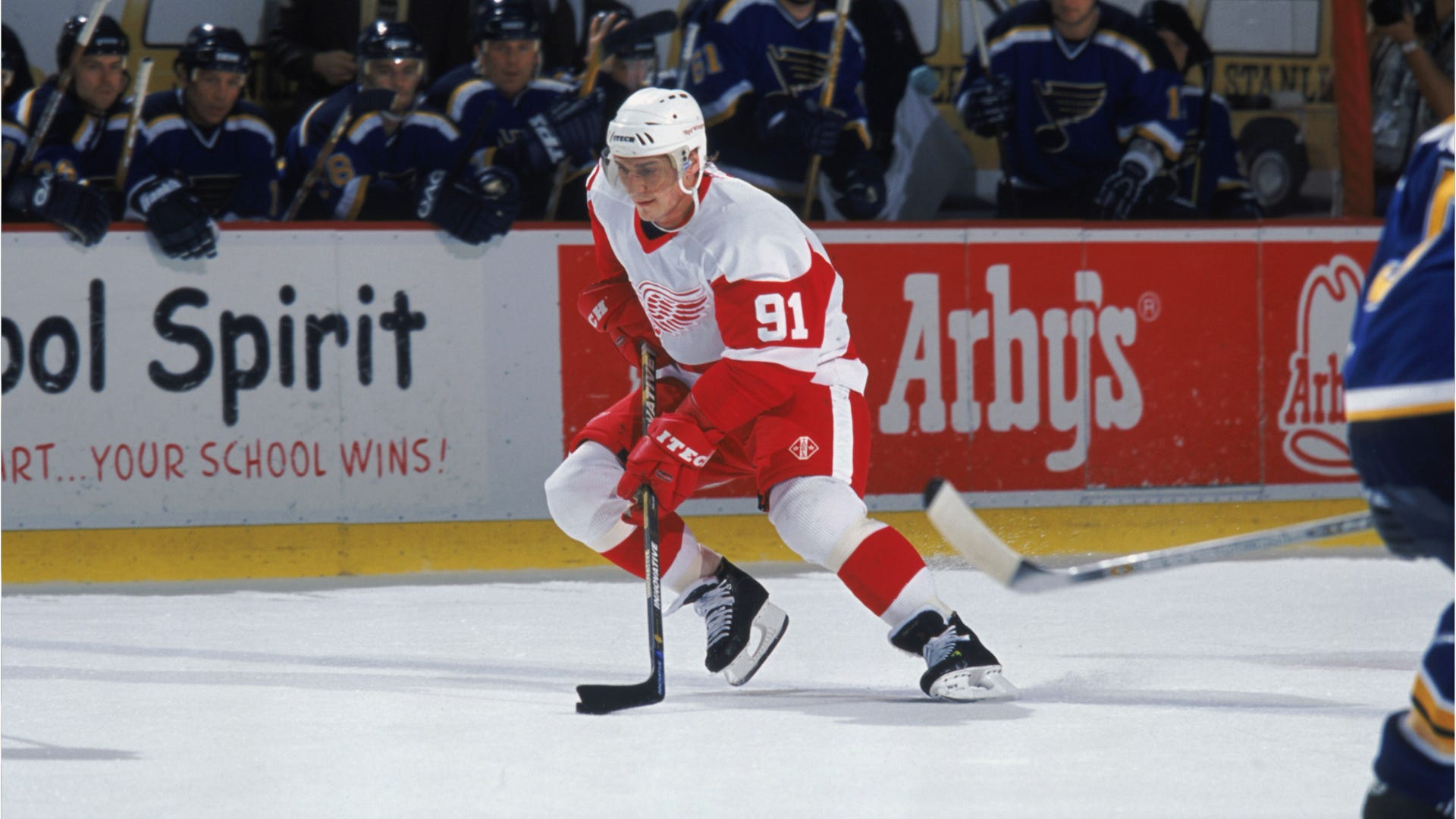
The Detroit Red Wings will honor Sergei Fedorov by retiring his iconic No. 91 jersey on Jan. 12, 2026, at Little Caesars Arena during the franchise’s centennial celebration.
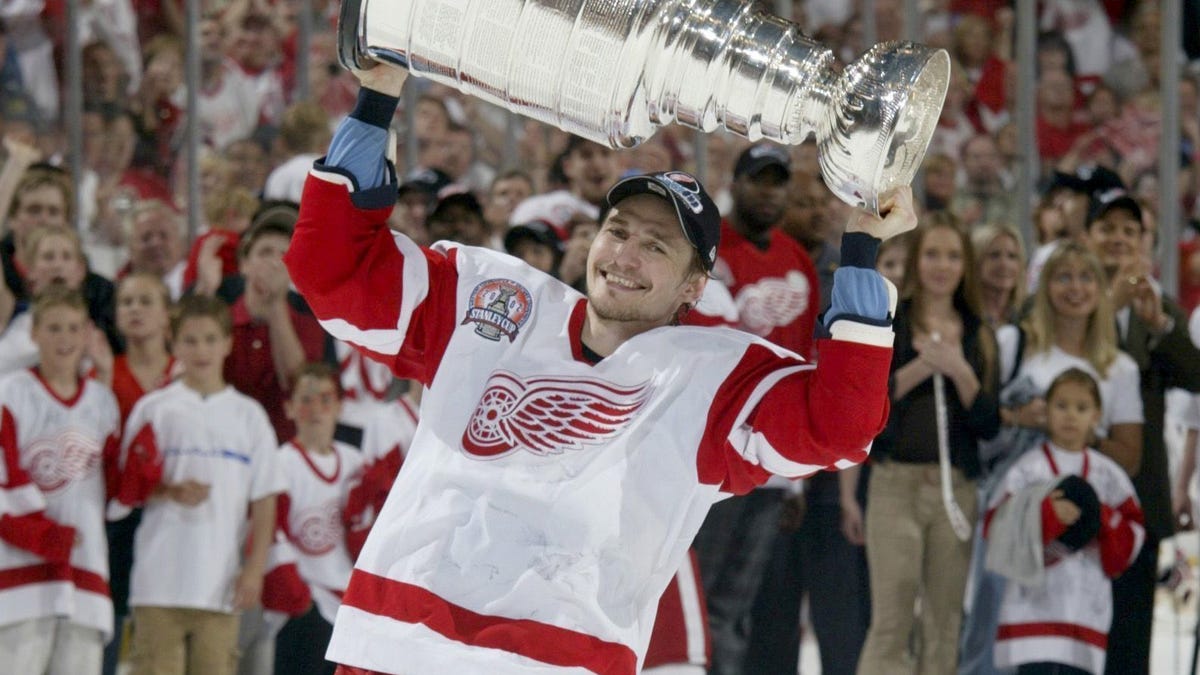
The Detroit Red Wings will retire Sergei Fedorov’s number 91 on Jan. 12, 2026.Fedorov, a key member of the Red Wings’ Stanley Cup-winning teams in 1997, 1998, and 2002, was a dominant two-way player.The ceremony will be part of the franchise’s centennial celebration.
Sergei Fedorov, one of the Detroit Red Wings’ all-time greats, will have his jersey number retired next year.
It’s arguably overdue – fellow 1989 draftee and 2015 Hockey Hall of Fame inductee Nicklas Lidström’s No. 5 was retired in 2014 – but on the flip side, it’ll now fall during the franchise’s extensive centennial celebration. The retirement ceremony is scheduled for Jan. 12, 2026, at Little Caesars Arena, before the game that night against the Carolina Hurricanes.
Fedorov, 55, was told Monday, Aug. 18, via a telephone call from Red Wings owner and CEO Christopher Ilitch.
“I’m extremely grateful for this tremendous honor,” Fedorov said via a Wings release. “Thank you to everyone with the Red Wings organization, especially those who helped bring me to Detroit and gave me the chance to play for such a historic franchise. I was fortunate to be part of some unforgettable teams, and above all, I’m proud of the three Stanley Cup championships we won for our amazing fans in Hockeytown.
“The memories made along the way – with legendary teammates, coaches, and exceptional ownership – will stay with me forever. Lastly, I want to thank Chris Ilitch for the call yesterday to share the news about retiring my number. It’s a moment I’ll always cherish. I can’t wait to see everyone in January.”
Fedorov’s jersey number will be the ninth retired by the Wings, joining Terry Sawchuk (No. 1), Red Kelly (4), Lidström (5), Ted Lindsay (7), Gordie Howe (9), Alex Delvecchio (10), Sid Abel (12) and Steve Yzerman (19).
“We are honored to celebrate Sergei Fedorov and raise his (No.) 91 to its rightful place hanging in the rafters at Little Caesars Arena, among the all-time greats who have worn the Winged Wheel,” Ilitch said. “His exceptional skill, relentless drive, and lasting impact playing a pivotal role bringing three Stanley Cup championships to Detroit make him the perfect embodiment of the qualities deserving of our franchise’s most prestigious honor.
“My parents, Mike and Marian Ilitch, had a special reverence for Sergei as one of the most dynamic and charismatic players of his era, and someone who made a tremendous impact on our organization. All of us at the Red Wings look forward to hosting Sergei and his family in January to pay tribute to his remarkable career.”
Sergei Fedorov: A history of success
The Wings drafted Fedorov in the fourth round of the 1989 draft, deciding to take a chance on a player then-general manager Jimmy Devellano called “the best young player in the world.” That Fedorov was still available when the Wings’ turn came at 74th overall was because of his origins: NHL teams were wary of drafting Soviet-era players, fearing they’d never be allowed out from behind the Iron Curtain. But Devellano knew what he was doing: Might as well chance a pick on an elite Russian forward than on a North American player most likely destined to be a career minor leaguer.
It was a decision that would change the franchise – and made executing his defection worth every risk.
Getting Fedorov to Detroit took subterfuge out of a John Le Carré novel. The setting was an exhibition game in July 1990, in the lead-up to the Goodwill Games. A hotel key was slipped under a door. A team employee collected Fedorov’s belongings while he was at the game. Another employee waiting in the lobby, a signal for Fedorov to follow him to a taxi that idled nearby (the driver had been tipped $100 to not ask questions). Mike Ilitch’s private plane, ready for takeoff.
Give him the puck
Fedorov’s English, then-coach Bryan Murray joked, was limited to, Give me the puck. But nothing was lost in translation on the ice: A combination of finesse and fierceness, physicality and grace, Fedorov made an immediate impact. He scored in his debut, on Oct. 4, 1990, the first of 79 points he would put up that season. But Fedorov didn’t just dazzle with the puck; his defense was just as eye-catching.
“The best defensive player to come out of Europe,” team executive and former coach Nick Polano said.
The 1993-94 season was a banner one for Fedorov: 120 points. The first Russian to win the Hart Trophy as the league’s most valuable player. The Frank J. Selke Trophy honoring the league’s best defensive forward.
Then, in 1997, Fedorov helped deliver what the franchise craved: A Stanley Cup championship, ending a 42-year drought. A member of the Russian Five with Igor Larionov, Vyacheslav Kozlov, Slava Fetisov and Konstantinov, the quintet gave opponents fits with their ability to control the puck.
So gifted a skater was Fedorov that coach Scotty Bowman used him as a defenseman at times. “His skill level was off the charts,” Bowman said. “He was so physically strong.”
Contract issues sullied Fedorov’s legacy
But with Fedorov’s success came the uglier, business side of the sport: He was a contract holdout when the 1997-98 season began, and the standoff dragged on until February 1998, when Fedorov signed an offer sheet with the Carolina Hurricanes, then owned by Detroit businessman (and Ilitch rival) Peter Karmanos.
The front-loaded offer – as much as $28 million if the Wings won three playoff rounds in 1998 (which they were likely to do, while the Hurricanes were not) – was designed to scare off Ilitch. But the Wings didn’t blink, and Fedorov returned to the fold – and four months later, the Wings celebrated a second straight Stanley Cup championship.
Fedorov helped the Wings win another Cup in 2002. A year later, Fedorov left as an unrestricted free agent, beginning a journey that would take him around the NHL from the Mighty Ducks of Anaheim to the Columbus Blue Jackets (whose uniform he was wearing when he became the first Russian to reach 1,000 games) to the Washington Capitals.
Relations restored
Fans in Detroit booed Fedorov when he returned over the years, but when he was inducted into the Hockey Hall of Fame in 2015, relations thawed, and Fedorov was treated to a standing ovation at Joe Louis Arena when he appeared for a ceremonial puck drop.
“I had the best years of my life here,” Fedorov said.
And now, those years will be celebrated when his number joins the legends hanging from the rafters at the Wings’ home.
Contact Helene St. James at hstjames@freepress.com.
Read more on the Detroit Red Wings and sign up for our Red Wings newsletter. Her books: “The Franchise: Detroit Red Wings, A Curated History of Hockeytown,” and “On the Clock: Behind the Scenes with the Detroit Red Wings at the NHL Draft,” and “The Big 50: The Men and Moments that made the Detroit Red Wings” are available from Amazon, Barnes & Noble and Triumph Books. Personalized copies available via her e-mail.