
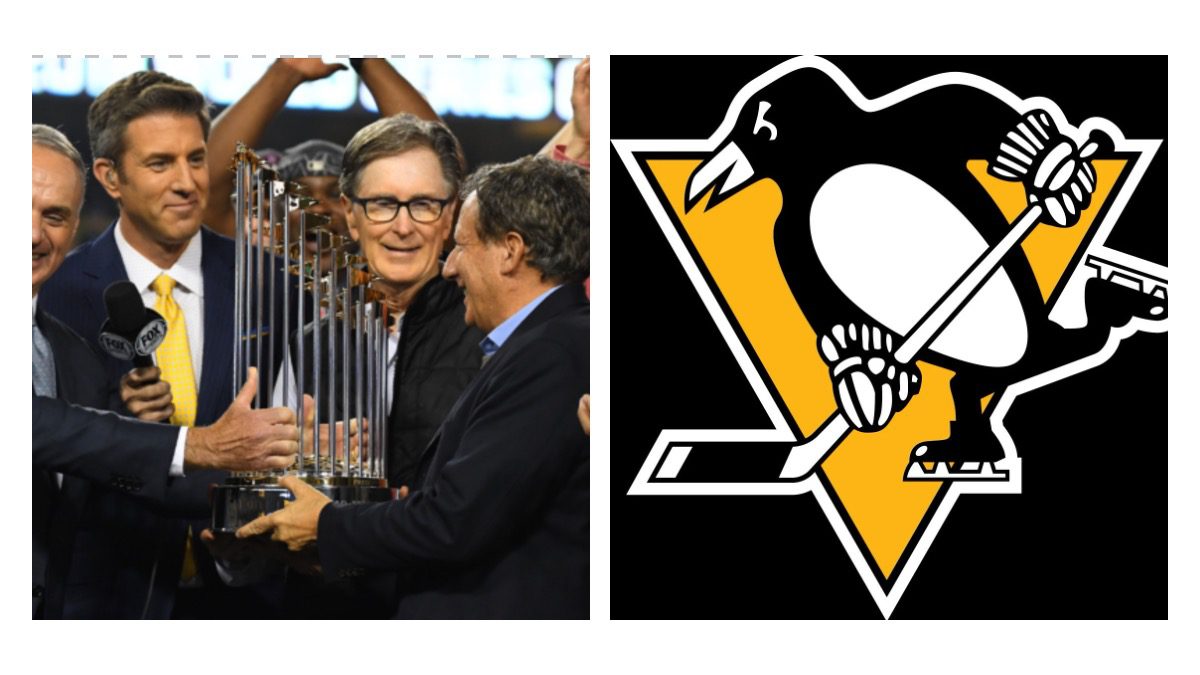
 Fenway Sports Group celebrates World Series: Photo Jayne Kamin-Oncea-Imagn Images
The Pittsburgh Penguins were nothing more than a commodity, a transaction.
As all signs point to Fenway Sports Group abandoning the team they bought just four years ago, taking the nearly $900 million profit and moving on. Those words and denials that the Penguins were not for sale and the group was merely looking for a minority investor now look hollow as the equity club filled with billionaires such as John Henry and Tom Werner, and mega-wealthy star athletes, including LeBron James, are cashing out.
Hey, Pittsburgh fans have experience with detached or unfuriating owners. After all, Bob Nutting runs the local baseball team. However, Pittsburgh has otherwise enjoyed local and engaged owners who cared not only about the bottom line but also about the team and the community.
The Rooney Family and Mario Lemieux cast large shadows when it comes to owners who are beloved and respected by the local populace for creating first-class organizations and delivering championships.
Pittsburgh owners have long shared the fans’ passion for the teams.
Read More: ‘Feels Real’: Penguins Sale Seems Imminent
Not that anyone expected the capital corporation FSG to become pillars of the community and read to orphans on Sunday mornings, but as it turns out, FSG was here for the money.
Hard times are coming, and now it surely appears they’re going. If indeed the sale goes through, fans may rightfully feel used.
Before they do, we can admit, FSG did some good things.
They brought expertise from a myriad of other sports team ownerships to the organization, which has and will serve the organization well. They reorganized the front office, from the sales staff to business operations.
Perhaps most importantly for the team, FSG has led an innovation in the training room.
New personnel and investment into keeping players on the ice have yielded impressive results. The Penguins were annually among the leaders in man games lost, but have uncoincidentally been healthy over the last three seasons.
Sidney Crosby has missed just two games in that time, and after playing all 82 games in two straight seasons, Evgeni Malkin missed 14 games last season.
Remarkably, the pair have never played as many regular-season games together as they have in the last three years. It’s supposed to be the opposite trend as players age.
FSG both wisely moved on quickly from GM Ron Hextall and hired the current president of hockey operations/GM Kyle Dubas. While history has yet to judge Dubas’s work with the Penguins, being able to land the GM in whom other teams were immediately interested following his clash with upper management in Toronto showed the attractiveness of working for the group.
The group made Dubas pretty well paid, too. And FSG signed off on both giving coach Mike Sullivan an industry-leading contract not long after taking over, and they obviously approved terminating him in May.
Most visibly, FSG has spent money on the team that will not be returned by improved performance on the ice, at least in the next few years. FSG gave Dubas the ability to buy draft picks by accepting unwanted salaries. The Penguins recouped a future second and third-round pick by taking on Kevin Hayes’s remaining $7 million. They got a third-round and sixth-round pick for accepting Cody Glass’s $2.5 million last summer (and another third-round pick when they traded him to New Jersey) and a second-round pick for taking Matt Dumba from the Dallas Stars.
That’s about $12 million spent for two second-round picks and a third-rounder. Not a lot of ownership groups would agree to such debits on the ledger.
Fenway has provided all necessary finances and infrastructure, even as they lacked a personal touch. FSG spent the money and hasn’t cheated fans for corporate benefit. Perhaps that is the new normal, and all anyone can ask in the age of billionaires.
And after more than a decade of city and team clashing over Hill District development, FSG also got the development underway, too, but like many things, it is far from finished.
There can be few complaints about the last four years of ownership, but if they soon close the sale to the Hoffman Group, the quick exit before the hard work is done still leaves a bad taste and a transactional feeling, where once a feeling of trust presided.
Tags: fenway sports group penguins ownership Pittsburgh Penguins
Categorized:Pittsburgh Penguins