

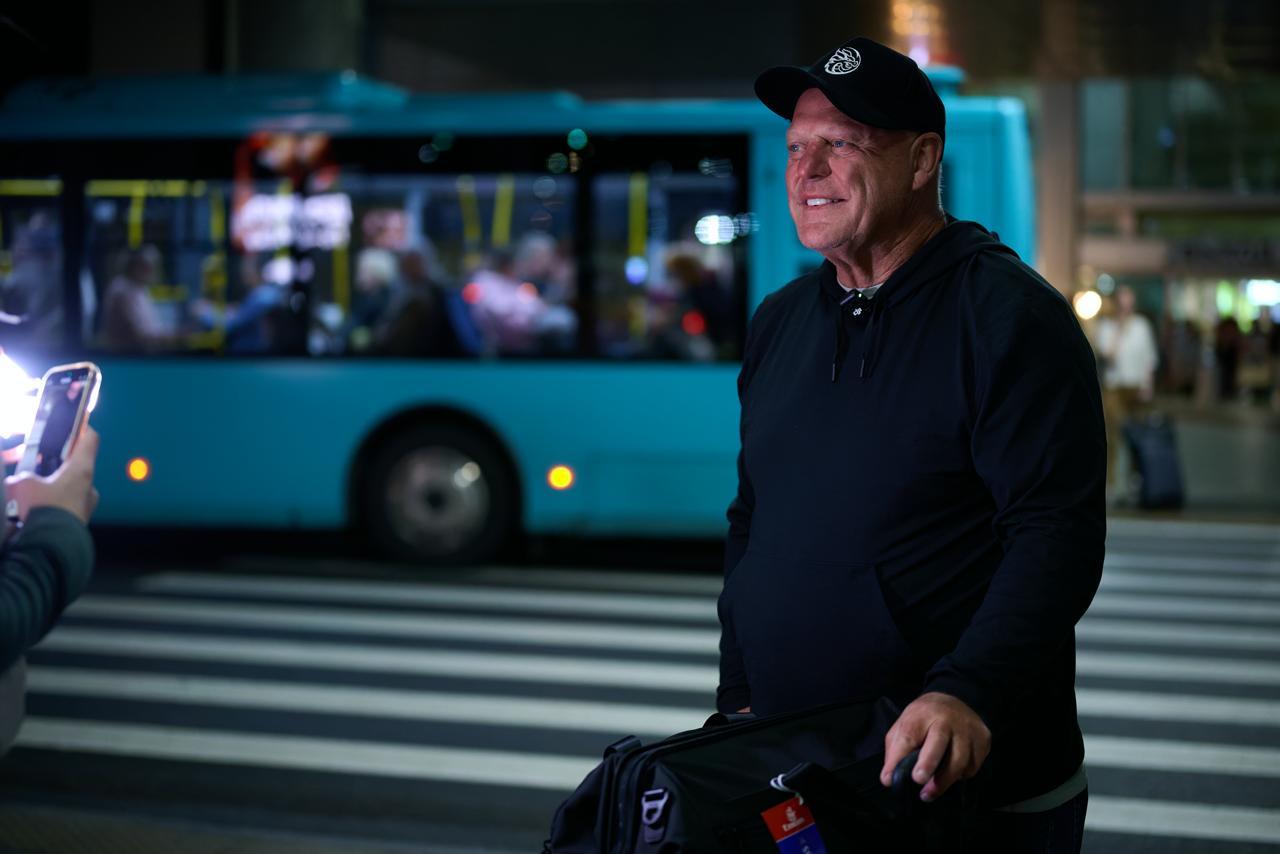
Gerard Gallant is now the head coach of the Shanghai Dragons in the KHL (Photo courtesy of @khl_eng on X)
Gerard Gallant is back behind the bench. The veteran coach, who most recently guided the New York Rangers during the 2022–23 NHL season, has been named the new head coach of the Kontinental Hockey League’s Shanghai Dragons. At 61 years old, Gallant still feels the pull of the game and wasn’t ready to step away from the sport that has defined his life. Instead, he has embraced an opportunity that takes him overseas for the first time in his coaching career.
Gallant knows this new chapter will be different. The Dragons, who recently rebranded after years as Kunlun Red Star, face challenges both on and off the ice. The KHL is a strong league, but the depth of talent is not the same as the NHL. Gallant is realistic about the task at hand but sees plenty of reasons to be optimistic.
“It is a different level because there are no Panarins and no Chris Kreiders in the KHL,” Gallant told RG in an exclusive interview. “But it does not matter. The KHL is a good level of hockey, a very high level. We still have lots of skill and talent on our team. But your job as a coach is to try to make your team better. That is what we will try to do as coaches.
We talked about this offer with my family and everybody said, ‘You are only 61 years old, and you want to coach again?’ It was the best opportunity, and I said, ‘I will give it a try.’ I wanted to try it, it was something new, and it was going to be tough. But I said, ‘I want to try, I want to keep coaching.’ I still do not feel like I am ready to retire.”
His words reflect the mindset of a coach who has seen and done nearly everything in the NHL, yet still burns with the competitive fire to stay behind the bench.
Settling in
Gallant arrived in St. Petersburg, where the Dragons will be based, on August 21. The timing leaves him just a few short weeks to prepare the team before their September 6 opener against SKA. While some coaches might be daunted by such a quick turnaround, Gallant points to his international coaching experience as proof that he can adapt quickly.
“I cannot say that because I coached Hockey Canada a few times at World Championships. During COVID we only had one practice with all new players and then had to play the tournament. Last year’s Spengler Cup we had two days of practice and then we played the tournament. So it is tough. But honestly, two weeks is a lot of time. Our players skate in North America all summer long. Russian players train and skate here. So when we get together, we try to put our systems in. For me, the two weeks we have is the perfect time. There are no issues. Our players will be fresh. They are not going to be really tired from training camp. Hopefully we will take advantage of that.”
For Gallant, the preparation window is less about the length of camp and more about setting the right tone. He believes the freshness of players can become an asset, and his confidence is rooted in years of managing diverse rosters under pressure.
“I have not seen the city very much. I cannot say I am surprised. I mean, everybody told me it is a beautiful place. You come here and you see the arena, it is a beautiful arena. We have not been able to do much because we have been working for the last five days. But everything I see is very good. I am very happy with it.”
Rebrand and a Bigger Stage
The Dragons themselves are undergoing a transformation. Previously operating as Kunlun Red Star in Beijing, the organization has rebranded and shifted its focus to establishing a new home base in Russia. The long-term ambition remains to return to China, but for now, Gallant inherits a roster in transition and an organization eager to redefine itself.
“Yes, we can compare it. We prepare the same way no matter which team I am going to coach. As coaches, we get together, we make a plan for our players, and we try to do the same thing every day. You make your plan, you try to make your team better, you make your practices better, sometimes harder. It is all about what your style is. For me as a coach, that is what I bring. I expect my players to work hard every game. I expect my players, as I told you, to make mistakes and to get back on the ice. Respect works both ways, players and coach.”
Gallant also acknowledged that part of his role is to help the Dragons lay the groundwork for their eventual return to Shanghai.
“When I received the job offer, the club’s management told me about the plans to move to China. I do not know when that will happen, but we definitely need to show good results so that the audience in Shanghai starts loving our team even before the return. We will do everything we can to achieve that. I have heard that there might already be some games in Shanghai this season, but I do not have any specifics yet.”
In the meantime, the team will call SKA Arena home — a venue that dwarfs nearly every NHL building in size and scale.
“It is an NHL arena, it is 23,000. But I had no idea it was this nice and how big it was. I think the biggest one in the NHL is 21,000 or something in Montreal or wherever it is. But, you know, this one is bigger, and it is very nice. It is great to play in this building. I just came in five days ago. But we practice every day on it, and the ice has been very good.”
Bringing a North American System
Gallant admits he hadn’t been a regular KHL viewer before signing, but he doesn’t see massive differences in the style of play. He intends to bring the same systems that defined his NHL success.
“Just recently I watched some games on TV, so I do not see a big difference. Some of the Russian players regroup a little bit more with the puck. But I do not see a whole big difference in the game. I am coming over here as a North American coach, and we are going to play our North American system. We will make adjustments if we have to. But I do not see a big difference.”
He also said he had not reached out to fellow Canadian coaches currently working in the KHL–Guy Boucher (Avangard), Benoit Groulx (Traktor), and Bob Hartley (Lokomotiv)–before taking the job. The move happened quickly, leaving Gallant little time to consult with peers already coaching in the KHL. Still, he managed to exchange words with one old teammate.
“I have not talked to them. I consider them friends, and when you bump into them, you will talk with them and chat with them. But I have not reached out to them with any questions. Assistant coach Dave Barr, he is with Guy Boucher. I talked to him a little bit because he and I played together in Detroit. So we chatted a little bit. But no, it all happened very fast. I just tried to get over here and get our team going. So it was pretty good. He just asked me if we had any issues. And he said, ‘It is very good over here.’ You know, some people are a little worried about coming. But he said, ‘Saint Petersburg is a beautiful city. The organization is very good, and they are building something big.’ So everything was positive.”
Intensity and a Players’ Coach
Those who know Gallant will not be surprised to hear that his practices with the Dragons have been fast-paced and demanding. Intensity has always been part of his identity, both as a player and as a coach.
“I have always been like that. That is the way I was as a player when I was a young boy, and there is no change in coaching. I want us to win, and I want us to give our best effort every night. I get intense. I am involved in the game as a coach, I feel like a player. That is the way I am. The older I get, I slow down a little bit. But it has been good. I have enjoyed it and I have enjoyed coaching. This will be a new experience for me.
I think if people watched the way my teams played with the Rangers and with Vegas, I do not change a lot. It is going to be a tough support hockey game. I do not like to play wide hockey. I like to play support hockey, short passes, but aggressive, forechecking hockey.”
At 61, Gallant describes himself as a players’ coach who emphasizes freedom on the ice. He emphasizes that while he demands effort, he also believes in empowering players.
“I would say I am a players’ coach. I give them opportunities. Every player is going to make mistakes in a game, and they have to get an opportunity to go back out after their mistakes. If there are mistakes over and over, then they will have some time on the bench. But I give players opportunities. I know the game is very fast and very tough. If you want to be a good player, sometimes you are going to make mistakes.”
Familiar Faces and Lasting Impressions
Gallant is no stranger to working with elite Russian talent. With the Rangers, he coached two of the country’s biggest stars in Artemi Panarin and Igor Shesterkin. His admiration for them is clear.
“Panarin would be right at the top. And obviously Igor Shesterkin, he is an elite goaltender. They were star players with the Rangers when I had them. Every day they came to the rink, and they were fun guys to be around. I used to watch Panarin every day at practice. He smiled, he had fun, he laughed. Shesterkin was a little more serious. But they are great athletes, great players. They both have families now, and I enjoyed coaching both of them.”
Gallant also guided Team Canada to a victory over Russia in the quarterfinals of the 2021 World Championship. While the Canada-Russia rivalry remains historic, he says the gap in playing styles between the two countries has virtually disappeared.
“There is no difference anymore. There are so many Russian players who come over to the NHL, and they play the North American style right away. There are a lot of players here, and the guys we have on our team, the Russian players, they are some big boys, and they play a physical game. So it is not like it used to be years ago when the Russian players were all about skill. Russian players are big, physical, tough players now. They play both sides of the puck. There is no difference.”
Gallant’s ties to Russian hockey go back even further, to his playing days with the Detroit Red Wings, when he shared the ice with Sergei Fedorov.
“When Sergei came over, I was a couple of years older than him. He was a tremendous player for us at a young age. We knew he was good, but we did not know how good he was. He was just a tremendous, tremendous talent. He is a really good guy. We really liked Sergei. Obviously, his career in the NHL, he deserves to be up in the rafters in Detroit with Steve Yzerman and Gordie Howe and all those guys. He is a phenomenal player. I do not know if he is the best Russian player ever, but he has to be up there. When they talk about the best Russian players, his name has to be mentioned. I really like Sergei. I have not seen him for quite a long time, but I am very happy for him that his number is being retired in Detroit. Well deserved.”
For Gallant, the move to the KHL represents more than just another coaching stop — it’s a chance to prove that his fire and his methods still translate, no matter the league or the roster. He has built a career on intensity, respect, and adaptability, guiding expansion teams to improbable heights and working with some of the game’s biggest stars.
Now, with the Shanghai Dragons, he inherits a team searching for identity and relevance, and in many ways, that challenge mirrors his own fresh start. At 61, Gallant is not winding down — he is embracing a new stage, determined to keep doing what he loves most: coaching hockey at the highest level.