
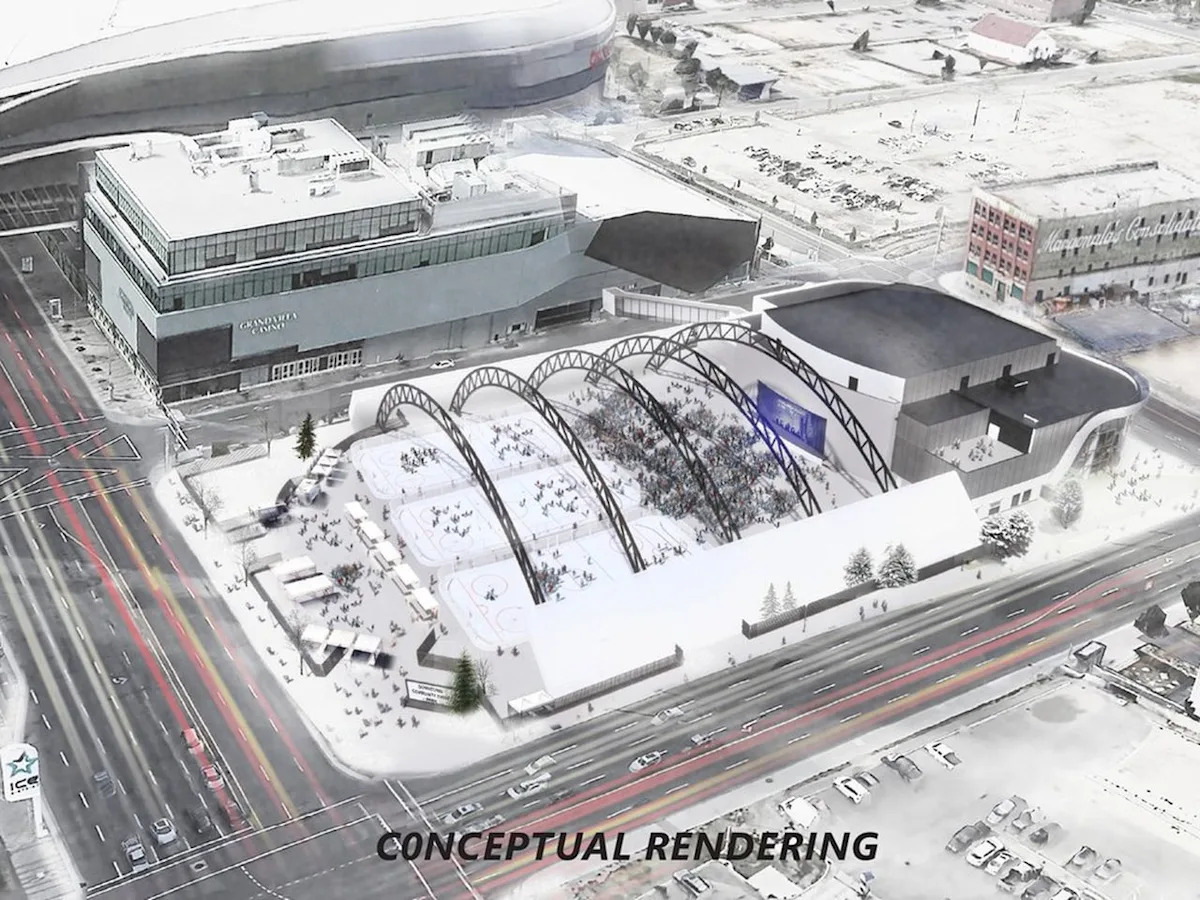
If all goes according to plan — and I suppose that’s a big if these days — a new, $250-million, indoor-outdoor event park operated by the Oilers Entertainment Group will be up and running Downtown sometime in 2029.
It’s touted as a unique venue in North America, built for Edmonton’s diverse climate, capable of hosting not just Oilers playoff parties, but all sorts of year-round concerts, community gatherings, sport showcases, conventions and so on.
Moreover, it is linked with the promise of an important new Downtown housing development nearby — OEG’s Village at Ice District — along with provincial funding to finally knock down the old coliseum and kickstart redevelopment of the languishing exhibition lands.
All told, it’s an exciting development for our city, especially since it might be the last “cool” mega-project we’ll see for awhile.
(Even Calgary doesn’t have one of these, but they may end up wanting to copy us again).
“This is a win for our Downtown, and a win for our city,” said Mayor Amarjeet Sohi, who now has a nice little infrastructure legacy to tout after an otherwise challenging four years.
As such, it’s curious to note a pretty subdued reaction to it all, even among city councillors who voted to approve the complex “master agreement” — also known as in the fine print — with OEG and the Alberta government last week.
Perhaps it’s the prospect of many more years of construction headaches Downtown. Or maybe it’s that very scarce public dollars are going to an unnecessary corporate development. Or that the deal-making process felt a bit coercive, rushed and short on public engagement.
Or maybe the mood is just a product of these world-burning times in which it’s hard to trust anyone or anything.
And in that vein, I suppose, you could note that there are still significant questions, risks and disappointments in the final agreement.
Those shortcomings are one way in which to view the overall deal — as four councillors did in voting against it — and I’ll discuss those in a moment.
But overall, my sense is that the city did fairly well under difficult pressures, forging a pact that at least limits taxpayer exposure, if not getting all the public benefit guarantees it might want.
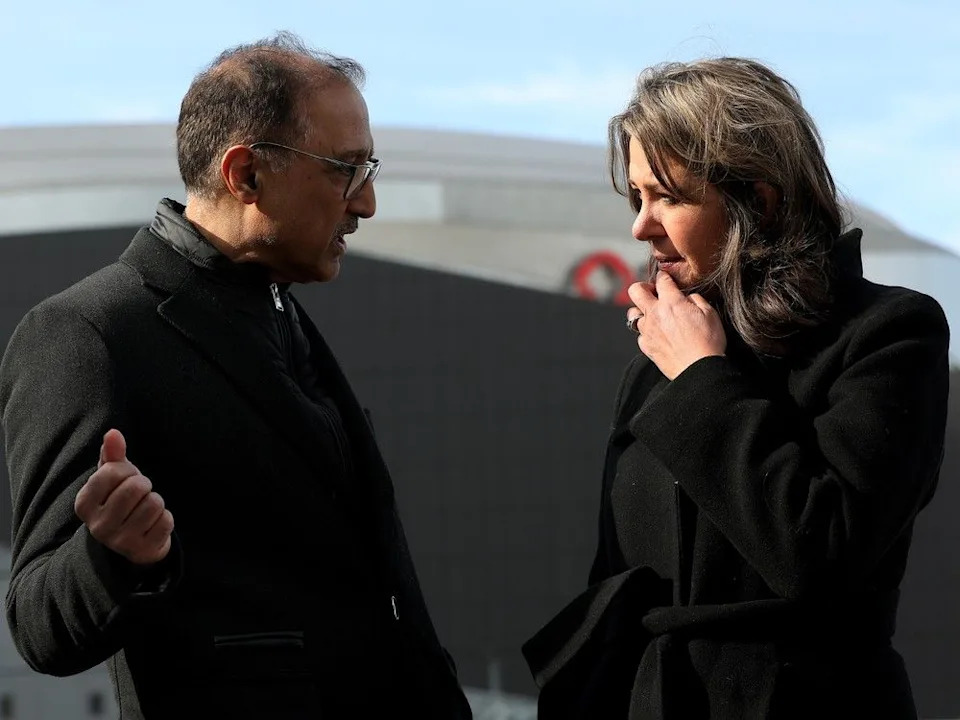
Mayor Amarjeet Sohi and Premier Danielle Smith chat in March following a press conference to officially announce a funding agreement for a new $250-million OEG event park.
City expenses capped
Case in point, the city’s contribution to the event park of $69 million and its contribution to Village at Ice District of $33.8 million are capped at those amounts. Any cost overrun is shouldered by OEG.
At the event park, one-third of the available booking time will be available to community and non-profit groups at below market rates, and the city gets a say in how this works. OEG and the city will jointly form a committee to decide what the rates will be and how venue’s schedule gets split up, including “prime” booking times.
(The point is, OEG is not allowed to unilaterally change how the park is used.)
Smartly, the two partners have also conceived a strategy to build up a fund for major repairs and refurbishments in the future — mostly by adding a ticket surcharge onto OEG events. The city gets to determine the surcharge rate, in collaboration with OEG.
And oh yes, the city will also own the event park, and the land on which it’s built, which it is buying from OEG for less than half of its assessed value.
As for the Village at Ice District, north of the arena, OEG’s plan is to turn ugly parking lots into a much more attractive mixed-use development with up to 2,500 housing units of different types. The city and province are helping to launch the project by contributing to up-front utility upgrades, remediation and other land work.
This is the most vital part of the whole scheme for the city, which needs housing to be built as quickly as possible to generate new property taxes that will pay for its investments in these projects.
To assist that goal, the master agreement includes a promise from OEG to build 354 units by the second half of 2028, and further 420 units within the following five years “based on demand in the Edmonton downtown market.”
That last clause would appear to give OEG significant wiggle room on timing and numbers, which isn’t ideal, but there are financial incentives to push the corporation to get at least some housing in the ground relatively quickly.
OEG is responsible for the first $3 million of the land remediation costs. They must also front the first $4 million for utility/servicing work, and will be reimbursed by the city only after foundations and footings for those initial 354 units are completed.
Also remember that if the plan works, the city expects tax revenue to sufficiently rise in the area to fund bunch of other Downtown improvements, including an incentive program to help build more housing, and new transit security projects.
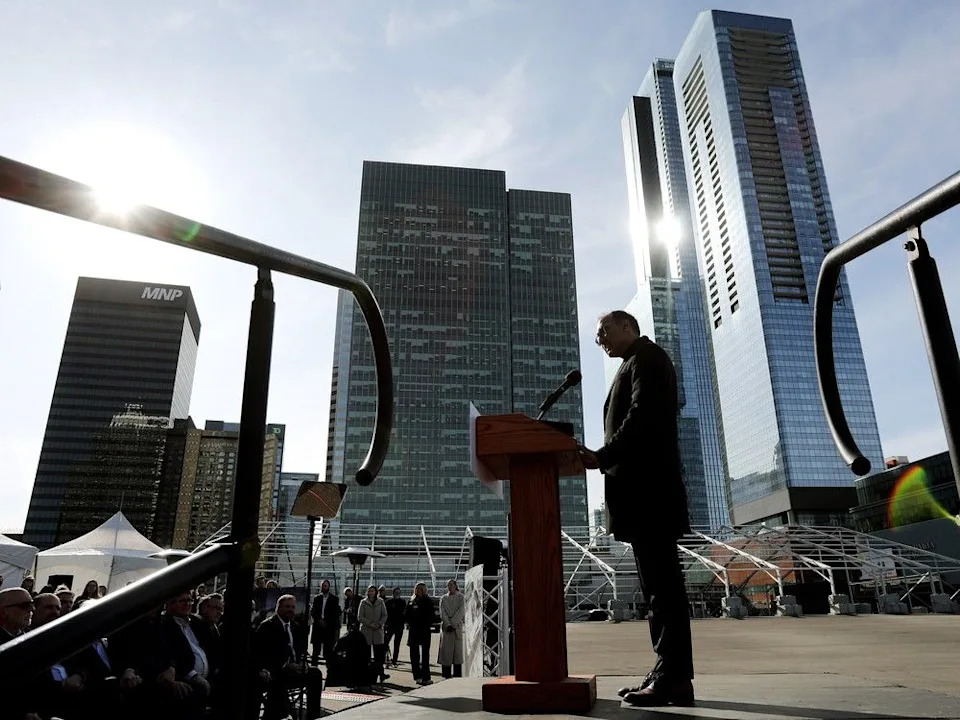
Mayor Amarjeet Sohi takes part in a press conference in March to officially announce a funding agreement for a new $250-million OEG event park.
Shortfall on housing?
That said, there are pieces to quibble over.
My biggest point of nervousness is the speed and scope of housing development at Village at Ice District over the long term. If that stalls, the city’s whole Downtown revitalization plan may go with it.
Construction of the first 354 units seems relatively assured, but after that I would have liked to see something more substantive in the deal than a vague promise for a mere 420 additional units sometime before 2034.
Even if OEG makes good on that promise, that’s still represents only 30 per cent of the expected full buildout. There’s no real plan or timeline to achieve the touted 2,500 units, even though the stated intention is to finish by 2038.
“We are funding an event park and maybe we get housing,” suggested Coun. Andrew Knack, who has been the group’s biggest critic of the deal.
Moreover, I was disappointed the agreement didn’t include guaranteed percentages of affordable units, social housing, student dwellings and other needed housing types.
As for the event park, the main question is whether community groups and non-profits will actually use the public booking times extensively or not. And if it does well, there is a possibility that the venue might end up taking some business away from city and community facilities.
That said, with those shortcomings duly noted, I think this is still a generally positive and appropriate risk for the city to take on. People can always focus on how the investment could go wrong, but the potential upside for Downtown is just too valuable to ignore.
I won’t go so far to declare this a game changer — this won’t cure homelessness, for example — but it at least feels like a game booster. And in these fraught times, that is worth celebrating.
Related
Bookmark our website and support our journalism: Don’t miss the news you need to know — add EdmontonJournal.com and EdmontonSun.com to your bookmarks and sign up for our newsletters here.
You can also support our journalism by becoming a digital subscriber. Subscribers gain unlimited access to The Edmonton Journal, Edmonton Sun, National Post and 13 other Canadian news sites. Support us by subscribing today: The Edmonton Journal | The Edmonton Sun.