
The state of the world is in flux; this much is easy to say. Just as the current geopolitical situation, the hockey world is also undergoing a period of transition. The NCAA is becoming a formidable alternative to the Canadian Hockey League clubs. And then, there’s the new NHL collective bargaining agreement taking effect next year.
One underrated but key detail in the new CBA is that “paper transactions” will no longer be allowed. This means that teams won’t be able to send a player down to the American Hockey League on paper and then recall him a short time later, without the player ever leaving the NHL club. If a player is sent down, they must dress for at least one AHL game before being recalled.
A relatively small change in the newly negotiated NHL CBA is the elimination of the ability for teams to ‘paper’ players to the AHL on off days to save cap space by requiring players play at least 1 AHL game before being recalled. This will make the cap system fairer, particularly for young players.
— David Johnson (@hockeyanalysis.com) 2025-07-09T18:21:06.229Z
Many teams have already been future-proofed against this new rule. Toronto, Calgary and Winnipeg all have their AHL clubs in the same city, while Vancouver, Ottawa and Montreal have the AHL crew in a city close by. Edmonton is the lone Canadian team whose AHL club isn’t in the same region. In fact, the only time in the Oilers franchise history when the AHL club was nearby was in 2004–05. That was when the RoadRunners were moved up to what was then Rexall Place, amidst the NHL season being wiped out due to a lockout.
By all accounts, the Oilers and the Bakersfield Condors, their current affiliate, are on absolutely solid ground. There’s never been any relocation rumours, and Bakersfield loves their team. But if the Oilers wanted their affiliate closer to home, what are the options? Let’s take a look.
The nearby: Red Deer
Logistically, Red Deer makes a lot of sense, being just over an hour’s drive south of Edmonton. With Calgary content on having their AHL franchise in the same barn as the NHL club, the concern about neutrality for Red Deer wouldn’t necessarily come into play. As a bonus, Red Deer has the Gary Harris Centre, which was built recently for the Canada Winter Games. The home of Red Deer Polytechnic’s hockey teams could serve as a top-tier practice facility for an AHL club.
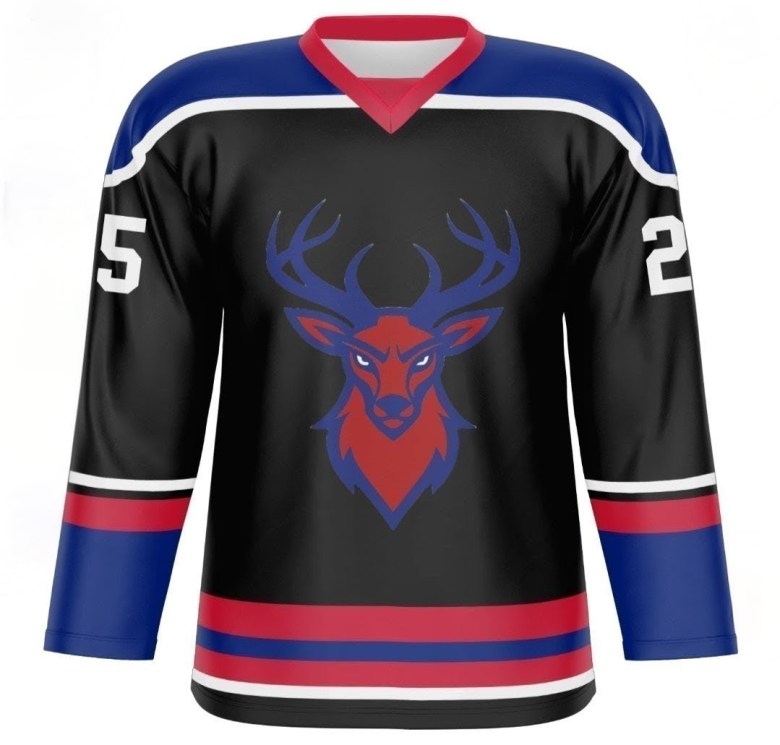
 Red Deer Stags concept logo.
The biggest concern here would be population size. While Red Deer is the third-largest city in Alberta, it still has only 113,000 residents. That would make it the sixth-smallest AHL city. In addition, there might be a hesitance for the WHL’s Rebels, who have been in town for over three decades, to share their market.
The NHL-sized arena: Saskatoon
For those who don’t know, Saskatoon once almost had an NHL team, as the St. Louis Blues came close to relocating there back in the 80s. Even though it fell through, former Oilers owner Bill Hunter still built an arena there that opened in 1988. To this day, it still stands as the SaskTel Centre.
 Saskatchewan Miners concept logo. For either Saskatoon or Regina.
The SaskTel Centre seats 15,195 and has been hosting pro lacrosse ever since the Edmonton Rush moved there. Saskatoon, as a city, is more than twice the size of Red Deer, bolstering their case further. Both the Rush and the WHL’s Saskatoon Blades draw well for their home games.
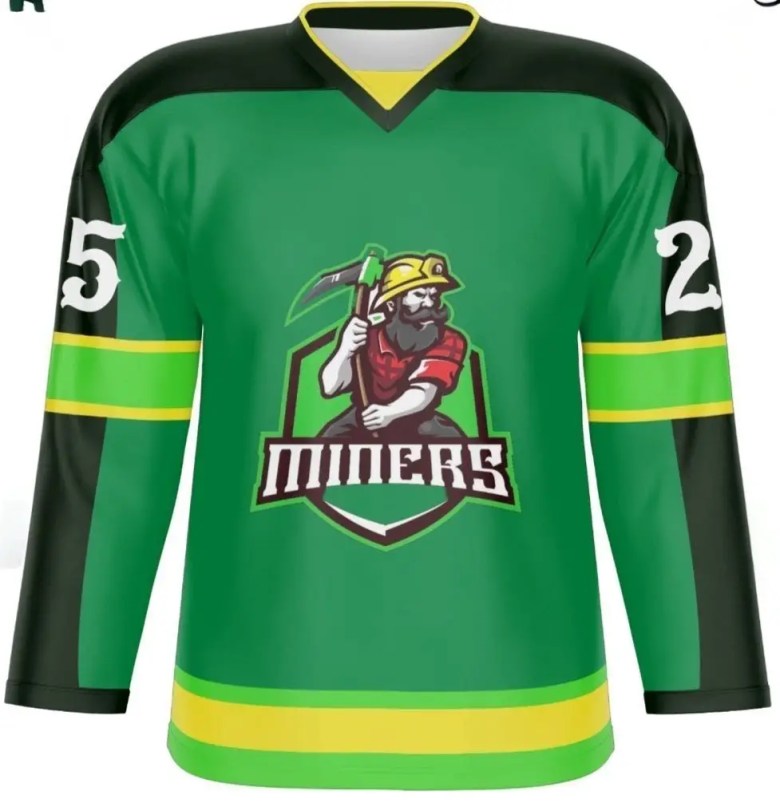
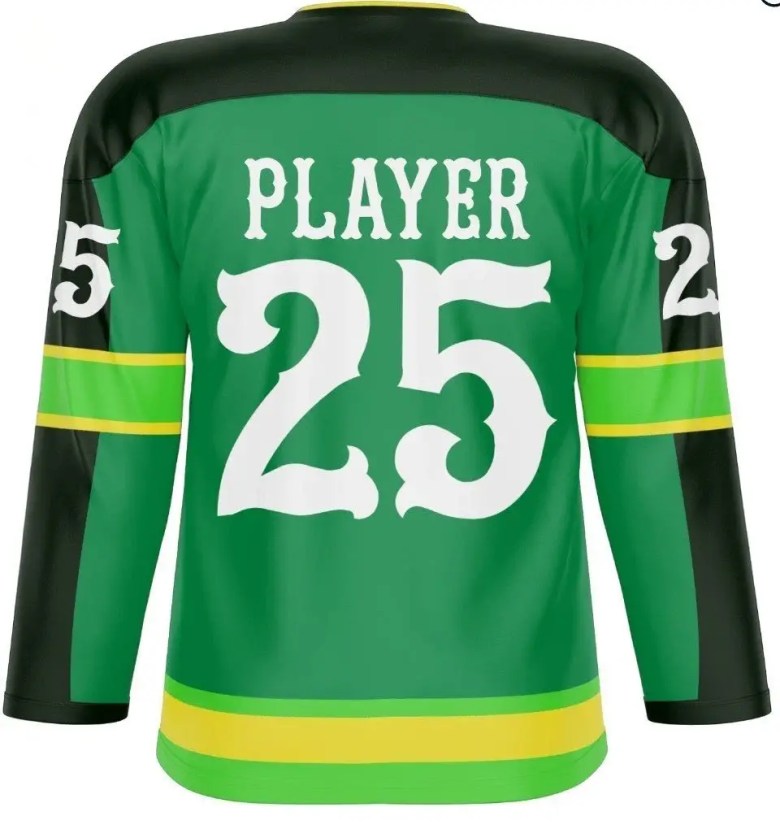
The main issue is the arena location. Saskatoon is close enough to Edmonton that distance doesn’t factor in as a big issue, but the SaskTel Centre is on the edge of the city, and not the easiest to get to. That could change if Saskatoon builds a new downtown arena, as has been discussed recently. And SaskTel can still be serviceable despite the flaw. But it’s certainly not perfect, either.
The “capital cities connection”: Regina
So maybe the Oilers don’t want to compete with the National Lacrosse League. Maybe they want to minimize AHL travel and have their team closer to the US border. Regina is a decent alternative, in that case.
Regina has a comparable population to Saskatoon, and their arena would still meet the lower end of AHL requirements capacity-wise. Both the WHL’s Pats and then in the summer the Roughriders, are very well-attended. The city also showed well with the 2019 Heritage Classic between the Flames and the Winnipeg Jets.
Ultimately, the hangup here is the distance. Regina is closer to Edmonton than Bakersfield is, but it’s still a bit of a commute. Also, beyond the capital cities thing, there’s not much tying Edmonton and Regina together. Football does, one would suppose. But that has no bearing on an AHL team.
The long, but historic connection: Hamilton
Once upon a 2000s Oilers, not long before the lockout, their affiliate was the Hamilton Bulldogs. The Bulldogs in the past decade-plus have been an OHL team, but previously they brought AHL hockey to a Copps Coliseum built for NHL follies. It’s been over 20 years now since the Oilers called Hamilton their affiliate, but it’s fun to think about.
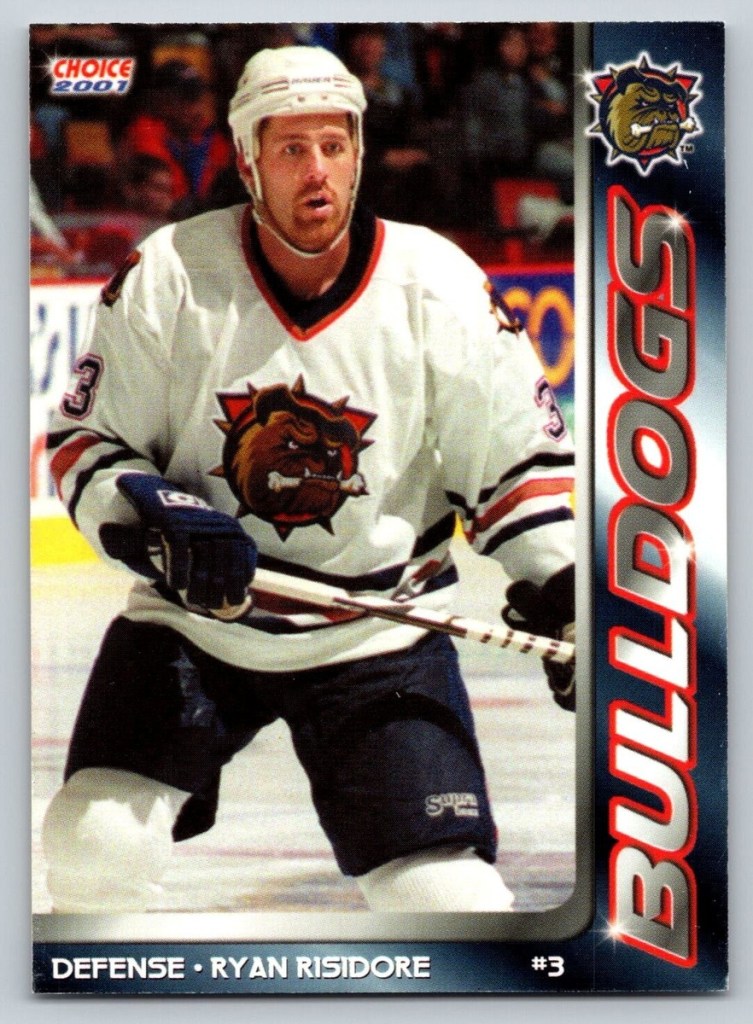 Bulldogs defenceman Ryan Risidore during the 2000-01 season.
A newly-renamed and renovated TD Coliseum would become an AHL crown jewel if the league saw a return there today. Fans in the Hammer are very passionate about their sports, and already the Toronto Rock lacrosse franchise is going back there for home games. It’s a proven facility that can totally make the AHL work again.
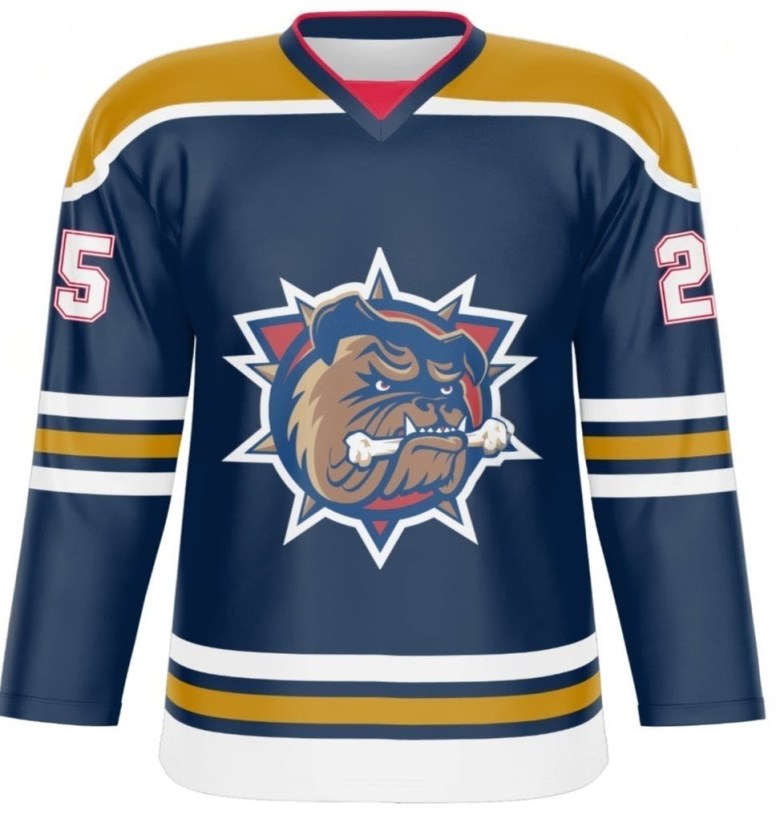

Of course, travel is the main concern here. While the customs issue would be eliminated, the distance issue would not. The “Golden Horseshoe” region is a four-hour flight away from Edmonton, which would be rather inefficient. Part of the Oilers having their A’ franchise in Bakersfield was for a “Pacific Division” AHL-style to match with the NHL clubs. So perhaps in 2025, Hamilton wouldn’t be workable. Nostalgia would be huge, though.
The “YEG proud”: Edmonton
Surprise! Edmonton is a viable option to have its own AHL team. And unlike Calgary, the Oilers wouldn’t even need to cram three hockey teams into one building to make the schedule work. The answer would be simple: go back to the future.
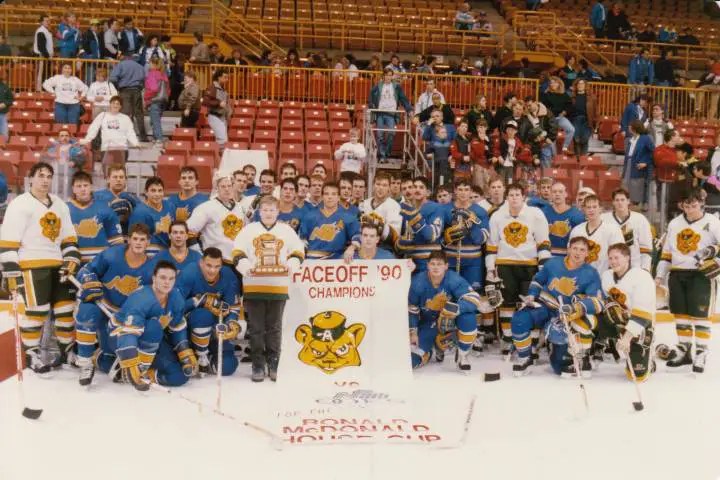 Faceoff 1990, at what was then the AgriCom. Yes, it used to have ice.
The Edmonton EXPO Centre, formerly the AgriCom, has had the Hall D arena since its inception in 1984. While currently it is the home of the Edmonton Stingers basketball club, its roots lie in hockey. The seating bowl was built for hockey, and the old Ice franchise of the WHL played there from 1996 to 1998 before taking off for the Kootenays. Even more interestingly, it sits on the site of the old Edmonton Gardens, the Oilers’ very first home.
With a current capacity of 4,628, the arena would still be larger than three existing AHL rinks. A renovation and modest expansion to just over 6,000 could put it above another couple of teams. And there would just be something special about Oilers-affiliated hockey at the Exhibition Lands.
 This needs to make a comeback. An Edmonton AHL team could do that.
It could even be that the Oil Kings, with their strong following and a soon-revamped Exhibition Lands area, go there and start an insane sellout streak. All the while, the AHL team draws well at Rogers Place. Either way, even with the Coliseum gone, hockey on 118 Avenue would still be huge for civic pride.
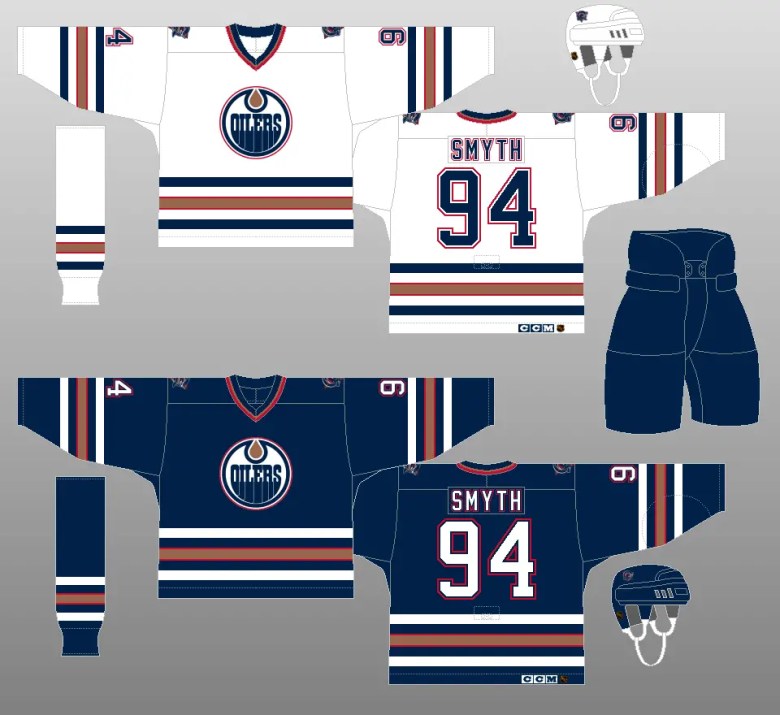 These, but with the “Rigger” logo on the front.
Would this be something the Oilers consider? Unlikely, given the strong relationship with Bakersfield. But if they want the AHL guys closer to home, the solution may well already be within city limits.
Like this:
Like Loading…