
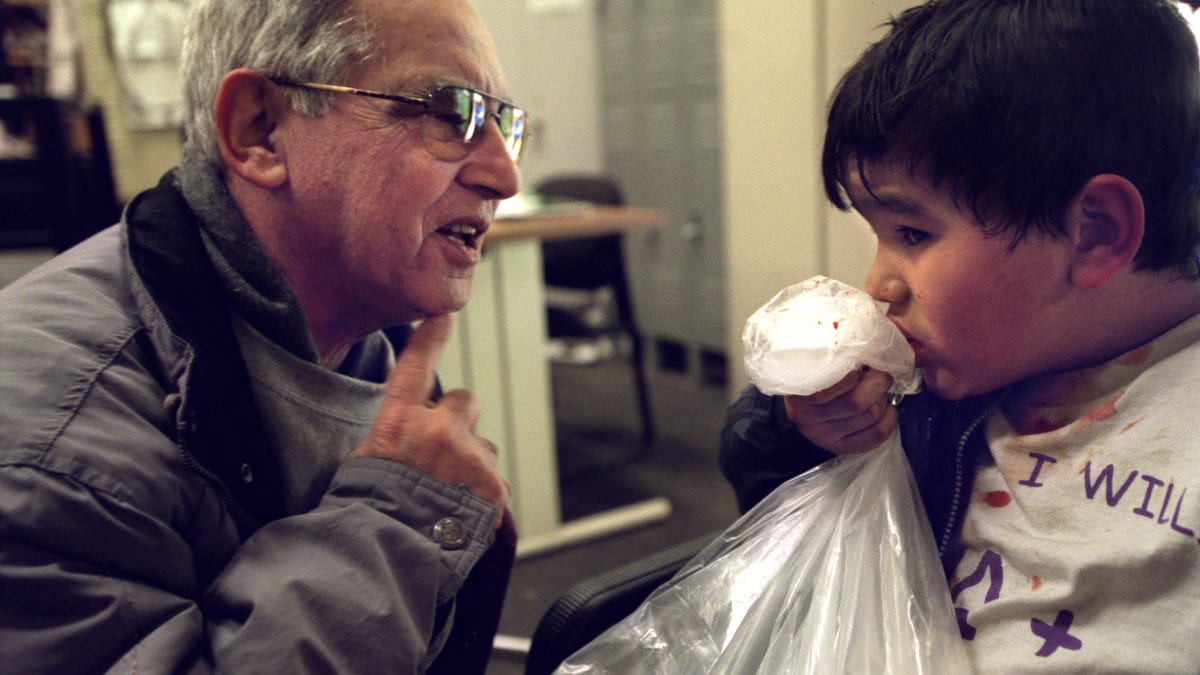
Ziggy Gonzalez spent most of his 94 years playing, teaching and coaching generations of Detroiters at Clark Park. His leadership helped save the park, which is now one of the city’s best.
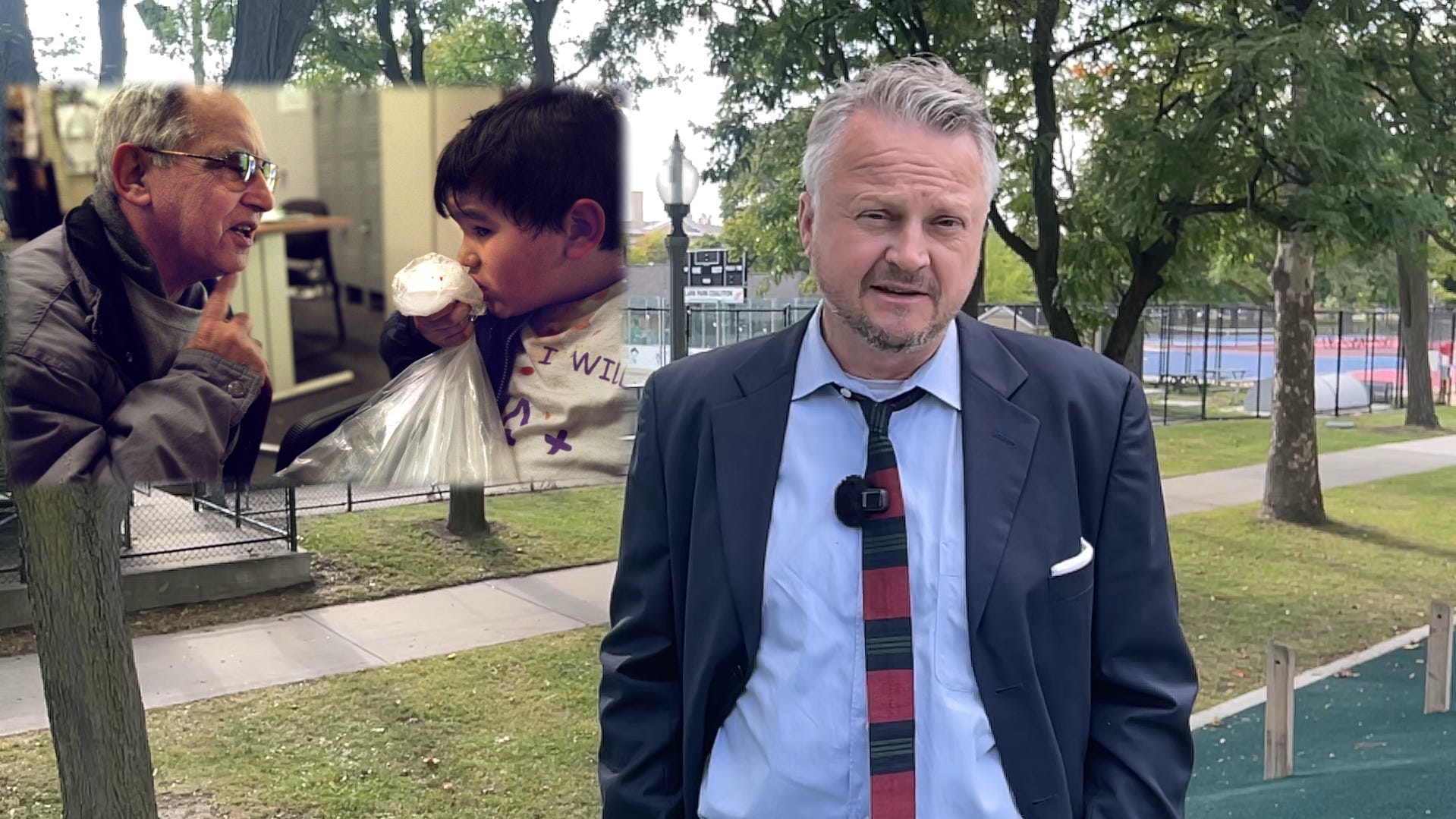

SW Detroit legend Ziggy Gonzalez is gone, but his legend lives on
Ziggy Gonzalez spent most of his 94 years playing, teaching and coaching generations of Detroiters at Clark Park. His leadership helped save the park.
When I moved back to Detroit in 1999 to write obituaries for the Free Press, I used to describe my job as “writing about amazing people you’d love to meet … if it wasn’t already too late.”
There is almost no better example of that maxim than Ignacio “Ziggy” Gonzalez.
I say “almost,” because many of us were blessed to meet Ziggy long before he passed away Aug. 29 at age 94.
Raised in southwest Detroit at a time when the area was loaded with Eastern European immigrants who worked in the nearby factories or, like my Hungarian great-grandfather, labored in the salt mine, Ignacio became “Ziggy” because these newcomers couldn’t pronounce his given name.
Ziggy, as he often did, found humor in the situation. It became one of the many stories he regaled new acquaintances with as he got to know them.
And Ziggy made lots of acquaintances over the past nine decades. Many became dear friends and, eventually, invaluable allies, as he helped put together the coalition that saved Clark Park from closing when Detroit wrestled with a budget crisis in the early 1990s.
“The rink was on its last legs,” said Anthony Benavides, a longtime friend who has been running the recreation center and outdoor ice rink for more than 30 years.
“Zig was like: ‘We’ve got to do something about it!’ “
If you’ve never been to Clark Park, or if it has been awhile since you stopped by, I guarantee one visit is enough to see that Ziggy, Benavides, Deb Sumner and Bill Deuparo not only saved the rink, they helped revive one of the best neighborhood parks in the city.
Until health problems slowed him down a couple years ago, Ziggy had been a nearly constant presence at the park, coaching, mentoring and charming almost everyone he met. Between his teaching at Wilson Junior High and Western High School and volunteering at the park, it seemed like everyone knew Ziggy.
“He was the first person who let me do stick-and-puck. He taught me how to stickhandle,” said Sergio Broughton, 22, who spent countless hours hanging out at the rec center and rink. “When I got off the ice, my grandmother knew him. He had been her teacher.”
Ziggy’s death made the Congressional Record, when U.S. Rep. Rashida Tlaib, D-Detroit, read a tribute to him on the House floor.
Detroit Red Wings legend Darren McCarty stopped by the Martenson funeral home in Allen Park on Thursday, Sept. 4, to pay his respects.
I arrived too late for the family hour, where many stories were shared, and I still heard a ton of tales.
One of the most common cliches you hear about folks like Ziggy is that they “would give you the shirt off their back.” The loquacious Ray Montemayor, who Ziggy helped convert from a street hockey goalie to a state champion ice hockey keeper, had a much better anecdote.
He said that when he told Ziggy he couldn’t get one of the snazzy Clark Park baseball hats emblazoned with the logo for top hockey equipment maker CCM, Ziggy took off his own lid and gave it to him. Montemayor then took off the cap he was wearing, flipped it over, and showed me where Ziggy had signed the underside of the bill.
“On Guard” was created to tell you about public officials who are doing things they’re not supposed to, public officials who aren’t doing what they’re supposed to, and to take you behind the scenes to reveal what’s really going on in government and politics.
It’s one of the reasons why when people tell me: “You need to do a story about me,” I tell them I’ve had two jobs at the Free Press: Obituary writer and investigative reporter.
That changes their mind pretty quickly.
So, it’s a distinct pleasure to be able to use this space to tell you about one of the truly great Detroiters I’ve had the pleasure to know — one of the people who reinforce my belief that while politicians tell us they will solve our problems if we give them our vote, our real salvation will come from the friends and neighbors who do the right thing merely because it’s the right thing to do.
The legend
There are still not a lot of hockey players of Mexican heritage in Detroit — though Clark Park turns out more than its share — but they were really hard to come by in 1930.
So, Ziggy grew up playing baseball.
The family’s outstanding tribute to Ziggy, which they graciously gave me permission to steal from, says the teacher in charge of the safety patrol took young Ziggy and his colleagues to watch the Red Wings.
“Zig came home all excited about this game none of his family had ever heard of,” his descendents wrote. “Somehow, he dug up enough money to buy some beat-up old skates from a shoemaker, and that started four brothers playing hockey.”
After high school, Ziggy joined the U.S. Air Force and was stationed in Savannah, Georgia, where he met Mable Sanders, who became his first wife. Segregation was still common in the 1950s, and his family told me Mable was horrified when, seeing two water fountains, Ziggy drank from the one labeled “colored” — meaning it was for Black people.
Ziggy turned, smiling, and pointed to the clear water flowing from the tap.
See, he told Mable, it isn’t colored.
Unlike the crackers who tried to separate people, Ziggy wanted to bring people together.
After returning to Detroit, he attended Wayne State University and became a teacher.
He coached baseball, winning two state championships, and started hockey teams at nearby St. Hedwig’s.
Benavides played hockey with one of Ziggy’s sons and told me Ziggy often drove the boys to their games.
“Ziggy became like another good friend/part-time father … to the kids growing up in southwest Detroit,” Benavides said.
While Clark Park today is overflowing with used hockey equipment, it was hard to come by in those days. Hockey then, as today, is an expensive sport to play. Even if you can find free ice, the cost of skates, sticks and protective gear can be a deal-breaker for families of modest means.
“Ziggy was always on the hunt for used gear,” Benavides said.
Ziggy’s commitment to kids could be a sore spot for his own six children, however.
“Zig’s family had to learn to share him,” they wrote, “something they were not always eager to do, but share they did — recognizing his commitment to other youth as a point of pride.
“He would often remind his own children that they had what they needed, while others did not.”
Ziggy outlived two of his children, a son who had special needs and a daughter he lost to the streets. He was around 85 when he told me about his daughter. He was wistful, but stoic.
Benavides told me Ziggy tried not to let things get him down, recognizing that loss is part of life.
“He was always looking at everything on the bright side,” Benavides said, summing up Ziggy’s philosophy as, “Don’t keep your head down too long.”
Hockey in southwest Detroit shifted from St. Hedwig’s to Clark Park in the mid-1970s. By around 1990, the park’s signature outdoor rink was falling apart.
“Sections of the boards were just laying on the ground,” Benavides recalled, adding that Ziggy got one of his brothers who was a UAW journeyman and some other skilled union tradesmen to help out.
“We put the rink together, best we could,” Benavides said.
Detroit’s finances, however, also were falling apart.
Clark Park was slated for closure.
Ziggy pulled together friends and neighbors and, through their Clark Park Coalition, took over the park, maintained the recreation center, rebuilt the rink, and offered sports, tutoring and nutrition to kids in southwest Detroit.
The legacy
I met Benavides about 15 years ago, at a youth hockey coaching clinic. His concern for kids and commitment to Clark Park inspired me, in the way Ziggy inspired hundreds, if not thousands, of people.
So, about 10 years ago, while working at WJBK-Fox 2, I proposed adding a charity hockey game to Clark Park’s annual winter carnival. Two of the first people I met at the park were Ziggy and Broughton, a rink rat ready to jump into any game looking for an extra player.
Broughton was one of the first people to tell me about Ziggy’s passing.
“He was always trying to help anybody and everybody,” he told me when we got a chance to catch up and reminisce about our friend. “He was a huge part of my life; the father figure I never had.”
“He did that for everybody,” Broughton added.
Mable and Ziggy’s son David and daughter Laura died years ago. He is survived by his wife, Ellen; daughters Julie, Barill and Christina Gonzalez; sons Daniel and Frank; brothers Roy and John; and a sister, Olga, as well as grandchildren and great-grandchildren.
Services will be held Friday, Sept. 5 starting at 10 a.m. at the Basilica of Sainte Anne de Detroit, at 1000 St. Anne St., in southwest Detroit. Ziggy will be laid to rest in Woodmere Cemetery after a graveside committal ceremony with military honors.
“Everybody says ‘Ziggy’s this icon,'” Broughton told me. “He touched a lot of people. … It almost seems like Ziggy was a part of everyone’s family.”
Although Ziggy had not been back to the park much in recent years, Benavides said: “To this day, people come and say, ‘Is Ziggy there?’ “
Your beliefs about what comes next are your business. But if you’re asking me, I can’t rule out that the answer to that question could be a resounding “Yes.”
To donate to Clark Park, hit this link: https://clarkparkdetroit.org/donate/
M.L. Elrick is a Pulitzer Prize- and Emmy Award-winning investigative reporter, director of student investigative reporting program Eye On Michigan, and host of the ML’s Soul of Detroit podcast. Contact him at mlelrick@freepress.com or follow him on X at @elrick, Facebook at ML Elrick and Instagram at ml_elrick.