
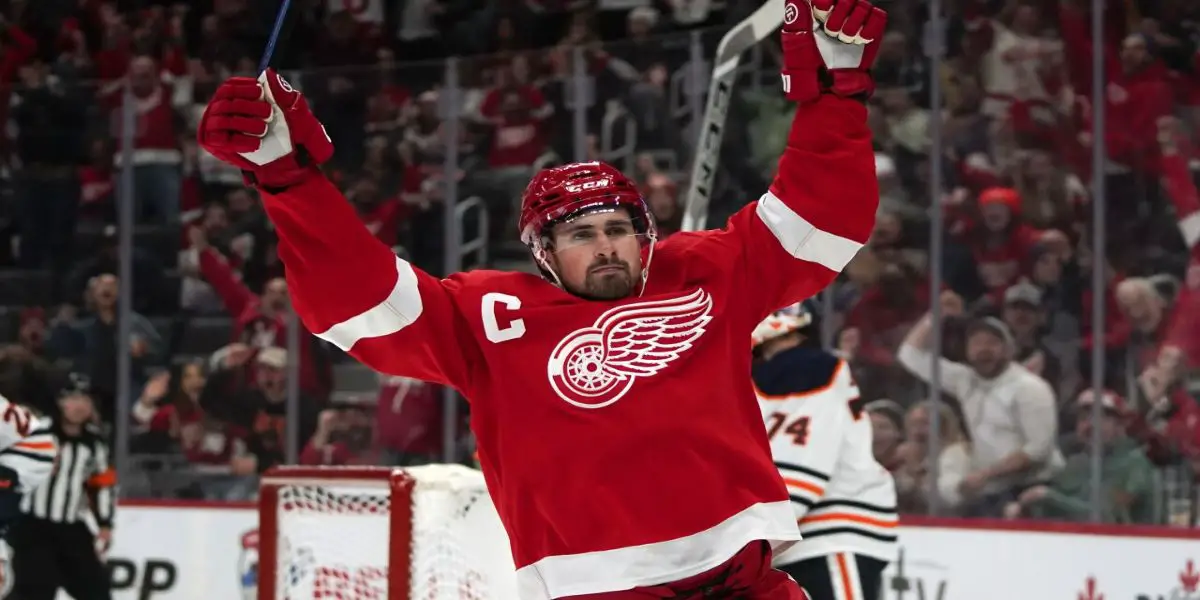
During his post-season press conference, Dylan Larkin implied that he needed some help to get into the playoffs, and fans felt like he was pointing fingers at general manager Steve Yzerman. While that may be true, it doesn’t ignore the fact that Larkin had one of his worst seasons in recent memory. From prolonged cold streaks, battling off injury, or just lacklustre five-on-five play, Larkin has a lot of ground to cover. This marks the third instalment of my player preview series; the other ones will be up on my page if you’re interested.
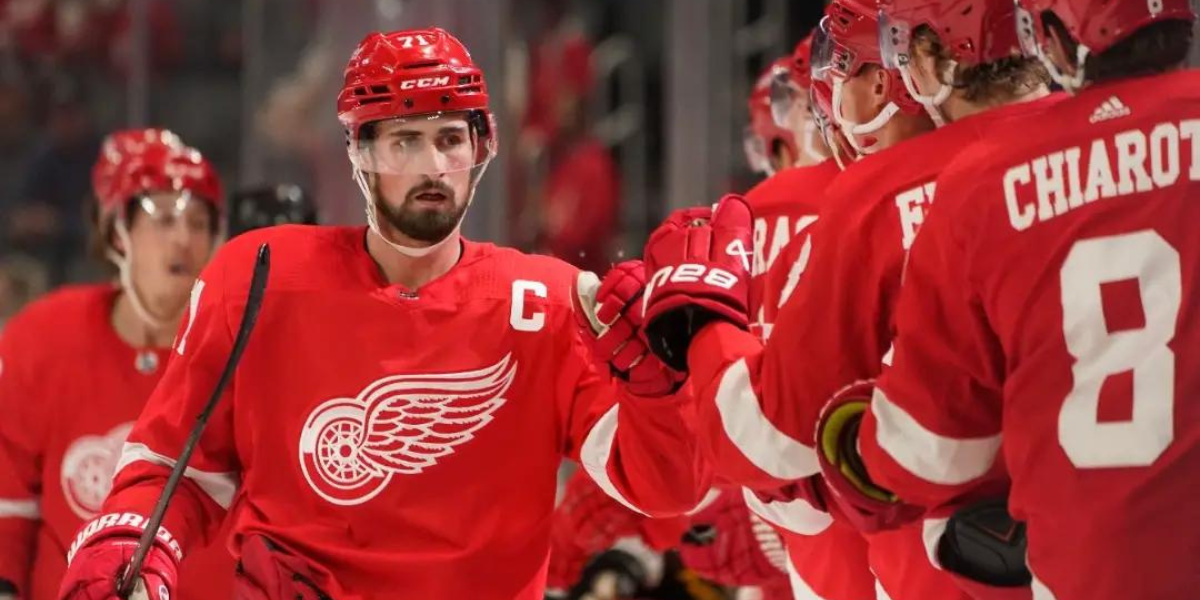 Captain Dylan Larkin leading the handshake line for Detroit | (AP Photo/Paul Sancya)
Offense:
Role, 1C: The most important position in the NHL is first line center. Larkin does it all; the faceoffs are elite, the play on both ends is stellar, and he can log big minutes in all situations. Larkin is essentially the blueprint for a solid first-line center. Last season, there were prolonged stretches where he still did all the same things just at a lower level. Early in the season and post Four Nations, Larkin’s visibility and statistical performance took a step back in all his strengths. Later in the season, he revealed he was battling an injury. If Dylan Larkin can be the best version of Dylan Larkin for 82 games, Detroit will have an elite 1C. The problem is he hasn’t shown he can.
Where, slot: Larkin is one of the league’s most infamous slot shooters. Both at even strength and during special teams, Larkin is best in between the faceoff dots. His snapshot is consistent and accurate, generating most of his scoring. Outside of zone sets, Larkin is always a willing forechecker. His speed makes him a good option for F1, even if his physicality isn’t his strongest trait. He’s a responsible playmaker and can deal anywhere in the offensive zone. Larkin plays a consistent and well-rounded offensive game with strengths all over the offensive zone.
Pros, speed/snapshot: Larkin is one of the NHL’s best skaters. The speed is there both on and off the puck, losing himself against defenses and being great at carrying the puck. Away from the puck, Larkin sets up as one of the best snap shooters in the league. His release is quick, and he can get it off even off balance. This combines to make Larkin a threat, no matter what his status on the ice is.
Cons, consistency: His physicality isn’t a plus, but it’s not a downside; he doesn’t need to check with his speed. Larkin can be insanely streaky. When he’s on, a 7 game goal streak feels like a given. When he’s struggling, a 5 game pointless streak is likely on the horizon. Injuries are to blame, but staying healthy is part of Larkin’s job.
Eye Test: I’ve alluded to it, but Larkin feels like a top 10 center at his best, and then he will either get hurt or slump into a mediocre one. He has all the tools, but he needs to put it together for a full year. In an Olympic year, Larkin’s health is definitely a worry for Red Wings fans.
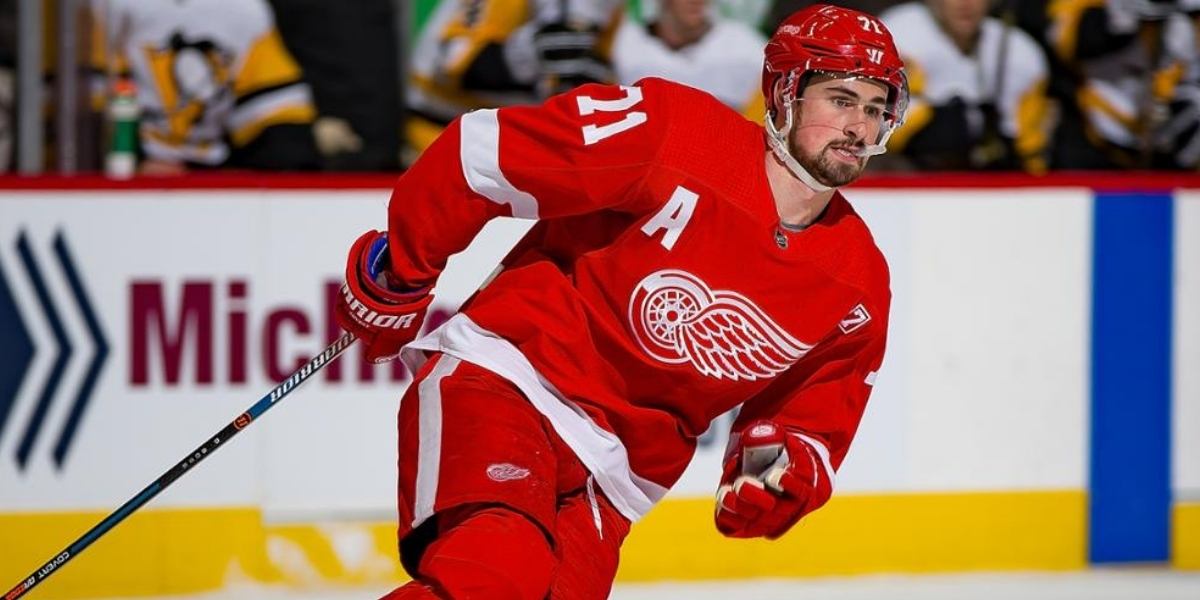 (Photo Credit: NHL.com)
Defense:
Role, 1C: As the center, Larkin is the first man in and last man out on defense. He’s willingly along the boards and is depended on as the primary puck carrier. Larkin, being the 1C, also means he faces the hardest deployments in the NHL. However, his deployments are still harder than most other centers in the NHL, and he is a positive in the Corsi For department. Larkin is one of the best faceoff men the league has. All in all, every box is checked with Larkin. Defensively, even at his worst, he is a 1C.
Where, pressure forward: Larkin isn’t in any one spot on defense. As a center, it’s typical you’re the pressure forward. Larkin’s speed and sharp puck-carrying abilities make him an elite candidate at pressure forward. Watch for Larkin to prowl mostly above the dots when the other team is in zone sets. When chasing, pressure forwards are there to hound the puck, and Larkin is really no different.
Pros, speed/faceoffs: Larkin’s defensive IQ and stickwork isn’t a negative, but it is pretty standard among 1C’s so I won’t touch on it too much. His speed is Larkin’s number one trait. His ability to close gaps fast and make shooters have to adjust their shots can snuff out plays. His speed also makes him an elite puck carrier out of the zone and in transition. His faceoff win percentage was at 55% again this season. His ability to consistently win draws makes getting out of those defensive zone starts so much easier.
Cons, physicality/irritation: It’s not exactly something he runs away from, but Larkin really isn’t much of a checker. His 44 hits last season were fine, and Larkin is comfortable going into the boards, but it is fairly uncommon to see him punish forwards along the wall and free up the puck easily. Larkin also isn’t a pest in the same way you might want players to be defensively. He’s not often found bothering the other team or making those chippy plays that wear the other team down. Unfortunately, it’s a Florida Panthers league, and playing the by the book means you’re not taking the chance to take an advantage
Eye Test: Larkin overall is a plus defender, even compared to first line centers. Unfortunately, as long as Kane and Cat are together on the second line, his deployments are going to be pretty brutal. It’s his cross to bear, and he does it generally really well. Larkin is intentional on defense, and while you don’t see too many finesse stick lifts, the impact is clearly there. If there is a path to getting him some easier deployment, he will only look better. Until then, so long as he is playing against the league’s best forwards, he will have to continue to be one of the league’s most sound defensive centers.
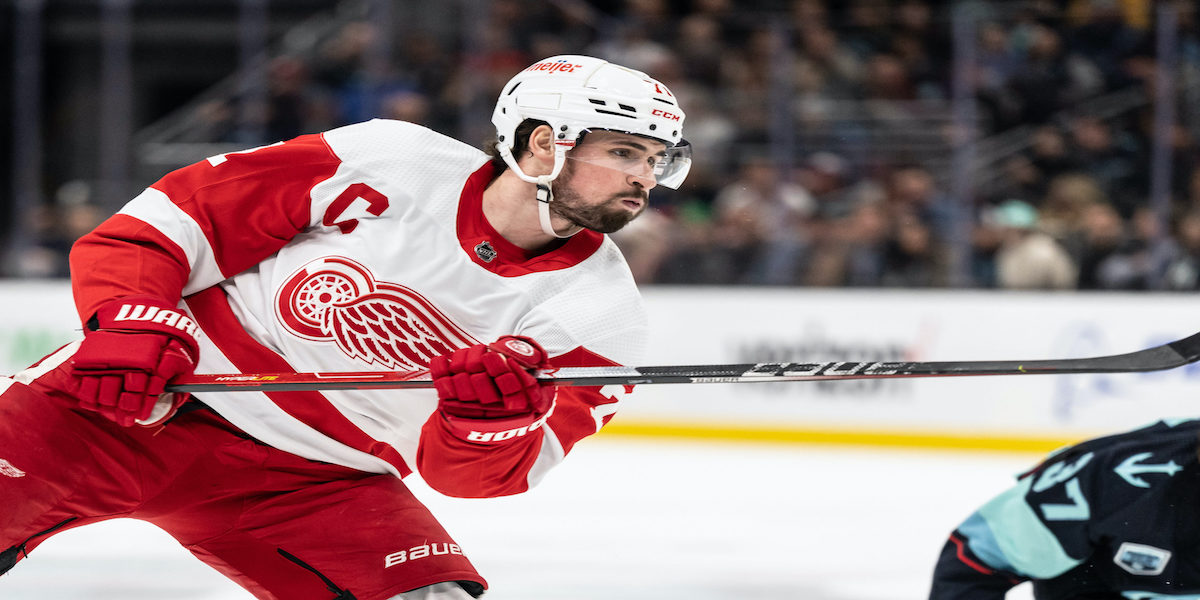 Mar 19, 2022; Seattle, Washington, USA; Detroit Red Wings forward Dylan Larkin (71) is pictured during a game against the Seattle Kraken at Climate Pledge Arena. Mandatory Credit: Stephen Brashear-USA TODAY Sports
Special Teams:
PP, net front/slot: The power play rotates through Larkin, and that previously mentioned elite faceoff ability makes getting the setup that Detroit wants so much easier. When the puck is set, Larkin typically rotates from the net front for a tap-in or into the slot for a snap shot. Both of which Larkin does at an elite level, and he is consistently one of the NHL’s best power play goal scorers. There really isn’t much to say for Larkin as his role on the power play will remain the same as it has been for years now.
PK, PK3 pressure forward: In my Kasper preview, I mentioned I think Kasper and Larkin will make up PK3. I also mentioned Kasper’s grit makes him a better candidate to be the slot protector and have him operate near the boards. Larkin will continue to be Detroit’s pressure forward, even down a man. His speed and threat in transition are exactly what you want for quick counter pushes against the power play. His faceoff skills also give Detroit a chance to get the easy clears.
That will conclude my Larkin season preview. Sorry if there was a noticeable delay between this one and the other ones. I just haven’t been as keen on doing player previews, but the rest of the core will have theirs up before the season starts.
More to Read:
Discover more from Inside The Rink
Subscribe to get the latest posts sent to your email.