
The difference between the two goalies in was, in a word, towering.
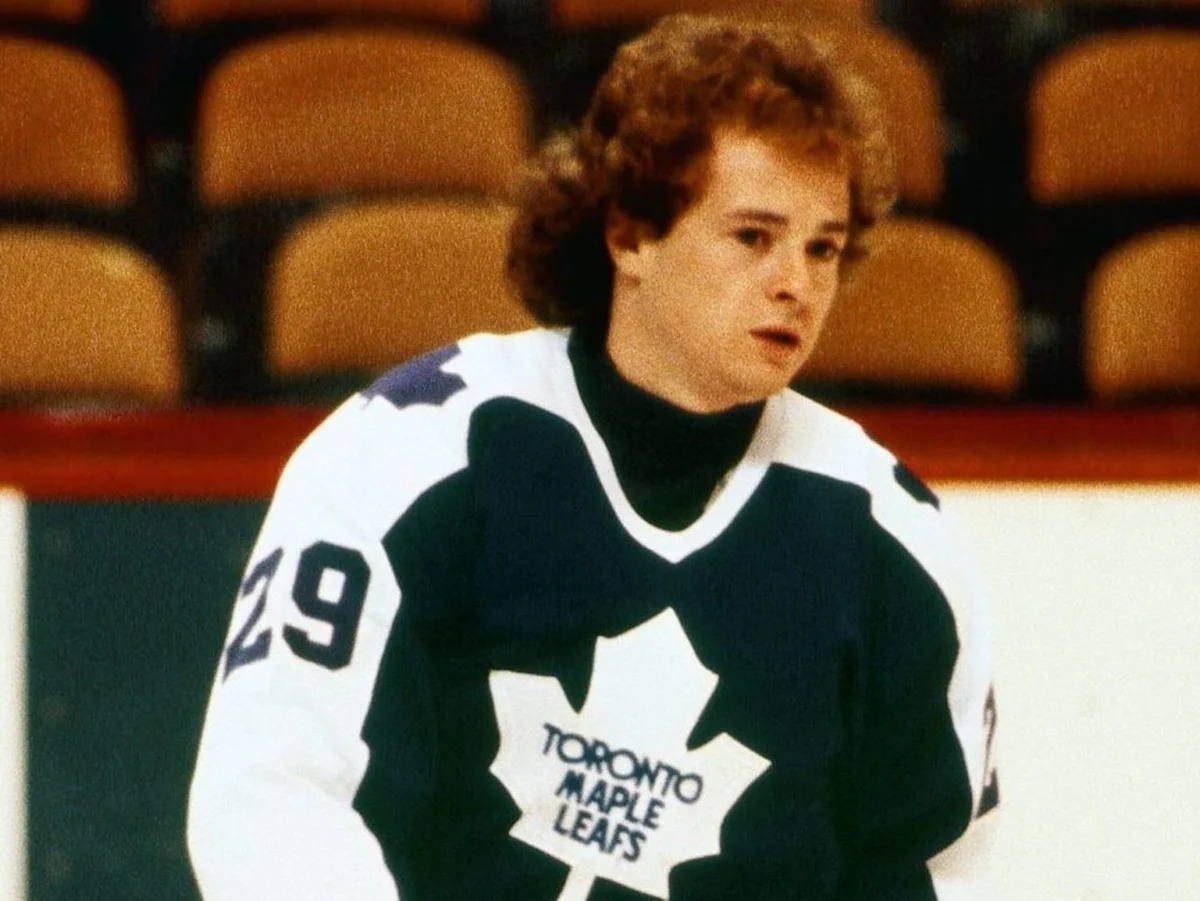
Almost a half century ago, it was 6-foot-4 stand-up Ken Dryden, a two-time Stanley Cup winner, about to start a run of four more with the Montreal Canadiens, versus Mike Palmateer, 5-foot-8, 169 pounds, bouncing around his crease like a red-hot popcorn kernel.
Where Dryden leaned on his stick during breaks to preserve energy and strategize, Palmateer often spent the pre-game on the toilet at Maple Leaf Gardens, sneaking a cigarette and studying the opposing lineup. On this November night, Toronto’s record of 6-7-4 probably didn’t faze the Habs, but the home team managed a 1-0 shutout on 39 Palmateer saves, his first appearance against the storied rivals.
“We’re waiting on the bench afterwards, me the first star, Ken the second,” Palmateer recalled. “He looks down at me and says: ‘Nice game kid, but don’t get too cocky.’
“He meant it in the nicest way. And of course I said: ‘Thank you.’ I would meet him later (when both worked for the Leafs’ hockey office). Just a real gentleman.”
Dryden’s unexpected passing on Friday at age 78 from a very private battle with cancer stirred many memories on Monday at Scotiabank Pond where the NHL Alumni held its monthly luncheon. While Dryden will always be a Hab in the majority of hockey hearts, his hometown Leafs knew him well from trying to beat him and his six years as team president (1997-2003).
“I was in a situation much like Kenny in Montreal when I played for the (1973 Memorial Cup winning) Marlies,” Palmateer said. “We had such a great team in front of us, we only had to make a few stops a game. But when the Leafs played Montreal, even if the shots were close, ours were from the blueline, theirs were in the slot.”
Palmateer’s team was twice swept by Dryden’s in playoffs, the former still lamenting 1979’s fluke double OT goal in Game 3 by Habs checker Cam Connor, who lost the puck off his stick.
“If Connor didn’t mishandle it, I stop him,” Palmateer declared.
Palmateer was well aware of Dryden’s many contributions to the sport as executive, commentator, author and remains supportive of Dryden’s work around concussion awareness.
“His death was a shock, he led such a great life on and off the ice.”
Winger Steve Thomas, originally a Leaf in the mid-1980s, made his return at almost the same time Dryden became president and the club moved from the Gardens to the new Air Canada Centre in 1999.
“Ken arranged the great idea of having the old players and us have a motorcade to the ACC,” Thomas said. “The Stanley Cup was there, the closest I ever got to one.”
Dryden didn’t break the jinx, now at 58 years, but achieved one vital goal, getting the Leafs back in the Eastern Conference.
“That certainly helped us because it made no sense being in the West,” Thomas said. “My son-in-law (Adam Henrique) is now with Edmonton, which has 2 1/2 times more travel of East teams.
“Just to have a person such as Ken in the organization who had that much success … every time I saw him took me back to 1972, watching Team Canada (beat Russia) on a TV at my public school gym.”
Thomas and others couldn’t resist mentioning Dryden’s gift of verbiage, born of his long public speaking career.
“A wonderful man, a great storyteller – if you had time to listen,” Thomas laughed. “He wanted to meet all of us when he first arrived in Toronto and called me up to his office. He started talking and I could’ve got up, went out for a sandwich and come back before his sentence was finished.”
But Bryan Lewis, who refereed more than 1,000 NHL games through three decades, says Dryden was silent in the heat of battle.
“I don’t recall any conversations with Ken. A goalie like Gerry Cheevers would say: ‘Get out of the road, I don’t want you in my sightlines.’ You might say casually to them: ‘You must be crazy to be a goalie’, but with Ken, nothing, other than maybe asking about a faceoff placement.”
That changed years later when Lewis was league director of officiating and Dryden with the Leafs as a proponent for change.
“He’d make a sensible approach to a rule he thought should be revised. I wouldn’t call any of his ideas radical, though maybe off-the-wall. He was a student of the game, who sometimes couldn’t get enough support around the table to buy in to what he wanted.
“It was always business conversation with him about the betterment of hockey.”
HEARING OTHER VOICES
Ken Dryden wanted to make hockey come alive for the viewer and listener.
That’s what long-time Maple Leafs broadcasting host Paul Hendrick remembers most about Dryden coming to the NHL’s biggest media market.
“He wanted to stick microphones in the boards, to bring that kind of action into the crowd, the whole stadium,” said Hendrick at the NHL Alumni Lunch on Monday at Scotiabank Pond. “He was very pro-Leafs TV (the in-house network founded in 2001). He realized we had an opportunity to represent this hockey club, especially on the road, to cover it like never before. He was big on the in-game experience.”
That included cameras in the dressing room, though a short-lived experiment when old-school Pat Quinn was general manager/coach.
“(Producer) Mark Askin later came up with the coaching staff talking to me before the game (now a staple of broadcasts),” Hendrick added. “A lot of that started with Ken, promoting their own people.”
Leafs TV and Leafs Nation Network also featured panel discussions, vintage telecasts, AHL Marlies matches and even broadcast its own NHL games before eventually absorbed by communication giants Bell and Rogers when they bought Maple Leaf Sports and Entertainment.
Dryden also acted on a recommendation from Scott Morrison, then sports editor of the Toronto Sun, to pick popular Q-107 radio’s Andy Frost as public address announcer at the new Air Canada Centre, succeeding legend Paul Morris.
Lhornby@postmedia.com
X: @sunhornby