
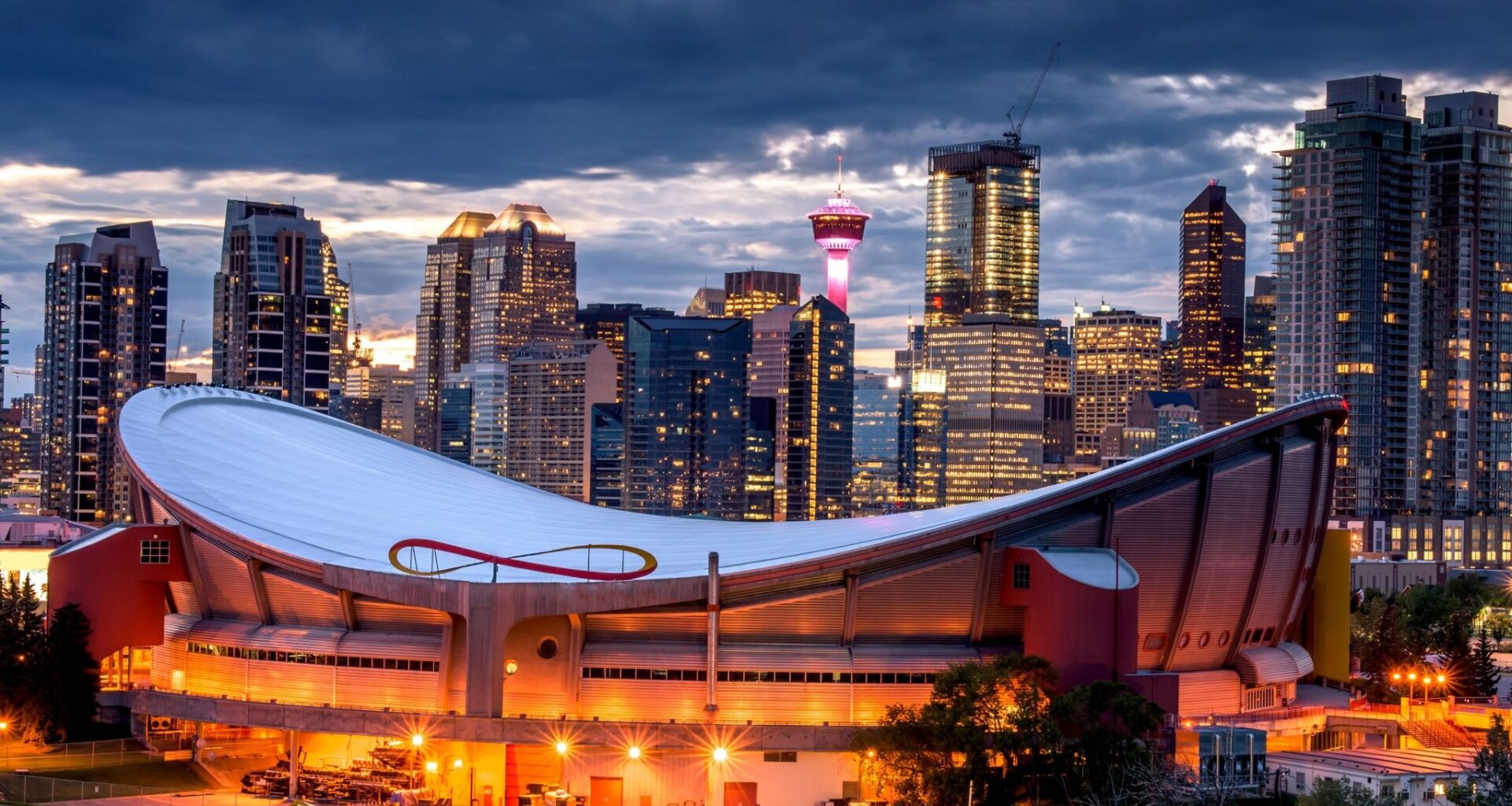
The Scotiabank Saddledome is one of Calgary’s most iconic landmarks, its saddle-shaped roof a staple in YYC’s skyline. The Saddledome isn’t just some arena; it has become a staple in our city’s culture.
We got curious about the early days of the ‘Dome Calgarians have affectionately grown to know over the decades, and its history is just as impressive as its appearance.
In 1980, Calgary recognized the need for a sporting venue as the Atlanta Flames were relocating to the city. The Saddledome Foundation was established to oversee the construction and management of the facility. With construction underway, Calgary also bid to host the 1988 Winter Olympics.
One of the most notable features of the Saddledome is its roof. When it was built, it set records as the largest free-span concrete roof in the world at the time. The structure was made out of 391 lightweight concrete panels, supported by steel cables.
The Saddledome officially opened on Oct. 15, 1983, and hosted a Battle of Alberta matchup between the Calgary Flames and the Edmonton Oilers, with nearly 17,000 fans in attendance.
In 1988, Calgary hosted the Winter Olympics, which brought people from all over the world to the city. Hockey and figure skating were held at the Saddledome, and put Calgary on the global map.
In 1994, management of the Saddledome was transferred to the Calgary Flames Limited Partnership, and the facility underwent major renovations totalling $37 million.
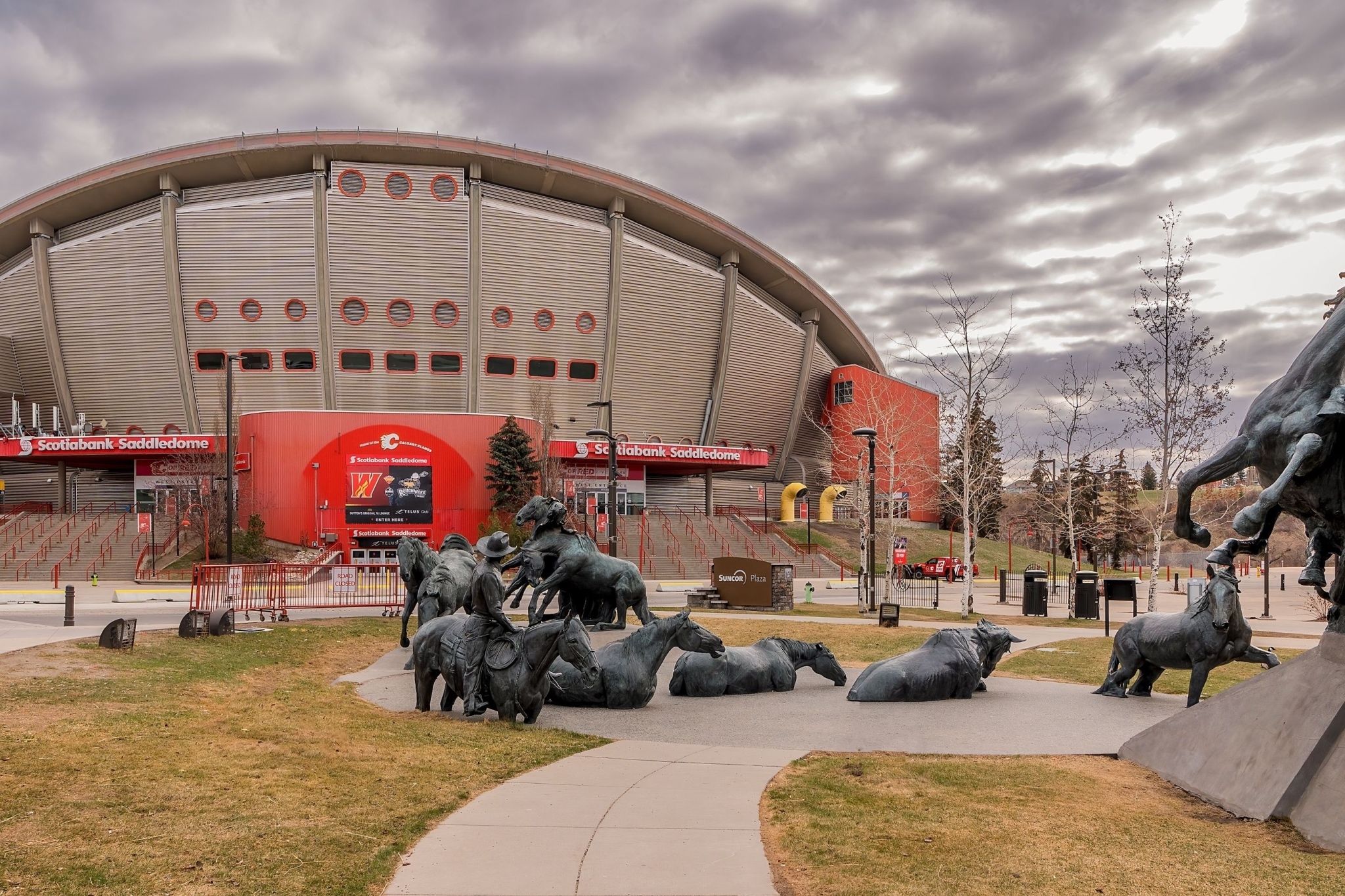
Liz Miller/Shutterstock
Reba McEntire opened the Saddledome after its renovations with a sold-out show, and the Flames started their 1995-1996 season just 11 days later.
In 2013, after the devastating floods, parts of the Saddledome were submerged, causing millions of dollars in repairs. Despite all of the damage, the venue was restored and reopened.
Over the years, the Saddledome has seen some amazing things, from Stanley Cup runs and unforgettable concerts to rodeo events and celebrations.
As a new arena is in the works, the building is entering its final chapter, and while we might miss the funky-looking roof, its legacy will forever hold a special place in Calgary’s history.
If you’re interested in more of Calgary’s history, we dove into how the Bow River helped mould Calgary, the old Chinook Drive-In, and the nicknames Calgary has picked up over the years.