
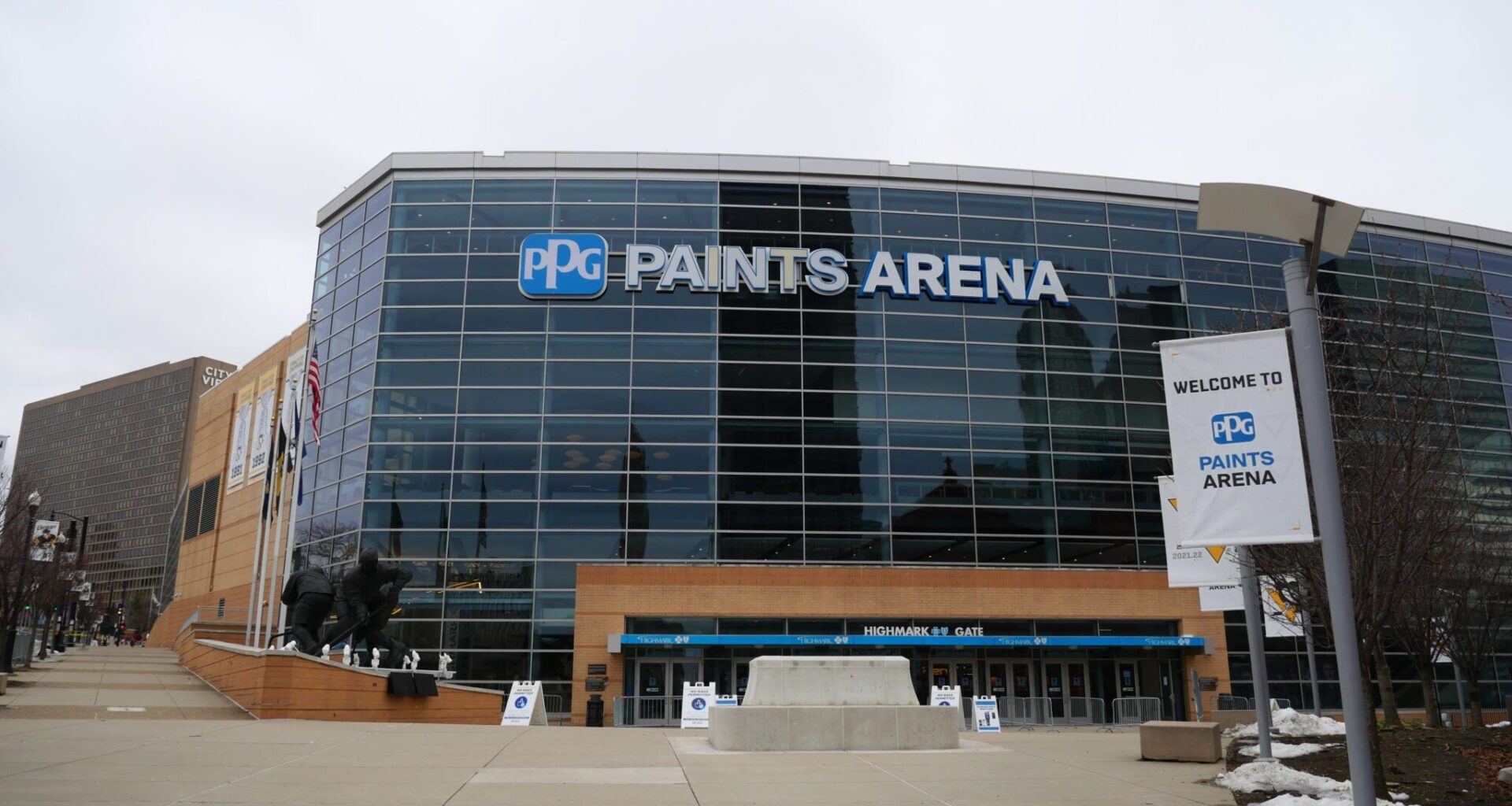
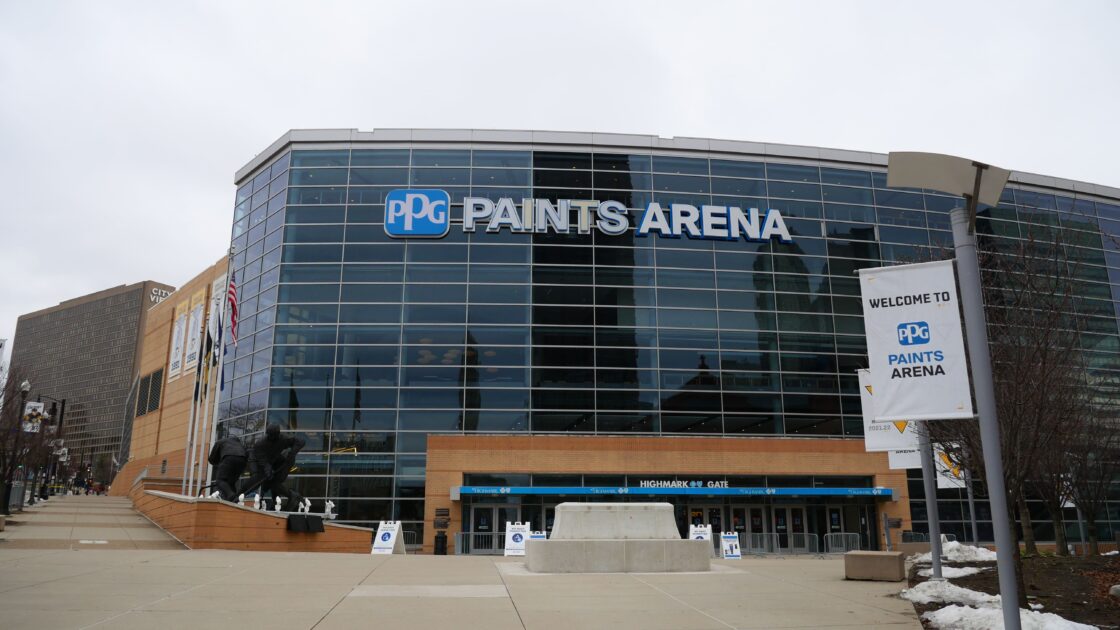
 PPG Paints Arena Pittsburgh, PA (Photo- Owen Krepps/National Hockey Now)
PPG Paints Arena opened in August 2010. The Pittsburgh Penguins worked through years of struggling for a new arena to remain a viable franchise in the NHL, and through the state’s controversial decision to award a gambling license to a group with Northside plans, not to a group willing to build an arena.
As part of the eventual agreement to build the Penguins’ new arena, the opportunity, or responsibility, to develop the land around the arena, including Downtown and the lower Hill District, was included in the deal. As part of the agreement, the land parcels in question are owned by the Stadium and Exhibition Authority (SEA) and the Urban Redevelopment Authority (URA), but contracted to the Penguins organization.
Fast forward 15 years, the Penguins are moving forward at their own pace, and politicians are long unhappy with the parking lots that adorn the site of the former Civic Arena, are attempting to turn up the heat, and this time they’re using as leverage hard deadlines with significant consequences.
The flashpoint between the two sides will come this fall.
Confirmed by the SEA, there is a pending deadline of Oct. 22 to begin development of the remaining parcels of land, or the SEA and URA can repossess the land. Development was loosely defined by PHN as publicly presenting specific plans and schedules to the appropriate boards.
Before the deadline, the Penguins can enact a two-year extension on the agreement, pushing development deadlines to 2027, but at a cost of about $126,000 per month.
With looming deadlines, several local leaders are speaking to the media and ramping up their rhetoric, hoping to apply pressure and spur more development around the arena and the lower Hill District.
“We’re fed up,” State Senator Wayne Fontana told Pittsburgh Hockey Now. Fontana is also a voting board member of the SEA.
Over the last few weeks, Pittsburgh Hockey Now has spoken with local leaders, developers, and those who have been directly involved in the agreements that accompanied the arena deal in an attempt to provide the complete picture.
After 15 years, requests and expectations that the Penguins ownership groups from The Lemieux Group to Fenway Sports Group (FSG) develop the arena land are giving way to contractual threats of land repossesion.
The prospect of the impending Penguins sale to the Hoffman Family of Companies and David Hoffman only adds to the tension of the situation.
There are two sides to every story, and the Penguins have finished one development, the First National Bank office tower, and are gaining on completion of the second, the Live Nation concert venue. Because those developments were started before the deadlines, they will remain the Penguins’ property.
The Penguins also provided a statement to PHN:
“We remain committed to the long-term redevelopment of the Lower Hill site and to advancing a partnership that reflects the shared vision of all stakeholders. That commitment has guided our work to date and continues to be our objective. We have expressed our desire for an extension to both the URA and SEA, as well as local government officials, and we are hopeful that we can reach an agreement in the near future.”
Sources we spoke to were unable to place a valuation on the undeveloped land, though one placed the value of finished projects on the currently undeveloped land in the range of several hundred million dollars. PHN was told that should the SEA and URA take the land, then the process of officially valuing the land would begin.
Moving Forward?
Barring a shocking surprise, FSG will miss the coming October deadline to begin developments, as only one SEA meeting remains between now and the deadline. Further, SEA sources tell PHN that FSG has not responded to a letter sent a couple of months ago requesting more information and FSG’s intentions for the land.
The only paths forward would be to execute the extension or surrender the land.
Sources on both sides confirmed there have been discussions, though the importance of a response to the formal letter seemed to vary among the sources.
The heated rhetoric expressed to PHN only underscored the city’s frustration.
“We’ve had enough of this,” Fontana said. “With the lack of progress, we need to consider if they really want the land or are using it (for the sale).”
The pending Oct. 22 deadline is both firm and could impact the sale, if only because it could affect the assets that FSG is offering. It is unknown to the city leaders and PHN how the Hoffmans view the land development, though the Hoffman Family of Companies does have both a commercial real estate and residential real estate division.
Sources with direct knowledge of the agreements also walked PHN through the economics of the situation. Most requested to speak on the condition of anonymity as they expect future negotiations.
As a matter of their function, the SEA is responsible for maintenance, repairs, and upgrades of the local stadiums, Acrisure Stadium, PNC Park, and PPG Paints Arena. As the former two stadiums are reaching 25 years old, the group is spending more and more on maintenance and repair.
The same will soon be true of the Penguins’ home, a fact which has added greater urgency to the development and the accompanying government revenues, at least from the SEA’s perspective.
As an example, earlier this year, the Penguins needed over $421,000 for a new server room (as shown in the minutes of the SEA meetings).
In short, the SEA needs revenue from the land to erase an operating deficit that sources say has recently increased from $2 million to $5 million annually.
As part of the existing development plans, the local groups expect the land to be developed for not only commercial and retail use, but also some of the land that the URA owns is designated for affordable housing.
Though it should be noted that the agreements afforded the Penguins organization the opportunity to engage in real estate speculation and development in their best interests, and the organization is not required to build the housing or any other commercial developments as part of the arena deal.
Local politicians made clear the SEA is prepared to seize the land should the agreement lapse, in October or in two years. It was clear through the communications that the clock is ticking on the developments and the SEA is quite serious, but what that means for the sale of the team or the city is still to be determined.
Tags: city of pittsburgh fenway sports group hoffman family of companies penguins land development Pittsburgh Penguins stadium and exhibition authority urban redevelopment authority Wayne fontana
Categorized:Penguins News