
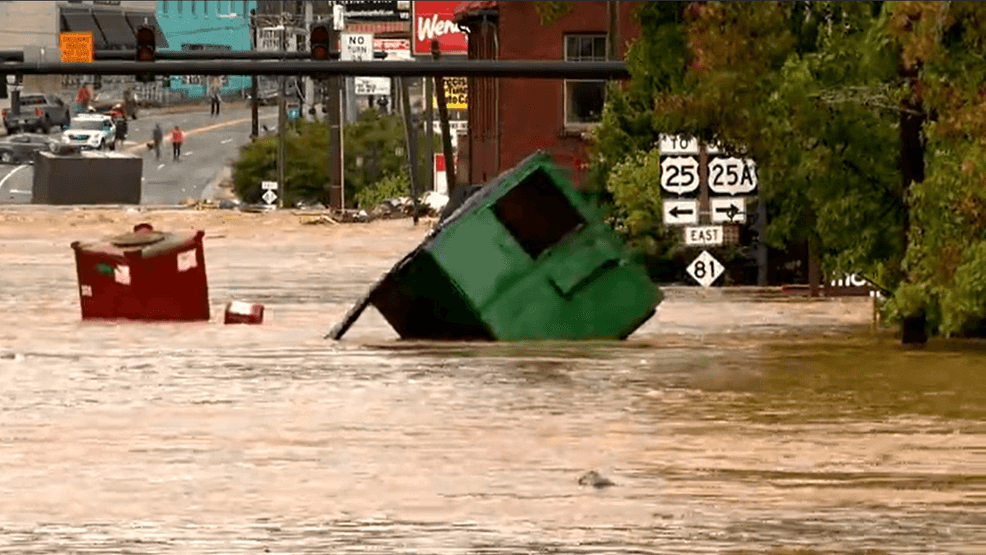
ASHEVILLE, N.C. (WLOS) — North Carolina has always known hurricanes, but the storms of the last decade are rewriting the state’s history. Recent storms, including Helene, have set new records for rainfall and destruction.
In 2018, Hurricane Florence set a statewide record with nearly 36 inches of rain, while Helene followed in 2024 with over 31 inches, marking the highest ever recorded in the mountains. Three of the seven heaviest storms on record have come in just the last decade: Florence, Fred, and Helene. The trend has become impossible to ignore.
“These storms are getting wetter. They are capable of dropping heavier rain over a shorter time period than we’ve seen in the past,” Corey Davis, assistant state climatologist at the North Carolina State Climate Office, said.
ATLANTIC HURRICANE SEASON QUIETER THAN EXPECTED, BUT EXPERTS WARN OF POTENTIAL LATE STORMS
Helene’s impact was record-breaking, with river levels along the French Broad and Swannanoa Rivers near Asheville surpassing those of the historic 1916 flood, according to Davis.
The financial toll was also staggering, with the governor’s office estimating costs at $60 billion, more than three times that of Florence.
“From that climatological side, it is hard to find a comparison for Helene, just because of that scale and because of the mass level of destruction that it brought in the state,” Davis said.
HELENE FOLLOWED DAYS OF HEAVY RAIN, DECIMATED NC MOUNTAINS WITH FLASH FLOOD EMERGENCIES
As communities pick up the pieces from recent storms, Davis emphasizes the need for North Carolinians to reconsider rebuilding strategies.
“Look at areas that have flooded from Helene or that were very close to flooding, and maybe don’t rebuild as much in those areas,” Davis said. “Maybe try to look at higher elevation sites or areas outside of those historical floodplains.”
One year later, Helene is part of a larger story that has rewritten North Carolina’s hurricane history and revealed new trends that are shaping the state’s future.