
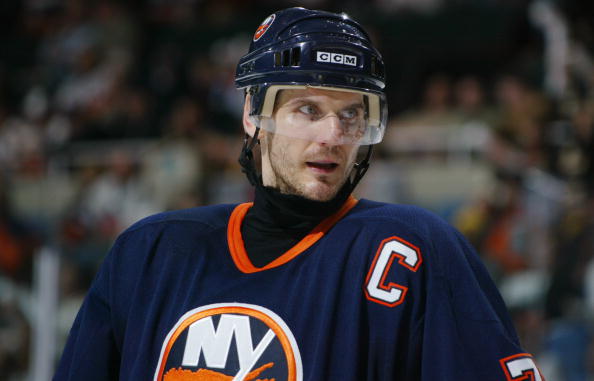
If you followed the Ottawa Senators in the mid-to-late 1990s, you didn’t just know the name Alexei Yashin—you felt his presence. He was the team’s first real star, the player who gave fans hope that Ottawa could become more than a basement-dweller.
Related: Breakdown of Each of the Senators’ First 17 Preseason Roster Cuts
For a franchise still finding its footing, Yashin was a big deal, and he played like one—for a while, anyway. Ask Senators’ fans today, and you’ll hear mixed emotions. Yashin’s story isn’t just about highlight reels and box scores—it’s also about holdouts, controversy, and a breakup that still stings.
Yashin Was the Guy Who Put Ottawa on the Map
Yashin was legit. Drafted second overall in 1992, he stepped into a struggling expansion team and quickly became its heartbeat. He had size, hands, and a bit of bite—everything you’d want in a franchise centre.
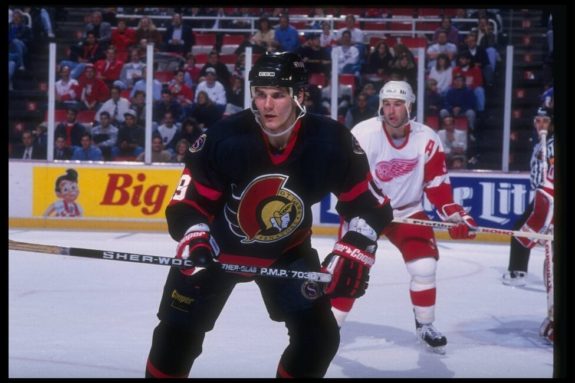 Center Alexei Yashin of the Ottawa Senators, Nov 1993
(Mandatory Credit: Rick Stewart /Allsport)
By the 1998–99 season, he was on another level: 44 goals, 94 points, and wearing the “C.” That season, the Sens hit 103 points and won their division for the first time. It finally felt like they were turning the corner, and Yashin was leading the charge. He was the kind of player who made fans believe—until he wasn’t.
Yashin Was the Holdout That Broke the Senators’ Bond
After that monster season, Yashin wanted a raise. Fair enough—he’d earned it. But when the Senators didn’t meet his demands, he took a hard line and sat out the entire 1999–2000 season. It wasn’t a threat; it was a full-on standoff. The team suspended him. He lost the captaincy. Fans, understandably, were furious.
Related: Senators’ Darkhorses Halliday and Meriläinen Are Ready to Surprise
It’s one thing to fight for fair pay. However, it’s another thing to leave your teammates hanging when the team is finally getting somewhere. Even when Yashin returned, things never quite clicked again. The trust was gone. The energy was dissipated. It was clear the relationship between Yashin and the Senators had run its course.
The Trade That Changed Everything
In 2001, the Senators pulled the trigger and sent Yashin to the New York Islanders in a blockbuster deal that brought back Zdeno Chára, Bill Muckalt, and the second-overall pick, which Ottawa used to draft Jason Spezza. That trade, in hindsight, turned out to be one of the most important in franchise history.
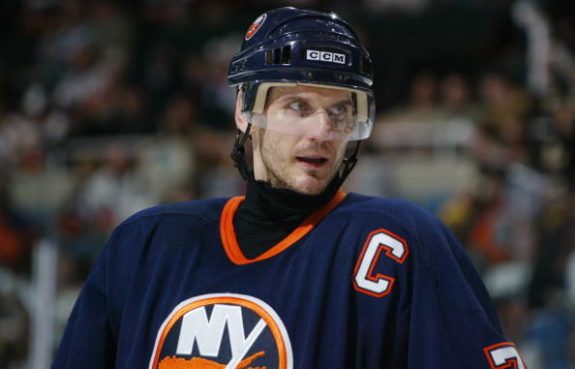 Alexei Yashin #79 of the New York Islanders looks on against the New Jersey Devils during their NHL game on March 27, 2007, at Nassau Coliseum in Uniondale, New York. The Devils won 3-2.
(Photo by Mike Stobe /Getty Images)
The Islanders went all-in, handing Yashin a 10-year, $87.5 million deal—massive money at the time. He was supposed to be their centrepiece, their leader, their ticket back to relevance. That’s not how it played out.
For Yashin, Life on Long Island Became a Mixed Bag
Yashin had his moments with the Islanders. He still possessed skill and produced at times. However, the consistency was lacking. Injuries crept in. So did frustration. That big contract? It didn’t help.
Related: Alex Burrows’ Journey From Grinder to Canucks’ Game 7 Hero
Fair or not, that contract had become a weight around Yashin’s neck—and around the team’s, too. By 2007, with a few years still left on the deal, the Islanders bought him out. He never played in the NHL again. He played five more seasons in the Kontinental Hockey League (KHL), bringing his career to a close.
So, What Was Yashin Really?
So, in the end, what was Yashin’s Senators legacy? Was he a bust? Not quite. A legend? Not exactly.
Yashin was a star in Ottawa. That much is clear. He could take over games. He could carry a team, at least for a stretch. But in the NHL, talent alone doesn’t make you a franchise icon. It’s how you lead. How you show up—not just in points, but in presence. In that, he’ll always be a part of the Senators’ history. In short, his legacy is far from positive – a bit tarnished, but still memorable.
Related: 6 Burning Questions For the Ottawa Senators in 2025-26
Yashin wasn’t the villain some fans painted him to be. But he also wasn’t a player who brought a Stanley Cup to Ottawa, or one who stuck around long enough to finish what he started.
