

New York Rangers greatest players of all time
Who made our list of the greatest New York Rangers? Watch and find out.
There were wide-ranging opinions and feelings shared during the postmortem of a season that went off the rails for the 2024-25 New York Rangers.
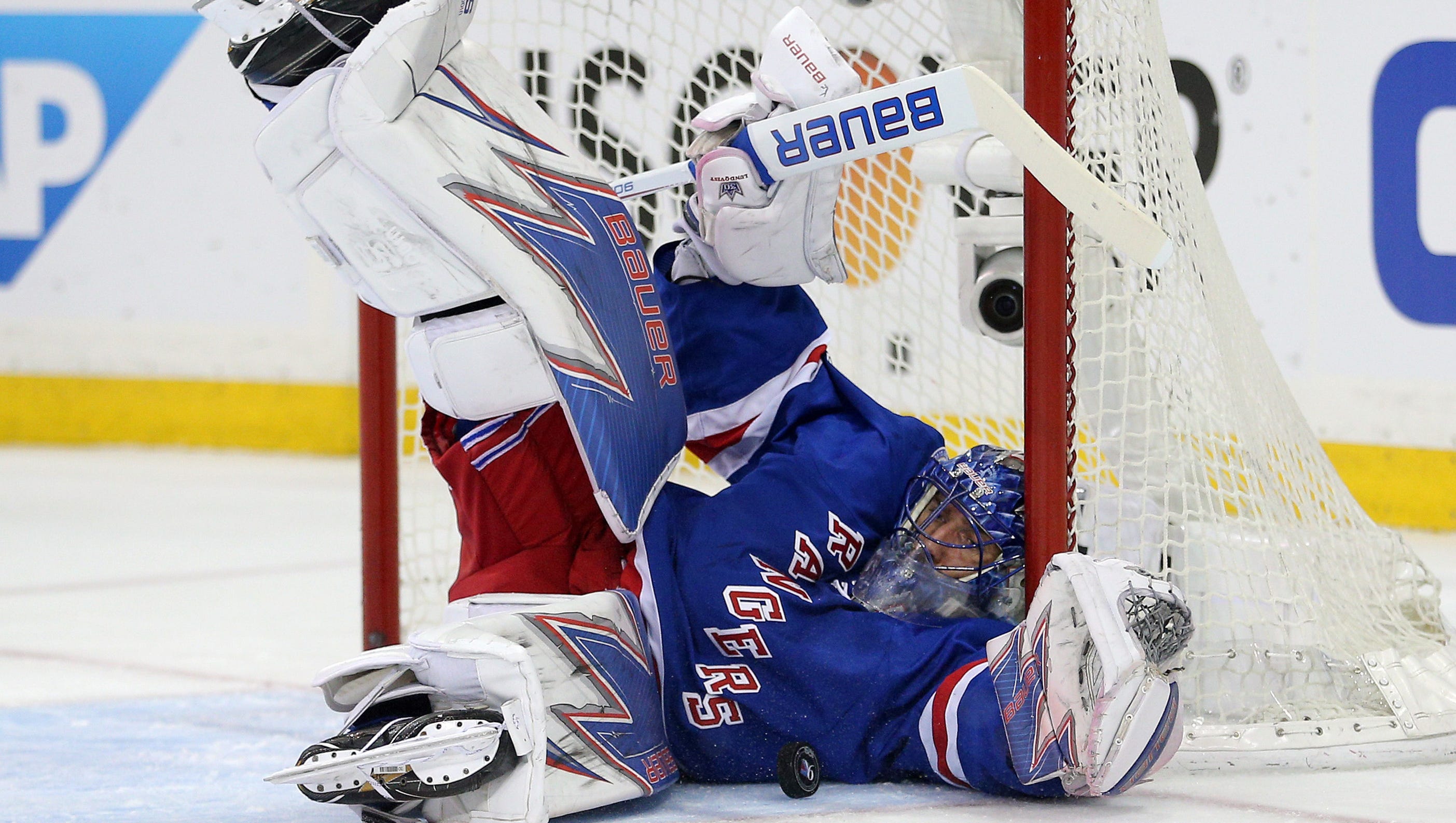
Star goalie Igor Shesterkin, never one to be long-winded, put it most succinctly.
“In my mind, something broke during the season and went the other way,” he said. “We couldn’t handle it.”
A fractured locker room was on display Monday, as players gathered for the final time at the MSG Training Center to conduct exit interviews and pack their bags for a longer summer than any hoped for.
All 25 players who spoke to the assembled media took responsibility for missing the playoffs and costing head coach Peter Laviolette his job, but the messages came in different forms.
There was general agreement that the turmoil surrounding this lost season − which began with since-departed captain Jacob Trouba at odds with management and ended with sexual assault allegations against leading scorer Artemi Panarin, with plenty of drama in between − served as some level of distraction. But what level of transparency players should expect from team president Chris Drury, and how all parties proceed from here, remains open to interpretation.
“This year was unrecognizable,” defenseman Adam Fox said. “It certainly feels different, and we’re all asking why?”
A chilling effect
Breakup day is usually a forum for players to open up about topics they may have preferred to avoid during the season, which was certainly the case when it came to discussing popular teammates who were pushed out as part of Drury’s ongoing purge.
The handling of Trouba, who used his partial no-trade list to block a trade last summer but was ultimately forced out anyway, as well as the ousting of Barclay Goodrow and others, had a chilling effect in the room.
“It was obviously guys that were really well-liked,” Fox said. “I think more so was even Troubs admitting it was hard for him to kind of lead this team in that situation. Maybe a lot of it’s subconscious, too. You don’t really think (about it), but I guess when your captain has that thought and feels that way – that’s a guy that has changed games for us in terms of the energy he’s brought, and being able to change it with a hit or a fight − sometimes that could affect a team.”
Fox said Trouba “was open with us about” his conflicting emotions regarding his leadership duties, but the void remained.
He was eventually given an ultimatum that led to his Dec. 6 trade to Anaheim, beginning a run of eight trades in roughly three months. Familiar faces such as Filip Chytil, Kaapo Kakko, Ryan Lindgren and Jimmy Vesey soon followed, with the team responding by going in the tank.
They were in the midst of a damning 4-15 stretch when Trouba then Kakko were traded, then floundered by going 6-10-3 from the time Lindgren and Vesey were dealt in early March until their official elimination on Apr. 12.
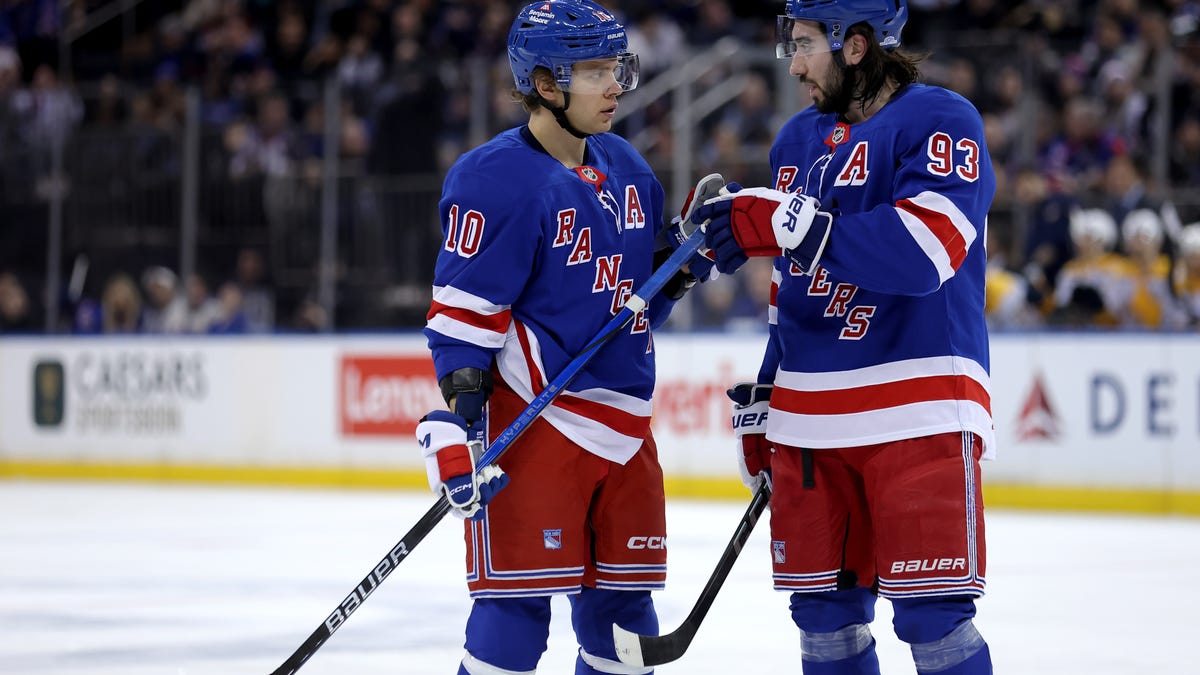
“I can’t speak (for) everyone else,” said veteran Mika Zibanejad, who was among the most introspective players who spoke. “I think everyone deals with it differently. Everyone has a different relationship to it, but when it happens, yeah, it’s frustrating. There’s frustration when you don’t know everything. We don’t know what’s going on. Obviously, we don’t have control over that kind of stuff, but it’s still something that we talk about, or we have to go through. And it’s two of our leaders. It’s our captain, an assistant captain (Goodrow), and big parts of our locker room. So, of course, it shakes things around a bit.”
On top of all the turnover was an elephant who remained in the room.
Chris Kreider, the longest-tenured Ranger and a central figure for 13 seasons, was included in a late-November memo Drury fired off to every NHL general manager. It put the franchise’s all-time leading playoff goal-scorer firmly on the trade block and backfired in a resounding way.
The 33-year-old forward found out secondhand − “I wasn’t really aware of it until people close to me brought it to my attention,” he said − and seemed distant from that point forward.
The Rangers, as it turned out, would never fully recover.
“I’m sure, especially if you’re one of the guys being named,” center Vincent Trocheck said when asked if the memo added pressure on the players. “It’s tough not to feel that, right? But pressure is going to happen. Everybody has pressure on them. We’re the New York Rangers, and in a city like New York, we’re going to have pressure every year. It’s on us to harness that pressure and use it for good.”
‘We have to work together’
How much players deserve to know in advance of trades, memos or other actions that could alter their lives and potentially force them to uproot their families is up for debate.
None of them argued for input in those decisions, but communication has been a buzz word throughout the season. Multiple players expressed frustration with the lack of information regarding their roles and ice time, while Goodrow and Trouba both lamented being blindsided by attempted transactions without explanation or prior notice.
Drury put the onus on himself for it all turning sour, while also defending Laviolette’s communication process and calling it “a priority” for the organization.
“We’re going to look at every single aspect of this,” Drury said during Saturday’s 10-minute Zoom call with reporters, which has become his preferred method of responding vaguely to a controlled number of questions. “Certainly, I’m always critical of myself and trying to find ways to be better. It starts with me, and I will continue to do that. As far as players — and we’ve had a few this year talk about ice time or scratches — we certainly want players here who want to play. We don’t want players who are happy being scratched. I know for a fact that Lavi is really big on communication and communicated with players throughout his two years here about where they stood – why they were out, or why they were in, or what their role was or wasn’t.”
But what about being upfront with players who poured themselves into the franchise about why you’re looking to move on? And making sure those who remain understand the direction the roster is heading?
In his own subtle way, Zibanejad advocated for more straightforwardness.
“I heard a lot about open honesty and communication,” he said. “It starts with us players. We have to take ownership of what we do and how we go about things, but I think it has to be cohesive with everyone. This organization doesn’t work without the players. The organization, for us players, doesn’t work without the people that work above us. We have to work together, as well, and we have to look at it and we have to talk about it.”
A harsh look in the mirror
Regardless of which side you fall on, it’s clear that the Rangers have fences to mend.
The good vibes that carried through last season’s run to the Presidents’ Trophy and Eastern Conference Final have vanished, with key players pressing and regressing across the board.
“The harder you try to dig yourself out of it, you sink further,” Trocheck said. “I remember when we started that little stretch of games where we were losing games, I think it was two games in and we were like, ‘Holy – the sky’s falling. It’s the end of the world.’ You try to change things, you try to do too much, and then it just starts to snowball.”
They recognize that others will pay the price for their collective shortcomings − “When you fall short of expectations, you can’t be surprised if there’s change,” Fox said − but Drury may be limited in how much more surgery he can perform.
Kreider likely remains on the chopping block, but Panarin and Zibanejad hold full no-movement clauses that will make it difficult to part ways with either. Fox, Shesterkin, Trocheck and others have varying levels of contractual protection and are long shots to go anywhere, as well, which means the majority of the remaining core should be back in 2025-26.
They must find ways to get on the same page with Drury, along with whoever ends up as their fourth coach in the last six seasons.
“We’re all going to look ourselves in the mirror after today and reflect on the year and think of things that we can do to get better,” Trocheck said. “There’s a lot of things that are more for internal talks, but I have some things in mind, and hopefully we can all work together this summer and figure it out.”
Trocheck was among the leading voices pointing inward, but the divide between players, management and staff has undeniably grown wider on Drury’s watch. It’s creating a feeling of walking on eggshells within an organization that’s seen its dirty laundry trickle out in recent months, including a December report from lohud.com, part of the USA TODAY Network, that peeled back some of the behind-the-scenes layers.
That’s seemingly drawn the attention of owner James Dolan. He’s sticking with the current structure that gives Drury total authority as the hybrid team president-GM, but Dolan’s increased presence in this year’s exit-interview process suggests he’s trying to get a feel for how and why it all went so terribly wrong.
The next steps will determine whether the Rangers bounce back or crumble under the weight of their own dysfunction.
“It’s not about blaming people,” Zibanejad said. “If we start blaming each other, we’re not going anywhere. But we have to be able to realize what our areas of growth could be, because everyone wants the same thing. Everyone wants to be here in June and talk to you guys and have a smile on their face, and you guys ask us how it was on the parade and how it was to win and what it means. That’s all we want, but we’re not there right now, and we’re not going to get there if we don’t take ownership – for me, of my own season – but also of a lot of other things we have to do together.”
Vincent Z. Mercogliano is the New York Rangers beat reporter for the USA TODAY Network. Read more of his work at lohud.com/sports/rangers/ and follow him on Twitter @vzmercogliano.