
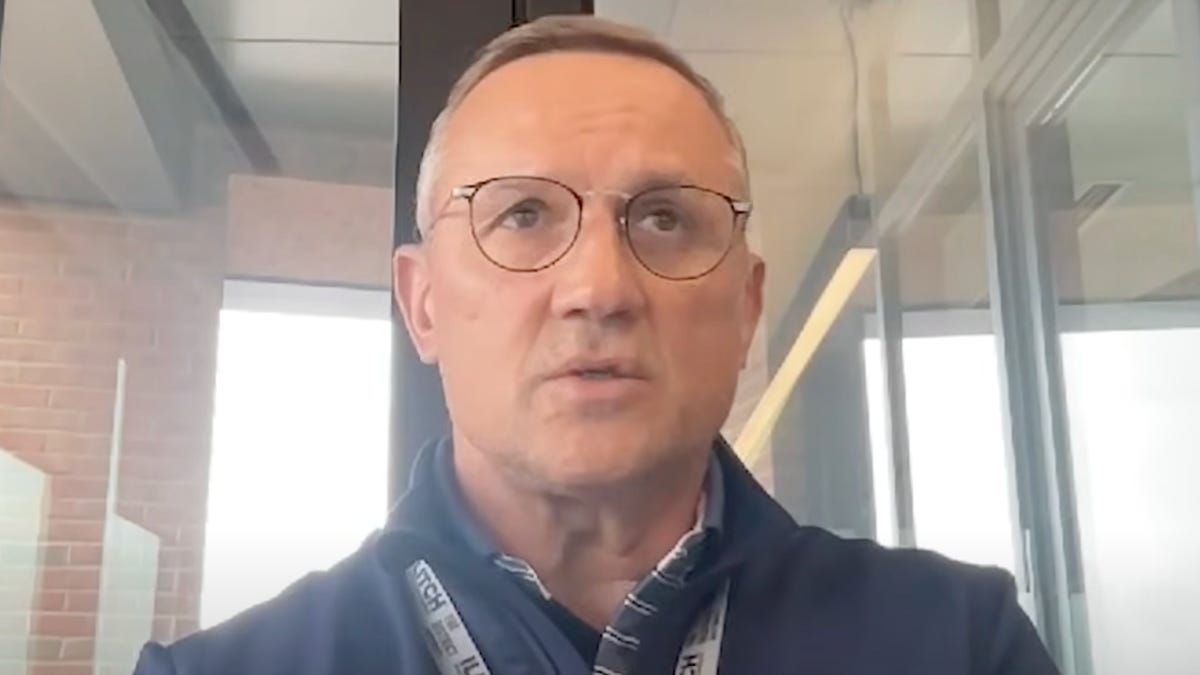
Detroit Red Wings general manager Steve Yzerman set the record straight about his defensive role under legendary head coach Scotty Bowman on “Ozzy and Keats,” a podcast with Yzerman’s former teammate, goalie Chris Osgood, and retired TV sportscaster John Keating.
When asked by Keating how he altered his playing style from a 65-goal scorer in 1998-99 to a defensive-minded player when Bowman joined the team in 1994-95, Yzerman said he wasn’t the only player who sacrificed offense to become a better team.
“It wasn’t specifically me … it was our team,” Yzerman said on the podcast. “We lost in the first round in 1992-93 and 1993-94 and we were a high-scoring team. Our mindset as a group was, it’s a tie game in the third period, we’re going to outchance you and outscore you. Scotty changed the mindset of the whole organization.
“We’re going to be the best defensive team in the league. And for me specifically, he referenced his Canadiens teams where he had enough scoring and he referenced Jacques Lemaire. He said, ‘I want a line I can put out at any time and know that we’re not going to get scored on and we’re going to check.’
“Ultimately, over the course of those years, whether it was Mac (Darren McCarty) and Tomas Sandstrom or Homer (Tomas Holmstrom) and Mac or Bob Errey prior to that, we became somewhat of a checking line. I was all over the place as far as even playing wing, right wing, left wing. I still played special teams but I kind of embraced the role and really enjoyed it. There wasn’t that pressure to be a big-time scorer.
“Honestly, when I came into the NHL from junior in relation to the big-time scorers, I was pretty average as far as a scorer. I played in Peterborough in a system that was defensive-minded so I think, if anything, Scotty kind of got me to play the way I was most effective and meant to play, and that wasn’t necessarily as a 50- or 60-goal scorer. It was to do all the little things well.”
▶ On double-OT goal in Game 7 against Blues in 1996:
“At that time of year at Joe Louis (Arena), it was hot and the ice was slow and the rules back then, in overtime, you could tie guys up and tackle. As the game went on, I’m thinking, I’m tired, I’m going to shoot the puck at every chance I get it from anywhere, not trying to beat guys, D-men, not a chance because they’re just going to put their stick between your legs and grab you and throw you down.
“I picked up a loose puck in the neutral zone and coming through it was against Murray Baron, I think, the left defenseman. My only thought was don’t get this shot blocked because they’re going the other way, just put it by his feet. I just shot. I was just trying to miss his legs and had a clear path straight into the corner. It was pretty cool. People always reference that goal. I got to enjoy it for about two days because it was a Saturday or Sunday that we had to play Colorado. We lost and we lost the series. It was a fun goal but I forgot about it pretty quickly.”
▶ On learning how to handle pressure:
“You know, it’s funny, over time, I used to put so much emphasis, I have to do this, I have to do that, and then it probably changed in 1995-96. Do your job. You count on everyone to do their job, including the starting goalie and you do the best you can. That year, you do your job and whatever happens, happens. It started to work out that way instead of, any player, I have to do it, I have to be this or that.
“There is a lot of pressure. It’s a team sport and so many things are out of your control. You do your job. You focus on being a good teammate and playing to the best of your ability and whatever happens, happens. I felt that made me be more comfortable, more prepared and more energetic in these big games.”
▶ On the intensity of the rivalry with Colorado:
“They were in Quebec the year before, in 1995-96 and it was either Peter Forsberg’s first or second year. We didn’t realize how good of a team they were. We played them early in the year in Denver and it was a great game. We played four games through the regular season. I can’t remember if we split them or not. Going into the series in ’96, we recognized this is a pretty good team here. We had that tough series where we lost in six. Part of that, I felt we weren’t ready to go in Game 1. We went all the way to Game 7 and turn around two or three days later and then an afternoon game. They got the jump on us and wound up winning games 1 and 2.
“I was a spectator for some of these brawls on the ice but I get the entertainment part of it, from a fan perspective, a media perspective, but what I emphasized, what gets lost is both teams were really good. We had respect for the talent the Colorado Avalanche had. They were an outstanding team that went on to win two Stanley Cups. I like to think we brought out the best in each other. It was extreme competition and it was a great rivalry at the time, great for the league. Now when you go to LCA, when they bring up highlights from that, for whatever reason, time of year, it always gets the most excitement, the biggest rise out of the fans.”
▶ On when he’ll know what kind of team the Red Wings are this year:
“You go through that first month, maybe your first long homestand and your first road trip, now you don’t have matchups, you’re playing back to back, you’re playing tired. You get a pretty good indication quickly, your strengths and weaknesses. The preseason, for everybody, is necessary. I don’t know if I should use the term, a necessary evil for everyone. You go through the process but generally, it’s really hard to assess your team in the preseason because usually the vets play at home and you send the young kids on the road. You get your full team together maybe for the last game, and even that, guys are just trying to get through, to get to the start of the regular season.
“We’ll use that first month to see where we’re at. If it goes good or goes bad, you can’t simply assume you’re in or you’re done at that point. You react accordingly and try and do what you can do to improve your team. Again, keeping the big picture at hand, is what you’re trying to accomplish. We like to think it’s going to be interesting, this camp, because it looks like some of these young guys are going to challenge for jobs this year.”
 Want to comment on this story? Become a subscriber today. Click here.