
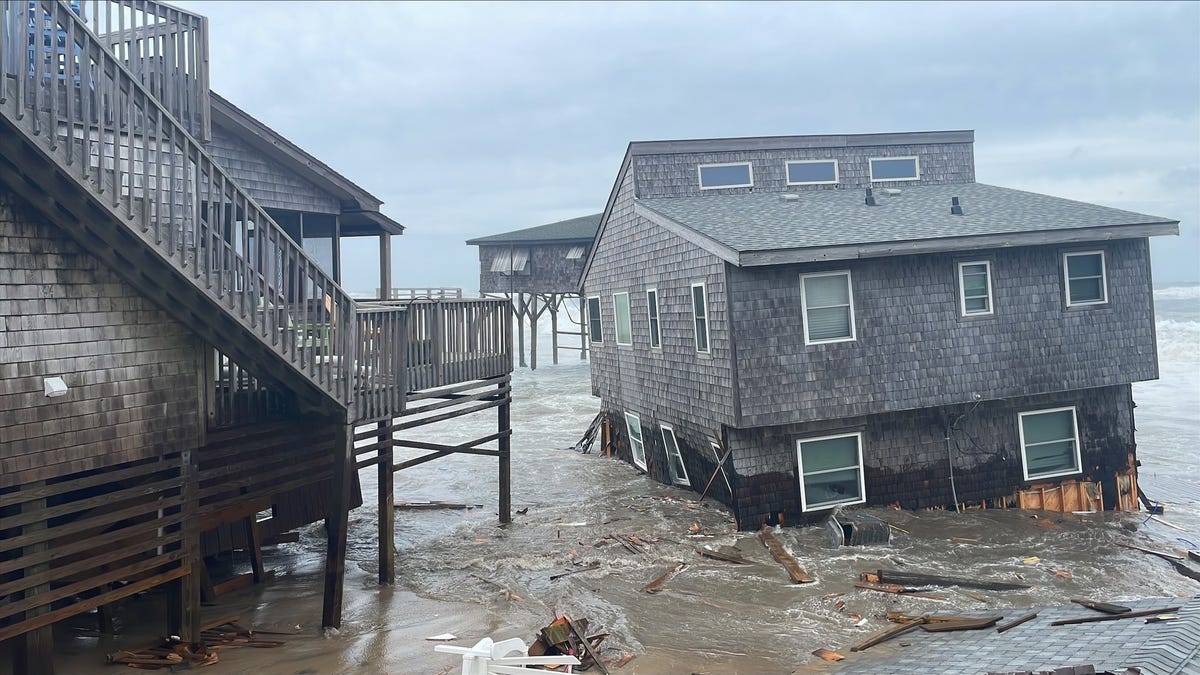
High seas and rough surf from two hurricanes have been blamed for the collapse of seven houses on North Carolina’s Outer Banks.


Drone captures footage of Outer Banks homes collapsing into ocean
Drone footage captured five unoccupied homes collapsed into the Atlantic Ocean as Hurricanes Humberto and Imelda caused severe coastal flooding.
Another unoccupied house in Buxton, North Carolina, fell victim to the Atlantic Ocean’s pounding surf on the night of Oct. 1, bringing the count to seven collapsed homes within about 30 hours.
An eighth house fell on the evening of Oct. 2, the National Park Service said. The houses are collapsing as a result of hurricanes Humberto and Imelda, which made a mess of the Atlantic Ocean in the coastal waters off North Carolina’s Outer Banks. Huge waves continued on the evening of Oct. 2, but conditions are forecast to begin improving, the National Weather Service said.
Five of the unoccupied houses on the oceanfront collapsed from 2 p.m. to 2:45 p.m. on Sept. 30, along Cape Hatteras National Seashore as a high tide pounded the beach and washed over dunes, the park service said. Another unoccupied house collapsed that evening at 11 p.m., when the weather service estimated the surf height on Sept. 30 at 8 to 12 feet.
The seventh house collapsed on Oct. 1, around 8 p.m., the seashore announced. Almost 24 hours later, the 8th house slid into the ocean.
Where and when did the houses collapse?
Sept. 30, 2-2:45 p.m.
46001 Cottage Avenue46002 Cottage Avenue46007 Cottage Avenue46209 Tower Circle Road46211 Tower Circle Road
Sept. 30, 11 p.m.
Oct. 1, 8 p.m.
Oct. 2, Before 5 p.m.
A changing seashore
The latest collapse brings the total number of homes lost to the ocean since May 2020 to 20, as the Outer Banks grapples with questions about communities built along the coast on a barrier island subject to some of nature’s most dynamic forces.
Shorelines change rapidly along the 75 miles of beach included within the national seashore, the park service wrote in a report to Congress in late 2024. However, erosion has accelerated in recent years, with the shoreline retreating at a rate of roughly 4 feet per year, according to the report.
Some of the homes now collapsing were once a few lots back from the beach, local residents told USA TODAY.
Sea level rise also takes a toll. Federal projections indicate sea level rise in the region could rise as much as 14 inches by 2050, bringing a tenfold increase in the number of coastal flooding days.
It’s not only hurricanes that can batter the seashore and move incredible volumes of water and sand. Winter Nor’easters can wreak similar damage. Of the total collapsed houses, one fell in February 2022 and another succumbed in March 2023.
Removing collapsed home debris from the beach can take weeks or even months, the park service reported.
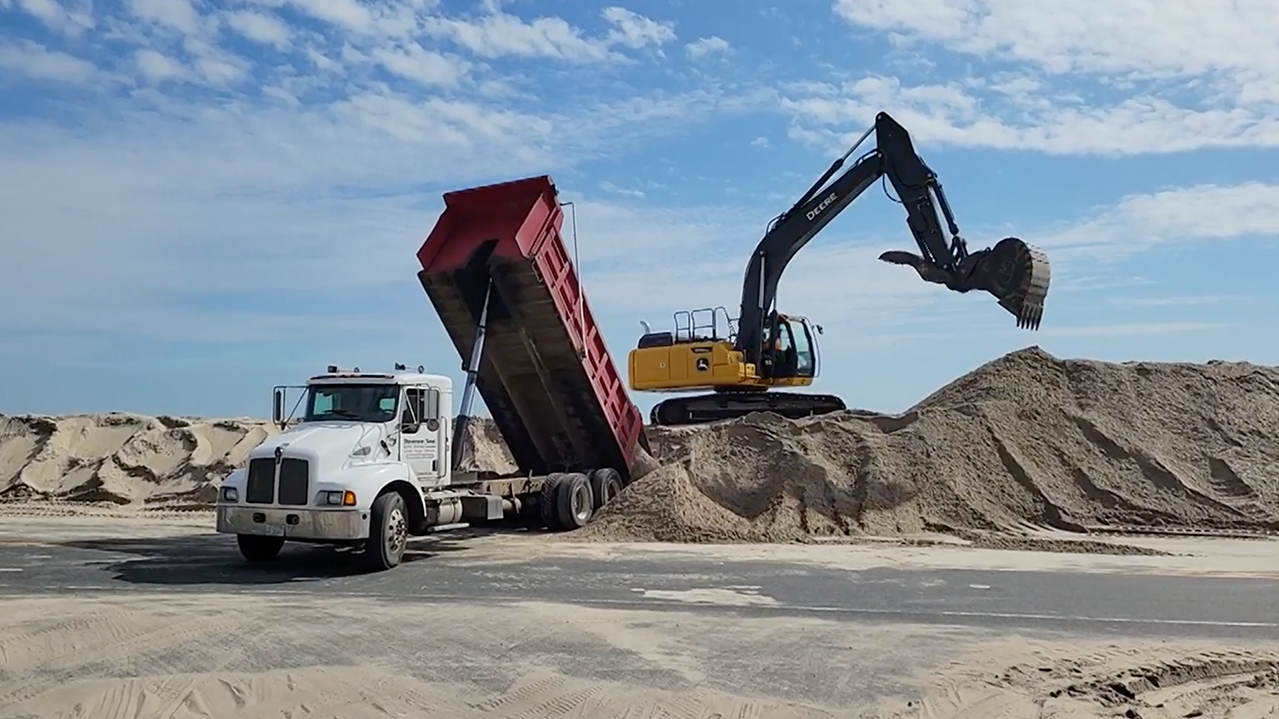
Combatting a changing coast along the Outer Banks
Crews add sand to help protect dunes and the highway from rising seas and flooding at the Pea Island National Wildlife Refuge in North Carolina.
Years of tumultuous discussion and research have taken place in communities along the Outer Banks, as property owners, as well as officials at the local, state, and federal government level have explored and debated how to preserve the lone highway that stretches along the Outer Banks, homes, local economies, and the seashore itself.
While houses have been collapsing in Buxton and Rodanthe, eventually erosion and receding beaches in “many other villages” is likely to leave more oceanfront structures threatened along the scenic highway, the park service concluded.
In 2023, the national seashore bought two of the threatened properties within its boundaries for market value, with assistance and funding from the National Park Trust and Land and Water Conservation Fund. The homes were then removed. The seashore said the project would help assist property owners who did not have viable options to move the structures or promptly remove debris if they collapsed, and help restore the beach and provide public beach access.
Dinah Voyles Pulver, a national correspondent for USA TODAY, covers climate change, wildlife and the environment. Reach her at dpulver@usatoday.com or @dinahvp on Bluesky or X or dinahvp.77 on Signal.