
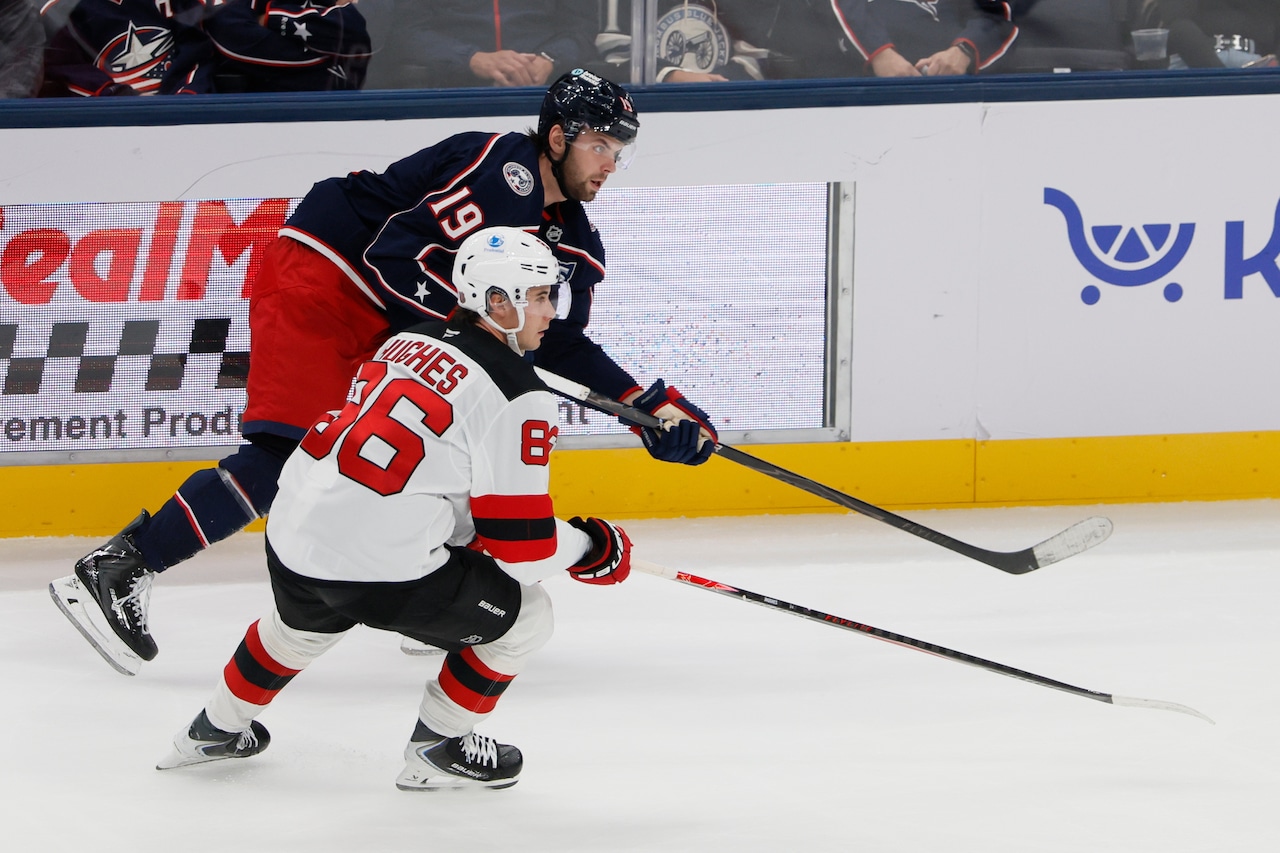
COLUMBUS, Ohio — The Blue Jackets three games into this season are a tale of two teams defensively.
In 5-on-5 situations, they have been stingy, allowing just two goals. One was an empty netter by Devils forward Dawson Mercer in Monday night’s 3-2 loss.
When a reporter mentioned that the Blue Jackets had held New Jersey Devils superstar Jack Hughes without a shot in a previous game and limited him to just one shot in their most recent matchup, Evason confirmed what the eye test suggested: Columbus has established a defensive identity that can neutralize even the game’s most dangerous talents.
“We’re doing a lot of really good things,” Evason noted. “We’re checking well, but we’re staying on the right side of people.”
This defensive structure is no small achievement. Hughes, one of the NHL’s most electric offensive talents, has been rendered nearly invisible against Columbus. For a team that has struggled defensively in recent seasons, this represents significant progress and suggests that Evason’s system is taking root.
“We’re happy with the defensive end. Clearly five-on-five. We just got to stay the course,” the coach added.
But the problem has been when the Blue Jackets are down a man. They gave up two more goals on the penalty kill and they are 7-for-14 on the PK this season.
“I said this morning about our penalty kill is pretty good. It just seems to end up in our net,” Evason lamented. “What is it, one second and four seconds? I mean, literally killed the whole penalties, but you know, it’s going in right now in that area.”
These numbers tell a heartbreaking story. The Blue Jackets are successfully defending for 99% of their penalty kills, only to concede goals in the dying seconds. It’s the hockey equivalent of running a perfect marathon only to trip just before the finish line—repeatedly.
Adding to this special teams nightmare, Columbus’s power play has failed to provide the compensatory offense needed when the penalty kill stumbles.
“So when it does (give up goals), your power play should pick you up, too. And it struggled here tonight with the 4-minute and then got another one right after that. Obviously, that could have changed the momentum for us, too,” Evason explained.
This imbalance creates a psychological challenge. The team is doing so many things right, executing their five-on-five system to perfection, yet not seeing results. As Evason put it: “That’s why it’s frustrating that you don’t get rewarded for playing good defensive hockey.”
The question becomes: how long can the Blue Jackets maintain their defensive excellence while special teams failures continue to cost them games? Will frustration eventually erode their commitment to structure? Or will special teams finally catch up to their five-on-five play?
For now, Evason seems determined to focus on the positive while acknowledging the areas needing improvement. His message remains consistent: trust the process, stay the course, and results will come.
“We had a real good opportunity to win this hockey game here tonight,” he reflected. “We just didn’t finish.”
For Blue Jackets fans, that finish line can’t come soon enough. The foundation is clearly there—now they just need all aspects of their game to align.
If you purchase a product or register for an account through a link on our site, we may receive compensation. By using this site, you consent to our User Agreement and agree that your clicks, interactions, and personal information may be collected, recorded, and/or stored by us and social media and other third-party partners in accordance with our Privacy Policy.