
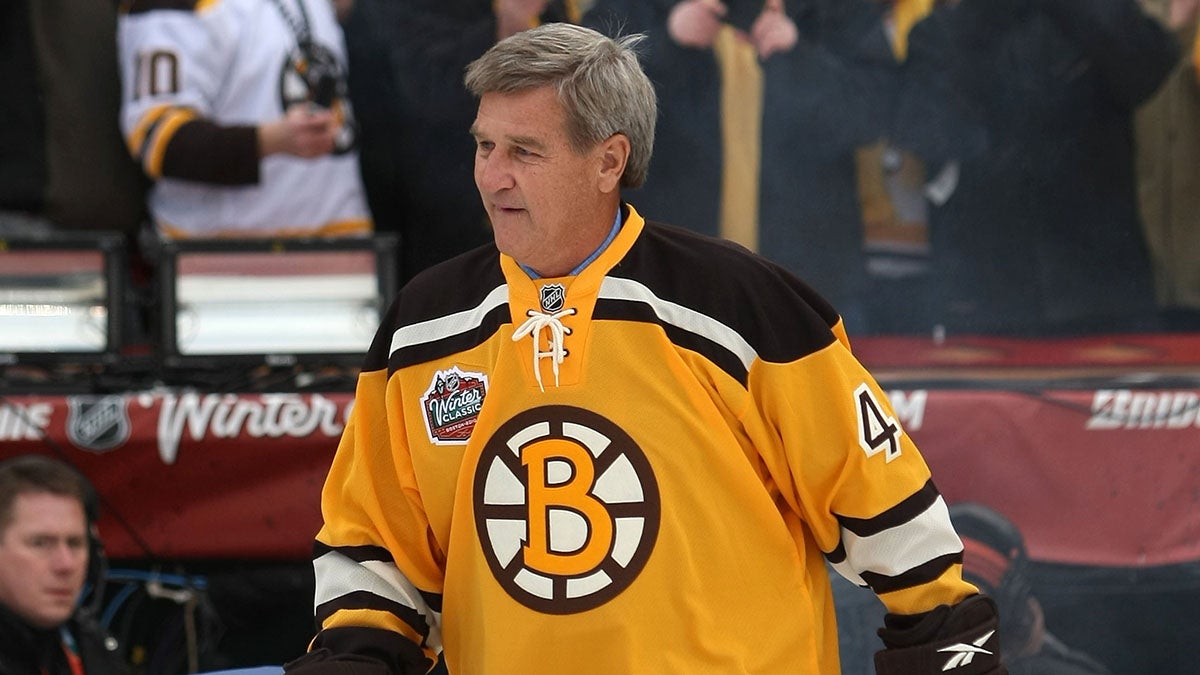
Orr was inducted into the Hockey Hall of Fame in 1979 at only 31 years old, the youngest to be inducted at the time. He’s a unique talent in the history of pro hockey, which lends itself to some mind-blowing fun facts. Explore the following five pieces of info about Orr:
1. The First True Offensive Defenseman
Before Orr came around, a defenseman would typically stay back, guard the net, and chip the puck in the offensive zone. Defenders back then didn’t do anything fancy; they just got the puck out of their own end. Orr didn’t just add offense to the position, but did it at an elite level.
Orr didn’t just skate like a forward; he was the best skater in the league. Orr would join the rushes up the ice and would often be the guy to put the puck in the net. In the 1969-70 season, he scored 33 goals and finished with 120 points. These stats would’ve been impressive for any player, let alone a defenseman.
Orr basically created the offensive blue liner, and in today’s game, there are a decent number of those offensive-minded defenseman across the league, most notably players like Cale Makar, Quinn Hughes, and Roman Josi. These players today have enjoyed using the Orr formula, but still none of them have matched Orr’s speed, vision, and balance of offense and defense.
2. Eight Straight Norris Trophies
The Norris Trophy is awarded to the NHL’s best defenseman, and it is a tough award to win even one time. Orr won it eight times in a row. He was basically the face of the league for defensemen. For almost a whole decade, no one was better at the position.
Other teams had to do extra game-planning against Orr all the time; players tried to keep up with his skill set, and none of it worked. Orr controlled the pace of the game and the position every season. His career was cut short by knee injuries; if he had kept playing, he might have ended up with double-digit Norris Trophies.
3. His Iconic Goal
Even if you don’t watch hockey that much, you have probably heard of or seen “The Goal.” The iconic moment happened on May 10, 1970, in overtime of Game 4 of the Stanley Cup Final against the St. Louis Blues. Orr took a quick pass, cut in front of the net, and scored the game-winning goal. As he scored, he went flying into the air after being tripped by a defender.
The photographer captured the perfect angle and picture of the moment as Orr had his arms raised, soaring in the air, ready to celebrate. That image has become one of the most recognizable sports photos ever taken, and the goal was historically significant because it clinched the Bruins’ first Stanley Cup in decades. The moment marked a new era for the NHL.
4. A Career Cut Short
Bobby Orr made a significant impact on the NHL that is still felt to this day, despite playing in only 657 games. That’s fewer than eight full 82-game seasons, and most NHL All-Stars can at least get over 1,000 games in their careers. Despite the low number of career games played, Orr won two Stanley Cups, the aforementioned eight Norris Trophies, three Hart Trophies, two Art Ross Trophies, two Conn Smythe Trophies, and nearly 1,000 career points (915).
 Bruce Bennett/Getty Images
Orr played through knee pain constantly because of his aggressive playing style, which required constant skating and quick changes of direction, and that put immense stress on his already damaged knee. Despite all that pain, he still averaged well over a point per game. The relative lack of effective knee treatments at the time contributed to a sharp decline in Orr’s physical abilities at the tail-end of his career.
5. A Generational Talent — At 14
Orr’s legend didn’t even start in the NHL. It began at 14, when he was outplaying guys in the Ontario Hockey Association. At 12 years old, the Bruins signed him to a junior contract, and by 14, he was playing better than guys who were 4-6 years older than him.
Scouts thought he had a hockey IQ beyond his years and was the best player on the ice. Most players need time to adjust to each level in a sport, and Orr was always ready for the next challenge.
Orr was a dominant and revolutionary hockey player. His legacy left an impact on future generations because of his new-wave, offensive-minded defenseman style. Orr is still a cultural icon and known for his creative play. He has become an inspiration to other legends of the game and continues to be an advocate for the sport.