
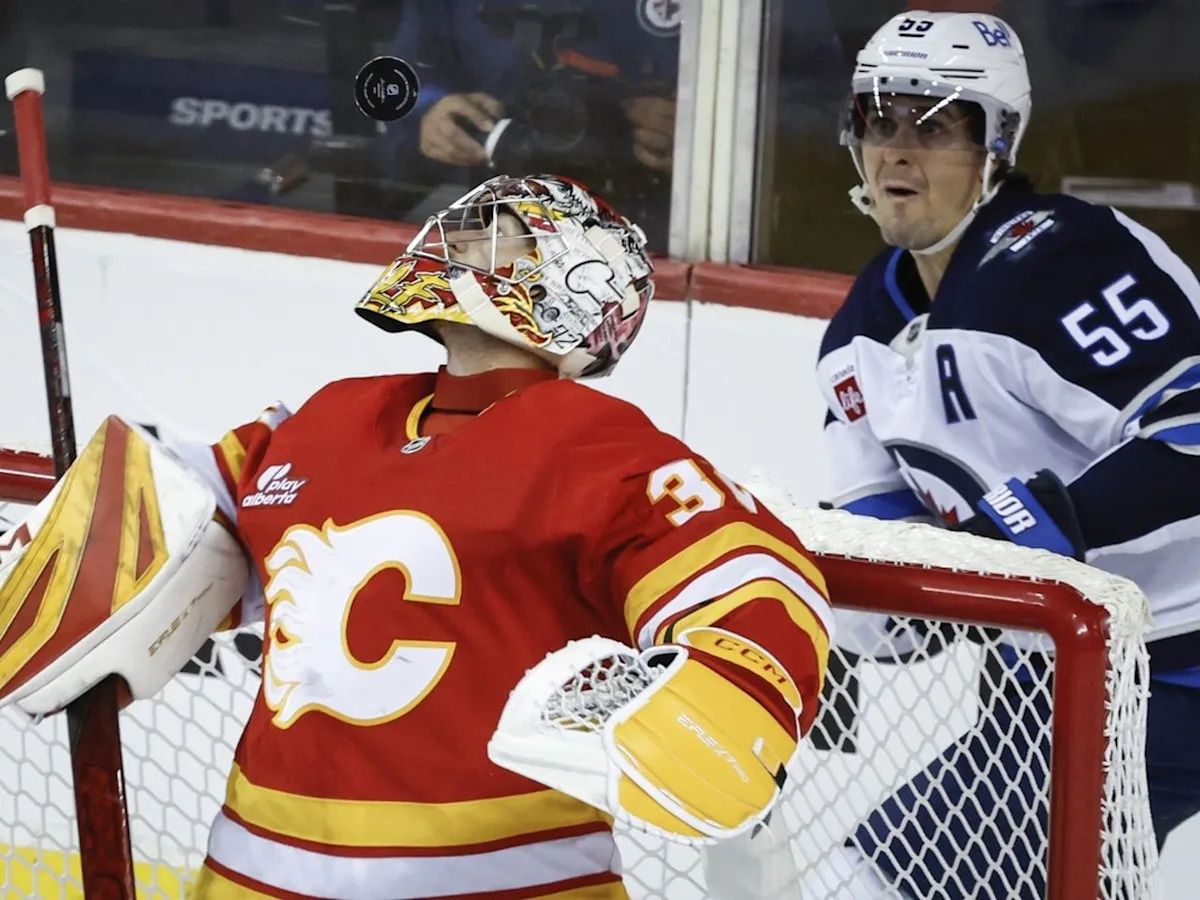
The Calgary Flames don’t tank.
They never have. Not in the Iginla twilight years, not during the Monahan–Gaudreau reset, and not even during the Young Guns era of the late 90’s.
The certainly have gone through rebuilding and retooling periods, as they are now, but they’ve never committed a full-on, scorched-earth tank.
But through seven games, that philosophy is under new pressure. The Flames are 1–6–0, sit at the bottom of the standings and are scoring less than any team in the league.
The schedule ahead is difficult and, if the losses continue, they could be out of playoff contention by American Thanksgiving. That would leave the aspirations of competing for a post-season berth while rebuilding a pipe dream. At least as far as 2025-26 goes.
To be fair, the Flames probably aren’t as bad as their record suggests. They’ve opened the year with one of the toughest schedules in the league. Their netminding has been uneven (a strength last year) and their shooting percentage sits last in the NHL, even lower than what they managed last season.
Those things tend to even out. The puck will start going in more often and the save percentage will climb. A regression toward the mean should make them more competitive as the season goes on.
But that doesn’t change the larger truth. This team hasn’t made the playoffs since 2022 and couldn’t score consistently last season, either. Even if the bounces improve, there’s no sign this roster has the offensive talent to truly contend. At best, they might scrape back into the race, only to run headlong into the same ceiling they’ve hit for years.
In some fan quarters, there has been a new term coined for what the Flames could do this year instead: The “ethical tank.”
The idea isn’t to gut the team and lose on purpose, but simply to stop chasing short-term results that don’t change the long-term picture. Play hard, compete every night, but accept the outcomes and fully commit to prioritizing later over right now.
The need for elite talent is obvious. Calgary hasn’t drafted a blue-chip forward since Matthew Tkachuk in 2016. The franchise has never picked higher than fourth overall. That limits access to the kind of players who can shift a team’s trajectory.
Finishing at the bottom of the league doesn’t guarantee draft success (nothing does), but it does give a club the best chance of selecting the kind of cornerstone talents around which a contender can be built.
An ethical tank would mean only slightly shifting priorities. Management shouldn’t trade draft picks or prospects to plug short-term holes.
Younger players such as Zayne Parekh, Matt Coronato, Connor Zary, Matvei Gridin, and Sam Honzek should get more ice time, even if it results in mistakes.
Veterans on expiring or high-value deals like Rasmus Andersson, Nazem Kadri and Blake Coleman should be aggressively evaluated as trade options before the deadline. These decisions would give the organization more flexibility and a clearer path forward.
Related
Calgary relentlessly tries to balance the future and present, but the outcomes have rarely rewarded that mindset. Since 1990, the Flames have garnered the fewest playoff wins of any franchise in the NHL (aside from the Seattle Kraken), while also never finishing low enough to select a Connor McDavid-level player.
The fans understand effort, but they also understand reality. Desperately chasing a wild-card spot this year could do more harm than good. A disciplined approach this time could break the cycle.
No one expects players or coaches to stop competing. But management needs to recognize when the math no longer works. Craig Conroy doesn’t have to take a hacksaw to the roster, merely shift his vision ever so slightly to the horizon rather than the next few steps.
The Flames don’t have to tank in the traditional sense. They only have to stop fighting gravity.