
Home » America Travel News » Florida Joins North Carolina, Texas South Carolina as Hurricanes Engulfs Tourism Economy, Government Shutdown Affecting America, While Nevada, North Dakota, New York, Texas, California Unite in Travel Sector Decline as Trade Tariff Storms, New Update is Here
Published on
October 28, 2025
By: Tuhin Sarkar

Florida, along with North Carolina, Texas, and South Carolina, is grappling with the devastating impact of hurricanes, which have severely affected the US tourism economy. As these states battle fierce storms, the broader travel industry faces additional challenges, including the disruptive effects of the government shutdown. Meanwhile, Nevada, North Dakota, New York, Texas, and California are also experiencing a sharp decline in their travel sectors. This downturn is compounded by the storm of US trade tariff disruptions, further rattling the travel economy.
These significant setbacks in United States are creating an unparalleled situation where multiple states across the U.S. are uniting in the struggle to weather these tumultuous times. The combined impact of natural disasters, political gridlock, and trade tensions has left the tourism sector reeling, demanding urgent attention and innovative solutions. Stay tuned as we explore how these crises are reshaping the U.S. travel landscape in our full analysis.
In 2025, the US travel industry faced a perfect storm of challenges that left it reeling and struggling to recover. From the wrath of hurricanes like Melissa and Chantal to the devastating effects of the US Government Shutdown and the fallout from Trump’s trade war, the US tourism sector took a massive hit. This report dives deep into the chaos that gripped the nation and left both travelers and tourism businesses scrambling to survive.
The Storm That Shut Down US Airports: Hurricanes Melissa and Chantal
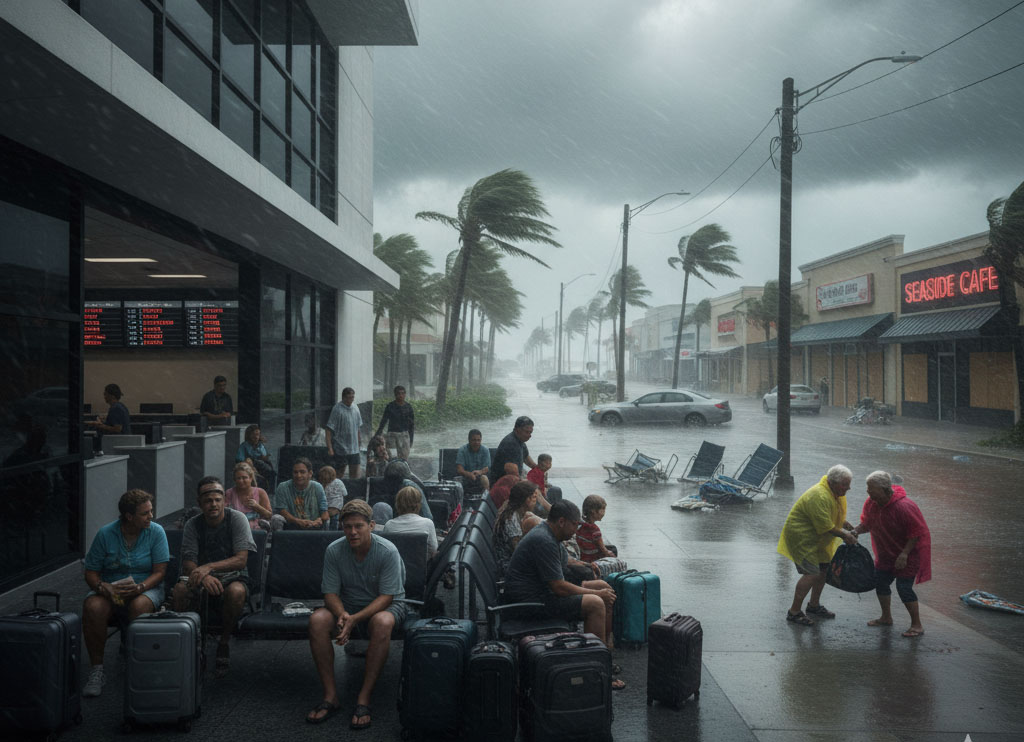
Hurricanes were the first hammer blow to the US travel industry in 2025. Hurricane Melissa and Tropical Storm Chantal wreaked havoc across the eastern US, from Florida to North Carolina, and beyond. Flights were delayed for hours, some even cancelled. Major airports like Miami International, Charlotte Douglas, and Orlando faced severe disruptions, with both domestic and international flights grounded.
In Florida, a state already known for its vulnerability to hurricanes, Hurricane Melissa was particularly destructive. It not only damaged local infrastructure but also caused widespread flight cancellations, stranding thousands of tourists and business travelers. Spirit Airlines, American Airlines, and United Airlines were among the worst affected, with long delays in handling customer requests for rebookings. The storm’s aftermath left the US travel industry grappling with recovery as airports in hurricane-hit regions became overwhelmed.
Shutdown Disasters: How the US Government Shutdown Paralyzed Travel
While hurricanes lashed the US, the political storm brewed in Washington. The US Government Shutdown, which began in October 2025, compounded the woes of an already struggling US tourism industry. Thousands of air traffic controllers and TSA agents were furloughed, leading to massive delays and chaotic airport scenes across the nation.
Airports like Los Angeles International (LAX) and Washington Dulles were particularly hard-hit. With fewer TSA agents and reduced airport staff, security lines became nightmarishly long, with passengers often waiting for hours just to pass through security. The shutdown didn’t just affect domestic flights but international travel as well, with foreign visitors reporting chaos at immigration checkpoints. The loss of confidence in the US travel system during the shutdown hurt the tourism industry badly. Tourists, once eager to explore the cultural landmarks and natural beauty of the US, stayed away.
Trump Tariffs: The Hidden Culprit in the US Travel Industry Decline
As if the hurricanes and the government shutdown weren’t enough, President Trump’s tariffs exacerbated the challenges for US tourism. His ongoing trade war with China, Canada, and Mexico caused the prices of goods and services to skyrocket. The added 25% tariff on imports hurt many sectors, including travel and tourism.
For the US travel industry, this meant rising costs for everything from hotel accommodations to food and transportation. International visitors found the US much more expensive, with many opting to travel to cheaper destinations elsewhere. The US tourism sector saw a significant dip in international visitors, with countries like China and Canada leading the charge in reducing their trips to the US. As tariffs increased, airlines also found themselves facing inflated operational costs, forcing them to raise ticket prices. This double blow of higher ticket prices and limited affordability made the US an unattractive destination for foreign tourists.
The US Tourism Exodus: How Hurricane Chaos and Tariffs Hurt the Bottom Line
The result of the combination of Hurricane Melissa, Storm Chantal, and the Trump Tariffs was disastrous for the US tourism industry. With fewer visitors coming to the US, hotel bookings plummeted, especially in the hurricane-affected regions. Major hotel chains like Hilton and Marriott saw occupancy rates fall by as much as 25%.
The airline industry also suffered. Domestic airlines like American Airlines, United Airlines, and Delta had to deal with flight cancellations, rerouting, and refunds, leading to skyrocketing operational costs. International carriers such as Air Canada and Lufthansa also reduced their services to the US due to the political uncertainty and economic strain caused by tariffs and the shutdown. Tourism experts estimated that the US economy lost a staggering $10 billion in tourism revenue during the peak months of the crisis.
Trump’s Trade War: A Long-Term Devastation for US Tourism
Even after the US Government Shutdown ended and the hurricanes passed, the lingering effects of Trump’s tariffs continued to haunt the US travel industry. The trade war’s lasting impact caused international tourists to rethink their travel plans. The rising cost of US goods and services, combined with the uncertainty created by the US government’s shifting trade policies, made it a less appealing destination for many.
According to the US Travel Association, international arrivals to the US dropped by nearly 8% in 2025, a sharp decline from previous years. Countries that were once major sources of tourists to the US, including Canada, Mexico, and China, saw a noticeable drop in the number of visitors. Tourists from these countries increasingly preferred destinations in Europe or Asia, where they could get more for their money and enjoy a more stable economic and political environment.
How the US Travel Industry Can Recover: Lessons from 2025’s Perfect Storm
Despite the hardships faced by the US travel industry in 2025, there is still hope for recovery. Experts believe that the US government must work towards stabilizing its trade policies and ensuring that international tourism remains a key driver of economic growth. The industry must also focus on improving disaster preparedness and response, especially in hurricane-prone regions.
Tourism bodies must also work on rebuilding the trust of international tourists by addressing the issues that arose during the shutdown. For example, better coordination between airports, airlines, and government agencies is needed to ensure that travelers are not inconvenienced in the event of future shutdowns. Airlines should also focus on creating more affordable options for international travelers, mitigating the impact of Trump’s tariffs.
A Challenging Road Ahead for US Tourism
The US travel industry faced a tumultuous year in 2025, with hurricanes, government shutdowns, and tariffs all combining to create an unprecedented crisis. Hurricane Melissa and Tropical Storm Chantal left widespread damage, while the US Government Shutdown crippled airport operations and tarnished the image of US travel. Meanwhile, Trump’s trade war caused inflation, making travel to the US unaffordable for many.
However, with strategic adjustments and improved crisis management, the US tourism sector can bounce back. The industry must rebuild, adapt, and innovate to reclaim its status as one of the world’s top tourist destinations.
