
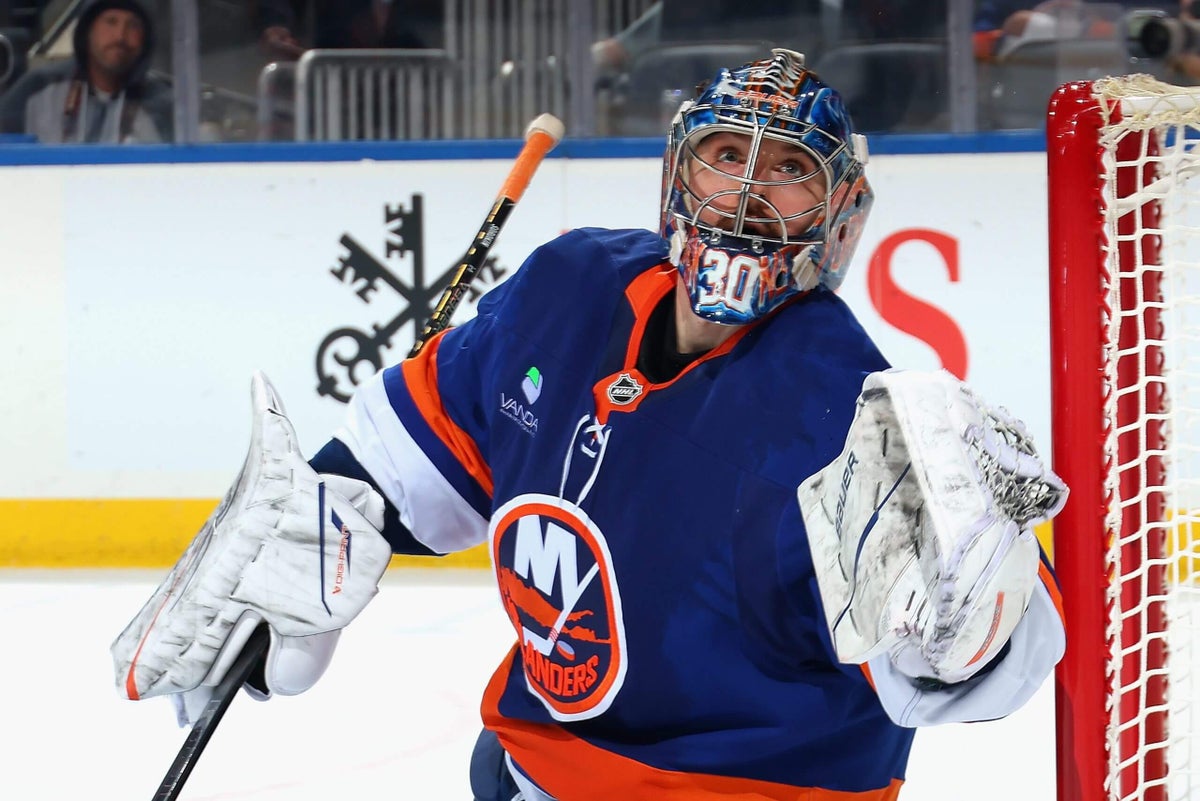
The New York Islanders fired goaltending coach Piero Greco last Wednesday after seven-plus seasons with the team, and promoted Sergei Naumovs from AHL Bridgeport, reuniting him with Ilya Sorokin on Long Island.
Sorokin is off to the worst six-game start of his NHL career, with a .875 save percentage and 22 goals allowed. He will now train with Naumovs daily, but the two have worked together on and off for eight years. Naumovs was Sorokin’s goalie coach during his last two seasons with CSKA Moskva in the KHL from 2018-20, and the two have trained together during the summers since.
“It’s my decision. It’s not on the player,” Islanders general manager Mathieu Darche told reporters on Wednesday. “The players will never tell you, ‘I want this coach, or that coach.’ I know (Sorokin) has had success with Sergei, and that’s where we went. It’s 100 percent my decision and the goalie had nothing to do with it.”
Despite the poor statistical start, the technical aspects of Sorokin’s game haven’t looked out of sorts early this season. He’s still one of the best in the world at reading plays and beating passes on his feet. He still maintains his structure and butterfly seal along the ice, even in the most chaotic of situations in front of him, and he’s still showing the lateral explosion to make show-stopping backdoor saves.
There are areas with room for improvement. Today, we will analyze Sorokin’s film over his first six starts, examining what he’s done well, where he can be better, how the Islanders’ team struggles in front of him has contributed to the poor start, and how the coaching change may help him return to his usual world-class level.
The Islanders’ biggest issue as a team has been committing turnovers while exiting their own zone. Those became less frequent over the four-game win streak that ended on Saturday, but they remain one of the biggest factors in many of Sorokin’s goals against. They’ve also led to New York allowing the most high-danger chances per game of any team in the NHL.
“We’re giving up a lot of chances, but the reason we’re giving up a lot of chances is because we have turnovers,” coach Patrick Roy said. “When you turn over pucks, it’s hard. It has nothing to do with the structure.”
Defensive-zone turnovers, in particular, put unique stress on the goalie. Because they result in instant scoring chances, they don’t allow the goalie to establish depth and retreat with the flow of play, the way he would when the opponent crosses the red line and enters the zone traditionally. Instead, the goalie is caught chasing the play, which can throw off timing and mechanics for the rest of the scoring chance.
This goal by Washington Capitals sniper Aliaksei Protas on Oct. 11 is a perfect example.
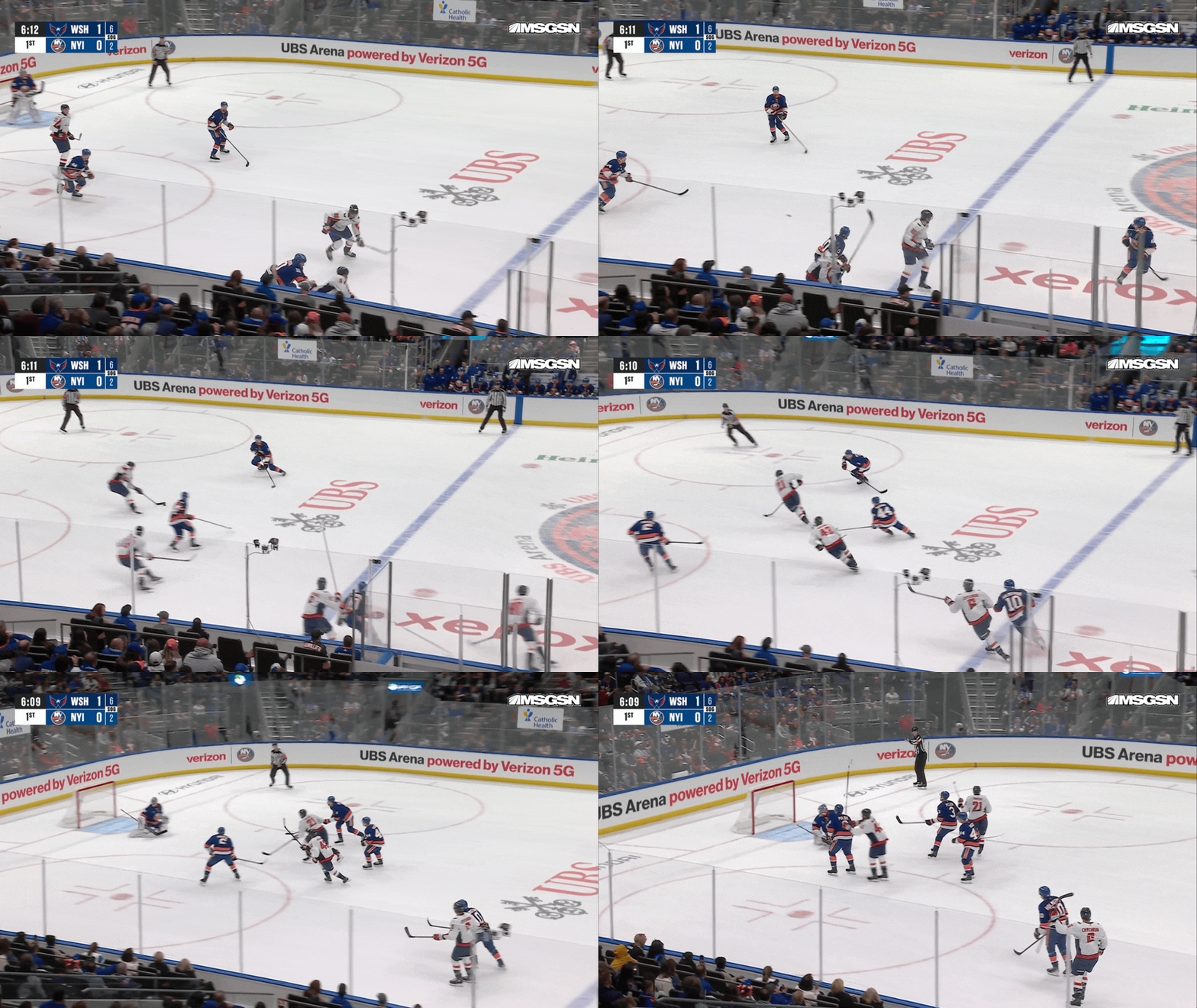
When the puck suddenly bounced to a dangerous scorer right in the slot, Sorokin quickly telescoped out to challenge. Because he spent those precious moments gaining depth, he couldn’t make the adjustments needed to stay square to the shot.
One of Sorokin’s best attributes is his quick feet. They don’t just help him kick out low shots as if his pads were pinball flippers; they also keep him square to shots with micro-shuffles as the puck moves around the ice. Here’s an example of those tiny adjustments on a nice save he made against Winnipeg on Oct. 13. You can see him make three tiny shuffles to his right as Nikita Chibrikov dekes to that side, closing any angle he may have to the short side.
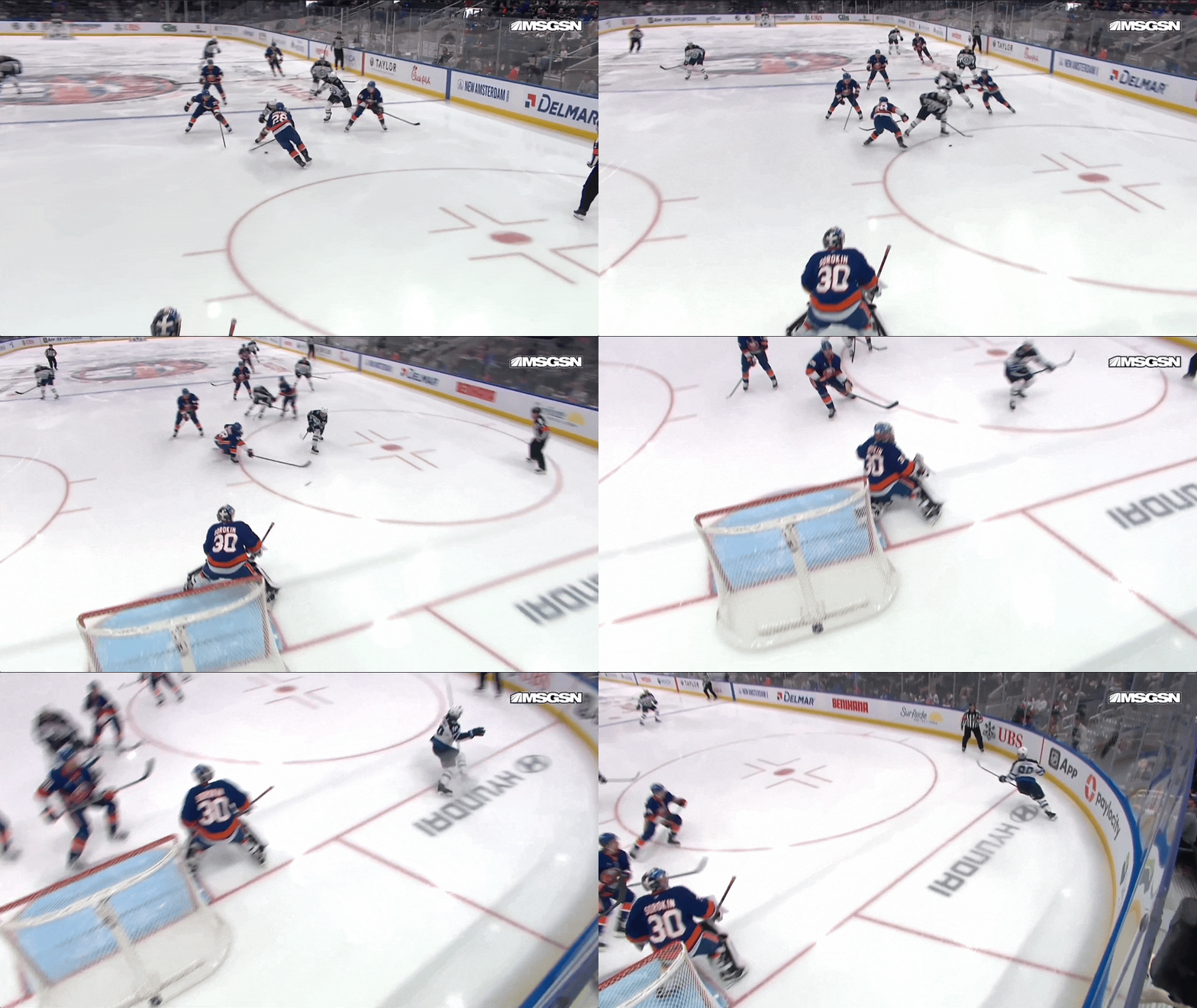
The adjustments are so minimal that they’re almost invisible in live action, but they are crucial to staying on angle for the goalie. Now, back to Protas’ goal on Oct. 11, when Sorokin didn’t have time to make those adjustments. It left him off his angle when Protas pulled the puck out away from his body. In the still frame below, you can see that Sorokin was no longer on angle with the puck. If he were, the line from the puck to the middle of the net would have perfectly intersected the middle of Sorokin’s body.
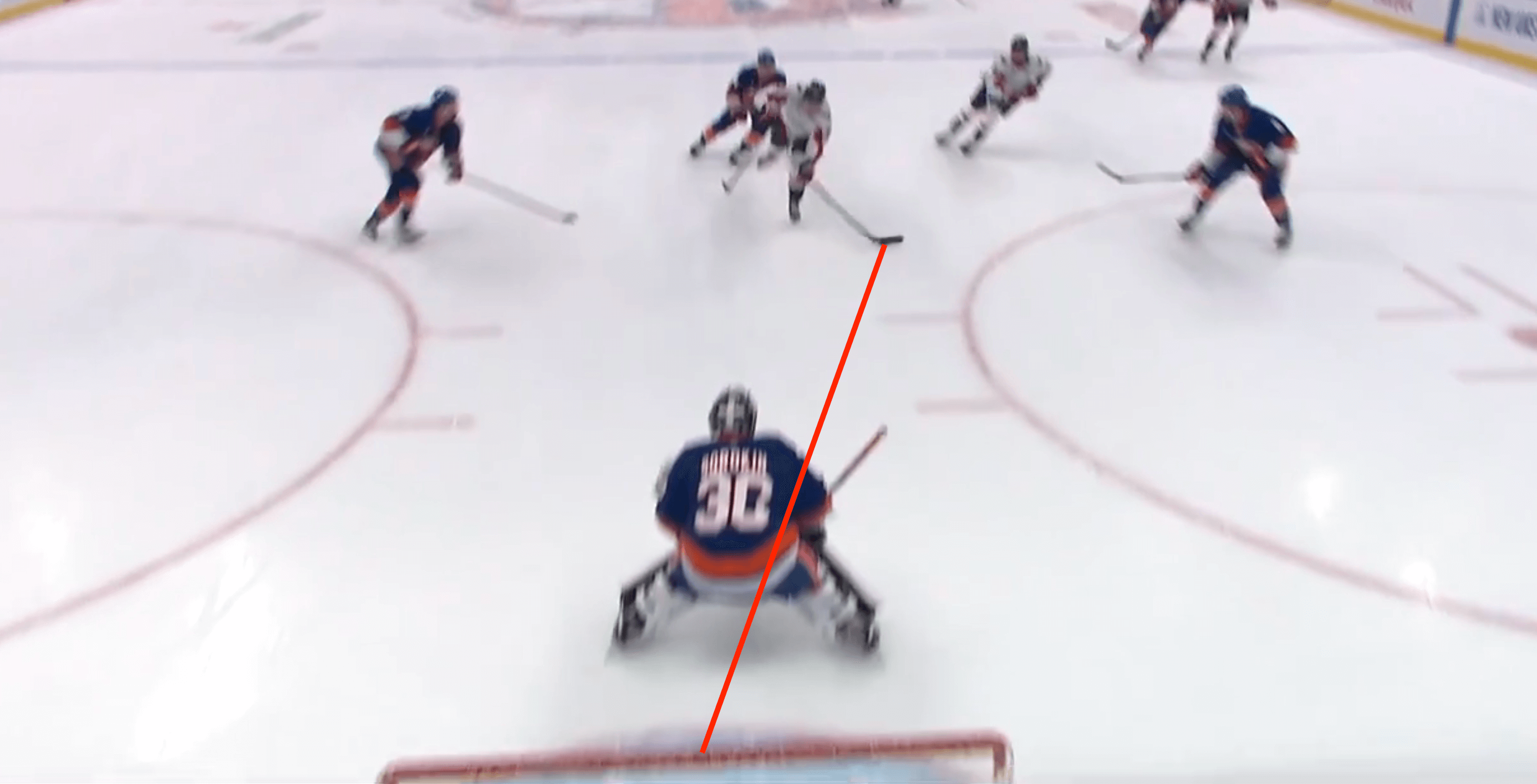
Protas changed the shooting angle, opened up room to the blocker side of the net and buried a hard wrist shot.

This is just one example, but it’s something that has happened to Sorokin on numerous goals against this season. This isn’t a problem a new goalie coach will fix, but if the Islanders limit turnovers, Sorokin’s numbers will improve.
That is because when Sorokin has had the opportunity to read the play as it develops in front of him, rather than chasing it following a sudden turnover, his footwork and depth management have still been exemplary. This save on opening night against Pittsburgh is a great example.
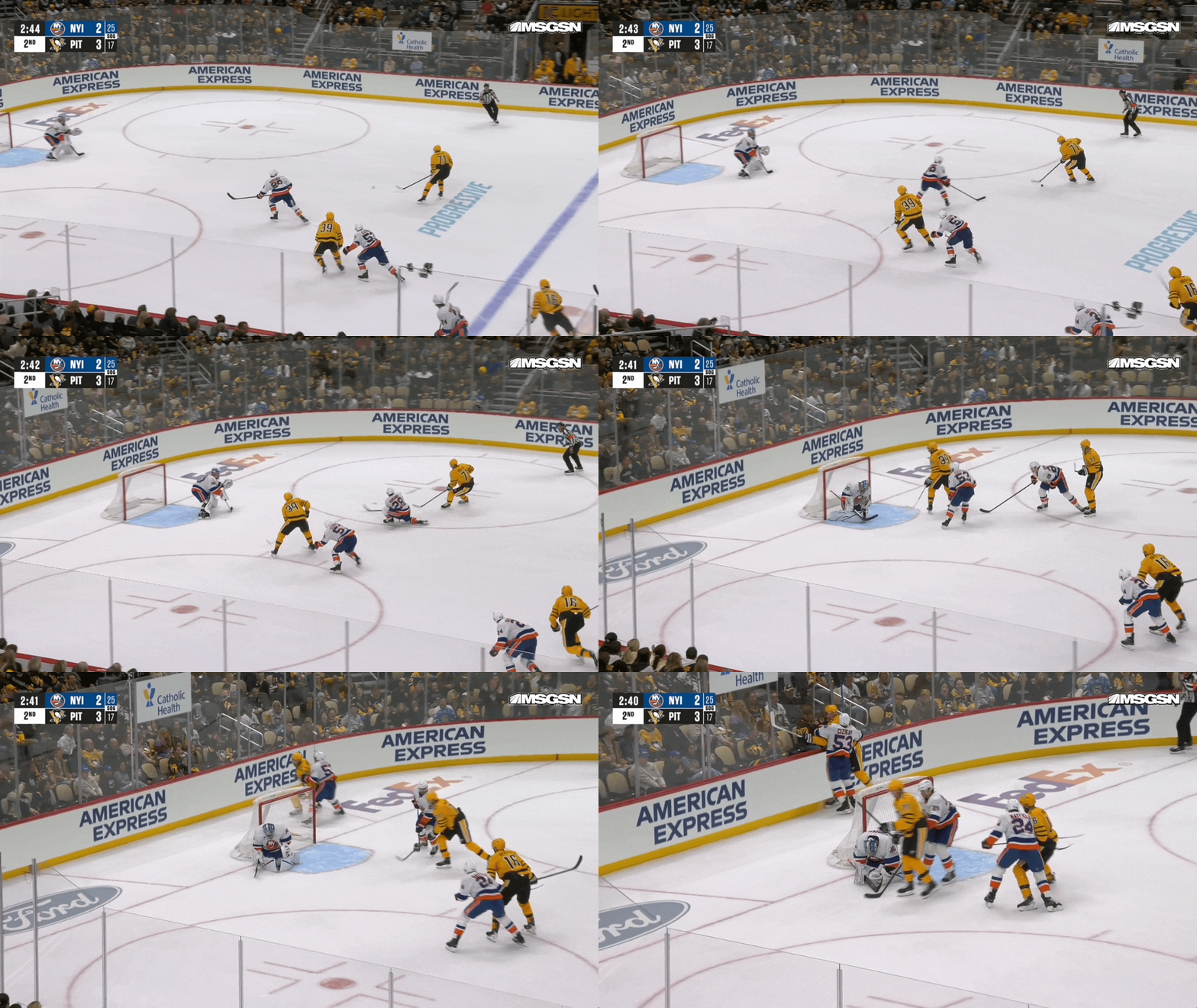
Sorokin began the play with plenty of depth, well outside of his crease. Initially, he played for a shot by the puck carrier (No. 71, Evgeni Malkin), but he was aware of the passing option (No. 39, Anthony Mantha) on the backside of the play. In the next clip, watch how the moment Malkin pulled the puck to his backhand – decreasing the threat of a shot and increasing the likelihood of a pass across – Sorokin responded with a powerful cut with his left leg that pulled him back toward his net.
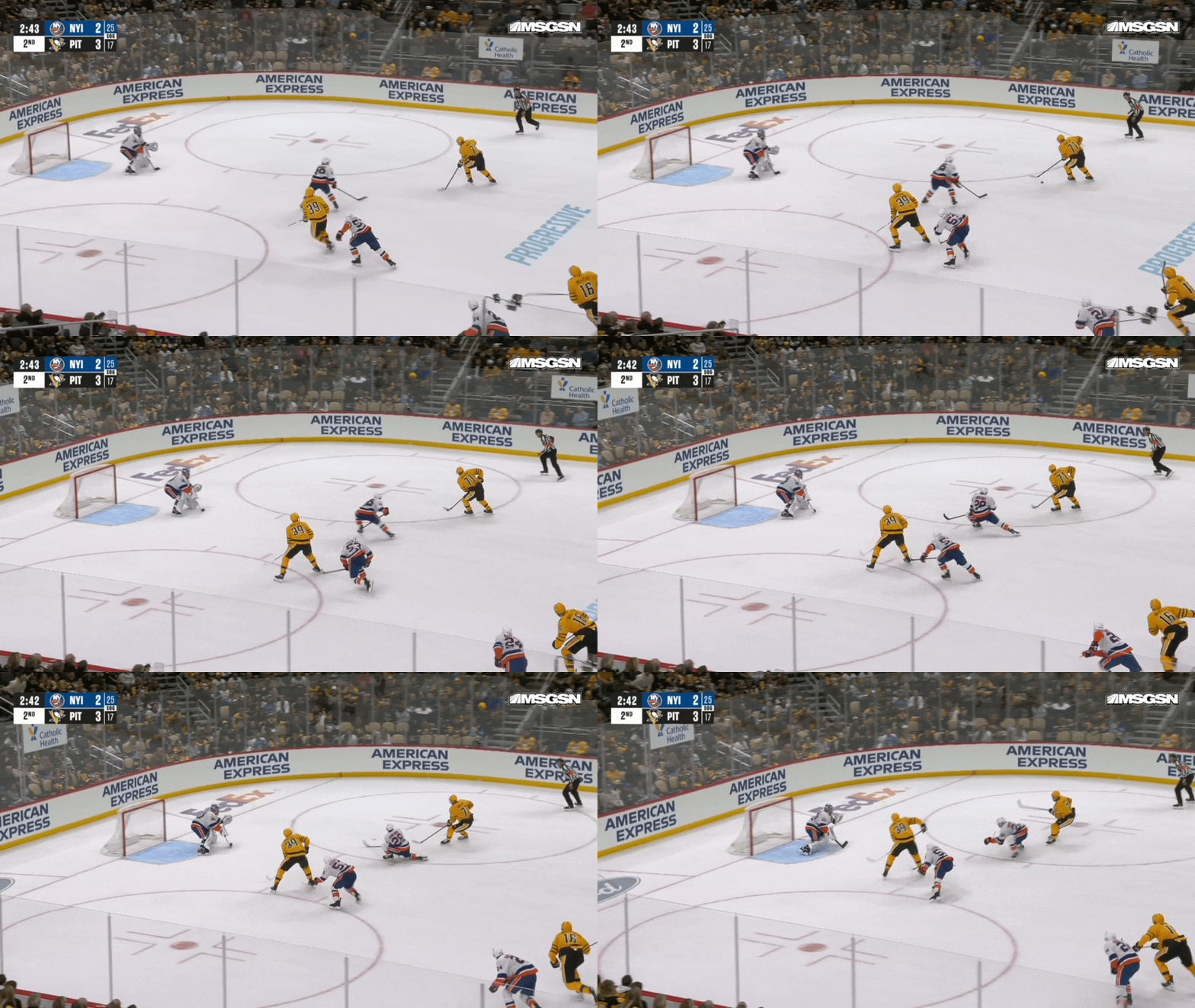
That preemptive retreat left Sorokin with significantly less ground to cover when the pass was made, and he slid across to stop Mantha’s redirect with a relatively simple save. His early read and smart depth allowed him to stop the puck with a high-percentage save in his gut, rather than a sprawling desperation attempt.
Examining all of Sorokin’s goals against this season, two other trends stand out, and both are symptoms of less-than-optimal puck tracking. It’s not as if Sorokin’s tracking has been awful, but it just hasn’t quite been up to his usual lofty standards. He has been beaten by shots to his glove side that he would normally snare, and he has spilled some rebounds off his chest and pads that led to net-front scrambles and a few goals against.
It’s worth noting that over his entire career, Sorokin hasn’t had the greatest rebound control. Statistically, it’s one of his few weaknesses as a netminder. This season, he has given up the tenth-most rebounds per save (.081) according to Money Puck. That is a bit higher than his prior seasons, but he’s typically around the .06 rebounds per save mark, which is below league average.
Rebounds per save is a tricky stat to analyze because it’s heavily influenced by shot location. Shots from farther away from the net are significantly easier to control because the goalie has more time to track the puck through the air. Once shooters get inside the faceoff dots, goalies don’t have time to react to the flight of the puck, and are mostly relying on reading the stick blade angle and other body language tells to determine where the shot is going. That shifts the priority from controlling the rebound to simply stopping the initial shot.
No head coach in the NHL understands this better than Roy, who faced more than 35,000 shots over the course of his 19-year playing career.
“Everybody knows that we’re giving a lot of chances from the pocket, so we have to do a better job there,” Roy told reporters on Oct. 21.
On a per-game basis, Sorokin has faced more shots from the slot and in front of the net than any goalie in the NHL. He has actually performed well on those chances. His .857 save percentage on high-danger shots is well above the league average of .811, but facing this quantity of those chances has led to goals against and poor rebounds – neither of which is good for a goalie’s confidence.
When a goalie is confident and feeling good about his game, hockey can feel like it’s in slow motion. Pucks look bigger and slower, and goalies track them more effectively. That clearly isn’t the case for Sorokin at the moment, but that could be where the coaching change helps.
“We just felt that at this time, it was the right time to have a reset for our goalies,” Darche said of the change. “There’s obviously a history with Sergei (Naumovs) and Ilya, and we just made that decision going forward to have a reset for our goalies.”
The keyword is “reset.” This coaching change isn’t meant to completely rework Sorokin’s game or change what he’s doing fundamentally. There’s no need for that, but perhaps working with a longtime coach, with whom he’s had success and enjoys working with, can help Sorokin play more confidently and instinctively.
It also helps that his head coach is a Hockey Hall of Fame goalie who was known for his strong mental fortitude during his days in the crease. Roy and Sorokin’s chats on the ice at practice typically revolve more around that side of the position than technique.
“What he knows is a goalie mindset, and that doesn’t change,” Darche said of Roy. “It wasn’t about technical stuff. It was mindset stuff that he was able to talk about with Ilya. You look at goaltending from when Patrick played to today and it’s a totally different position, so Patrick is humble enough to understand that the technical part of it is not (his expertise), but a goalie mindset is a goalie mindset, and Patrick had a pretty good one.”
The combination of Roy, Naumovs and a defense that allows fewer slot chances should help Sorokin return to form. This is, after all, the goaltender who has stopped 106.58 goals above expected since he entered the league – the third-most of any goalie over that span. There are already signs he’s trending toward that, and it all started with a sequence of crucial saves in the third period of last Saturday’s win in Ottawa.
Through two periods, it was actually Sorokin’s worst performance yet. He had given up a goal that trickled off his blocker and underneath him into the net, followed by three second-period goals that all beat him clean to the glove side. Sorokin went on to stop every shot in the third period, including a penalty shot attempt by the NHL’s leading goal-scorer, Shane Pinto, followed by this sensational stop to keep the game tied.
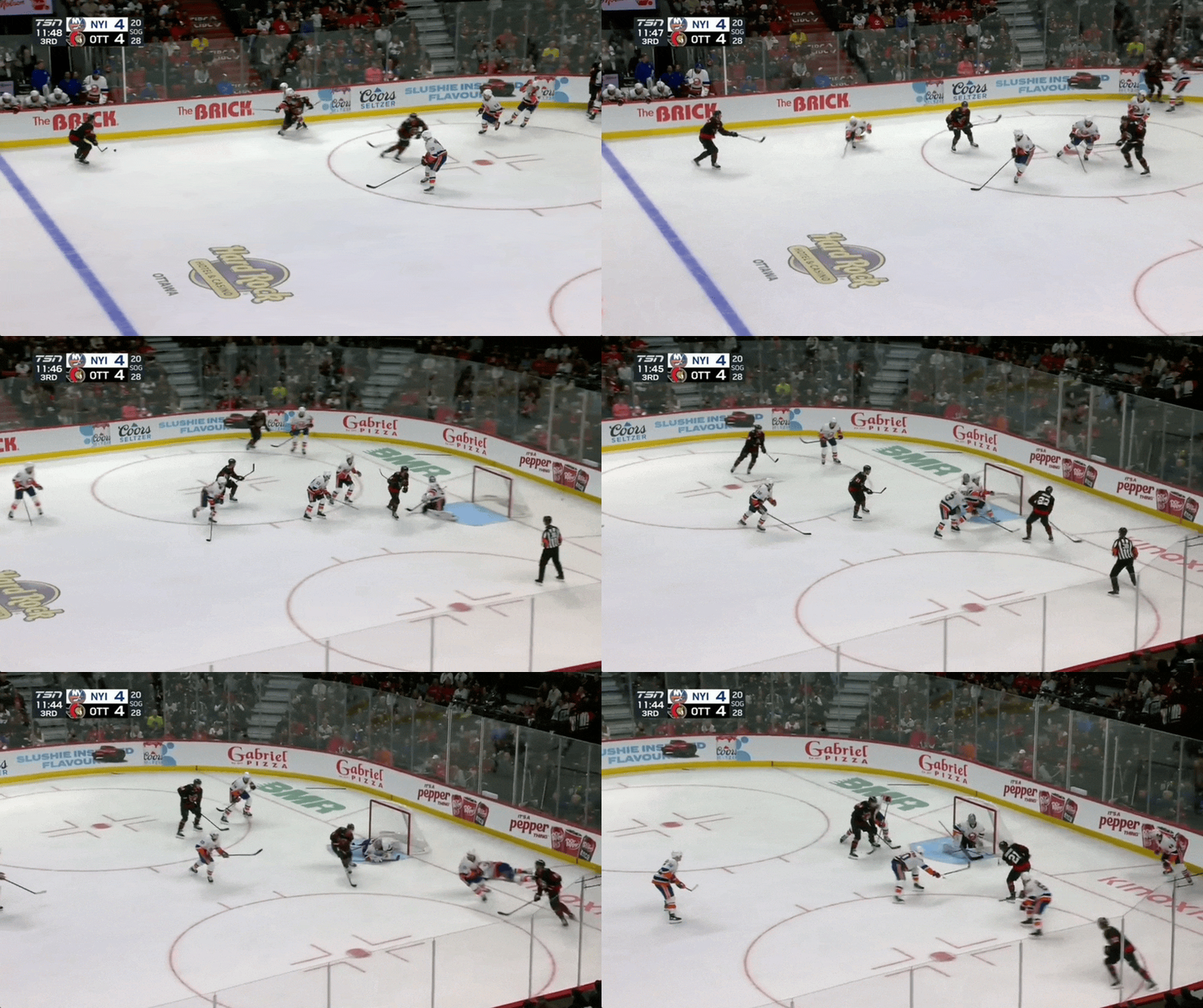
Sorokin shows off so much of what makes him a great goalie in this clip. He tracks the puck’s trajectory off the end boards behind the net, and somehow sees Senators winger Michael Amadio (No. 22) getting across for a rebound. He digs his right skate into the ice for an explosive push to the far post and uses his ridiculous internal hip rotation to keep his pads flat on the ice to maximize net coverage.
“He made some really important saves at the key moments of the game,” Roy told reporters after the game. “That’s what you want from your goalie, and that’s what he did.”
Islanders captain Anders Lee went on to score the game-winning goal that night. After the following game, a win over San Jose, he handed the Ironman mask (the players’ player of the game trophy) to Sorokin in the Islanders’ dressing room.
“You want to get some momentum, and feel good about yourself, and I hope that he gets a lot of confidence from that third period,” Roy said of Sorokin, “and he should because he played really well.”
Despite Saturday’s 4-3 shootout loss to Philadelphia, which snapped New York’s four-game win streak, Sorokin continued his positive trajectory. He looked in control, made several excellent saves, and didn’t have much of a chance on any of the Flyers’ three goals. He’s still not completely out of the slump — he didn’t look particularly sharp on either of the two shootout shots that beat him — but his game is trending in the right direction, and it’s still early.