
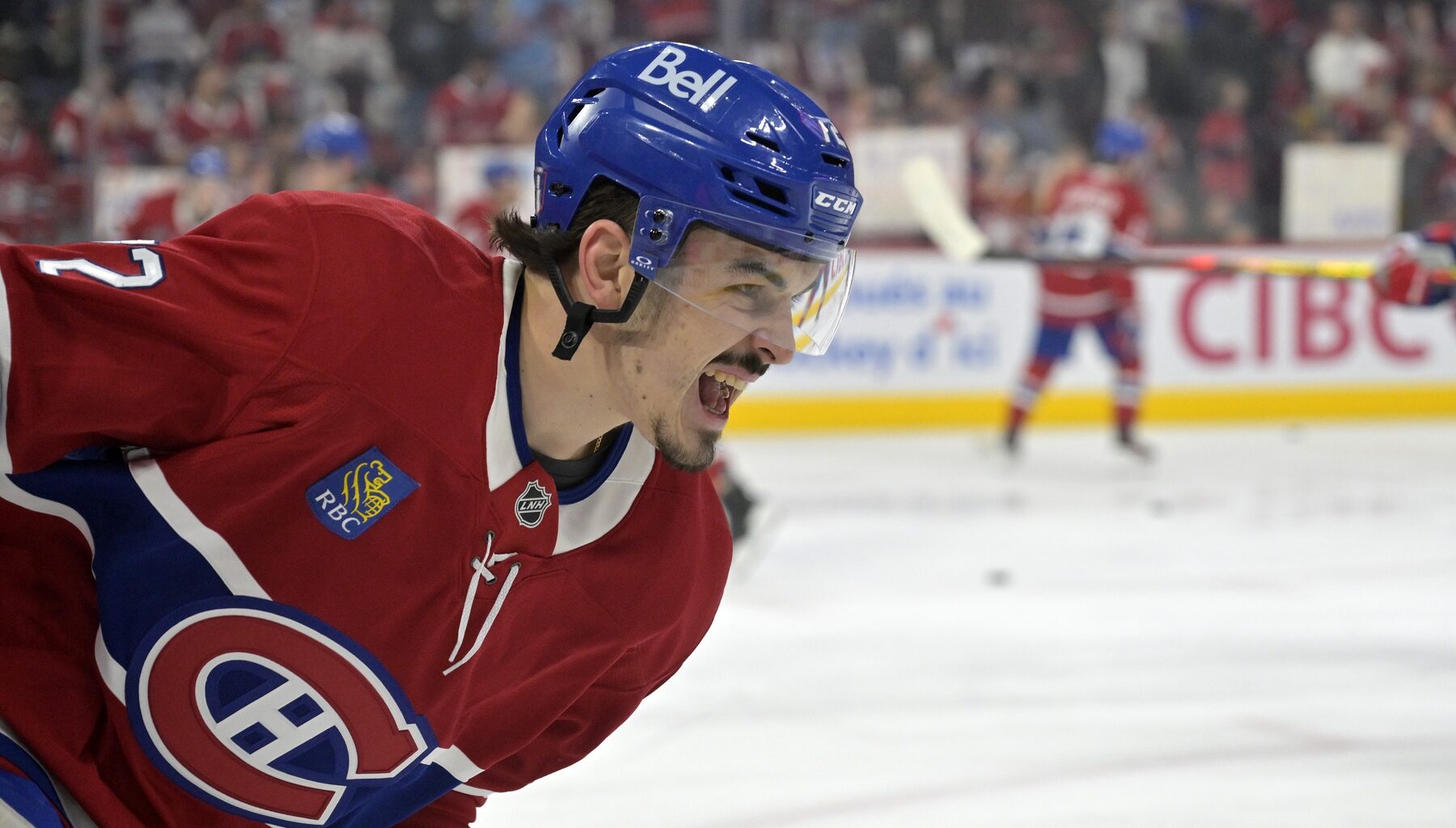
When Kaiden Guhle returns from injury, Martin St. Louis will face one of those “good problems” coaches love to have: too many capable defencemen. Through the first month of the season, Montreal’s blue line has quietly become one of its greatest strengths, blending youth, mobility, and steady improvement. But the question remains, when the lineup is healthy, who should stay in as the sixth defenceman: Arber Xhekaj or Jayden Struble?
The Start of the Season
The Canadiens began the 2025-26 season with a fairly stable defensive rotation. Mike Matheson played big minutes, Noah Dobson and Kaiden Guhle also handled heavy minutes, while Lane Hutson brought creativity and pace on the offensive side of the blue line. Xhekaj started the season on the third pair over Struble.
At that point, Struble was watching from the press box. The decision made sense early on. Xhekaj’s combination of size, toughness, and willingness to defend teammates adds an element that few others on the roster bring. His presence gives Montreal a deterrent and a spark when the game gets physical. For a team still developing its young core, that edge can be valuable. But when Guhle went down, the Canadiens’ defensive hierarchy shifted. Struble, who had been patient, suddenly found his opportunity.
Should It Be Struble?
Since Guhle’s injury, Struble has quietly impressed. He has averaged over 15 minutes per night, more than Xhekaj did in his early games, and he has taken advantage of that ice time. Through 10 games, Struble has three assists and a plus-1 rating, while showing improved puck management and poise under pressure. His skating allows him to recover quickly in transition and join the rush without getting caught.
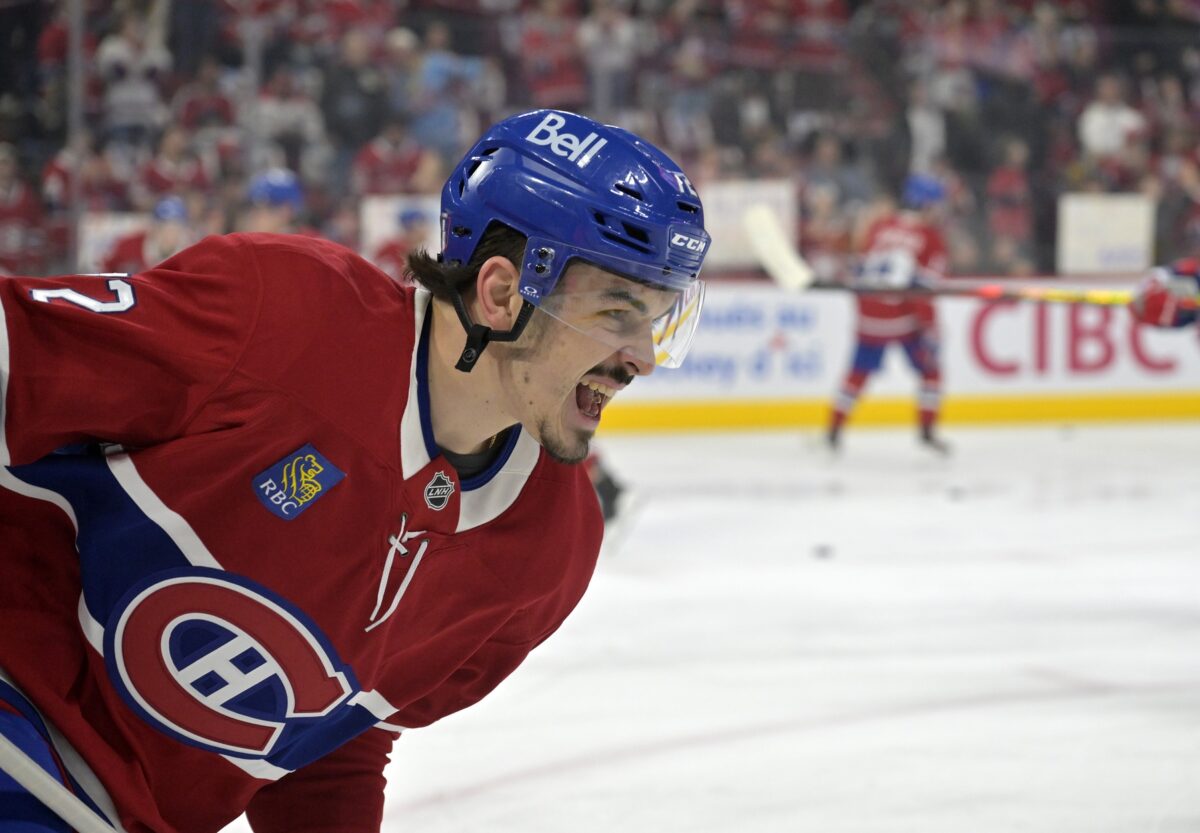 Montreal Canadiens defenseman Arber Xhekaj (Eric Bolte-Imagn Images)
In contrast, Xhekaj’s season has been more uneven. In 13 games, he’s posted just one assist and a minus-4 rating. His physicality remains an asset, but at times it comes at the cost of positioning or penalties. The Canadiens have been emphasizing controlled aggression, play hard, but smart, and that’s an area where Struble’s game may currently fit better.
Struble also brings versatility. He can play both sides, kill penalties, and transition the puck effectively. While he may not have Xhekaj’s raw power or mean streak, he compensates with better skating and decision-making.
That’s not to say Xhekaj’s role has vanished. His presence is felt every time he steps on the ice. He protects teammates, clears the net front, and changes the physical tone of a game. Against heavier opponents like the Boston Bruins or Toronto Maple Leafs, that kind of edge is valuable. But when the Canadiens are playing faster, puck-movement teams, Struble’s style may be a better complement to the lineup.
A Good Problem to Have
Ultimately, this debate reflects a positive shift for Montreal’s defence. Just a couple of years ago, the Canadiens lacked NHL-ready depth on the blue line. Now, with Matheson, Carrier, Hutson, Guhle, and Dobson locked into top-five roles, the battle for the sixth spot is between two capable young defenders who each bring something different.
Related: Canadiens’ Power Play Thriving Since Ivan Demidov’s Promotion to Top Unit
That kind of competition pushes everyone to improve. It allows St. Louis to tailor his lineup to the opponent: Xhekaj when the team needs toughness and a physical presence, Struble when it needs skating and puck movement. Over an 82-game season, both will get their share of ice time.
The Canadiens’ defensive depth has also helped stabilize their overall structure. With Dobson and Matheson logging major minutes and Hutson driving the offence, the blue line has supported a more balanced attack. The team’s goals-against average is trending downward, and puck exits have become cleaner. Whether it’s Struble or Xhekaj, the sixth spot now complements a well-rounded unit rather than filling a weak link.
For now, the logical choice when Guhle returns might be to keep Struble in the lineup. He’s earned the minutes with steady, mistake-free play, and he fits the Canadiens’ fast, transition-oriented identity. Xhekaj remains an excellent seventh defenceman, one who can jump in anytime and make an impact, but Struble’s reliability may give him the edge in the short term.
Still, it’s hard to call this a bad situation. Depth on defence is one of the hardest things to build in the NHL, and Montreal suddenly has an abundance of it. As Guhle gets healthy and Hutson continues to grow, the Canadiens’ blue line could soon become one of the most balanced in the conference.
