

Looking at the Philadelphia Flyers’ ranking among the 1967 NHL expansion teams, it’s clear that the Philadelphia team holds a solid place in the “standings.” While other teams had periods of great success, the Flyers stand out for their early path to glory in the 1970s. They then sustained excellence for decades, leaving a mark on the league (and literally) with their signature hard-nosed playing style.
The Philadelphia Flyers’ ranking is defined by Stanley Cup victories, postseason consistency, and the impact that this team has had on the enduring legacy of hockey culture. The Philadelphia Flyers’ two titles set the benchmark for these teams, and they even played well against powerhouse teams, like beating the Boston Bruins for the 1974 title.
Learn more below, about where exactly the Flyers rank among the NHL’s original expansion teams.
Stanley Cup Success
One of the most significant factors in ranking the Flyers among the 1967 expansion teams is their immediate success and respectable overall history with the Stanley Cup. Philly was the first expansion team to hoist the beloved trophy, and they did so with back-to-back titles in 1974 and 1975. This was a massive milestone for both the Flyers and the entire NHL, which had just doubled in size. It showed that, seven years after expansion, new teams could compete with the legendary “Original Six.”
The Los Angeles Kings and Pittsburgh Penguins didn’t win their first titles until 2012 and 1991, respectively. The California Seals briefly relocated to Cleveland as the Barons before eventually merging with the Minnesota North Stars, and the franchise finally won its first Stanley Cup in 1999 as the relocated Dallas Stars. The St. Louis Blues didn’t win the Stanley Cup until 2019.
The Flyers’ Postseason Consistency
Even though the Philadelphia Flyers won only two championships, the franchise often contended. The Flyers made the playoffs in 40 of their first 58 seasons, giving them the second-most playoff appearances among expansion teams, trailing only the Blues. They also own the most Stanley Cup Final appearances of all the original expansion clubs, with eight total. The longevity and consistency showcase the franchise’s culture, and their priorities on consistently winning at a high level.
 Al Bello/Getty Images
In the early days, this organization had a powerful front office and coaching staff. This track record of greatness surpasses teams like the Kings, who endured long stretches of mediocrity, and even the Penguins, who faced financial issues before the arrival of Mario Lemieux turned the franchise around.
The Broad Street Bullies
During the 1970s, the Flyers built their success on the foundation of the “Broad Street Bullies,” a style of play that blended skilled hockey with hits and an intimidating edge. This identity led to the birth of two great legends: Bobby Clarke and enforcer Dave Schultz. Their style of play has evolved over the decades, and the Philadelphia Flyers’ grit remains a part of it; the fan base loves it.
None of the 1967 expansion teams has developed fun identities like that, kept them, and left a league-wide impact. The Broad Street Bullies were feared, captivated the hockey world, and influenced the league’s tactical play.
Comparison To Other Expansion TeamsSt. Louis Blues: The Blues enjoyed early success, reaching the Stanley Cup Final in their first three seasons (1968-1970). However, in all three of those appearances, the Blues were swept. They have only one Stanley Cup win, and that was their first and last in 2019 over the Boston Bruins. The Philadelphia Flyers already had championship status on their side.Pittsburgh Penguins: They became a mini-dynasty in the early 1990s, then returned to prominence in the 2000s and 2010s. The Pens won multiple Stanley Cups and enjoyed two separate generational talents in Mario Lemieux and Sidney Crosby. They beat the Flyers 5-2 in the Stanley Cup victories.Los Angeles Kings: This team, like the Penguins, had a long Stanley Cup drought and eventually hoisted the Stanley Cup in 2012 and 2014. They didn’t have a great early history like the Flyers did, but they are enjoying success now.Dallas Stars: The original Minnesota franchise reached the Stanley Cup Final in 1991, but they never won a Cup in their original market. The Dallas Stars have had success, demonstrating that the team’s relocation was a good thing.California Seals: The Seals’ brief history was basically persistent turmoil. They never had a winning season, never reached the Stanley Cup Final, and soon folded as a franchise. Overall, the first foray into Bay Area NHL hockey was an on-ice failure.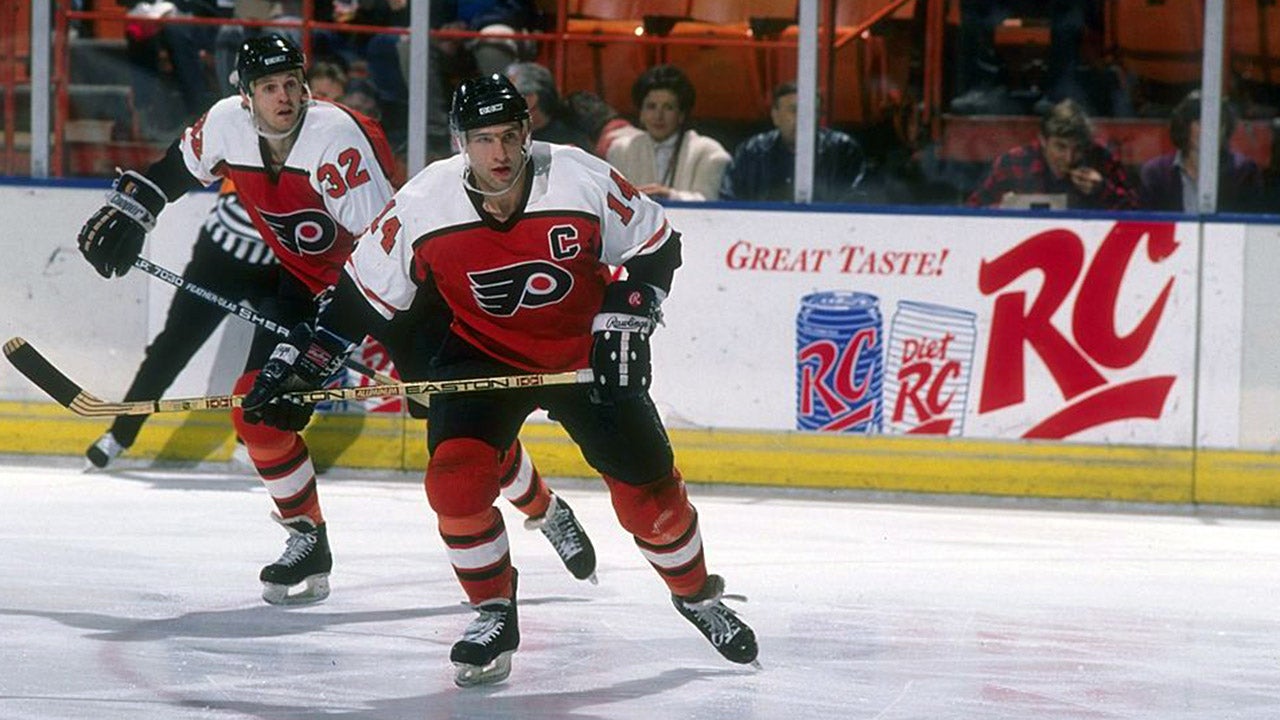 Ken Levine/Allsport
Looking at these facts, our rankings go like this: Penguins, Flyers, Blues, Kings, Stars, Seals.
Even though the Philadelphia Flyers have endured a Stanley Cup drought since 1975, the team still holds historical bragging rights over most NHL expansion teams. The Flyers got off to the right start and were the first to prove that a new team can win the prize.
When you consider the Flyers’ quick success and record of conference final appearances, you can understand how they remain firmly placed among the top-3 of these teams. In addition, the Philadelphia Flyers still have a strong hockey culture, which gives them another boost in overall hockey rankings.