
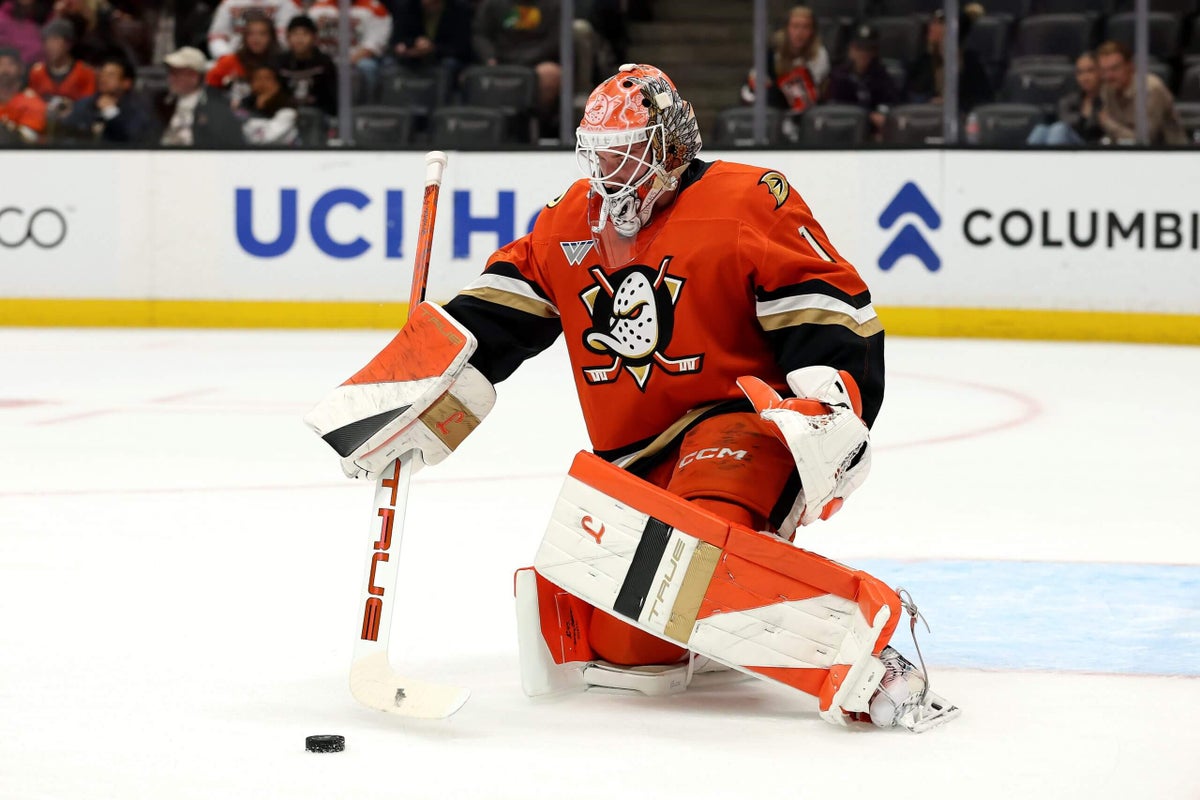
The days of the true stand-up goalie are long gone. The style dominated the position until the 1980s, when it eventually was replaced by the modern butterfly style. Now, goalies spend more time on the ice than ever before, and for good reason. Sealing the ice, especially when the puck is in close, is usually the most efficient and effective way to keep it out of the net.
But for the hockey fans who yearn for the days of goalies staying on their feet to react to shots, you may have a new favorite netminder. His name is Lukáš Dostál, and he’s backstopping the Anaheim Ducks to the most surprising start in the NHL.
Dostál isn’t dancing around the crease quite like Kirk McLean or Bill Ranford, but in today’s goaltending ecosystem, with most goalies dropping to the ice by default, Dostál may be the closest thing to the old-school, stand-up style.
Welcome back to Goalie Tracking, where we examine the details of the position and attempt to explain why goalies do what they do. In a position at which margins are razor-thin and the game is faster than ever, details are the difference between saves and goals. We try to highlight exactly what different goalies are doing to separate themselves.
In the first edition of the 2025-26 season, we’ll examine Dostál’s unique stance and play style, and even how he sharpens his skates in a peculiar way to facilitate both. We’ll also dig into Tampa Bay Lightning star Andrei Vasilevskiy’s glove positioning and how he’s using it to great effect.
Back to Dostál, who had saved the third-most goals above expected in the NHL entering Tuesday and helped the Ducks to an early lead atop of the Pacific Division. The 25-year-old took over Anaheim’s starting job at the beginning of last season, impressed throughout that campaign and has looked even better early this season.
Dostál plays with a very narrow stance, keeping his skates much closer together than most. As a result, his leg pads sit much more vertically as he navigates around his crease — somewhat reminiscent of the days of the true stand-up goalies.
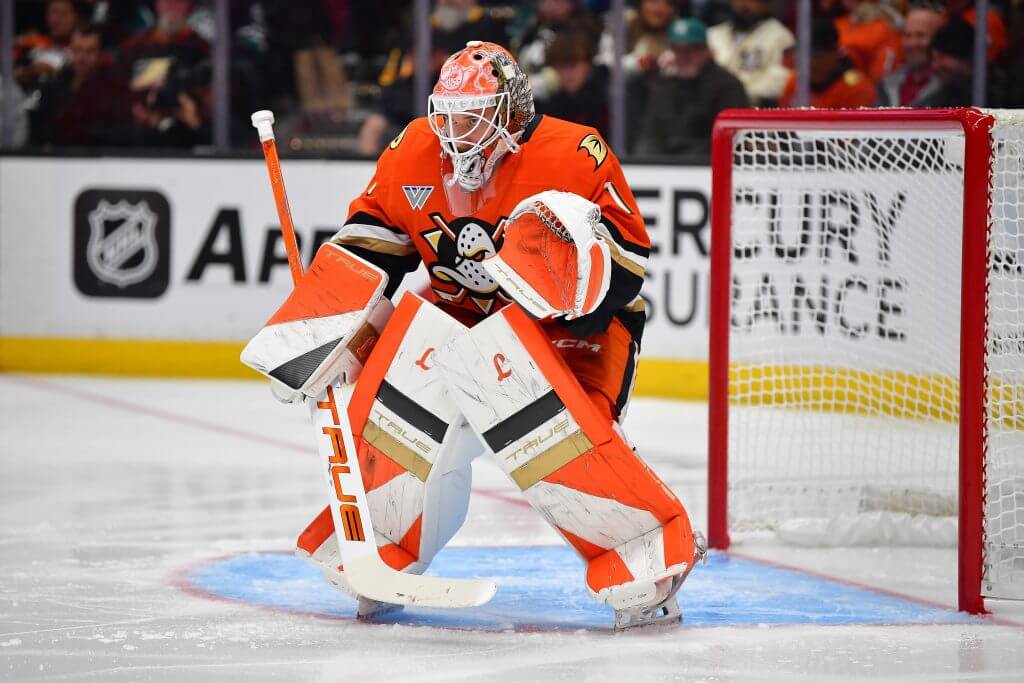
Lukáš Dostál plays a game different from most modern goalies. (Gary A. Vasquez / Imagn Images)
“I’ve gone through phases growing up,” Dostál told The Athletic. “If you see some of the pictures from when I was playing under-16 or under-17, my stance was very wide. I started working with my coaches then on a closer stance, because I like it when I have my feet underneath me, especially for mid-range or long-range shots.”
A narrow stance does several things for Dostál. Most importantly, by keeping his feet underneath him, he stays in a coiled, athletic position, ready to react to the play. The wider a goalie’s skates become, the more his skates dig into the ice and the less leverage he has to move laterally.
“You feel like you’re under control all of the time,” Dostál explained. “Once you get wide, there’s only so much you can do. You basically either have to slide or make a short T-push, and that’s it.”
Which leads us to the reason Dostál may be the closest modern example of a stand-up goalie. He is an excellent reader of the play, anticipating passes before they happen and getting to his spots on his feet, rather than sliding on his pads.
Here’s an example of Dostál staying on his skates in a situation where almost every goalie in the NHL would’ve dropped to the ice.

As Carolina Hurricanes forward Jackson Blake (No. 53) carries the puck below the faceoff dot, many goalies would’ve defaulted into the RVH (reverse vertical horizontal) position, with their left leg flush to the ice and their body leaning against the nearside post. Shooters have picked up on this trend and have started picking the short-side top corner, and that’s exactly what Blake tried to do on this play.
Not only did Dostál not go into the RVH, he also never fully dropped into the butterfly, even after Blake released the shot. He widened his skates slightly but held onto his edges, which allowed him to react athletically and get a shoulder on the high shot.
The way Dostál keeps his knees bent and his skates underneath his hips, he looks like a tightly-wound spring, ready to uncoil with power at any moment. Those quick bursts keep him ahead of the play when teams pass the puck around the zone, rather than chasing it. This sensational save against Tampa Bay on Oct. 25 demonstrates a lot of what Dostál does well.

Notice the first thing Dostál did the moment he realized his defenseman was being tied up by a forechecker behind the net. He crouched into his post to load his legs, and made two quick shoulder checks to scan the ice and identify passing threats. Those are important because he saw Brandon Hagel (No. 38) early, so when the pass was made from the corner, Dostál knew exactly where he needed to get to the top of his crease to be ready for that potential one-timer.
The biggest key to this entire play was how quickly Dostál got to that spot and set his feet. He didn’t guess that Hagel would rip the one-timer and slide into a butterfly. He took as much depth as possible, then came to a hard stop and set his feet.

“That’s something we’re always preaching here in Anaheim,” he said. “Always make sure you’re set before the shot, even if you have to sacrifice a little bit of depth. It’s better to be set than moving toward the puck, because then when there’s a rebound, you start chasing.”
Being set before the release of a shot gives a goalie two major benefits. First, it helps the nervous system track the puck and react to it because it isn’t partially preoccupied with other movements. Think of what it’s like to squint to read a sign from a long distance, and how much harder it would be if your head were moving while trying to read it.
Second, being set prior to a shot gives the goalie balance in his stance, so he can react in any direction. In this case, because Dostál was set for the shot and in his narrow, athletic stance, when Hagel made the extra pass to a wide-open Nikita Kucherov on the backside of the play, Dostál was ready to explode across. Even then, he didn’t slide in desperation. He got across in perfect balance and dug his right skate into the ice to set himself once again. That’s why when Kucherov tried to deke back against the grain, and then again to his forehand, Dostál stayed with him the entire way and made an impressive blocker save.

“When the puck gets closer, you have to get slightly wider, but then it’s about patience,” Dostál said. “If you can stay narrow as long as you can, then you’re loaded and you can always push.”
There were multiple opportunities for Dostál to slide out of control on that play, and either would’ve resulted in Kucherov shooting the puck into a wide-open net. Because he kept his balance and edges throughout, Dostál was able to react to every lateral move Hagel and Kucherov made, and stayed one step ahead the entire way.
Dostál was kind enough to let us in on a secret of his that helps him to play this way. The way he has his skate blades sharpened is as unique as his stance, and the two work in harmony.
“I have a high inside edge, so it allows me to glide when I have a narrow stance,” he explained. “That’s part of why I can keep the narrow stance quite a lot. I always have my edges, but I can also push with a nice glide. If I had just a regular three-eighths cut, I would need to be a little wider. It would take more effort to push.”
This graphic by Blade Tech Hockey shows an exaggerated example of how skate blades look when sharpened to different hollows. Each player has their preferred radius. The smaller the radius, the more pronounced the inside and outside edges become, giving the blade more bite into the ice.
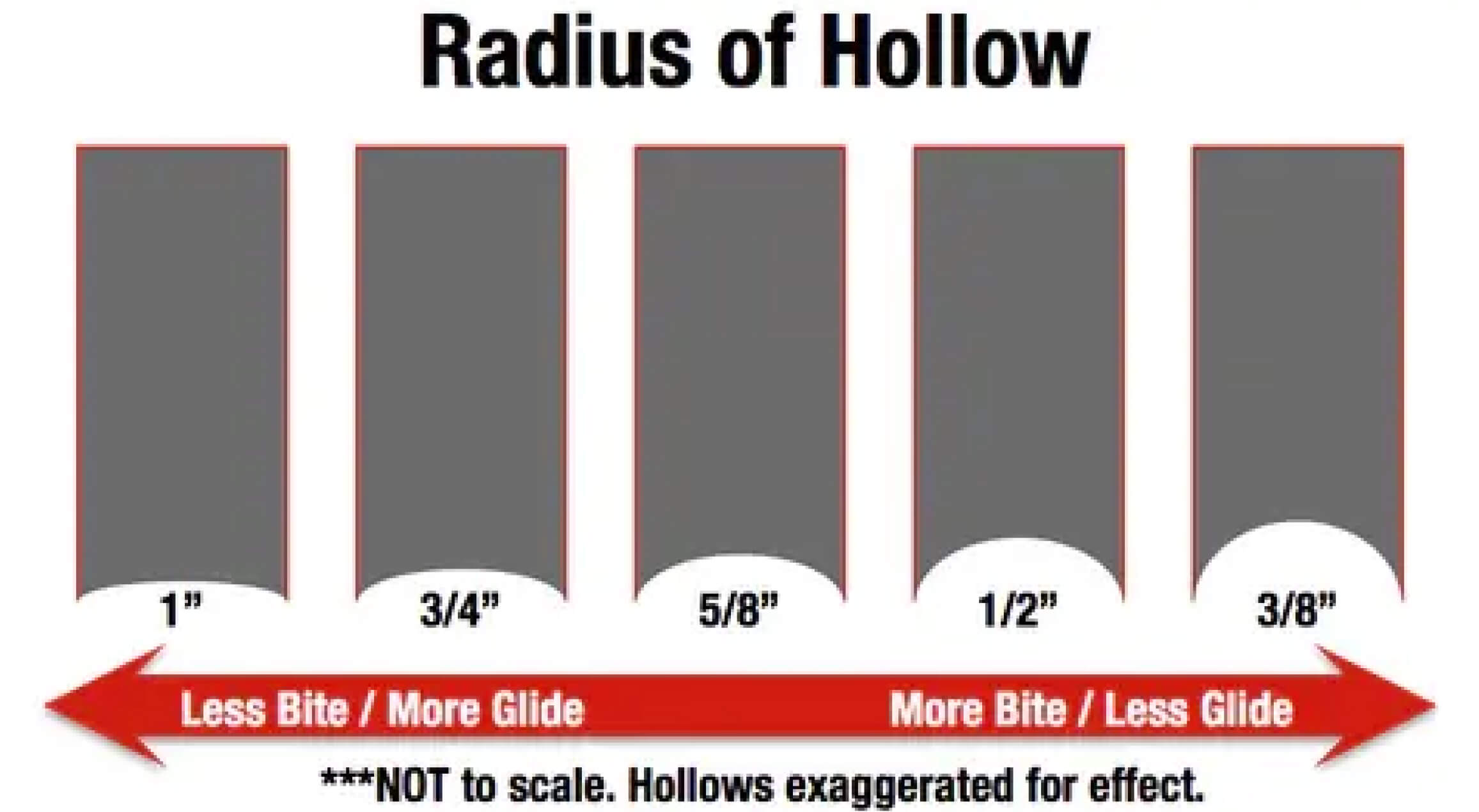
In these examples, the inside and outside edges are all symmetrical, which is the standard technique, but Dostál has his contoured so the inside edge of his skate blade is higher and more pronounced than the outside edge. It’s enough of a difference that you can actually see it by holding the skates and looking at the blade with the naked eye.
Dostál believes it gives him the best of both worlds. When he is standing upright, with his skates narrow and more vertical, his outside edge is less exposed in order to give him the glide he wants for smooth shuffles and change of direction. If he wants more bite, all he has to do is widen his stance a bit, and that raised inside edge catches the ice perfectly to anchor that skate for a strong push in either direction.
Dostál is quickly rising up the ranks as one of the most exciting young goalies in the league. If Anaheim can continue taking steps in its overall team game, the Ducks could be a legitimate contender earlier than many expected, and Dostál’s emergence is one of the biggest reasons.
Why Vasilevskiy glove saves look easy
After a slow start to the season for Vasilevskiy and the Tampa Bay Lightning as a whole, he and his team have turned things around in a big way. Vasilevskiy is 5-1-0 in his last six starts with a .923 save percentage and 5.86 goals saved above expected since Oct. 25.
It’s nothing new for the hulking Russian netminder, who was a Vezina Trophy finalist for the fifth time in his career last season. He’s one of the best in the world, and arguably has a Hall of Fame resume already, but still works hard on the details of his game.
Watching him practice while the Lightning were in Las Vegas ahead of their game against the Golden Knights on Nov. 6, one thing that really stood out was how far Vasilevskiy holds his gloves in front of his body.
“Glove projection,” as most coaches call it, is nothing new or unique to Vasilevskiy, but he exaggerates it more than most. Just compare his glove position to that of Dostál, who also has his gloves in front of him, but not nearly to the same extent.
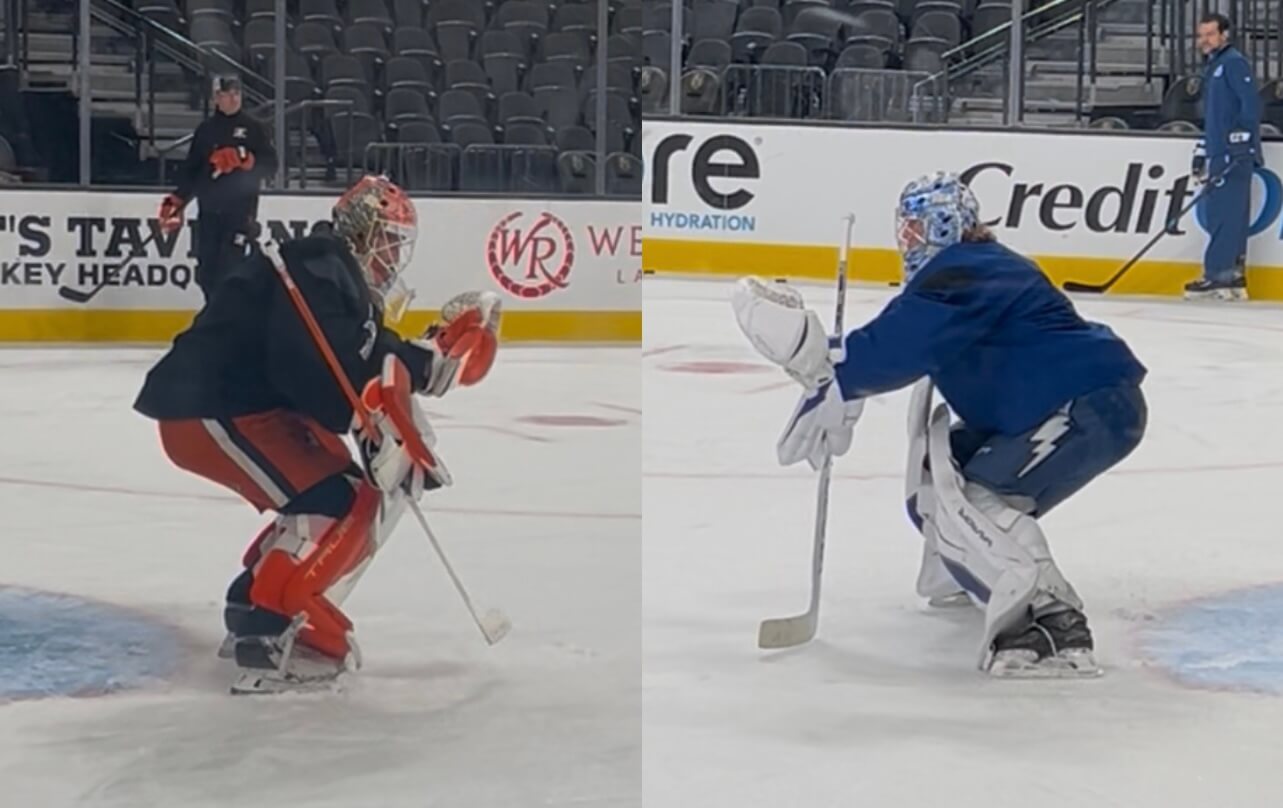
Vasilevskiy gets two main benefits from this posture. By extending his gloves so far out, he distributes his weight further away from his center of mass. Like with a tightrope walker using a pole for balance, Vasilevskiy’s hands serve as a counterbalance to his backside, which sticks out behind his skates. It gives him a solid base to play on his toes and move without losing his balance forward or backward.
Equally important, it also makes his gloves appear significantly bigger to the puck and eliminates shooting angles. We’ve covered the concept of “box control” more extensively in a past edition of Goalie Tracking, but if you haven’t read that, it’s the idea that the puck can only travel in a straight line once it leaves the shooter’s stick, so a goalie only needs to protect the box in front of him that the puck must travel through to hit the net. The closer the goalie is to the puck, the smaller that box becomes. This coaching video by David Schultz at Stop-It Goaltending and Pure Hockey visualizes the concept.
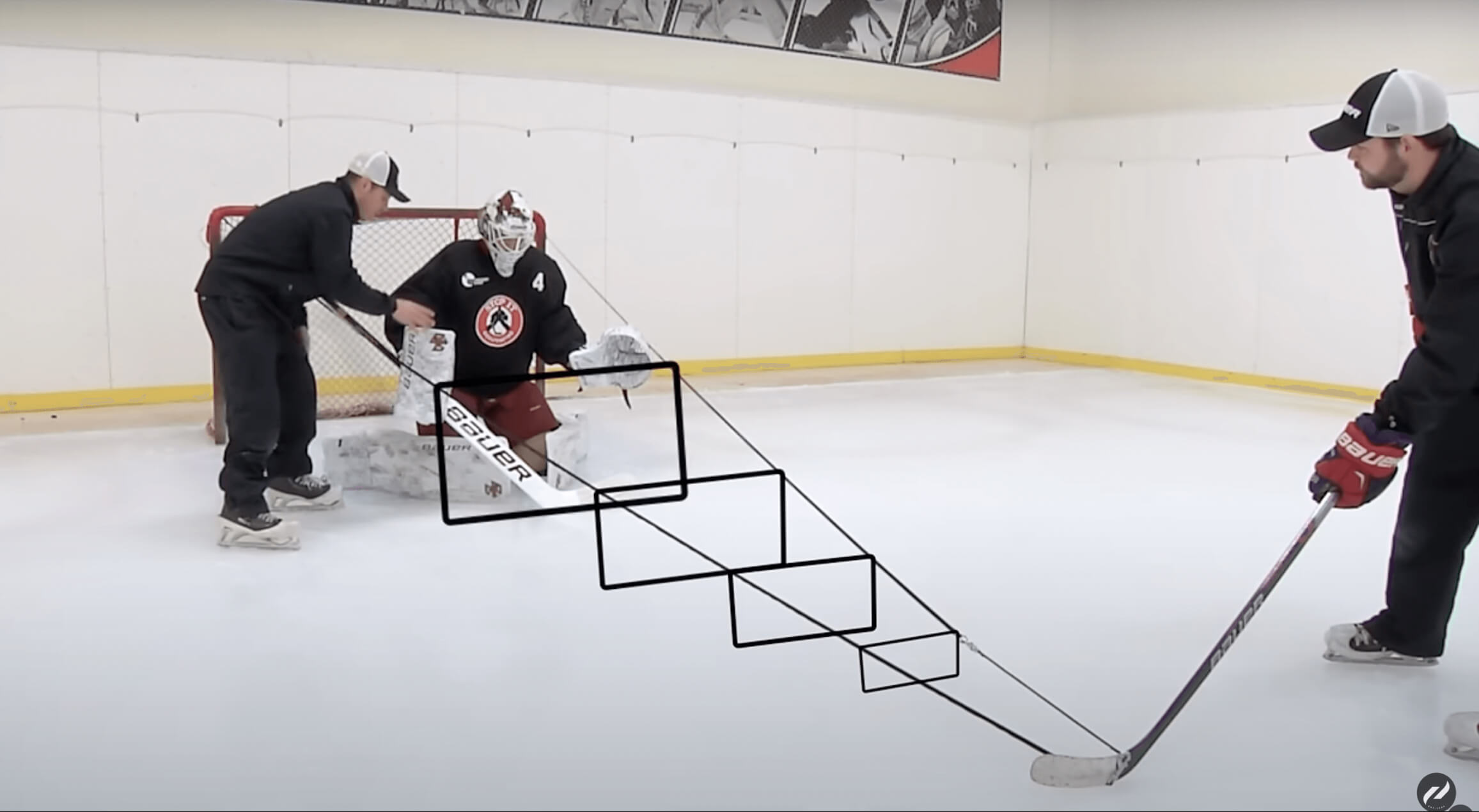
Some goalies will even try to visualize this imaginary box while training. It can help to understand how little they actually have to move to cover the net when they have proper depth. At 6-foot-4, 223 pounds, Vasilevskiy already has plenty of net coverage. By projecting his gloves out in front of his body, he gives shooters even less room to pick the high corners.
By shrinking the box, Vasilevskiy minimizes the movement needed to make glove saves. It’s why you’ll rarely see him make a spectacular-looking windmill snare with a lot of movement. Instead, it looks like he’s stabbing the puck out of the air with the smallest of adjustments, like this:
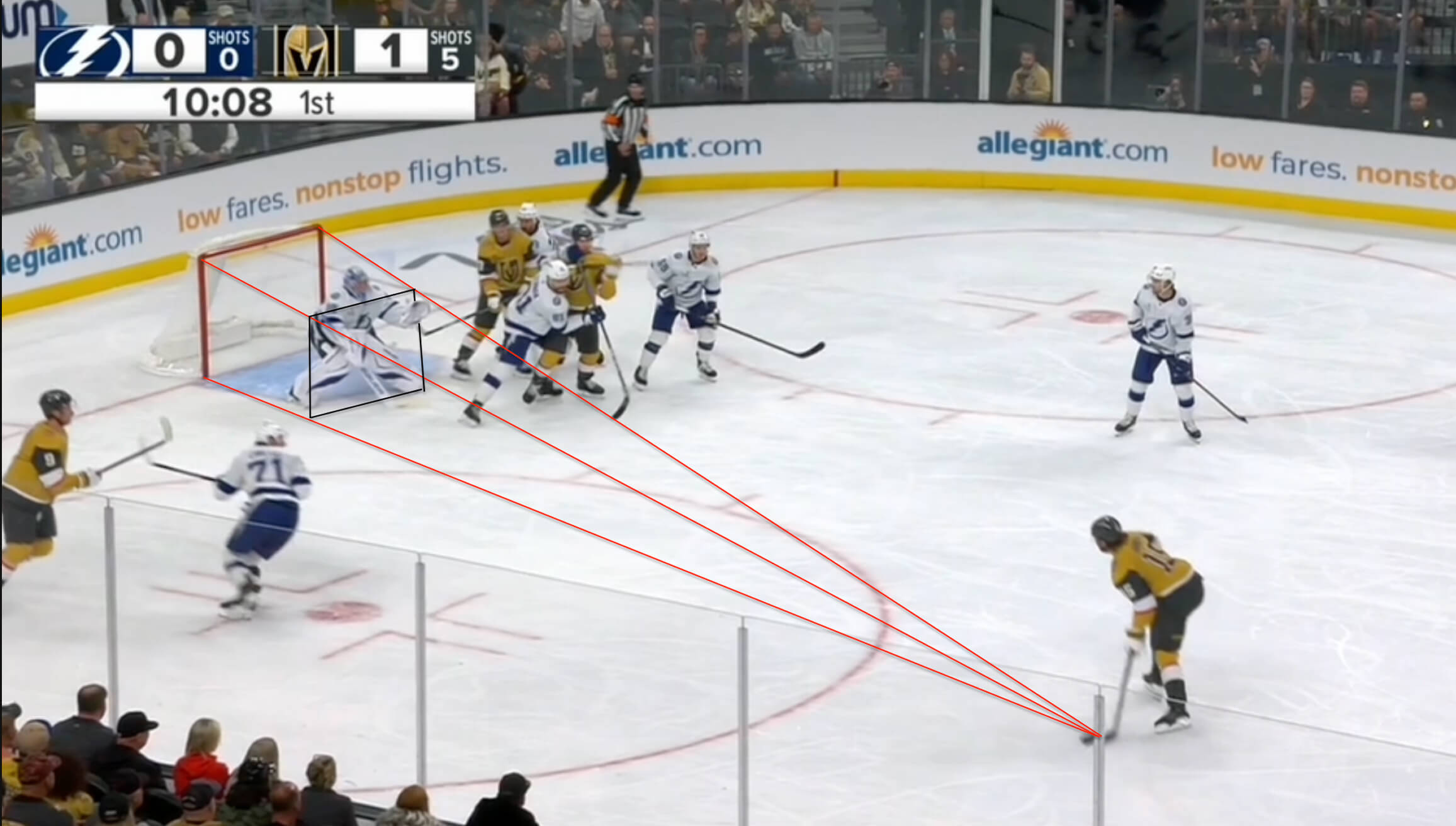
Here’s an example in game action, on a glove save by Vasilevskiy on Golden Knights defenseman Noah Hanifin on Nov. 6.

By overlaying the box control visual onto this play, you can see how small the area Vasilevskiy must defend actually is. You can also see how projecting his glove out in front of this window makes his life easier, and how little room there is above the glove.
Here’s another example of Vasilevskiy making a glove save with very little reaction required from his glove hand. This time it was on Colorado’s Cale Makar, who leads all defensemen in goals and points, from a dangerous shooting spot in the middle of the slot.

Because he’s standing tall at the top of his crease, Vasilevskiy barely has to move his glove at all to make this save. It may not look as visually impressive, but from a technique and process standpoint, it’s perfection. It would be easy to say, “Makar shot it right into his glove,” but the truth is, Vasilevskiy gave him nowhere else to shoot.

Vasilevskiy is a supreme athlete, but he also has incredible details to his game and understands shooting angles as well as any goalie in the world. It’s a big reason why he’s been able to sustain a high level of performance for such a long period of time. He’s a month into his 12th season in the NHL (10th full season) and has produced a save percentage below league average only once, and that was in 2023-24, when he was coming off back surgery.