
The Blackhawks have a plethora of forward prospects en route to the NHL, and they’ll have to eventually make space for them.
Fortunately, the Hawks have crafted their contract sheet with that in mind. Veteran forwards Nick Foligno, Jason Dickinson, Ilya Mikheyev and Sam Lafferty’s contracts expire in 2026, and Teuvo Teravainen and Andre Burakovsky’s contracts expire in 2027.
That will gradually clear roster spots for high-profile prospects like Anton Frondell, Nick Lardis, Roman Kantserov and Sacha Boisvert, all of whom could enter the NHL mix either during the final month of this season or at the start of next season.
Behind them are prospects like AJ Spellacy, Jack Pridham, John Mustard, Vaclav Nestrasil and Mason West, who remain a couple years (or more) away. Not all nine of those guys will pan out as NHL players, but the Hawks hope at least half will.
However, it’s neither realistic nor wise to build a depth chart entirely with youngsters. A few veteran presences are necessary and valuable.
The Hawks do have Tyler Bertuzzi under contract until 2028 and Ryan Donato until 2029, but they probably ought to bring back at least one of those four 2026 forward free agents on a short-term deal.
Foligno’s future likely rests in his hands. He just turned 38, and his playing time has been reduced to about 14 minutes per game. But he’s still effective in a fourth-line role — as evidenced by his two assists in the Hawks’ overtime loss Wednesday — and he obviously makes a huge off-ice impact as team captain.
If he decides to push out his retirement and play one more season after this, the Hawks would accommodate that. He hasn’t publicly indicated which way he’s leaning.
That leaves Dickinson and Mikheyev, two relatively similar players with defense-first mindsets. The Hawks might end up needing to decide — between the two of them — which one to re-sign. That won’t be an easy decision.
If Foligno returns, it’s possible they could let both Dickinson and Mikheyev walk, but that would place great pressure on young Ryan Greene — the third-line center in waiting — to handle brutal defensive matchups on his own next season.

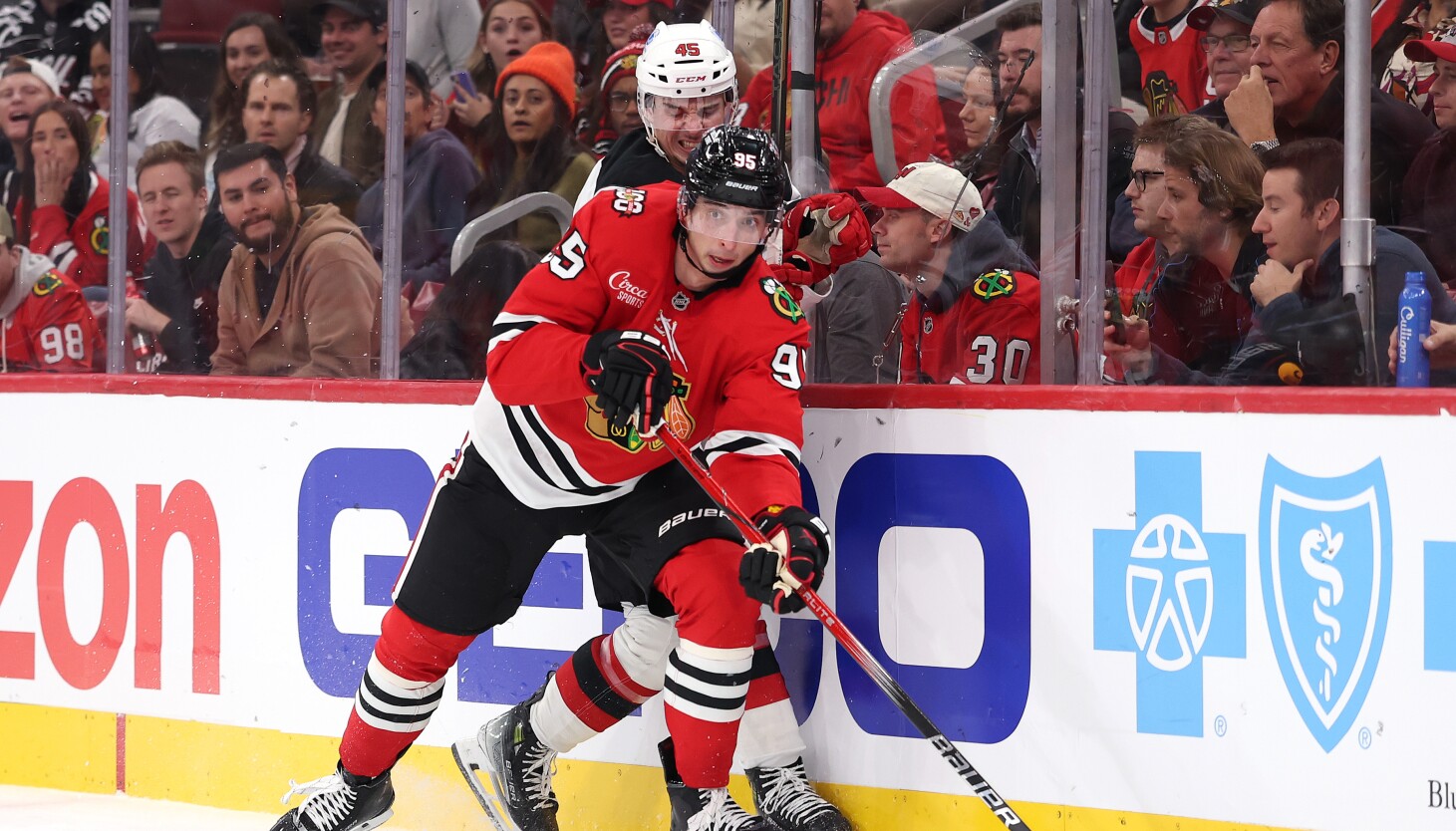
Jason Dickinson has dealt with some injuries in 2025.
Michael Reaves/Getty Images
The argument for Dickinson will highlight that he’s a center, he’s the team’s best faceoff-taker, he’s a year younger than Mikheyev (30 vs. 31) and he has a sizable leadership role as an alternate captain and extremely smart person.
The argument for Mikheyev will highlight that he has contributed more offense more recently than Dickinson, he has stayed healthier (missing just three games since the start of last season compared to Dickinson’s 32 and counting), he better fits the Hawks’ speed-based identity and he might be slightly cheaper to re-sign.
Making the decision trickier is the fact that Dickinson and Mikheyev usually play together — and play very well together — when both are in the lineup. It’s difficult to discern exactly which one is driving their results.
In their 464 five-on-five minutes together dating back to last season, the Hawks have an even goal differential (18-18) and a nearly even scoring-chance ratio (49.5%). Few other Hawks duos would have numbers that respectable.
In Mikheyev’s ice time without Dickinson, the Hawks have outscored opponents 35-34 but endured a poor 39.6% scoring-chance ratio. In Dickinson’s ice time without Mikheyev, the Hawks have been outscored 25-12 with a 40.1% ratio. With neither on the ice, the Hawks have been outscored 159-123 with a 42.6% ratio.
An apparent shoulder injury has limited Dickinson to just eight appearances this season, but he skated Tuesday and Wednesday and could return soon. That would help the Hawks substantially in the short term.
It would also allow them to begin the tough task of planning what to do with him before the March 6 trade deadline and next summer.