
TORONTO — Three separate incidents of racism involving hockey-playing youngsters by their teammates were shared in a conference room Thursday at a downtown Toronto hotel. Hockey Canada personnel and provincial member representatives were there to listen as part of the third annual Beyond the Boards Summit.
Jahmiah Ferdinand-Hodkin is the founder of Sports Dispute Management, a third-party group used by Hockey Canada to address reports of maltreatment. She reads every complaint that comes through. Of the 5,608 complaints the SDM has received in the past three years, 1,641 (29 percent) featured allegations of discrimination and 511 (31 percent) of those complaints were race-based.
The theme of the day emerged in those three stories, delivered in the form of written parental complaints read aloud by Ferdinand-Hodkin. One player was called the N-word. Another, a “Black monkey.” A third told his parents about the name-calling he endured only after another visible minority player joined the team. He didn’t want his new teammate to suffer the same fate.
The parents didn’t necessarily want punishment, in the eyes of Ferdinand-Hodkin, but sought education and reconciliation.
“We expect better from a sport that so many families, including ours, devote their time, energy and hearts to,” Ferdinand-Hodkin said, reading off another complaint from a parent. “Hockey is supposed to be a place of teamwork, belonging and mutual respect, not a place where a child can be targeted by way of racial slurs and then see that behaviour ignored.
“Education, awareness and swift action are the only ways to rebuild trust in the system and to make every child feel safe.”
The Beyond the Boards Summit was first launched in 2023 as Canada’s hockey culture faced intense criticism following sexual assault allegations toward five members of the 2018 Canadian World Junior team, forcing leadership changes and leading to departing sponsors. Those five players were eventually acquitted this past July.
Hockey Canada’s previous two Beyond the Boards summits focused on toxic masculinity and the outcomes of unhealthy hockey culture. Discrimination in hockey, including racism and its permeation through hockey’s economic and cultural barriers, was this year’s theme.
“What’s discouraging is that there’s still issues, and that there’s still racism, there’s still discrimination,” Hockey Canada board of directors chair Jonathan Goldbloom said. “And that there are real barriers of people feeling at home, at the hockey rink, and in the arena.”
Many of this year’s experts and panellists pushed for increased work in off-ice human development with players, as well as changes in approach for addressing these issues, to reduce stories of racial discrimination in youth hockey.
“I think bringing good people in, people who understand people and want to develop the human spirit more so than the skill development,” former NHL player and head coach Ted Nolan said.
“It’s that human development that’s going to bring kids back.”
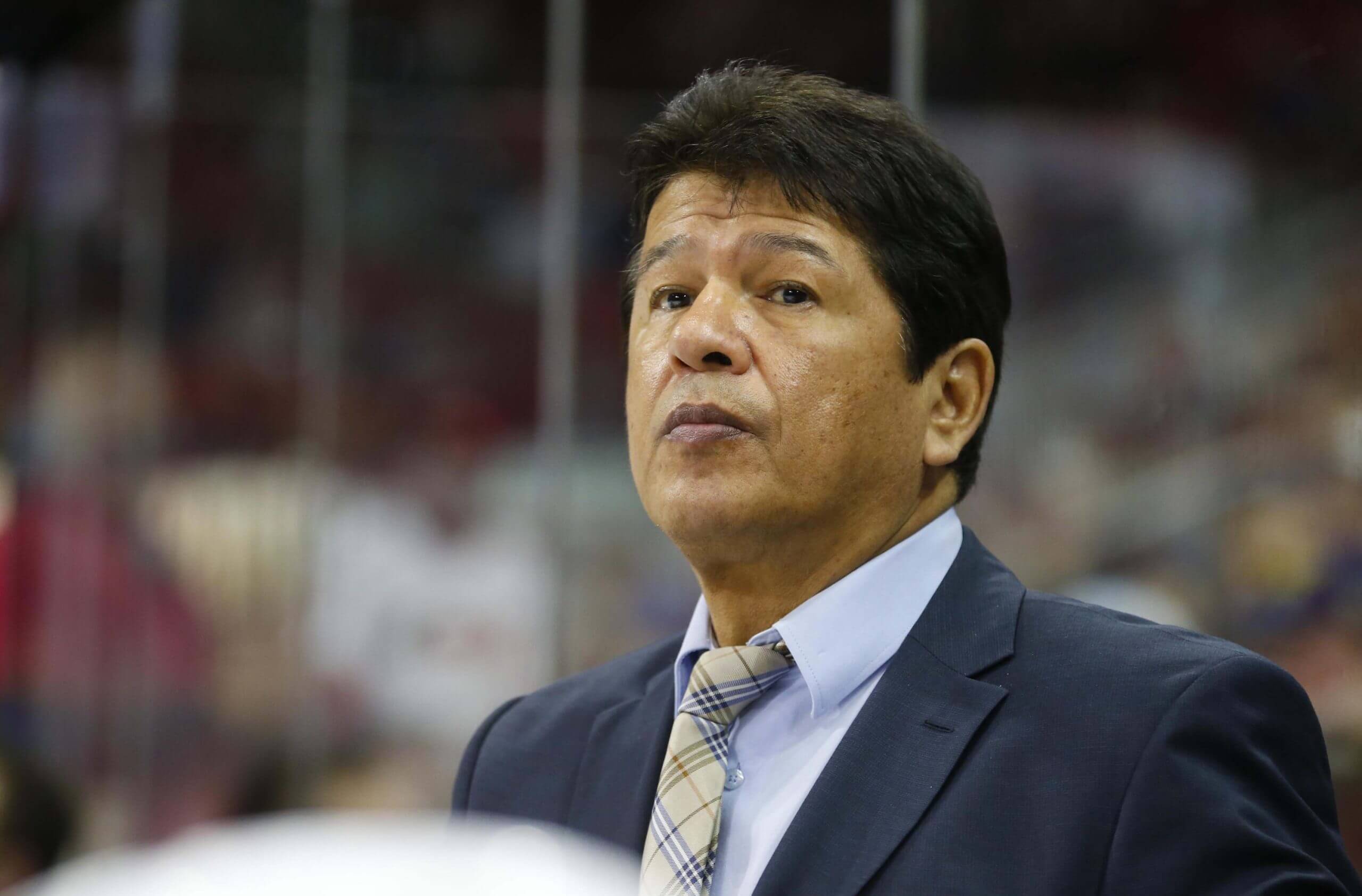
Former NHL player and head coach Ted Nolan was a speaker at this year’s Beyond the Boards event. (James Guillory / USA Today)
Nolan, a speaker at this year’s event, recounted his early days facing racist taunts while spending a year in Kenora, Ontario, playing hockey as a teenager before eventually emerging as a head coach for the Buffalo Sabres, New York Islanders and Team Latvia internationally.
Ferdinand-Hodkin was part of a session that discussed the metrics of racial discrimination that hockey players face, while the rest of the day featured panels and breakout groups addressing how Hockey Canada provincial member groups should address these instances going forward.
Another panel featured Hockey 4 Youth founder Moezine Hasham; Hockey Diversity Alliance director of operations Ed Aliu, brother of Akim Aliu; Black hockey historian Bob Dawson; and Karl Subban, father of P.K., Malcolm and Jordan Subban. Each member discussed how racism remains in hockey. Hasham, an Ismaili Muslim, specifically mentioned an instance where he walked into an arena and was referred to as a “cab driver.”
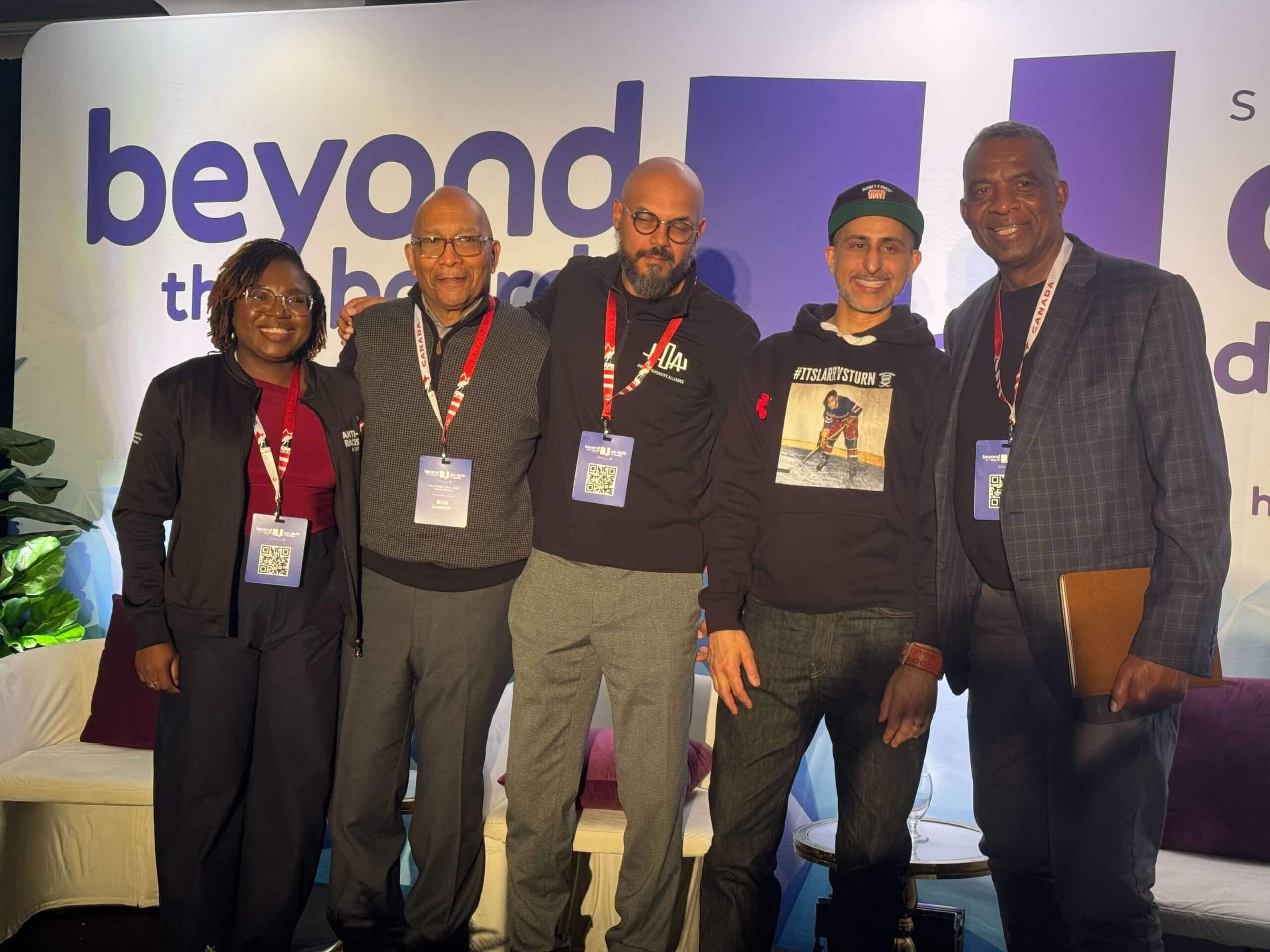
Moderator Moji Akande, Black hockey historian Bob Dawson, Hockey Diversity Alliance director of operations Ed Aliu, Hockey 4 Youth founder Moezine Hasham and Karl Subban at this year’s Hockey Canada Beyond the Boards Summit. (Julian McKenzie / For The Athletic)
Meanwhile, the elder Subban implored Hockey Canada to be “the leader of change” when it comes to making the sport more accessible and inclusive for people of colour.
“If you look at the face of hockey, it doesn’t look the same (as) when P.K. was 5, 6, 7 or 8,” Subban said. “It’s very, very diverse today. And people are different. And with differences, you’re going to have challenges. And so that’s why I continue to promote the training and development around belonging, around inclusivity, around giving people a voice.”
Despite racism persisting, Hockey Canada said there’s been growth among minority groups in youth hockey. According to the federation, over 600,000 children registered for the 2024-25 season, a fourth straight year of growth. That includes a 3.7 percent increase in Black, Indigenous, and people of colour groups.
“We have to continue with the programs that introduce young kids to the game,” Hockey Canada president and CEO Katherine Henderson said. “And we’ve got to make sure that we intentionally go out to those (BIPOC) communities to make sure that we are bringing those kids into the game.”
However, more work is needed to retain those youth while ensuring they aren’t victims of racial abuse. Aliu told The Athletic after his panel that he’d like to see a “more proactive approach” to tackling racism.
“What I think is lacking is a pathway and clear outcomes that we want to accomplish,” Aliu said. “It is moving in the right direction, but it’s still missing connecting those dots. Whereas people can report stuff, but then there’s still no power to take meaningful action, to be preventative, rather than (be) reactive to the problem.”
“I think educating young people to (know) with whatever’s happening inside your dressing room, we’re going to keep this place a positive, healthy space for you,” Hasham said. “And externally, when you leave the arena, we need you to understand that if our room is homogeneous and looks the same, it’s not like that out in society. So, we’re not going to use tropes and terminology. (If) you see (someone) that looks different than you, you’re not going to use that language.”
The work now falls on Hockey Canada’s provincial and territorial club members to implement what they heard this week. But for Beyond the Boards, it might mean a potential format change for future events. Henderson said a “pause” will be needed to consider what’s been learned over the last three years. But the next step is evaluating the future of the symposium, and possibly considering either regional symposiums or a more “action-oriented” event.
“I’d love to hear what the people who are participating in this think and see if they continue to see it as a hugely valuable thing, or if they’d like to see some evolution in the format,” Henderson said.
Until then, work continues to make more racialized communities feel more welcome in hockey.
“Obviously, the game is very expensive,” Aliu said. “I don’t know if it’s on Hockey Canada to necessarily bring down the cost of the sport, but creating pathways and environments for new folks in the country to come and experience the game at all levels is probably one of the biggest things that organizations can do right now.”