
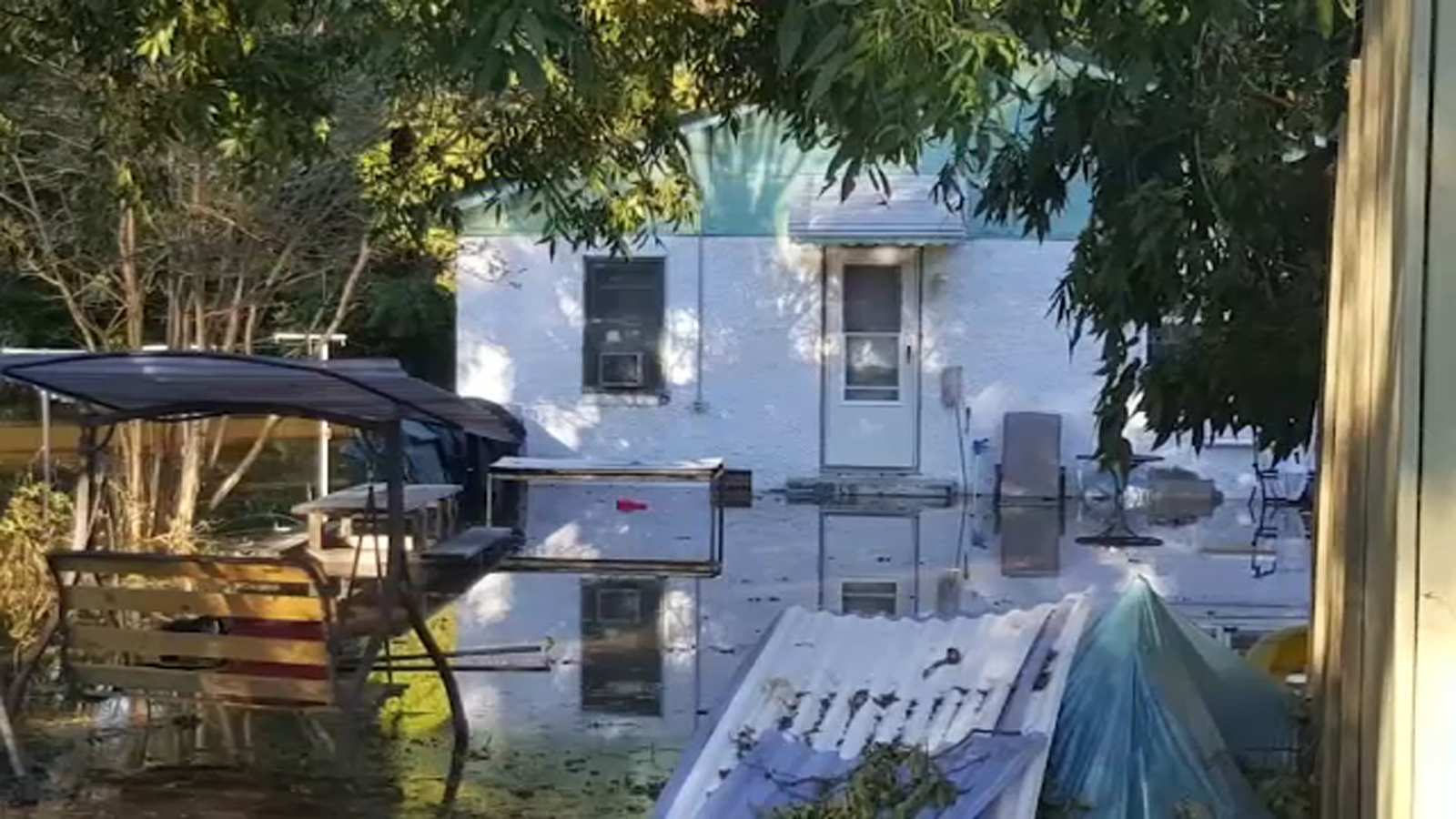
GOLDSBORO, N.C. (WTVD) — A new report from the North Carolina Office of the State Auditor says poor budgeting practices, unreliable data systems and weak oversight slowed the state’s efforts to help homeowners rebuild after Hurricanes Matthew and Florence, leaving some families in temporary housing for years.
The audit examined the North Carolina Office of Recovery and Resiliency’s Homeowner Recovery Program, which managed more than $1 billion in disaster recovery funds following the storms.
State Auditor Dave Boliek said the findings show the state’s disaster response fell far short.
“The unfortunate truth of this report is the response from North Carolina to Hurricanes Matthew and Florence was a disaster. When government decides to focus on administrative procedures ahead of boots on the ground, hurricane victims get hurt,” Boliek said.
“North Carolina must implement a long-term, comprehensive plan that can be used for decades to come. As state leaders, we owe it to the people of North Carolina to come to the table, institute accountability, and map out a transparent and permanent strategy to respond to hurricanes.”
The report found NCORR lacked a complete assessment of total recovery needs and made financial commitments that exceeded available funds. As a result, the state had to provide a $297 million bailout to keep the program running.
Auditors also cited inconsistent reconciliation across three separate financial and program management systems. The North Carolina Financial System, Disaster Recovery Grant Reporting system and Salesforce. Those discrepancies made it difficult for the agency to track money accurately and contributed to delays for homeowners.
Boliek highlighted the immense cost of implementation for just one of those systems, equaling entire budgets for other state agencies like his own.
“Our entire appropriation at the State Auditor’s Office is roughly $25 million for the entire office, and NCORR spent more than $25 million on the implementation of Salesforce, a single technology,” he said.
The application and construction process was lengthy. Applicants had to complete eight steps, each taking an average of at least 100 days. Grant determinations alone averaged 936 days, roughly two and a half years. Some families spent more than 1,400 days in temporary housing, and lodging costs exceeded $230,000 for at least one household.
Vendor oversight was another major issue. Only one of six program administration contracts included key performance indicators, auditors found. In some cases, payments were made without full verification of completed work.
The audit also noted that NCORR spent more than $25.4 million developing and implementing Salesforce, but incomplete and inconsistent data within the system affected day-to-day operations.
The report includes both short-term steps and long-term recommendations aimed at improving disaster recovery statewide. One proposal calls for establishing a Sustainable Outcomes for Long-Term Impact and Disaster Recovery (SOLID) partnership made up of statewide elected leaders. The group would work to create a consistent, accountable strategy for future hurricane response.
Other recommendations include strengthening budget controls, improving data governance, enhancing oversight of contractors and creating a structured financial roadmap for future recovery efforts.
NCORR worked with the auditor’s office throughout the assessment, and the agency’s full response is included in the report.
The report was released Wednesday in Goldsboro, one of the communities hit hardest by both storms. Some residents there say they are still struggling nearly a decade later.
Viola Figueroa, whose home took on three feet of water during Hurricane Matthew, told ABC11 she lived in a trailer for seven years while waiting for assistance.
“I’m disappointed. I’m very disappointed,” she said.
Figueroa said she suffered multiple health emergencies during that period, and her husband died in 2019 while the family was still living in temporary housing. She moved into a rebuilt home in 2023, but said construction problems persist.
“It’s a roof over our head. I’m grateful… but we really got ripped off,” she said, pointing out several construction concerns with her home just two years after she moved in. She pointed out warped floorboards, cracks in the drywall, and detailed several issues she’s had with her appliances and the electrical work done on her home.
Residents like Figueroa attended Wednesday’s audit briefing at the Wayne County Museum, where Boliek reiterated the need for stronger oversight.
When ABC11 asked whether anyone could be held accountable for the issues people faced, Boliek made clear that their office found no evidence of theft or fraud, chalking up the issues to mismanagement.
“I wish I had an answer on accountability… I think ultimately it is at the voting booth,” he said.
The Office of the State Auditor is recommending both short and long-term changes to ensure this doesn’t happen again, and called on other state officials to work together to have better oversight over how taxpayer money is being spent.
Boliek also said his office will begin examining recovery spending in western North Carolina following Hurricane Helene, now that enough time has passed to assess early expenditures.
Copyright © 2025 WTVD-TV. All Rights Reserved.